
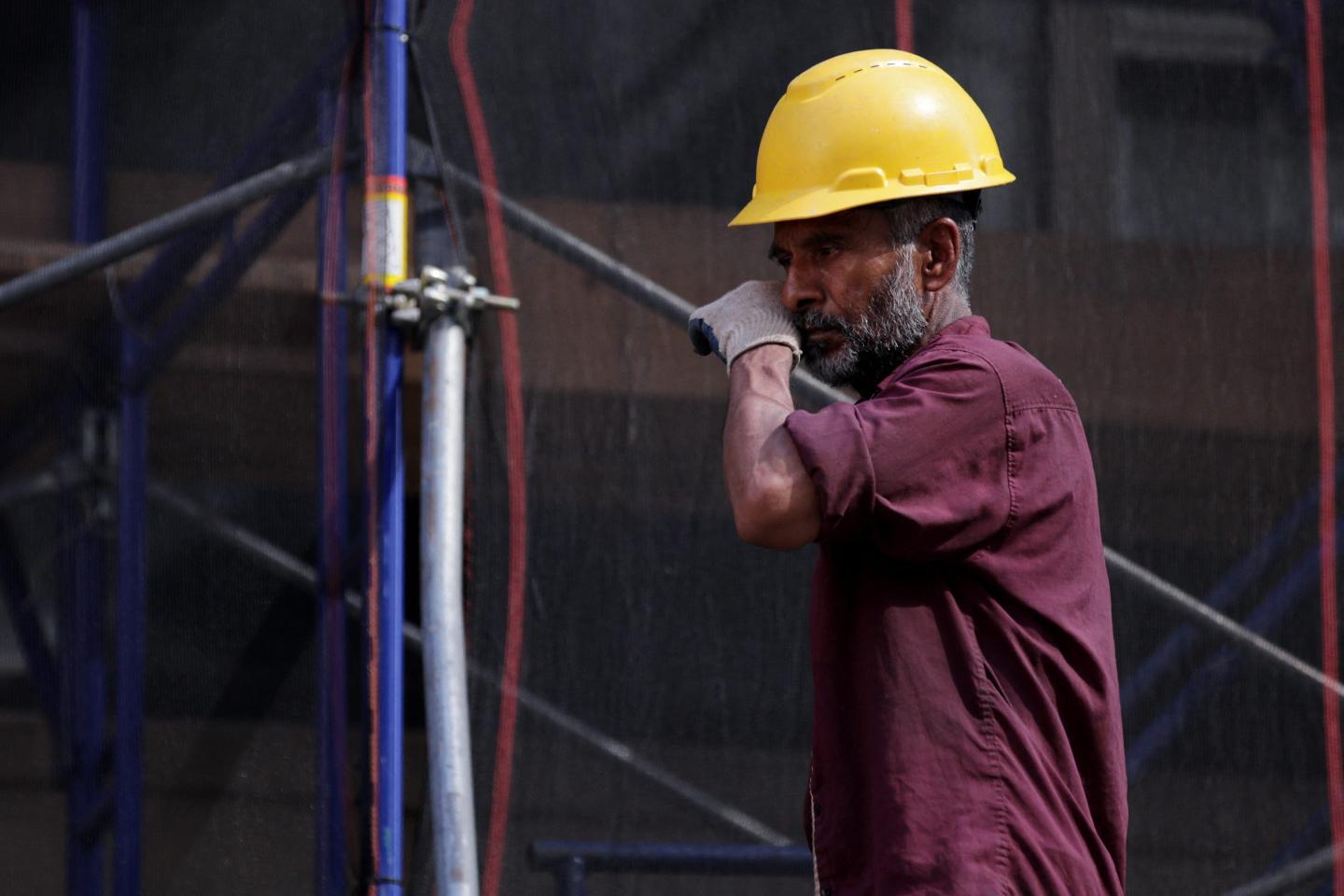
Last July, construction site superintendent Robby Robertson warned his $20 million recreation center project in Mobile, Alabama, would likely be delayed for three weeks. He told Reuters that half of his workers stopped showing up to the site after an Immigration and Customs Enforcement raid on another site in Florida, nearly 230 miles away, afraid of facing the risk of deportation.
The delay would cost Robertson an estimated $84,000, with $4,000 of daily “liquidation damages” mounting for each day the project dragged past its Nov. 1 deadline.
Robertson’s problem may be a nationwide challenge. New data has confirmed economists’ concern that the Trump administration’s immigration crackdown has led to fewer jobs in critical industries, particularly construction, reifying fears of labor shortages, delays, and ultimately passed-down costs to homebuyers.
A working paper recently published by the National Bureau of Economic Research found employment among likely undocumented immigrants dropped 4% on average in areas where ICE conducted recent raids. Construction was the most affected industry the researchers tracked, with employment dropping 7.5% for undocumented workers. The Associated General Contractors of America (AGC) estimates 35% of construction workers are immigrants.
Despite immigrants’ role in the construction industry—and the broader economy—the Trump administration has taken substantial efforts to curb immigration. On Friday, the White House announced that most foreigners seeking green cards must go back to their home countries in order to apply, a policy shift that could impact hundreds of thousands of foreigners seeking permanent residency in the U.S.
But it’s not just construction jobs at risk because of the immigration crackdown, economists warn.
“If the supply of immigrants is cut off, as it seems to be with the borders effectively closed these days, I think it will get much harder for the construction industry to fill positions,” Ken Simonson, chief economist at AGC, told Fortune.
“But the even bigger, broader concern is that the population as a whole is going to stop growing, and that will mean less demand for homes, for schools, for retail, for many consumer-facing kinds of construction projects, and a general slowdown in economic growth that sooner or later affects every kind of construction. I think that’s a real risk.”
Where have the construction workers gone?
Even prior to Trump’s clampdown on immigration, the U.S. was facing both a labor shortage in construction and a slowdown in homes being built. Last year, construction workers broke ground on about 1.36 million homes, a 0.6% drop from 2024, according to data from the Federal Reserve Bank of St. Louis, a worrying statistic for economists saying the U.S. needs to build 3 million to 4 million additional homes “beyond normal construction” to resolve the country’s housing crisis.
According to the Associated Builders and Contractors, a trade group, the U.S. must hire 349,000 more construction workers in 2026 in order to meet demand. By comparison, the U.S. added 181,000 total jobs in 2025.
Simonson said that while construction has been hit by the same low-hire, low-fire conditions straining job growth, the industry faces more severe shortages from both an aging workforce and dwindling interest from younger generations.
“There certainly is turnover in construction,” he said. “There are a lot of retirements happening, and so to keep that construction employment rising, we do need a pool of new entrants to the workforce.”
But the U.S. population of 18-to-22-year-olds has peaked, Simonson noted, and while more Gen Z workers are joining construction, the generation makes up just 14% of payroll, with Millennials and Gen X holding 71% of the jobs. From 2019 to 2023, the share of Baby Boomers in construction fell from 20.6% to 14.2%.
Tony Payan, a fellow at Rice University’s Baker Institute for Public Policy, said if labor shortages in the industry continue, construction companies will face cost overruns from delays or have to hike wages to attract workers from competing companies. Already facing tight margins, construction firms are not going to be able to absorb those costs.
“Everything is going to be passed down to the consumer,” Payan told Fortune.
Why construction jobs are being threatened
Historically, immigrants have been able to fill some of the gaps in construction’s labor supply, but mass deportation efforts have impacted more than just these foreign-born workers. Elizabeth Cox, a professional research assistant at the University of Colorado Denver and co-author of the NBER study on ICE’s impact on construction labor participation, said fear has been one of a few drivers of job losses.
“A lot of this is likely due to the public perception of ICE activity, and that people are a little bit more fearful than they have been in previous instances,” Cox told Fortune.
While deportation directly removes someone from the labor market, it also produces chilling effects, discouraging immigrants, particularly those undocumented, from participating in everyday activities, Cox said.
Those chilling effects account for why foreign-born workers may no longer participate in the labor market, but does not fully account for why immigration crackdowns would lead to fewer U.S.-born workers.
Cox explained fewer immigrants generally leads to less growth, which can disincentivize a workplace from hiring in general. Immigrants fulfill a complementary role in the workplace, meaning their jobs necessitate roles to support their work that may be more likely to be held by U.S.-born workers. For example, at a construction site, fewer laborers would necessitate fewer electricians to be working on site, as well as fewer managers to oversee the work.
Finding solutions to construction’s labor problem
Payan said the Trump administration could take action to address construction’s labor problem. While the agriculture industry has a dedicated H-2A visa for temporary agriculture workers, it does not have a specific visa for those in construction. Instead, there’s an H-2B visa for non-agricultural workers.
But these designations are meant for mostly seasonal or intermittent workers, not construction jobs that have yearlong demand. Visas are often granted for only up to one year, while many construction jobs require seasoned workers with certifications and good insurance.
“You need workers for at least a few years to train them and get them to be quite good at what they’re doing, so that they can deliver the project on time, on cost, and of course do it well,” Payan said.
With little likelihood of a visa being created to accommodate foreign-born construction workers, he noted construction companies have some, albeit limited, options to ease the burden of labor shortages. AI has helped to automate some roles in the industry, but automated construction equipment is still expensive and not yet reliable, Payan warned.
Moreover, more automation in construction doesn’t necessarily reduce jobs, as humans still need to oversee the work of the robots. Construction firms can also raise wages, but run into the problem of competing for the same pool of workers.
“They’re really at a quandary as to what to do,” Payan said. “Construction company owners and CEOs, they’re really at this point of reaching into the depths to compete for the available labor. It essentially means greater costs, that’s it.”