
For 250 years, America has done something no other country has managed at comparable scale: it has not merely invented the future, it has built it. Many of the foundations of modern life are distinctly American.
By our count, Americans created or supported 76 of the 100 most important inventions of the past 250 years, from the telegraph and the electric grid to the airplane, the transistor, the personal computer, and generative AI. But invention has never been the whole story. America’s enduring strength has been reinvention: reshaping its economy around each geopolitical development and technological leap, turning discovery into industrial power, prosperity, and global influence. The railroad era, the GI Bill, the internet—each was a moment when America did not merely lead in ideas but mobilized the institutions, infrastructure, and workforce needed to scale them.
As the country approaches its 250th anniversary, that cycle—from invention to reinvention—is under strain in ways that have no clear precedent. The question for the next 250 years is whether America can close the gap between what it discovers and what it builds, before others do it first.
As the country approaches its 250th anniversary, the question is whether it can reinvent itself again, and quickly, as the connection between breakthrough ideas and industrial capacity once again becomes central to growth.
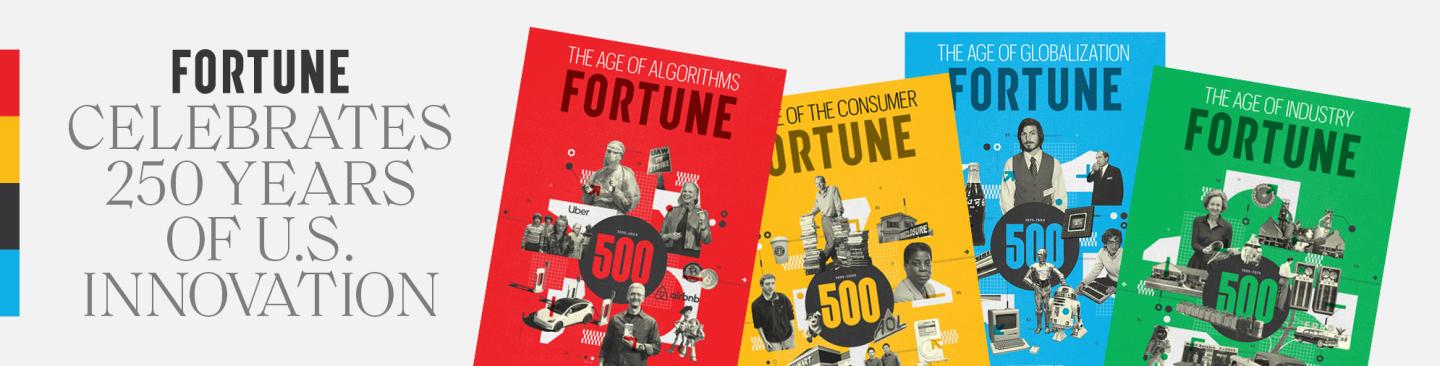
At each key turning point, American inventions have been followed by industrial transformation. The rapid build-out of railroads and mass production powered the rise of an industrial economy. In the 20th century, federal research funding and world-class universities fostered inventions that turned the United States into a scientific superpower. Personal computers and the internet gave rise to a digital economy built on software, networks, and global information flows. Growth has been sparked by new ideas, but nurtured by the institutions, infrastructure, and workforce systems that allowed those ideas to scale.
To compete in tomorrow’s economy, the United States must reinforce its historical connection between innovation and physical industry—it must once again reinvent its economy around new ideas around emerging technologies that will anchor tomorrow’s economyand that are tightly bound to physical systems. Artificial intelligence relies on vast data centers and reliable power. Robotics must be embedded in advanced manufacturing systems. Biotechnology requires scaled lab space and biomanufacturing capacity. Clean energy depends on grid expansion, storage, materials processing, and transmission. Even incipient technologies like quantum computing rely on specialized fabrication and precision engineering. These future-critical systems blend software with hardware and physical infrastructure.
Today, the United States’ capacity to reinvent is under strain. American firms still lead global markets and remain at the forefront of AI and advanced technologies. But the critical connection between invention and production has weakened. Manufacturing capacity has dispersed abroad. The U.S.’ share of global manufacturing output has declined from 45% to 11% today—a peak reached in the 1950s. The most advanced semiconductors are largely fabricated in Taiwan and South Korea. Processing of critical minerals and rare earth elements is highly concentrated in mainland China.
In the next wave of technological competition, the current disconnect between invention and production could mean ceding both economic value and competitive advantage. Countries that integrate research, production, and deployment of new technologies will be better positioned to capture their economic and strategic benefits. Leadership will depend as much on energy capacity, skilled labor, and supply chain resilience as on laboratory breakthroughs.
Three areas will determine whether ideas become industries.
Talent—educating, and welcoming, the world’s most cutting-edge creative thinkers. Advances in artificial intelligence promise productivity gains, but those gains will also require technical capability across the workforce. Expanding engineering and advanced manufacturing pipelines, improving K-12 education, and maintaining access to global talent will determine how widely new technologies spread. Earlier generations met comparable challenges with institutional innovations such as land-grant colleges and the GI Bill. A similar expansion of capacity is needed now.
Physical capacity—previous eras of growth were powered by large-scale infrastructure projects that opened new economic corridors. The same is required today. Grid bottlenecks, aging transport systems, and slow project approvals are constraining expansion just as demand for power and advanced facilities ramps up. Permitting delays alone have become a significant drag—we estimate that as much as $1.5 trillion in infrastructure capital expenditure is currently tied up in federal review processes. Modernized grids, expanded generation capacity, and faster build timelines are prerequisites for scaling emerging industries.
Resilience—concentrated production in critical sectors has exposed vulnerabilities during geopolitical tensions and supply shocks. Strengthening domestic capacity in key industries, while diversifying supply chains with trusted partners, would reduce that risk. The goal is not isolation but reliability under pressure.
The United States is starting from a position of strength: deep capital markets, a culture of entrepreneurship, leading research institutions, and a track record of adaptation. But other major powers are investing heavily in industrial depth. Technology cycles are accelerating. And energy, security, and economic policy are increasingly intertwined.
The inventions defining the next era, in artificial intelligence, advanced manufacturing, energy, and biotechnology, are already emerging from American laboratories and firms. The United States must scale them, and reap the benefits at home, or watch others do it. Invention alone won’t determine who owns the next century—the ability to build it will.
The opinions expressed in Fortune.com commentary pieces are solely the views of their authors and do not necessarily reflect the opinions and beliefs of Fortune.