
Good morning. On Fortune’s radar today:
- At Google, search ain’t what it used to be.
- Markets: Crude climbs, stocks shrug.
- With no end in sight, Trump considers new options in Iran war.
- Midterms: The Senate is a coin-flip, polls say.
- America’s curious thirst for raw milk.
Quick note: Subscribe to the forthcoming Fortune Gulf Brief. Every Tuesday, this new newsletter will deliver clear-eyed, authoritative intelligence on the deals, decisions, policies, and power shifts shaping one of the world’s most consequential regions, written for the people who need to act on it. Sign up here.
THE MARKETS
Stocks tread water. Oil does not.
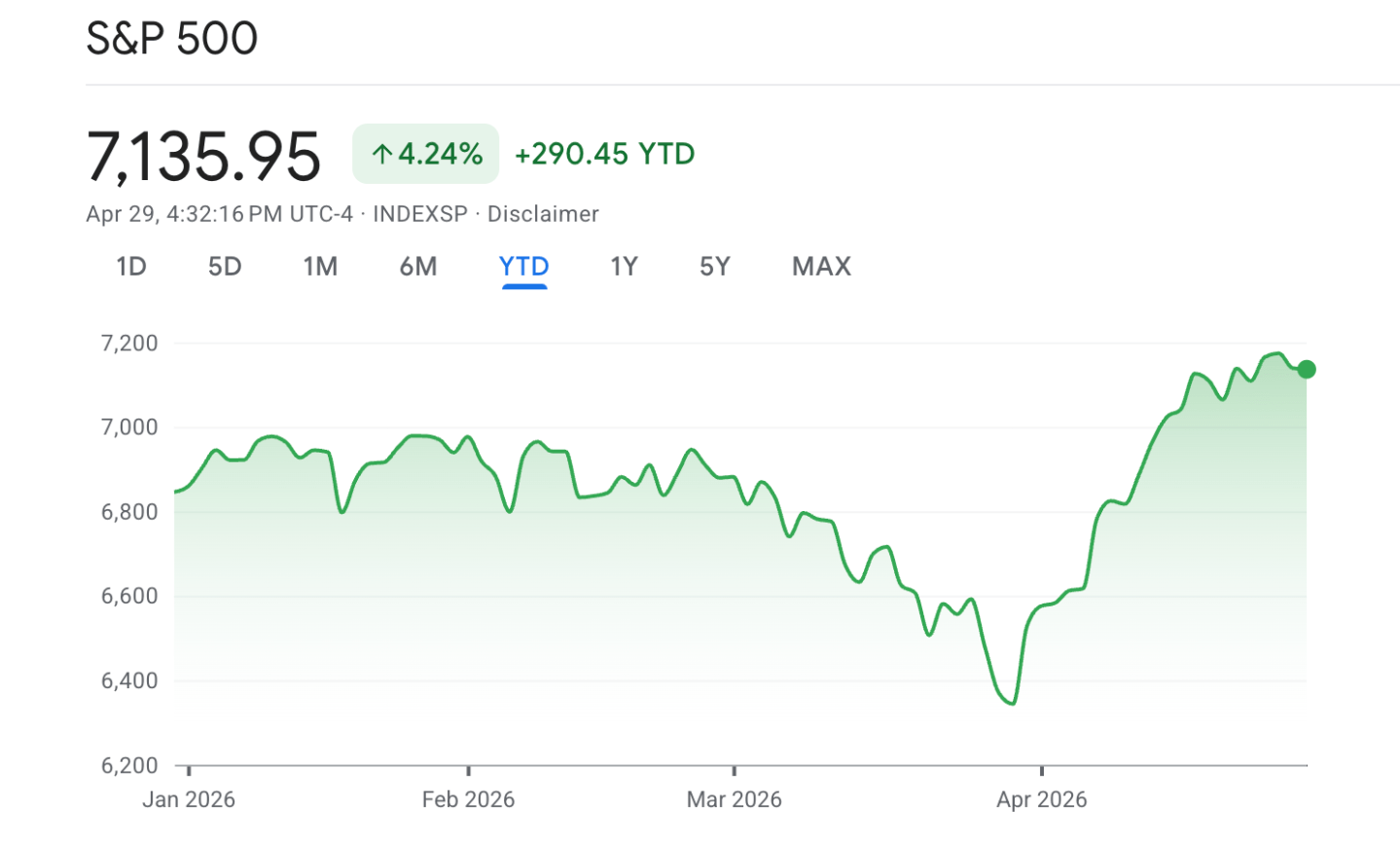
- S&P 500 futures were flat this morning. The index closed flat yesterday, just a smidge under its all-time high.
- In Europe, the Stoxx 600 was down 0.1% in early trading and the U.K.’s FTSE 100 was up 0.88% before lunch.
- Asia: Japan’s Nikkei 225 was down 1.06%. India’s Nifty 50 was down 0.85%. China’s CSI 300 was flat.
- South Korea’s KOSPI slipped 1.38% today. (The KOSPI is up a staggering 53% for the year so far and the country's stock market is now worth more than the U.K.’s, Fortune’s Nicholas Gordon tells me.)
- Brent crude was $111 per barrel this morning.
- Bitcoin hit $76.2K.
Central bankers expect gold to go up. Goldman Sachs analysts Lina Thomas and Daan Struyven have reiterated their target price for gold reaching $5,400 per troy ounce by the end of 2026. (The price was $4,637 this morning.) Why? Goldman took a survey of 29 central bankers at a recent conference and found that 70% of them saw it increasing. Many central banks have added gold to their reserves recently.
ONE BIG THING
The future of Google may not be Google
Ever since Google was founded in 1998, its search engine has been the core of the company’s identity. For most of that time, search and search advertising have been the vast majority of the company’s business. Yesterday, that began to change, Fortune’s Alexei Oreskovic reports. Alphabet’s cloud computing business posted 63% revenue growth in Q1, for a total of $20 billion. Cloud is now 18% of the company’s business. Coupled with the growth of its Gemini AI business, it is almost possible to imagine a future in which Google search is no longer the company’s main gig.
- Microsoft, Meta, and Google just announced billions more in AI spending. Only Google convinced investors it’s paying off - Amanda Gerut
- Meta just bumped its 2026 capex forecast up to as much as $145 billion for the AI boom—and investors flinched - Amanda Gerut
- Big Tech’s AI capex spending plans rise to $725 billion - FT
Chips ahoy! Samsung reported 57.2 trillion Korean won ($38.6 billion) in operating profit for the first quarter of the year, an eightfold increase. As one of the world's largest producers of chips, including the high-bandwidth memory used in AI processors, Samsung is benefiting from spiking prices driven by heightened demand. Samsung shares are up almost 75% for the year, even as shares dipped around 1.5% today, Fortune’s Nicholas Gordon tells me.
IRAN
Bombing them back to the table?
Brent crude peaked at over $120 per barrel overnight on news that President Trump will consider returning to major combat operations against Iran. It sank back to $111 this morning.
U.S. Central Command has also asked if it can deploy the Dark Eagle hypersonic missile in the region, Bloomberg reports.
In addition, the U.S. is planning to launch diplomatic efforts to persuade European powers to join a coalition capable of reopening the Strait of Hormuz. Most NATO countries have been wary of getting dragged into yet another endless Middle East conflict. Defense Secretary Pete Hegseth has made few friends in Europe. Six days ago he said, “We are not counting on Europe, but they need the Strait of Hormuz much more than we do, and might want to start doing less talking and having less fancy conferences in Europe and get in a boat.”
- The takeaway: There is no end in sight to the conflict or the oil shock.
MIDTERMS
Senate on a knife-edge, new polling says
Democrats have a 98% chance of retaking the U.S. House of Representatives, 235-200, according to data crunched by The Economist. Republicans, by contrast, have a 53% chance of holding the Senate. The model—which combines polling and probability scenarios—predicts a 50-50 split of the upper house.
MORE FROM FORTUNE
Thom Tillis: Free markets built American prosperity. Government intervention puts it at risk - Thom Tillis and John Stanford
Gensler Co-Chair: Hot-desking was supposed to save money. It may be costing you your culture - Diane Hoskins
Aerie built a $2 billion brand by rejecting Victoria’s Secret’s old playbook. Now it wants to win the AI backlash - Phil Wahba
FedEx and UPS are pledging to give their tariff refunds back to consumers, and the sum will likely top $5 billion - Sasha Rogelberg
Starbucks is winning customers back after investing $500 million in workers and stores - Phil Wahba
CHART OF THE DAY
Oil shock hits hardest at the bottom
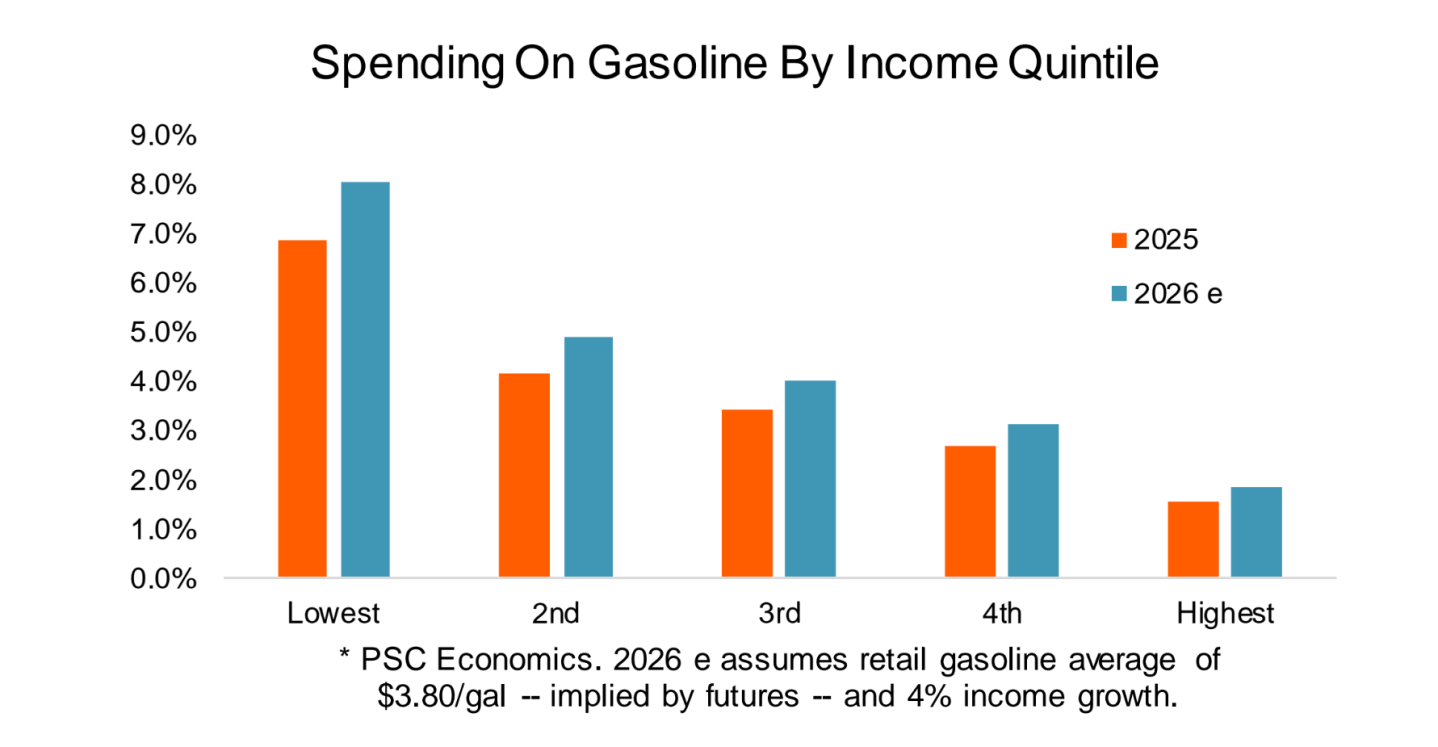
The increase in the price of oil since the onset of the Iran war is measurably eating into the incomes of the poorest. If the average price of gasoline in the U.S. is $3.80 per gallon, then the lowest quintile income bracket essentially takes an 8% cut in income. The wealthy are barely affected. Chart from Jake Oubina and his colleagues at Piper Sandler.
NUMBER OF THE DAY
9,139
The number of mutual funds that hold stock in Nvidia, per research from Piper Sandler. Nvidia’s stock has an outsize influence on the holdings of equity investors: The average company in the S&P 500 is held by only 2,342 funds.
THE FRONT PAGES TODAY
Half of ‘long shot’ Polymarket bets on military action are successful - FT
U.S. weighs ‘reduction’ of troops in Germany as Trump’s feud with Berlin deepens - CNBC
Commanders to brief Trump on new Iran military options Thursday - Axios
Powell Won’t Leave. The Fed Won’t Cut. Warsh Will Have to Deal With Both. - WSJ
Takeaways From Hegseth’s Testimony on Iran War and His Tenure - NYT
Anthropic Plan to Expand Mythos Access Is Opposed by White House - Bloomberg
ONE MORE THING
Americans risk kidney disease and death in thirst for raw milk
Public health officials have long warned that drinking unpasteurized “raw” milk is potentially dangerous. There have been five disease outbreaks in the past year tied to raw milk. The current bout has sickened nine people with E. coli, half of them children under 5. One victim developed a complication that can impair kidney function for life. “If you wouldn’t lick a cow’s underneath, why would you drink raw milk?” said Petra Anne Levin, a biology professor at Washington University in St. Louis. In fact, prior to the invention of pasteurization, infant mortality rates were 30-60 times greater than today, in part because of contaminated milk. Yet more than three dozen bills supporting raw milk have been introduced in statehouses across the nation, The Associated Press found.