
Good morning. Lots to talk about after yesterday’s Big Tech earningspalooza.
One pressing question through it all: When will investors soften their skepticism about the hundreds of billions of dollars that tech companies are sinking into AI-related expenses?
So far, according to colleague Amanda Gerut, only Alphabet has managed to change their tune. For everyone else? Tick, tock. —Andrew Nusca
Want to send thoughts or suggestions to Fortune Tech? Drop a line here.
Google Cloud revenue is now 18% of Alphabet's business
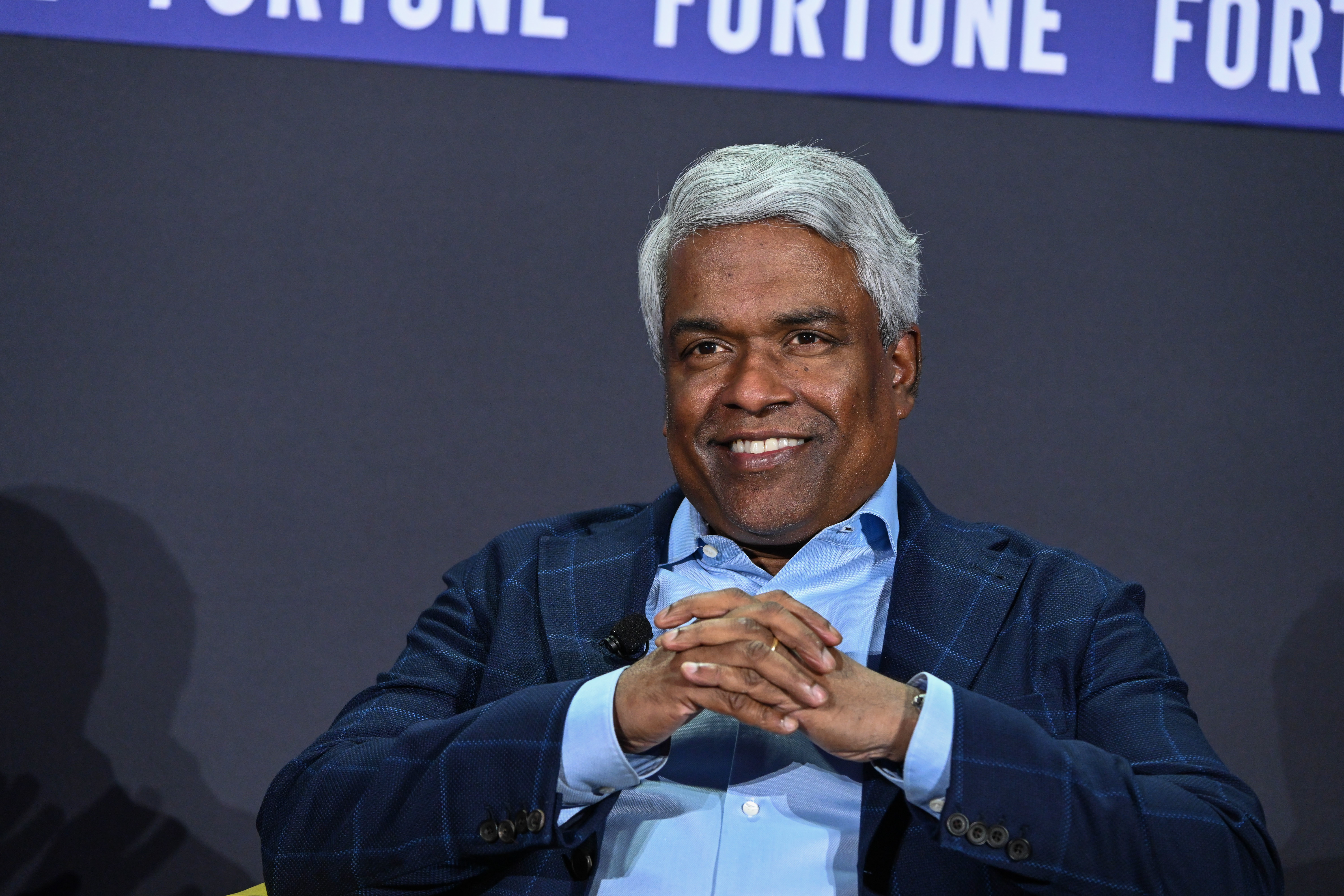
Ever since Google was founded in 1998, search has been the core of the company’s identity. For much of that time, search has also been the engine (no pun intended) driving Google’s business.
On Wednesday, that began to change.
The company’s cloud computing business was the undisputed star of parent company Alphabet’s first-quarter earnings, posting an eye-popping 63% revenue growth from the prior year, for a total of $20 billion.
AI is of course what’s driving the booming growth in the Google Cloud business, as CEO Sundar Pichai and other company executives noted on the earnings call. And investors were delighted, sending shares of Alphabet up 7% in after-hours trading.
But lost in the excitement of the moment is something more fundamental: Google Cloud now represents 18% of the company’s overall business. It’s perhaps just one quarter or two more quarters away from comprising one-fifth of the Google empire—something that would have been unthinkable a few years ago, and no longer just a cute sideshow to Google’s ad revenue.
The main factor that will determine how big the Cloud business becomes is AI. Right now, customer demand for AI is insatiable and Google’s cloud business is rising along with it. If the AI train suddenly comes to a halt, or even slows, Google’s cloud business could find itself back in second class. —Alexei Oreskovic
Meta boosts its 2026 capex forecast, investors flinch
Meta Platforms is splashing some serious cash on AI infrastructure, and investors aren’t pleased.
The company reported first quarter 2026 earnings results on Wednesday and raised its full-year 2026 capital expenditure guidance to $125 billion to $145 billion, up from a previous range of $115 billion to $135 billion.
Meta told investors the boost was the result of higher prices for components and “additional data center costs to support future-year capacity.”
Last year, Meta spent $72.2 billion on capex, up roughly $30 billion from the year before. The company is now guiding to nearly double what it spent in 2025, and more than it spent in 2025 and 2024 combined.
In after-hours trading, the stock tumbled more than 6%.
CEO Mark Zuckerberg was asked during an analyst call to explain any signposts or key factors he is watching to ensure Meta is “on the right path” to generating a healthy return on the investment.
“That’s a very technical question,” Zuckerberg responded. “The things that we’re watching are to make sure that we’re on track to building leading models and leading products. The formula for our company has always been to build experiences that can get to billions of people and focus on monetizing them once you get to scale.”
He added: “I’m quite comfortable that the lab we’re building is on track to be a leading lab in the world.” —Amanda Gerut
AWS CEO sees huge opportunity in AI-powered software
AWS chief executive Matt Garman isn’t losing any sleep over talk of the “SaaSpocalypse.”
In fact, he’s so confident companies will continue to buy software-as-a-service in the age of AI that he’s pushing Amazon Web Services into the SaaS business, and rolling out various products aimed directly at office workers and other professionals.
On Tuesday AWS unveiled Amazon Quick, a desktop application that lets users interact with an AI chatbot to handle personal productivity tasks like creating work presentations and arranging meetings.
The company also announced a trio of new Connect applications to help workers with tasks in specialized fields such as hiring, health care, and supply-chain management.
For the world’s leading cloud computing provider, whose core business involves helping companies like Netflix, Adidas, and Pfizer run their websites and operations online, selling software for individual workers is quite a change of pace.
In an interview with Fortune on Tuesday, Garman described it as a “huge business opportunity” for AWS and said the advent of agentic AI is what prompted the company to dive in.
“We see that so many applications are getting done with AI and agents,” he said. “And we think that there is just such a massive change out there that everything is going to be remade.” —AO
More tech
—Musk v. Altman: Elon Musk testifies he was a “fool” for financing OpenAI.
—Anthropic mulls fundraising at a reported $900 billion valuation.
—Microsoft Xbox sales slump. Hardware down 33% from last year, content and services down 5%.
—Amazon’s Q1 cloud sales rose 28% to $37.6 billion, handily beating analyst estimates.
—SoftBank may launch an AI robotics company in the U.S. Called Roze, it will reportedly build data centers.
—Qualcomm shares jump 12% after it said a leading hyperscaler would use its chips later this year.
—Samsung chip profits soar 48X. It’s good to be a memory-maker in an Intelligent Age.
—Parallel fundraises at a $2 billion valuation. The Palo Alto AI toolmaker was founded by former Twitter CEO Parag Agrawal.