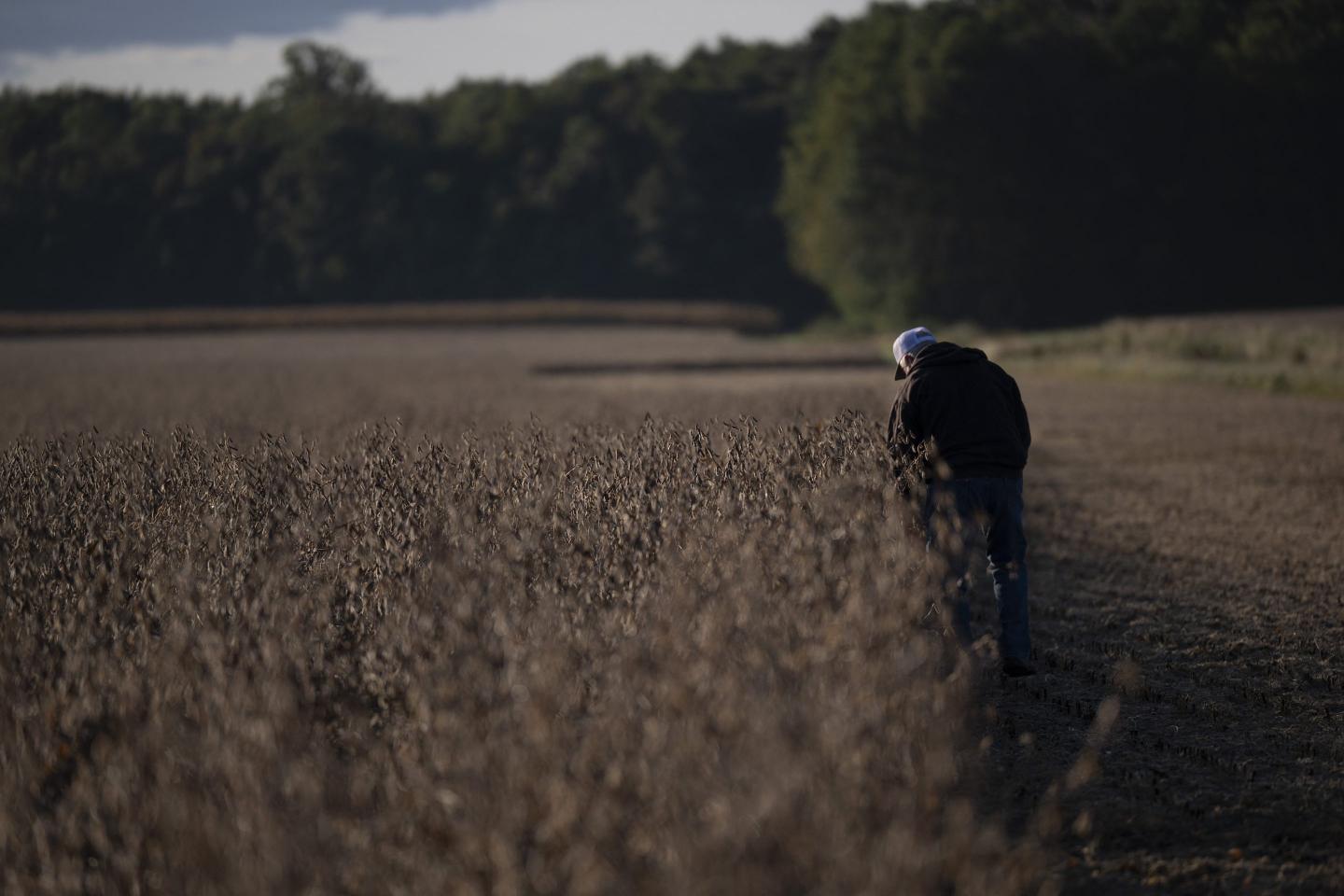
American farmers entered the spring planting season knowing fertilizer would be more expensive, fuel would be costly, and labor would be short. With the growing season now in full swing, they can add a record-setting drought and scarce water supplies to that list of headaches.
An overlapping series of headwinds—ranging from climate to economics and geopolitics—have made farming in the U.S. an exceptionally brutal profession in recent months. The headaches started last year when the Trump administration’s sweeping tariff regime warped the country’s trade policy, raising input costs for farmers and crowding out international buyers. This year, the war in the Middle East has caused the global fuel and fertilizer trade to sputter, further squeezing farmers’ margins.
And as spring continues, 61% of the continental U.S. is under moderate to exceptional drought conditions, according to NOAA, including 97% of the Southeast and two-thirds of the western U.S. For farmers, the upshot is reduced yields and potentially failed harvests. For everyone else, the towering pile of crises likely means higher food prices for the rest of the year.
“What’s unique about the current moment is that you have this perfect storm of factors,” David Ortega, an agricultural economist at Michigan State University, told Fortune.
An unseasonable hit
What makes the current drought stand out more than anything is its timing. Farmers are accustomed to dealing with sweltering temperatures and dry conditions in the summer, but not this early in the year. Last month was the warmest March on record.
The drought has spread over huge portions of the country’s agricultural land.
“It’s unusually dry in various parts of the country,” Ariel Ortiz-Bobea, a resource economist at Cornell University, told Fortune. “It’s been hitting hard in the Central Plains and in parts of the South, all along the Cotton Belt.”
Huge swaths of staple crops in the South and the Midwest are under drought conditions, according to NOAA, including nearly 70% of all U.S. winter wheat production, 29% of soybeans, and 26% of corn.
Drought conditions can be lethal to farming as they sap moisture out of the air and soil. Crops are most vulnerable around this time of year, Ortiz-Bobea said, and a lack of moisture this early in the season can stunt their growth, prevent pollination, and lower yields later on. And because of an unusually warm winter in the West, farms are also facing low levels of snowpack, the seasonal accumulation of slow-melting snow and ice that acts as a natural freshwater reservoir to help farmers weather the naturally dry summer season.
And this summer might end up even warmer than usual in some parts of the country. There is a high likelihood the U.S. will be blanketed by an El Niño later this year, a cyclical climate phenomenon that can shift temperature and rainfall patterns across the country. These events typically bring warmer temperatures to the northern U.S. and cooler days to the South, potentially—but not always—accompanied by wetter conditions. A strong El Niño would mean warmer temperatures across parts of the U.S., which might suck even more moisture out of the air, Ortiz-Bobea said.
Cascading effects
Challenging weather conditions add on to what was already a troubled year in the U.S. agricultural sector.
For months, farmers have dealt with steadily rising input costs—required expenses including fertilizer, livestock feed, labor, and fuel. President Donald Trump’s tariffs were an early disrupter, as fertilizers were quickly drawn into the trade war between the U.S. and Canada, saddling farmers with higher costs.
Those conditions have persisted this year as shipping ground to a halt in the Strait of Hormuz, the critical Middle Eastern waterway Iran has exerted control over during its war with the U.S. and Israel, and a chokepoint for one-third of global fertilizer shipments. A survey of 5,700 farmers published last week by the American Farm Bureau Federation found that around 70% of farmers cannot afford the fertilizer they need for the season.
The other pressure point has been fuel, prices for which have soared in the U.S. as one-fifth of the world’s oil supply is locked up in the Persian Gulf as long as the strait remains closed to most shipping traffic. The closure has been particularly painful for diesel users, including farmers operating heavy machinery.
The extent to which the drought impacts crop yields will most likely depend on how long conditions last, but farmers are already reeling from the consequences of these higher input costs.
“What I think we’re going to see is a one-two punch of higher energy prices and higher fertilizer costs,” Richard Volpe, an agricultural economist at California Polytechnic State University and a former researcher at the USDA’s Economic Research Service, told Fortune.
“We’re feeling energy now,” he said. “Then as we get into late summer and into the fall, that’s where we’re really going to start seeing the impact of the higher fertilizer costs.”
The multitude of overlapping challenges is already causing food prices to rise. While tariff pain was partially contained to specific categories of food, rising fuel and fertilizer prices promise across-the-board increases, Volpe said. The USDA’s latest price forecast, published in March, projected food prices will rise 3.6% in 2026, up from 3.1% predicted in February.
And if drought conditions persist to the point that crops start failing, reduced yields could lead to higher prices for livestock feed, snowballing into more expensive meat and dairy products for years. Today, beef inflation rapidly outpaces regular food inflation due, in part, to severe drought conditions starting in 2022 that raised feed prices and discouraged farmers from breeding cattle.
Michigan State’s Ortega said longer, unseasonable, and more severe droughts are becoming more frequent partly because of human-induced climate change. Farmers have some protection from adverse weather in the form of crop insurance, when the government compensates for failed harvests and lost revenue. But if fuel or fertilizer become too expensive, farmers are often on their own. Higher input costs and food prices can follow, and the whole country ends up on the hook.
“You can ensure yields, you can ensure revenue. But you’re not insuring against these costs,” Ortiz-Bobea said. “It’s kind of an unprecedented confluence of things. Some naturally occurring, some geopolitical, and then some domestic policy that is all kind of converging.”