• Home
  • Latest
  • Fortune 500
  • Finance
  • Tech
  • Leadership
  • Lifestyle
  • Rankings
  • Multimedia
EnvironmentData centers

Data centers are dealing hidden damage to environmental and public health—costing the economy $25 billion every year

By
Tristan Bove
Tristan Bove
Contributing Reporter
Down Arrow Button Icon
By
Tristan Bove
Tristan Bove
Contributing Reporter
Down Arrow Button Icon
April 21, 2026, 1:31 PM ET
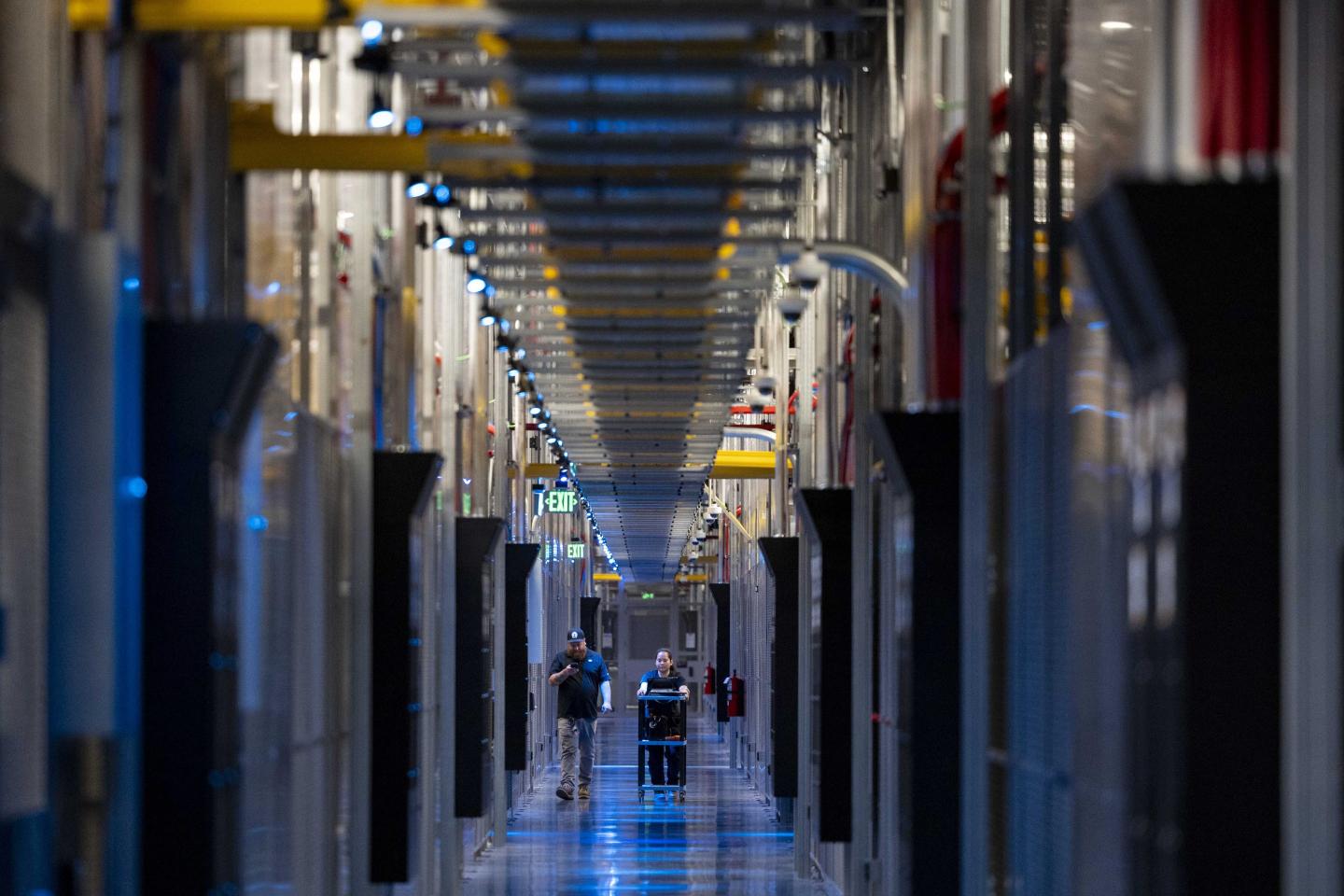
The inside of a data center in Ashburn, VA.
Inside a data center in Ashburn, Va.Amanda Andrade-Rhoades—The Washington Post/Getty Images

Data centers carry a hidden cost that dwarfs their price tag, according to new research. It’s not money. It’s the health of Americans living near them.

Recommended Video

In North America, the sprawling server farms used to train and run artificial intelligence models received a $47 billion investment surge last year, building out everything from cooling equipment to plumbing. The tech companies at the center of the data center craze, such as Meta and Google, took out $182 billion in loans last year to fund their splurge, double what they borrowed in 2024.

One of the primary criticisms of the data center construction craze has been its environmental effect, including the facilities’ impact on water, land, and electricity use. But that cost might also directly affect local residents and their health, according to findings from a National Bureau of Economic Research working paper published earlier this month.

The analysis of around 2,800 operational data centers was authored by Nicholas Muller, an economist at Carnegie Mellon University. Muller tracked data centers’ electricity needs last year and found how much air pollution and additional planet-warming greenhouse gases local grids generated to supply that demand. The author derived indicators, such as the risk of premature mortality associated with data centers’ electricity needs, and converted those measurements into dollar amounts using standard estimates, such as the social cost of carbon, which measures the economic damage of each additional ton of carbon released into the atmosphere.

The result is that data centers’ environmental damage last year cost the economy at large $25 billion, of which $3.7 billion is directly tied to AI activities in data centers. This price tag represents an externality—an indirect consequence of economic activity that imposes costs on third parties not directly involved in the original activity. Rather than reflecting an increase in day-to-day medical expenses or higher taxes to subsidize a greater need for care, Muller’s analysis boils down the cost of premature deaths tied to the environmental impact of data centers, assigning an economic value to the resulting shortened life expectancy.

“In the context of data center power consumption, the external costs from power generation are borne by consumers exposed to PM2.5,” Muller wrote, referring to inhalable particulate matter that can carry severe health risks for local communities, including lung disease, heart conditions, and in some cases higher rates of premature mortality. 

The impact of additional greenhouse gases, meanwhile, “manifest many years following emission, and hence, reflect an externality borne by future generations,” he added.

Data center winners and losers

Data centers aren’t delivering the widespread economic benefits that were promised to the communities hosting them. 

In the U.S., towns and counties have locked horns over the past few years, looking to attract data-center-shaped investment to their municipalities. In addition to the immediate employment boost for tradespeople—including construction workers, electricians, and plumbers—local governments have been enticed by the impressive tax revenues on offer. Between taxes paid on property and equipment, data centers are increasingly the single largest local taxpayer. Last year, a PwC report found that the data center industry’s total contribution to government revenues—including federal, state, and local taxes—rose from $66.2 billion in 2017 to $162.7 billion in 2023.

But those receipts have been at least somewhat minimized by the lavish tax breaks local governments have granted to data center developers. That’s in spite of the fact that data center construction rarely leads to a permanent rise in local employment. The race to offer data center operators the most appealing tax incentive may end up being a race to the bottom, as the strategy might already be losing local and state governments large sums of money. 

At least 10 states are losing more than $100 million a year in revenue owing to data center tax breaks, according to an analysis published earlier this month by Good Jobs First, a progressive advocacy and economic research group. The report noted that of the dozens of states currently offering tax incentives to data centers, only 14 do not disclose revenue losses. 

Local governments are also contending with declining public opinion regarding data centers, which many Americans blame for the billions of dollars in price hikes electrical utilities requested last year. There are many reasons for higher utility prices—including the costs of maintaining an aging grid, which started rising long before the AI infrastructure boom—but data centers have emerged as a lightning rod in the country’s widespread affordability crisis. 

Muller’s analysis isn’t alone in attempting to uncover the hidden costs of data centers. Emissions generated from a single data center in northern Virginia that uses on-site power generation might be costing anywhere between $53 million and $99 million in annual health damages, according to a February study commissioned by the Piedmont Environmental Council, a regional nonprofit.

That Virginia facility is located in what has been termed “data center alley,” a dense agglomeration of some 200 facilities in a highly populated corner of the state. Local residents have voiced concern over the massive build-out, citing excessive noise pollution and electricity bills that have gone up more than 250% in neighborhoods close to data centers, according to Bloomberg.

The geographic concentration of data centers means that indicators such as public or environmental health costs tend to vary widely by state. Muller’s study, in fact, found that Virginia and Texas, another data center hotspot, together account for around 30% of the $25 billion in health costs stemming from the build-out, meaning that the large data center buildup in those states is responsible for a significant share of the shared cost to public health.

Muller argued that the public health costs tied to data centers might prove minimal if AI does indeed transform the economy. If AI sparks in a 1% rise in GDP, he calculated, data centers’ environmental cost would represent only 1% of that increased output. Even if AI only leads to a 0.1% GDP boost, the externality would be worth around 12% of the extra productivity.

But AI has yet to deliver on its promises of economic transformation, and public opinion toward the technology and data centers is starting to sour. Until AI leads to a productivity boom that lifts the economy with it, tech companies will reckon with the fact that the most visible impact of data centers so far has been their physical presence and an environmental toll that might grow even larger. Muller calculated that, in the near term, the environmental externalities associated with data centers could rise a further 85%.

The Fortune 500 Innovation Forum will convene Fortune 500 executives, U.S. policy officials, top founders, and thought leaders to help define what’s next for the American economy, Nov. 16-17 in Detroit. Apply here.
About the Author
By Tristan BoveContributing Reporter
LinkedIn iconTwitter icon
See full bioRight Arrow Button Icon

Latest in Environment

Finance
Lorem ipsum dolor sit amet, consectetur adipiscing elit, sed do eiusmod tempor incididunt ut labore et dolore magna aliqua. Ut enim ad minim veniam
By Fortune Editors
October 20, 2025
Finance
Lorem ipsum dolor sit amet, consectetur adipiscing elit, sed do eiusmod tempor incididunt ut labore et dolore magna aliqua. Ut enim ad minim veniam
By Fortune Editors
October 20, 2025
Finance
Lorem ipsum dolor sit amet, consectetur adipiscing elit, sed do eiusmod tempor incididunt ut labore et dolore magna aliqua. Ut enim ad minim veniam
By Fortune Editors
October 20, 2025
Finance
Lorem ipsum dolor sit amet, consectetur adipiscing elit, sed do eiusmod tempor incididunt ut labore et dolore magna aliqua. Ut enim ad minim veniam
By Fortune Editors
October 20, 2025
Finance
Lorem ipsum dolor sit amet, consectetur adipiscing elit, sed do eiusmod tempor incididunt ut labore et dolore magna aliqua. Ut enim ad minim veniam
By Fortune Editors
October 20, 2025
Finance
Lorem ipsum dolor sit amet, consectetur adipiscing elit, sed do eiusmod tempor incididunt ut labore et dolore magna aliqua. Ut enim ad minim veniam
By Fortune Editors
October 20, 2025

Most Popular

Finance
Lorem ipsum dolor sit amet, consectetur adipiscing elit, sed do eiusmod tempor incididunt ut labore et dolore magna aliqua. Ut enim ad minim veniam
By Fortune Editors
October 20, 2025
Finance
Lorem ipsum dolor sit amet, consectetur adipiscing elit, sed do eiusmod tempor incididunt ut labore et dolore magna aliqua. Ut enim ad minim veniam
By Fortune Editors
October 20, 2025
Finance
Lorem ipsum dolor sit amet, consectetur adipiscing elit, sed do eiusmod tempor incididunt ut labore et dolore magna aliqua. Ut enim ad minim veniam
By Fortune Editors
October 20, 2025
Finance
Lorem ipsum dolor sit amet, consectetur adipiscing elit, sed do eiusmod tempor incididunt ut labore et dolore magna aliqua. Ut enim ad minim veniam
By Fortune Editors
October 20, 2025
Finance
Lorem ipsum dolor sit amet, consectetur adipiscing elit, sed do eiusmod tempor incididunt ut labore et dolore magna aliqua. Ut enim ad minim veniam
By Fortune Editors
October 20, 2025
Finance
Lorem ipsum dolor sit amet, consectetur adipiscing elit, sed do eiusmod tempor incididunt ut labore et dolore magna aliqua. Ut enim ad minim veniam
By Fortune Editors
October 20, 2025
Fortune Secondary Logo
Rankings
  • 100 Best Companies
  • Fortune 500
  • Global 500
  • Fortune 500 Europe
  • Most Powerful Women
  • Future 50
  • World’s Most Admired Companies
  • See All Rankings
Sections
  • Finance
  • Fortune Crypto
  • Features
  • Leadership
  • Health
  • Commentary
  • Success
  • Retail
  • Mpw
  • Tech
  • Lifestyle
  • CEO Initiative
  • Asia
  • Politics
  • Conferences
  • Europe
  • Newsletters
  • Personal Finance
  • Environment
  • Magazine
  • Education
Customer Support
  • Frequently Asked Questions
  • Customer Service Portal
  • Privacy Policy
  • Terms Of Use
  • Single Issues For Purchase
  • International Print
Commercial Services
  • Advertising
  • Fortune Brand Studio
  • Fortune Analytics
  • Fortune Conferences
  • Business Development
  • Group Subscriptions
About Us
  • About Us
  • Editorial Calendar
  • Press Center
  • Work At Fortune
  • Diversity And Inclusion
  • Terms And Conditions
  • Site Map
  • About Us
  • Editorial Calendar
  • Press Center
  • Work At Fortune
  • Diversity And Inclusion
  • Terms And Conditions
  • Site Map
  • Facebook icon
  • Twitter icon
  • LinkedIn icon
  • Instagram icon
  • Pinterest icon

Latest in Environment

Photo of a BYD Sealion 5 DM-i plug-in hybrid
EnergyElectric vehicles
How the Iran energy crisis is supercharging Southeast Asia’s EV transition
By Angelica AngApril 21, 2026
1 hour ago
Two Halliburton employees, clad in red coveralls, work at a pressure pumping, or fracking, operation in the Permian Basin.
EnergyIran
Halliburton CEO: U.S. oil is in the ‘early innings’ of a rebound—and a drilling ramp-up is coming
By Jordan BlumApril 21, 2026
2 hours ago
A soybean farmer inspects his crops in Maryland
Environmentfarming
Tariffs, war, and now a historic drought have converged into a ‘perfect storm’ for U.S. farmers and food prices
By Tristan BoveApril 21, 2026
5 hours ago
The inside of a data center in Ashburn, VA.
EnvironmentData centers
Data centers are dealing hidden damage to environmental and public health—costing the economy $25 billion every year
By Tristan BoveApril 21, 2026
5 hours ago
Scientists are burning homes to protect them in wildfires: ‘We crash test houses’
Environmentwildfires
Scientists are burning homes to protect them in wildfires: ‘We crash test houses’
By The Associated Press, Jeffrey Collins and Seth BorensteinApril 21, 2026
8 hours ago
Signs opposing a proposed data center in Monterey Park, CA.
AIData centers
Half of all new electricity demand in the U.S. last year came from data centers—just as public opinion of them plummets
By Tristan BoveApril 20, 2026
1 day ago

Most Popular

$166 billion in tariff refunds just became available, but small businesses may already be at a disadvantage
Law
$166 billion in tariff refunds just became available, but small businesses may already be at a disadvantage
By Sasha RogelbergApril 20, 2026
1 day ago
Jeff Bezos once gave Eva Longoria and the admiral behind Osama bin Laden's capture $100 million—but she says you don't need wealth to give back
Success
Jeff Bezos once gave Eva Longoria and the admiral behind Osama bin Laden's capture $100 million—but she says you don't need wealth to give back
By Orianna Rosa RoyleApril 21, 2026
15 hours ago
Meet John Ternus, the 51-year-old former swimming champ who will succeed Tim Cook as Apple CEO
Big Tech
Meet John Ternus, the 51-year-old former swimming champ who will succeed Tim Cook as Apple CEO
By Dave Smith and Fortune EditorsApril 20, 2026
1 day ago
This talent CEO says laid-off tech workers are ignoring a $300K ‘white-collar trade job’ with 81K openings a year
Economy
This talent CEO says laid-off tech workers are ignoring a $300K ‘white-collar trade job’ with 81K openings a year
By Jake AngeloApril 20, 2026
1 day ago
Current price of silver as of Monday, April 20, 2026
Personal Finance
Current price of silver as of Monday, April 20, 2026
By Joseph HostetlerApril 20, 2026
1 day ago
Thousands of CEOs admit AI had no impact on employment or productivity—and it has economists resurrecting a paradox from 40 years ago
AI
Thousands of CEOs admit AI had no impact on employment or productivity—and it has economists resurrecting a paradox from 40 years ago
By Sasha RogelbergApril 19, 2026
2 days ago

© 2026 Fortune Media IP Limited. All Rights Reserved. Use of this site constitutes acceptance of our Terms of Use and Privacy Policy | CA Notice at Collection and Privacy Notice | Do Not Sell/Share My Personal Information
FORTUNE is a trademark of Fortune Media IP Limited, registered in the U.S. and other countries. FORTUNE may receive compensation for some links to products and services on this website. Offers may be subject to change without notice.