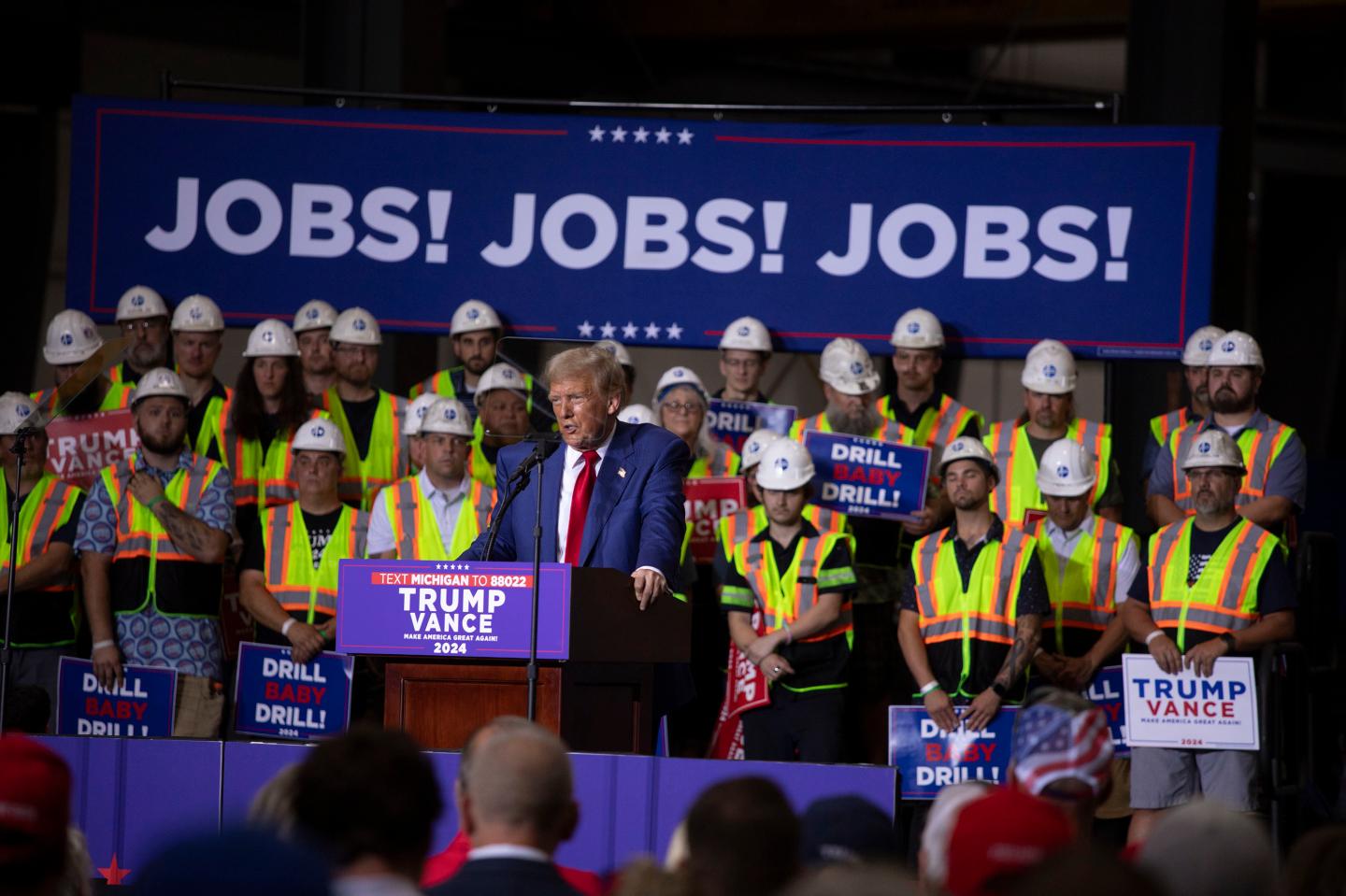
As this year’s State of the Union made clear, President Trump places manufacturing — and tariffs — at the center of his economic agenda. Even with the Supreme Court striking down the IEEPA tariffs, other tariffs, including Section 232 tariffs on steel and aluminum, are here to stay. In fact, last week the United States Trade Representative announced the initiation of its first investigation under Section 301 of the Trade Act of 1974 with the stated aim of replacing the IEEPA tariff regime.
President Trump’s goal of ushering in the greatest manufacturing era in American history remains intact, but the fatal flaw of the administration’s current tariff strategy is that it is making it more expensive to manufacture in America.
Trump allies, including Oren Cass at American Compass, argue that tariffs and reshoring are essential to securing supply chains and rebuilding America’s manufacturing base. Cass recently told the Financial Times that tariffs are strategic levers to restore industrial capacity. Michael Lind, in his essay “So What If Tariffs Are Taxes?”, portrays tariffs as a public good that can reassert national control over markets. Robert Lighthizer, Trump’s former trade representative, defends tariffs as central to safeguarding U.S. manufacturing. These arguments carry populist appeal, but they falter when confronted with the economics of manufacturing and the realities of global supply chains.
Cass and Lind suggest that reshoring can be accomplished swiftly. But the equipment manufacturing industry, which I advocate on behalf of, demonstrates otherwise. Supply chains are vast, intricate, and global. Companies operate on multi-year investment cycles, and suppliers cannot be uprooted overnight. Attempting to force rapid reshoring risks bottlenecks, shortages, and inefficiencies that weaken U.S. equipment manufacturers rather than strengthen them. The Trump administration has wisely provided glide paths for industries facing regulatory changes; reshoring requires similar patience, not blunt instruments.
Tariffs, meanwhile, raise the cost of U.S. manufacturing. Steel and aluminum tariffs, along with levies on derivative components, have already inflated input costs for American equipment manufacturers. The United States is already the highest-cost producer of heavy equipment globally, and additional tariffs only exacerbate this disadvantage. Cass and Lind argue that tariffs level the playing field, but in practice they make U.S.-made equipment less competitive both at home and abroad. Lighthizer’s defense of tariffs as a bulwark against globalization ignores a fundamental reality: higher costs erode competitiveness.
Export competitiveness suffers as well. Higher input costs make U.S. goods less attractive in foreign markets, forcing manufacturers to either absorb losses or relocate production abroad to remain competitive. This dynamic undermines the President’s vision of global manufacturing leadership and his claim to be the “Affordability President.” Cass, Lind, and Lighthizer frame tariffs as tools to reduce deficits, but in practice they risk expanding them by driving production offshore.
Even if reshoring could be swiftly accomplished through tariffs — a premise many economists dispute — expanding domestic manufacturing capacity runs into a more fundamental constraint: the nation’s workforce. The U.S. manufacturing sector is already struggling to fill open positions. As of late 2025, between 394,000 and 449,000 manufacturing jobs remain unfilled nationwide, according to U.S. Department of Labor and Federal Reserve data. In equipment manufacturing specifically, vacancies remain high, with more than 85,000 job openings. A Deloitte study forecasts a shortfall of 2.1 million manufacturing workers by 2030 — a gap large enough to cost the U.S. economy as much as $1 trillion in lost output.
This looming deficit is driven in part by accelerating retirements among Baby Boomers and Generation X, who make up a disproportionate share of today’s skilled industrial workforce. Compounding the challenge, current and anticipated immigration policies are shrinking the pool of available workers at precisely the moment labor demand is rising. With immigration now the primary driver of growth in the working-age population, these declines significantly constrain labor supply across industrial sectors. It will take far more than tariffs to rebuild domestic manufacturing. Meaningful increases in workforce availability — through training, retention, workforce participation strategies, and immigration reforms — are essential before the U.S. can fill today’s job openings, let alone the additional labor required to support large-scale reshoring.
President Trump’s vision of industrial strength can be realized through investment in innovation, workforce development, and critical new infrastructure. Advanced manufacturing technologies, automation, and national energy dominance can give U.S. equipment manufacturers a decisive edge. Expanding apprenticeships, vocational training, and STEM education will ensure a skilled and growing workforce ready for modern industry. Modernizing ports, rail, and digital infrastructure will reduce logistical costs and enhance supply chain efficiency. Strategic partnerships with allies can diversify supply chains without resorting to blunt tariffs. These measures align with President Trump’s goals while avoiding the pitfalls of Cass, Lind, and Lighthizer’s protectionism.
President Trump is right to champion manufacturing as the backbone of American strength. But tariffs and forced reshoring are costly detours. Global supply chains cannot be redirected overnight. Tariffs raise input costs, and higher costs erode American competitiveness domestically and abroad. Cass, Lind, and Lighthizer offer patriotic rhetoric, but their solutions undermine the very industries they seek to protect. To truly make American manufacturing great again, the administration should double down on building strength through competitiveness, not barriers.
The opinions expressed in Fortune.com commentary pieces are solely the views of their authors and do not necessarily reflect the opinions and beliefs of Fortune.