As an 8-year old, Demis Hassabis could just barely see the stars.
The astonishingly prodigious child of bohemian parents, Hassabis grew up in North London in the 1980s. And through the city haze, every now and again, Hassabis could see one constellation—Orion, named for Greek mythology’s formidable hunter and for centuries a guide to sailors and farmers. Some 40 years later, it remains Hassabis’s favorite constellation, in part for its connection to the immortal: Even the ancient Egyptians venerated Orion.
“First of all, it’s a bit random, these patterns of stars all lined up, as we look up from Earth,” Hassabis says. “And secondly, think about Orion’s Belt: It’s three stars that are just randomly configured. But they mean something because we are using our consciousness to interpret it.”
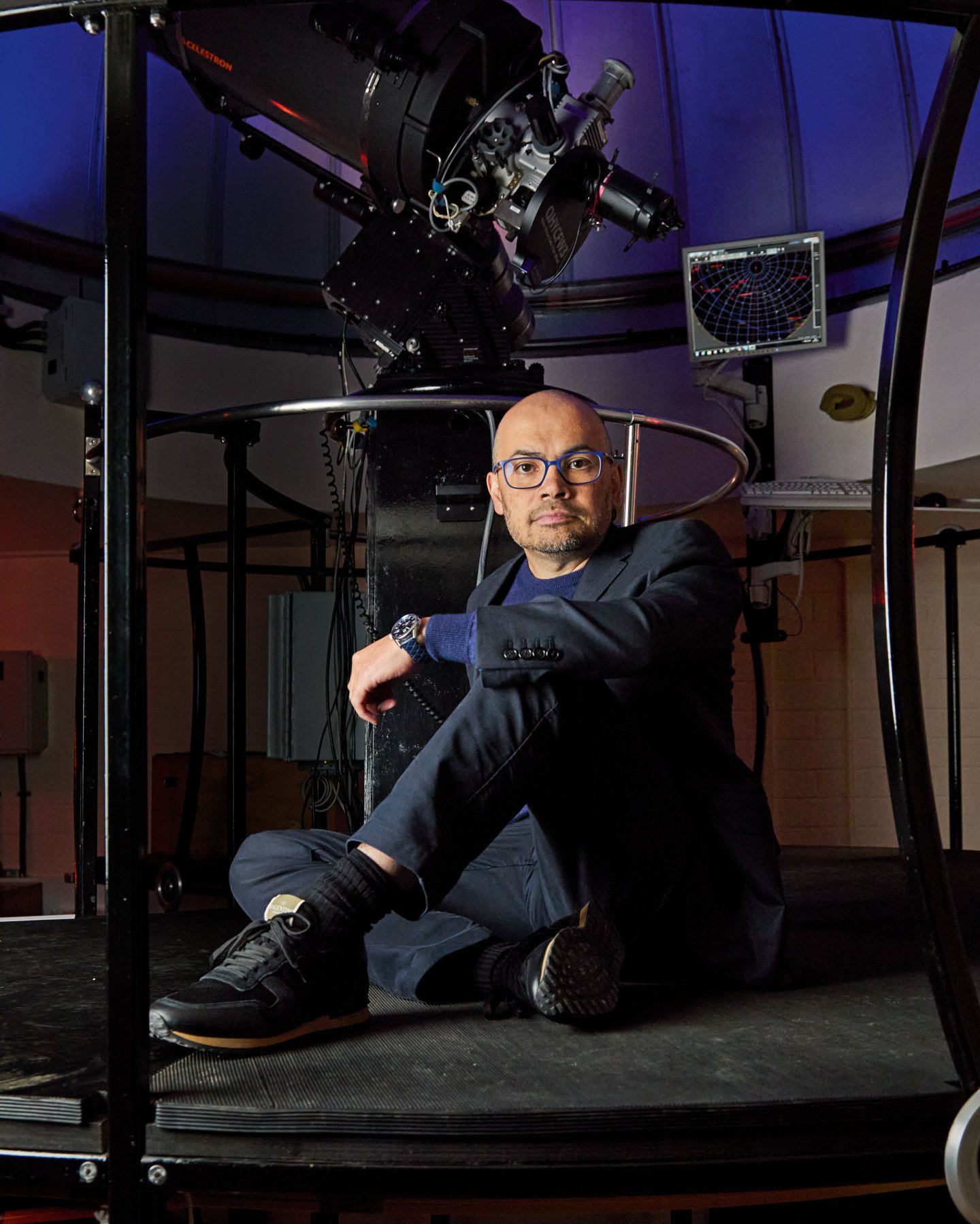
Hassabis and I are meeting not far from where he grew up—at the UCL Observatory, near telescopes more than a century old and still raised to the sky. It’s a fitting place to talk about vastness, not just of the stars but of ourselves.
It’s also a fitting place to talk with someone who’s famous for devoting his own consciousness to finding meaning in vast fields of data. Hassabis is one of the most important AI researchers and entrepreneurs of our time: He’s the cofounder of DeepMind, the pioneering AI lab that was acquired by Google in 2014. In 2016, DeepMind’s AlphaGo marked a seminal moment in AI by defeating the world’s best player in Go, one of the world’s most challenging two-player strategy games. More than a decade later, Hassabis leads Google’s core AI operations, helping to steer the giant at a time when it’s clawing its way to the front of the competitive pack on the strength of its Gemini 3 model.
But his most consequential work to date, perhaps, is the development of AlphaFold 2—an AI system, unveiled by DeepMind in 2020, that could successfully predict the three-dimensional structures of proteins from their DNA sequences. AlphaFold 2 was a generational scientific achievement with implications for better understanding and even curing diseases like Parkinson’s, muscular dystrophy, and certain cancers, all of which stem from misfolded or malfunctioning proteins. It won Hassabis and DeepMind scientist John Jumper the 2024 Nobel Prize in Chemistry; that same year, Hassabis was knighted.
To Sir Demis, it’s all connected. His early fascination with the skies has through lines to AI, finding order and meaning amid seeming randomness.
“The night sky is a mystery that’s staring us in the face all the time,” he says. “It’s a constant reminder of the bigger questions. I think that is how I got into vastness…You’ve got to find patterns in huge amounts of data, or find the right move in huge amounts of possibilities.”
Hassabis, for the past few years, has been devoting an important share of his 100-hour workweek to one of the world’s greatest pattern-recognition problems: drug discovery. In 2021, with funding from Google parent Alphabet, Hassabis started Isomorphic Labs, an AI drug-design company that aims to create new, breakthrough medicines for some of the most “undruggable” diseases—with the hyper-ambitious goal, as the startup’s splashy tagline puts it, to “solve all disease.”
Isomorphic has been quiet since launch and has yet to move a drug to the make-or-break clinical trial phase. But recent moves suggest that milestone isn’t far off, and its backers argue that Isomorphic’s approach will give it an edge once it enters the fray. The startup recently opened its doors to Fortune; I spent three days talking with its executives and scientists about what’s arguably AI’s biggest opportunity and challenge.
“We’re trying to build a system, a process…to do maybe dozens of drugs each year.”
Demis Hassabis, Founder and CEO, Isomorphic Labs
“A biotech startup might do one or two drugs its entire corporate life,” says Hassabis. “But we’re trying to build a system, a process, and all the technology to do maybe dozens of drugs each year. That seems crazy right now, but I think eventually, over the next 10 to 20 years, we could get to finding a solution to all disease…if we have a process that can find these needles in a haystack.”
Drug discovery is more like finding a needle in Iowa: It’s a process of testing potentially therapeutic compounds against the infinite variables of biology, characterized by continual setbacks and an astronomical failure rate.
Though it addressed only a small part of that process, AlphaFold offered hope for a break from that reality—some of the first seismic proof that AI could take a brute-force, grind-it-out problem in medical science and compress a process that once took years into minutes. After that breakthrough, Hassabis founded Isomorphic with a simple idea: What if you could turn AlphaFold into a full-fledged drug-design engine?
The resulting spinoff aims to succeed in a space where many have failed by focusing on structure: using AI to generate detailed molecular-level predictions about the interactions of drugs with their targets, thus stripping out much of the time-consuming trial and error that defines the pre-clinical-trial stages of drug discovery—and elevating the brash notion of “solving” disease to the realm of the possible.
After its spinoff, Isomorphic initially raised money from Alphabet, falling into the behemoth’s “Other Bets” bucket. In March 2025, the company raised an additional $600 million, in a Series A led by Joshua Kushner’s Thrive Capital that included participation from Google Ventures, which was involved from the inception. (Isomorphic declined to disclose the valuation.) The bet: that over time, we will design drugs that cure previously intractable diseases like cancer and Alzheimer’s, with new techdriven processes so precise they seem almost magical right now—but that, eventually, will become standard.
“No one would visualize designing an airplane today by hand, nor would you want to fly an airplane designed by hand,” says Thrive Capital partner Vince Hankes. “But all of our drugs are designed like that. In the future, they should all be designed with robust software and intelligence and simulation, just like we design airplanes today.”
Isomorphic’s 300 or so employees are aiming to do just that, with Hassabis as, so to speak, their pilot.
Brutally long odds
There are far more possible chemical compounds than stars in the observable universe—about 10^60, or 10 to the 60th power, according to the latest research. That estimate covers only small, drug-like molecules and may ultimately be low. Figuring out which of those combinations might tame a tumor or dangerous mutation is the task Hassabis and his peers hope to solve with AI.
Throughout most of history, there were very few drugs, and many of the ones that did exist were discovered by accident. (Penicillin, discovered as a result of an accidental mold contamination, is the most famous example.) In the 1960s, drug discovery picked up, as early cancer and cardiovascular treatments emerged. But for much of the 20th century, scientists scoured the chemical universe with a combination of brute force and slowly improving technology. Many chemists spent their careers boiling sludge, running lab tests, and starting from scratch—and usually failing. Even today, according to widely cited industry figures, only one in 20 drug discovery chemists will successfully bring a drug to market during their careers.
“There are lots of different parameters you’re trying to triangulate into one molecule that’s a perfect match for a specific problem,” explains Miles Congreve, chief scientific officer at Isomorphic. “You might find that you’ve got a great target, it’s a potent compound, and it does very well. But there are other things that aren’t right—and you go down a dead end. It’s a bit like Whac-a-Mole.”
Congreve is anomalous among medicinal chemists: He has helped get three cancer drugs to market, including Novartis and Astex Pharmaceuticals’ ribociclib, which treats breast cancer. Industrywide, even getting a drug to clinical trials is often considered a massive win. But as he points out, “Historically, there’s at least a 90% failure rate” on such trials. “Your chances of finding that perfect molecule are infinitesimally small,” agrees Fiona Marshall, president of biomedical research at Novartis.
Those odds help explain just how shocked a globeful of scientists was that AlphaFold 2 worked so well. That breakthrough, in turn, has helped Isomorphic attract talent. Melissa Davis, director of computational biology, says she came aboard precisely because she was intrigued by building on AlphaFold. “People would spend their whole career trying to crystallize one membrane protein,” notes Davis. “All of a sudden, you didn’t have to spend five or six years trying to get a structure for the protein anymore. Any scientist could generate one like that.”
Other top staff have longer histories with Hassabis. Max Jaderberg—who served as Isomorphic’s chief AI officer for four years before being named in November to succeed longtime Hassabis collaborator Colin Murdoch as president—spent seven years at DeepMind developing (among other things) AlphaStar, the first AI to best a human professional at the video game StarCraft II. Jaderberg is prominent among a cohort of DeepMinders who followed Hassabis to Isomorphic (they make up about 11% of the company’s staff).
“It’s humbling when rubber meets the road, with real wet-lab work.”
Max Jaderberg, President, Isomorphic Labs
“It’s always humbling to hear you have medicinal chemists who will do their whole career without creating a single successful drug,” says Jaderberg. “Contrast that with someone like myself, who comes from the AI world where you have to smash the best in the world every six months or you’re dead.” He adds, “It’s humbling when rubber meets the road, with real scientific processes and real wetlab work.”
Getting the right talent is one of Hassabis’s priorities, given that his crammed schedule limits his time at Isomorphic: He’s at the startup office one day a week, usually a Tuesday, when he meets with its executive team and sets priorities for the company’s technical direction.
Hassabis jokes that he loves managing “high-maintenance geniuses,” and that he’s looking for those with a creative streak. “Any professional scientist will already be very good technically,” says Hassabis. “But then can you come up with a creative new idea, or ask the right question? That’s actually harder. Finding the answer is actually finding the right question.”
Structure first
What Isomorphic calls its structure-first approach is, Jaderberg explains, a choice of generalization over specialization. The startup is focusing on an effort to map more and more of the complex biological constellations of the body, the better to predict how any compound might affect a range of diseases and other biological processes. CTO Sergei Yakneen says it’s all about working toward a precision that once would have seemed unfathomable, like landing a rocket on the side of the moon you can’t see.
Its core technology is a drug-design engine built around a number of proprietary models. The engine incorporates an updated protein-predicting model, plus models for peptides, molecular glues, and antibodies. The data the engine is built on includes a combination of the global Protein Data Bank, the U.K. Biobank, commercially licensed sources, internally generated datasets, and data from partners.
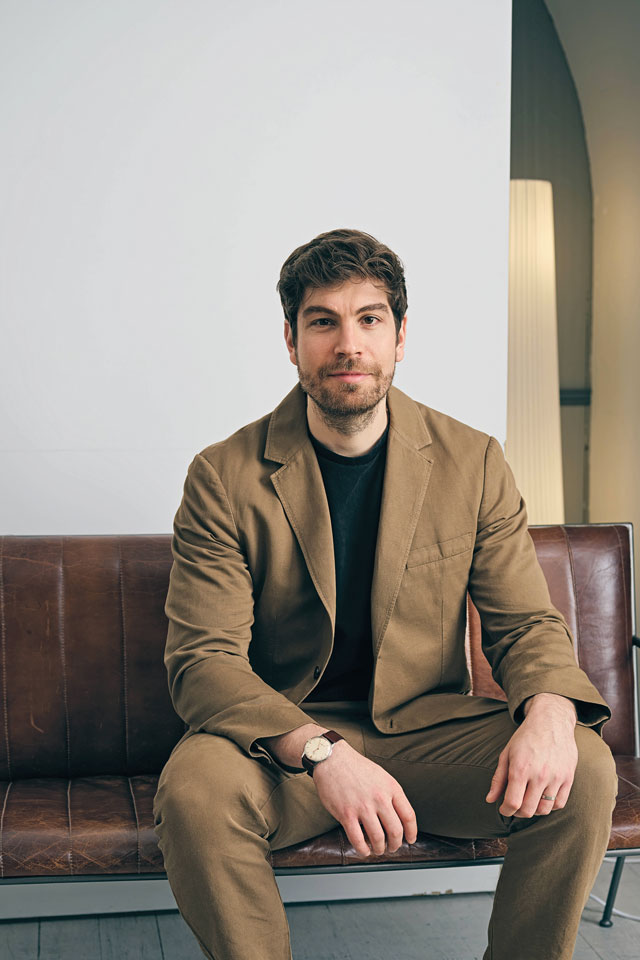
The task is partially squeezing more insight out of existing data— something others have tried to do in the past, often without success, Yakneen acknowledges. “Then, lo and behold,” he adds, “with the right skills, you’re able to build these mind-blowing systems.”
Isomorphic won’t say what diseases it’s targeting in the short term—a secrecy that’s normal in pharma and slightly odd in tech. The company points to its partnerships with pharma giants Eli Lilly and Novartis as evidence of its progress. (The Novartis partnership was expanded in 2025.)
In conversation, however, multiple executives say they’re focused on drugging the undruggable. This is a widely used phrase in drug development that means something relatively specific: tackling protein mutations that are particularly prevalent in pancreatic, lung, and colorectal cancers, along with transcription factors, which are widespread across various cancer types. All of these cancers have hitherto been resistant to treatment, but they’re likely the kinds of codes Isomorphic is most committed to cracking.
Saving five years, or more
Both drug discovery and AI economics are unforgiving. To get a new drug to market, you’ll likely spend more than $2 billion and a decade or more from discovery through clinical trials—only to face that 90% failure rate. In AI, meanwhile, you’re constantly running up against compute woes; there, Isomorphic’s Alphabet backing gives it some deep-pocketed support.
Isomorphic also inhabits a viscerally competitive marketplace: The pressure to be the first startup to bring an AI-driven drug to market is intense. Competitors like Insilico and Recursion are making headway; currently Insilico has several drugs in China-based clinical trials. Isomorphic says it’s moving toward trials, but declines to discuss a timeline. One sign that day is nearer: the June 2025 hiring of chief medical officer Ben Wolf, a precision oncology expert. Wolf is recruiting a Boston-based team. “For this all to work,” he says, “I need a super medicine, something with superior pharmaceutical properties that gives me the ability to test that it works straightforwardly.”
The startup for now is staffed and oriented to focus primarily on the drug-discovery process, not clinical trials or commercialization. On that front, Jaderberg is aware of both the possibilities and the limitations. “We’re always going to have, at least over the midterm, parts of biology that are mysterious to humanity,” he says. The goal, he adds, is to “put scientific processes in place so it’s less like magic, and more like you’re setting up mousetraps to isolate the effects you’re trying to drive.”
Novartis’s Marshall sees a path for AI to speed up discovery and trials by 50%. “I would think you could get to five years’ average time,” says Marshall, adding that most of the savings would come from an improved discovery process. “I can’t see how we’re going to shave off much more than that, because you’ve still got human biology and safety that needs doing” through clinical trials.
There’s a broad sense among medical scientists that AI drug discovery has over the past decade promised more than it can deliver—and Isomorphic is promising a whole lot. When I bring this up to Hassabis, he outlines his philosophy: The idea of “solving disease” is broader and more practical than eliminating illness once and for all. There’s a reason that he doesn’t say “cure.” While you can’t promise no one will ever get sick again, he says, you can develop a systematic, repeatable, and scalable process—powered by advanced AI and technology platforms—for discovering, designing, and optimizing drugs or treatments as needs arise.
“We’ll be building up our fundamental understanding of biology,” Hassabis says. “Hopefully we can come up with something like a virtual cell that is predictive about what would happen if you did certain interventions.”
He reckons that could be possible 10 years from now, which leads to the next question: “How personalized could it get?…You could imagine going into a pharmacy and phenotyping your specific disease. So you know exactly what’s individual to you”—a potentially huge breakthrough in disease treatment.
Thinking about other universes, Hassabis believes, can help us begin to understand the biological one inside us. The word “isomorphic,” after all, refers to two objects that appear different but are similar in structure.
After talking with Hassabis, I walked over to the UCL Observatory’s Fry Telescope, which dates to 1862. Looking through it, I saw Saturn. It takes about 95 minutes for light to travel between that planet and Earth, and it felt surreal to see something so far away, so clearly.
“The universe is set up somehow for science to work,” Hassabis had said. “I feel it almost wants to be understood. Otherwise, why would the scientific method work so well and be so repeatable? Forget AI…why should computers even work? They’re these bits of sand, metal, and electrons moving around. And then something amazing happens.”
The drug discovery process
Identify disease area: Researchers define the disease to target and identify unmet medical needs where new therapies could meaningfully improve patient outcomes.
Target identification and validation: Scientists pinpoint the mechanism driving the disease and confirm that modifying this target would benefit patients. This stage costs about $1 million and can take from three months to three years.
Assay development: Researchers design reliable laboratory tests that can accurately measure whether a compound affects the target in the intended way.
High-throughput screening to hit identification: Millions of compounds are rapidly tested using automated systems. This phase usually costs about $3 million and takes 12 to 18 months.
Hit: A “hit” is a compound that successfully influences the target in early testing. There may be one promising hit—or several dozen.
Hit-to-lead optimization: Scientists refine the initial hits to improve their effectiveness, selectivity, and drug-like properties. This phase typically costs around $3 million and takes 12 to 18 months.
Lead optimization: Researchers further refine the strongest candidate to maximize safety, efficacy, and stability. This high-risk stage takes two to four years and costs between $5 million and $10 million.
Preclinical phase: The drug candidate undergoes laboratory and animal testing to assess safety, toxicity, and effectiveness before human trials. This phase lasts one to three years and costs $10 million to $20 million.
Investigational new drug (IND) application: Developers submit preclinical safety data to the FDA and request permission to begin testing the drug in humans.
Phase I-III clinical trials: The drug is tested in progressively larger groups of patients to evaluate safety, dosage, and effectiveness. Clinical trials can take as long as a decade and cost between $1 billion and $2 billion .
This article appears in the February/March 2026 issue of Fortune with the headline “Google’s AI pioneer and his drug-design moonshot.”