
• Home
  • Latest
  • Fortune 500
  • Finance
  • Tech
  • Leadership
  • Lifestyle
  • Rankings
  • Multimedia

Trendingnow

1

Trump, who has repeatedly called climate change fake, is now threatening Brazil with tariffs over the deforestation of the Amazon

2

Current price of oil as of June 8, 2026

3

'We didn’t see this coming': Wall Street eats its forecasts as stocks sell off globally on fear of AI bubble ahead of SpaceX IPO

1

Trump, who has repeatedly called climate change fake, is now threatening Brazil with tariffs over the deforestation of the Amazon

2

Current price of oil as of June 8, 2026

3

'We didn’t see this coming': Wall Street eats its forecasts as stocks sell off globally on fear of AI bubble ahead of SpaceX IPO
MagazineBonds

Bonds 101: What investors need to know about the ‘shock absorber of the portfolio’

Jeff John Roberts
By
Jeff John Roberts
Jeff John Roberts
Editor, Finance and Crypto
Down Arrow Button Icon
Jeff John Roberts
By
Jeff John Roberts
Jeff John Roberts
Editor, Finance and Crypto
Down Arrow Button Icon
January 29, 2026, 5:00 AM ET
Bratislav Milenković

Many investors regard bonds as the frumpier cousins to stocks. Their prices rarely pop or plummet. They usually deliver a lower return, and—aside from a glamorous cameo in the 1980s thriller Die Hard—they are not part of popular culture in the same way as, say, GameStop or Tesla shares. They are, though, a critical part of any well-managed portfolio, and with the stock market looking particularly frothy, this may be more true than ever.

Recommended Video

On their face, bonds are simple: An investor loans money to a government or company and gets a guaranteed return with interest over a fixed period of time. But compared with what they know about stocks, many investors are less sure of which bonds to buy, or how to buy or evaluate them. Fortune spoke to three experts who walked us through some of the basics around bonds, but also shared a few lesser-known insights.

‘The shock absorber’

In 2025, owners of Nvidia shares enjoyed a gain of around 39%—not quite the eye-popping 171% jump the stock notched in 2024, but a very fine return all the same. Owners of the popular 10-year Treasury bill, meanwhile, settled for an annual take of around 4.5%. This illustration underscores the modest returns that come with bond investing, but it doesn’t reflect years like 2008 and 2020, when the stock market declined around 38% and 19% respectively, while bonds reliably delivered positive single-digit returns.

“Bonds are the shock absorber of the portfolio,” says Allan Roth, a former McKinsey consultant and founder of Wealth Logic, whose tagline is “Dare to be dull.” Roth recommends that every investor own bonds and, in particular, Treasury Inflation Protected Securities, or TIPS, whose payouts fluctuate with the consumer price index to stay ahead of inflation.

Another advantage: There’s a clear correlation between the interest rate, or “coupon,” of a bond, and the soundness of the borrower: The greater the perceived risk of default, the higher the rate. Richard Carter, vice president of fixed-income products at Fidelity, notes that bonds carry the additional benefit of being predictable. “You know when the coupon will be paid and when the bond will be paid back. That is eternal and appealing, especially for people older in life looking for income.” 

Bonds are not totally predictable, of course. Their prices can tumble if the issuer’s finances weaken, creating problems for those who want to sell before the duration expires. If the issuer becomes insolvent, investors risk losing their capital. And then there are black swan years like 2022, when bonds had their worst year ever because of a sudden spike in inflation that eclipsed the coupon rate of most bonds. (It’s worth highlighting, though, that stocks fared even worse that year.) 

Most bonds, like stocks, are highly liquid and easy to purchase. Investors can use brokerage platforms like Fidelity and Schwab to buy bonds on the primary or secondary market for low or no fees. They can also buy ETFs with very low fees that invest in a mix of bonds, while those chasing higher returns can consider a more actively managed fund.

Which bonds to buy?

Despite recent anxiety that U.S. debt levels are becoming unsustainable, bond experts emphasize that Treasury bills remain rock-solid investments and should be the cornerstone of any bond portfolio. While yields on 10-year Treasuries have dipped below the 5% or more offered two years ago, they’re still comfortably above inflation.

Roth of Wealth Logic advises investors to buy T-bills of short and medium duration. Kathy Jones, chief fixed-income strategist at Schwab, endorses the popular “laddering” strategy, which entails buying bonds that mature at different times in order to insulate the investor against fluctuating rates.

Treasury bills also offer an advantage that dividend stocks don’t: Their yields are not subject to local or state income taxes. That makes them especially appealing to residents of high-tax states like New York and California. And income from municipal bonds, or “munis,” issued by cities and other local authorities, is often exempt from federal income tax as well. For those looking to calculate the value of these savings, Fidelity and others provide online calculators that let users see how the tax-advantaged yield compares with other fixed-income products. 

While investors may balk at the thought of holding bonds from fiscal basket cases like Chicago or the state of Illinois, Jones says actual defaults are almost unheard-of, since government entities don’t go out of business. The bigger concern for investors is that advertised yields for munis can be misleading. As Roth explains, brokerages that sell munis can exploit a regulatory loophole that lets them tout too-good-to-be-true rates that reflect a portion of an investor’s initial capital when calculating a muni’s total yield. The upshot: A promised 6% annual return may turn out to be closer to 4%. 

Finally, there are corporate bonds. Those looking for safe and secure returns can purchase bonds from companies rated BBB or higher, or a fund that includes them as part of a broader portfolio; those with more appetite for risk can invest in higher-yielding but lower-graded “junk” bonds. 

Jones said this is an especially good time to consider company bonds since corporate profits have been especially strong. The cautious Roth, however, warns that companies can be prone to abrupt reversals of fortune. “I remember back when GM was ‘safe as America,’” he recalls, only to declare bankruptcy in 2009 during the financial crisis. He says investors should resist the temptation to chase extra yield: “Keep bonds the most boring part of your portfolio.”


Three basic bond buckets

Bonds can be the ultimate portfolio backstop, delivering reliable returns in good times and bad. But which bonds to buy? To play it safe, it’s best to choose bonds whose credit ratings are BBB or better. Here are three popular options:

Treasury bills: The ultimate safe investment, the popular 10-year Treasury typically delivers yields significantly above the inflation rate, while offering the additional advantage of being exempt from state and local income tax. An even better choice may be TIPS—Treasuries that offer a guaranteed rate above inflation.

Municipal bonds: “Munis” can offer a higher return than T-bills, while providing an especially sweet upside: They are not taxable at the state or federal level. But watch out for advertised rates from brokerages that can often exaggerate the real return (see main article).

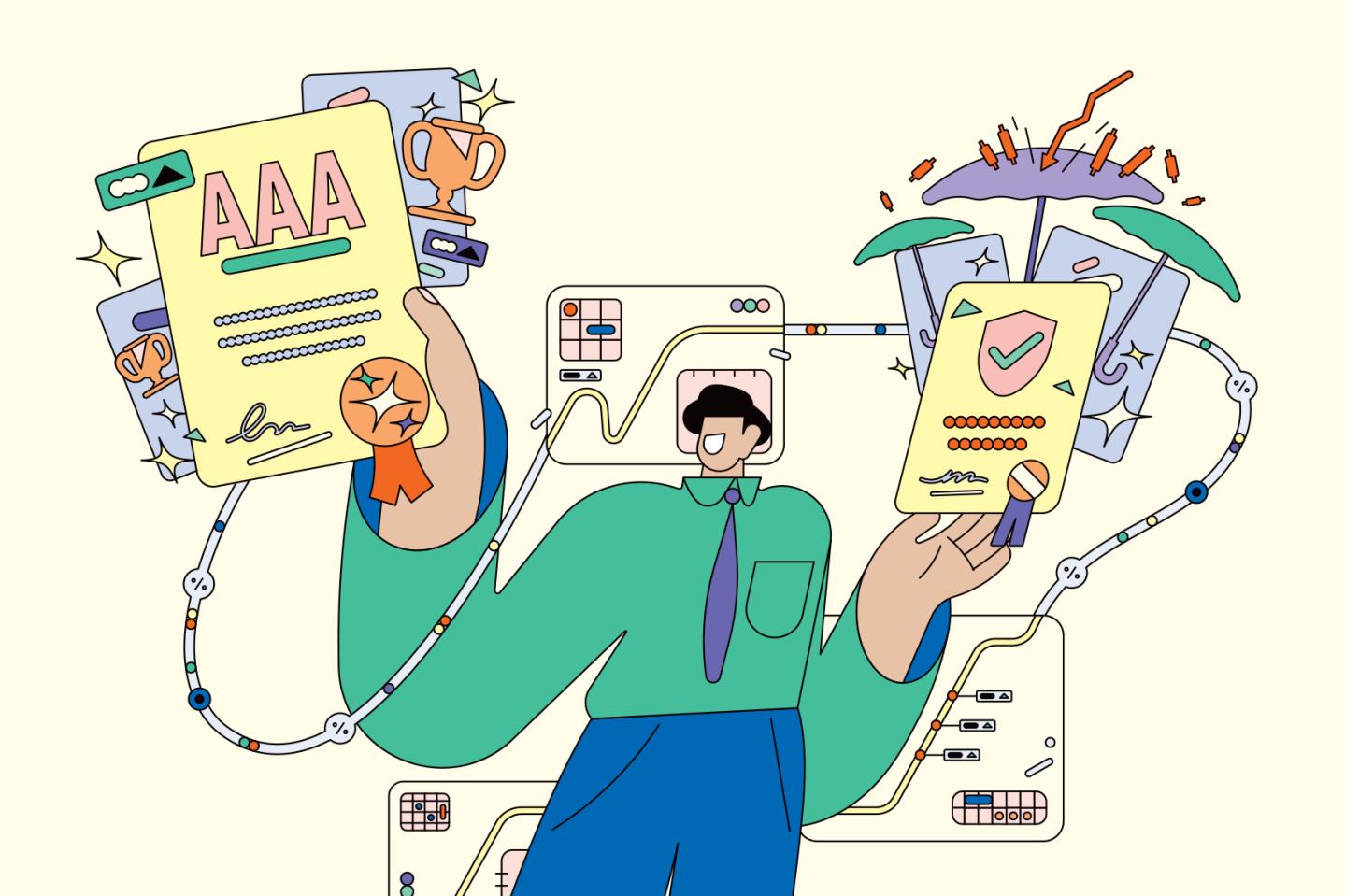
Corporate bonds: For many investors, the likes of Microsoft (AAA rated) and Apple (AA+ rated) look more fiscally sound than many governments; their bonds also often deliver higher yields than “sovereigns.” But be wary: Unlike governments, any company can go out of business.

This article appears in the February/March 2026 issue of Fortune with the headline “Learning to love bonds.”

The Fortune 500 Innovation Forum will convene Fortune 500 executives, U.S. policy officials, top founders, and thought leaders to help define what’s next for the American economy, Nov. 16-17 in Detroit. Apply here.
About the Author
Jeff John Roberts
By Jeff John RobertsEditor, Finance and Crypto
LinkedIn iconTwitter icon

Jeff John Roberts is the Finance and Crypto editor at Fortune, overseeing coverage of the blockchain and how technology is changing finance.

See full bioRight Arrow Button Icon

Latest from the Magazine

Finance
Lorem ipsum dolor sit amet, consectetur adipiscing elit, sed do eiusmod tempor incididunt ut labore et dolore magna aliqua. Ut enim ad minim veniam
By Fortune Editors
October 20, 2025
Finance
Lorem ipsum dolor sit amet, consectetur adipiscing elit, sed do eiusmod tempor incididunt ut labore et dolore magna aliqua. Ut enim ad minim veniam
By Fortune Editors
October 20, 2025
Finance
Lorem ipsum dolor sit amet, consectetur adipiscing elit, sed do eiusmod tempor incididunt ut labore et dolore magna aliqua. Ut enim ad minim veniam
By Fortune Editors
October 20, 2025
Finance
Lorem ipsum dolor sit amet, consectetur adipiscing elit, sed do eiusmod tempor incididunt ut labore et dolore magna aliqua. Ut enim ad minim veniam
By Fortune Editors
October 20, 2025
Finance
Lorem ipsum dolor sit amet, consectetur adipiscing elit, sed do eiusmod tempor incididunt ut labore et dolore magna aliqua. Ut enim ad minim veniam
By Fortune Editors
October 20, 2025
Finance
Lorem ipsum dolor sit amet, consectetur adipiscing elit, sed do eiusmod tempor incididunt ut labore et dolore magna aliqua. Ut enim ad minim veniam
By Fortune Editors
October 20, 2025

Most Popular

Finance
Lorem ipsum dolor sit amet, consectetur adipiscing elit, sed do eiusmod tempor incididunt ut labore et dolore magna aliqua. Ut enim ad minim veniam
By Fortune Editors
October 20, 2025
Finance
Lorem ipsum dolor sit amet, consectetur adipiscing elit, sed do eiusmod tempor incididunt ut labore et dolore magna aliqua. Ut enim ad minim veniam
By Fortune Editors
October 20, 2025
Finance
Lorem ipsum dolor sit amet, consectetur adipiscing elit, sed do eiusmod tempor incididunt ut labore et dolore magna aliqua. Ut enim ad minim veniam
By Fortune Editors
October 20, 2025
Finance
Lorem ipsum dolor sit amet, consectetur adipiscing elit, sed do eiusmod tempor incididunt ut labore et dolore magna aliqua. Ut enim ad minim veniam
By Fortune Editors
October 20, 2025
Finance
Lorem ipsum dolor sit amet, consectetur adipiscing elit, sed do eiusmod tempor incididunt ut labore et dolore magna aliqua. Ut enim ad minim veniam
By Fortune Editors
October 20, 2025
Finance
Lorem ipsum dolor sit amet, consectetur adipiscing elit, sed do eiusmod tempor incididunt ut labore et dolore magna aliqua. Ut enim ad minim veniam
By Fortune Editors
October 20, 2025
Fortune Secondary Logo
Rankings
  • 100 Best Companies
  • Fortune 500
  • Global 500
  • Fortune 500 Europe
  • Most Powerful Women
  • World's Most Admired Companies
  • See All Rankings
  • Lists Calendar
Sections
  • Finance
  • Fortune Crypto
  • Features
  • Leadership
  • Health
  • Commentary
  • Success
  • Retail
  • Mpw
  • Tech
  • Lifestyle
  • CEO Initiative
  • Asia
  • Politics
  • Conferences
  • Europe
  • Newsletters
  • Personal Finance
  • Environment
  • Magazine
  • Education
Customer Support
  • Frequently Asked Questions
  • Customer Service Portal
  • Privacy Policy
  • Terms Of Use
  • Single Issues For Purchase
  • International Print
Commercial Services
  • Advertising
  • Fortune Brand Studio
  • Fortune Analytics
  • Fortune Conferences
  • Business Development
  • Group Subscriptions
About Us
  • About Us
  • Press Center
  • Work At Fortune
  • Terms And Conditions
  • Site Map
  • About Us
  • Press Center
  • Work At Fortune
  • Terms And Conditions
  • Site Map
  • Facebook icon
  • Twitter icon
  • LinkedIn icon
  • Instagram icon
  • Pinterest icon

Latest from the Magazine

Inside Trump’s Oval Office deal machine
MagazineDonald Trump
Inside Trump’s Oval Office deal machine
By Alyson ShontellJune 8, 2026
1 day ago
Inside the $9 billion World Cup: How Gianni Infantino built a FIFA-dom with a tight grip on soccer’s biggest global event
MagazineSports
Inside the $9 billion World Cup: How Gianni Infantino built a FIFA-dom with a tight grip on soccer’s biggest global event
By Vivienne WaltJune 4, 2026
5 days ago
Nscale has raised billions to power Europe’s AI ambitions. Now the startup must prove the hype can survive reality
MagazineData
Nscale has raised billions to power Europe’s AI ambitions. Now the startup must prove the hype can survive reality
By Beatrice NolanJune 3, 2026
6 days ago
Intel CEO Lip-Bu Tan.
Magazine250 Years of Innovation
Intel’s new CEO cut management layers in half. The stock is up nearly 500%
By Jeff John RobertsJune 3, 2026
6 days ago
Macy's collage
Magazine250 Years of Innovation
An AI overhaul at Macy’s is fueling the 168-year-old retailer’s turnaround
By Phil WahbaJune 2, 2026
7 days ago
How Kelly Ortberg is rebuilding Boeing from the inside out
Magazine250 Years of Innovation
How Kelly Ortberg is rebuilding Boeing from the inside out
By Shawn TullyJune 1, 2026
8 days ago

Most Popular

Trump, who has repeatedly called climate change fake, is now threatening Brazil with tariffs over the deforestation of the Amazon
Environment
Trump, who has repeatedly called climate change fake, is now threatening Brazil with tariffs over the deforestation of the Amazon
By Sasha RogelbergJune 8, 2026
20 hours ago
Current price of oil as of June 8, 2026
Personal Finance
Current price of oil as of June 8, 2026
By Joseph HostetlerJune 8, 2026
1 day ago
'We didn’t see this coming': Wall Street eats its forecasts as stocks sell off globally on fear of AI bubble ahead of SpaceX IPO
Economy
'We didn’t see this coming': Wall Street eats its forecasts as stocks sell off globally on fear of AI bubble ahead of SpaceX IPO
By Jim EdwardsJune 8, 2026
1 day ago
Gen Zers are arriving at college unable to even read a sentence—professors warn it could lead to a generation of anxious and lonely graduates
Success
Gen Zers are arriving at college unable to even read a sentence—professors warn it could lead to a generation of anxious and lonely graduates
By Preston ForeJune 7, 2026
2 days ago
'The golden years are not golden': Boomers are hoarding most of America's wealth and power because they're terrified of outliving their money
Economy
'The golden years are not golden': Boomers are hoarding most of America's wealth and power because they're terrified of outliving their money
By Nick LichtenbergJune 7, 2026
2 days ago
Current price of silver as of Monday, June 8, 2026
Personal Finance
Current price of silver as of Monday, June 8, 2026
By Joseph HostetlerJune 8, 2026
1 day ago

© 2026 Fortune Media IP Limited. All Rights Reserved. Use of this site constitutes acceptance of our Terms of Use and Privacy Policy | CA Notice at Collection and Privacy Notice | Do Not Sell/Share My Personal Information
FORTUNE is a trademark of Fortune Media IP Limited, registered in the U.S. and other countries. FORTUNE may receive compensation for some links to products and services on this website. Offers may be subject to change without notice.