
• Home
  • Latest
  • Fortune 500
  • Finance
  • Tech
  • Leadership
  • Lifestyle
  • Rankings
  • Multimedia
CommentaryRetirement

Tim Cook and Reed Hastings just showed every CEO how to leave gracefully

By
Paul Hardart
Paul Hardart
Down Arrow Button Icon
By
Paul Hardart
Paul Hardart
Down Arrow Button Icon
May 9, 2026, 5:00 AM ET
Paul Hardart, Professor and Director, Entertainment, Media and Technology Program, NYU Stern School of Business
reed
Reed Hastings in Sydney on February 25, 2022. Wolter Peeters/Fairfax Media via Getty Images

In September 1960, John Updike sat in the Fenway Park stands and watched Ted Williams take his final at-bat. He drove a fastball 440 feet over the right-centerfield wall, rounded the bases head down and disciplined, and ran straight into the dugout. The crowd begged him to come out, tip his cap, take their adulation. He didn’t. The opposing pitcher waited on the mound, certain Williams would relent. Most players would have. Williams waved him off and never came back out.

Recommended Video

Updike titled his account of that afternoon Hub Fans Bid Kid Adieu — one of the greatest pieces of sportswriting ever published, about one of the greatest exits in the history of American sport.

Sixty-five years later, two of the most consequential business leaders of this century — Tim Cook of Apple and Reed Hastings of Netflix — have given us the corporate equivalent. No grandstanding. No extended farewell tours. No carefully staged vulnerability on a podcast circuit. Just a clean, disciplined exit. In a business culture that increasingly rewards visibility over substance, both men offered a different model. Neither built their careers around personal brand. They weren’t the story, and they weren’t trying to be. They focused on building institutions that would endure — and in doing so, reshaped entire industries: how we communicate, how we consume media, and how we spend our time.

Like Williams, they understood that how you leave is part of what you built. And in both cases, the exit was as instructive as anything they did in the corner office.

The Impossible Job Tim Cook Made Look Routine

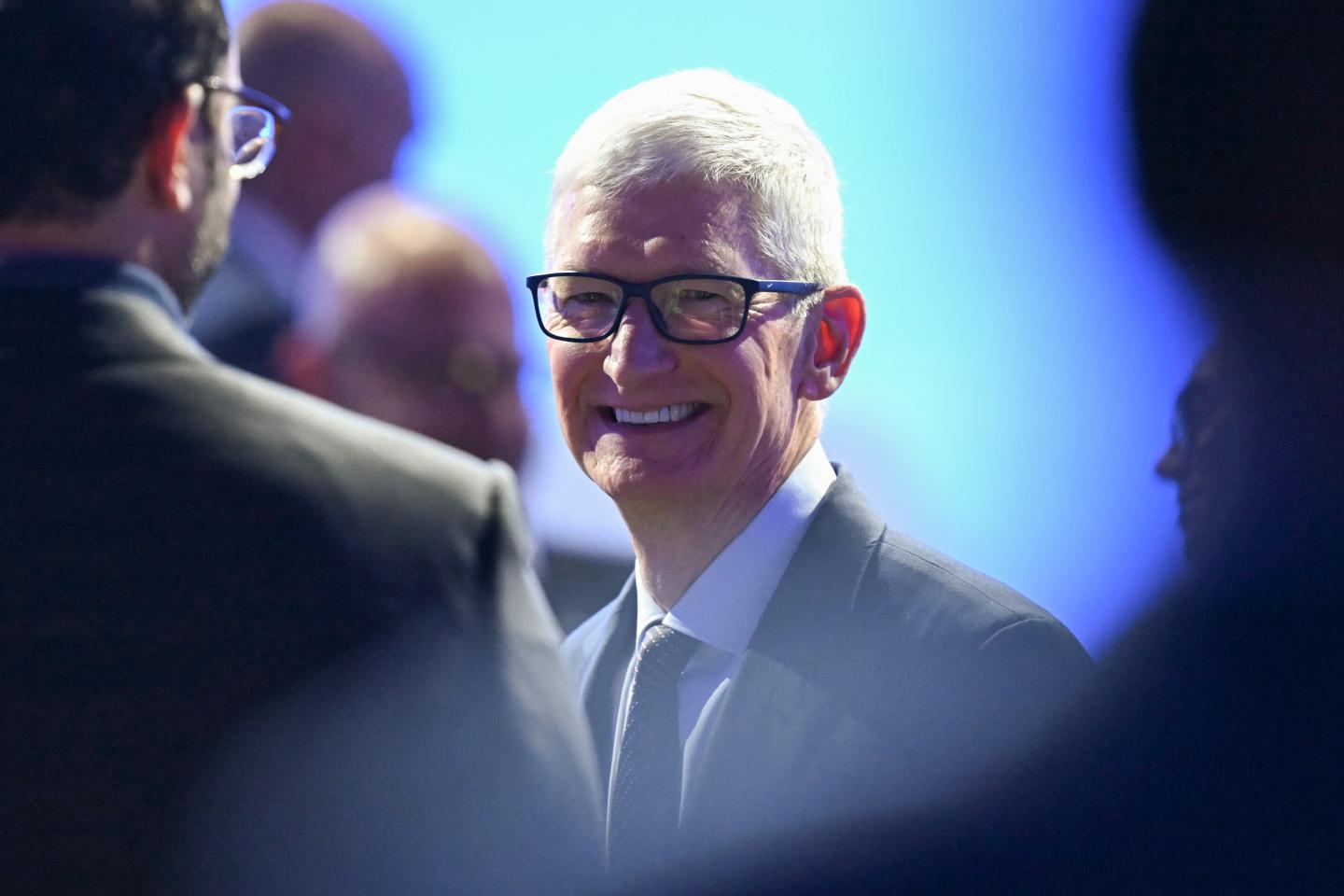
Cook had the nearly impossible task of following Steve Jobs. Rather than imitate him, he redefined the role. Under his leadership, Apple became not just a product company but an operational machine and a supply chain marvel. Most companies make a tradeoff between scale and margin. Apple, under Cook, managed both — and that is extraordinarily rare. It requires not just vision, but execution at a level that compounds over time: thousands of small decisions made well, supplier relationships managed tightly, production scaled without losing quality. There is very little glamour in that kind of work. It does not lend itself to headlines. But it is, in many ways, the difference between a good company and a great one.

Cook also brought steadiness to Apple at a moment when that was exactly what the company needed. Following a founder like Jobs is not just a strategic challenge — it is a psychological one. The temptation is to mimic, to chase the aura. Cook did neither. He leaned into his own strengths and in doing so extended Apple’s trajectory in a way that few successors in any industry ever manage.
The Disruptor Who Kept Disrupting Himself

Hastings, by contrast, was a scrappy and visionary disruptor. His career is a masterclass in seeing where the world is going and getting there before the competition knows it’s changing. From DVDs disrupting Blockbuster, to streaming, to binge viewing, to collapsing traditional release windows, Hastings consistently moved ahead of the market. Importantly, these were not isolated bets. They were part of a sequence. Each move built on the last. DVDs created a direct consumer relationship. Streaming removed friction. Binge viewing changed behavior. Original content shifted the power dynamic with suppliers. Over time, Netflix moved from distributor to platform to studio.

Hastings also rethought how companies operate. His shift from the idea of a “family” to a “professional sports team” — where every position is constantly evaluated against the best available — wasn’t cultural rhetoric. It was a recognition that in fast-moving industries, sentimentality can be a liability. Performance matters. Fit matters. The willingness to make hard decisions matters.

The Exit Strategy Nobody Teaches

What is almost never discussed — and what may be their most durable contribution to leadership practice — is how both men handled succession. In many companies, leadership transitions turn into awkward internal contests: quiet bake-offs where senior executives are pitted against one another, with one winner and several visible losers. Those who don’t get the job leave diminished, sometimes humiliated, and the institution absorbs the damage quietly for years. Cook and Hastings avoided that dynamic entirely.

Their transitions were clear, deliberate, and respectful of the broader organization. They signaled confidence in the next generation without creating internal drama or uncertainty. That discipline is not just good governance — it preserves culture, protects the institution, and reinforces that the company is bigger than any one individual.

In an era of celebrity CEOs, there is something almost countercultural about that approach. Today, many leaders are rewarded for visibility, narrative, and personal brand. The performance can become the point. The storytelling can outpace the substance. Cook and Hastings offered a different model. The work was the point. The results were the reward.

Both men, of course, made mistakes. No career at that level is flawless. But over long arcs, they were consistently effective — grounded in strategy and innovation, willing to take intelligent risks, and honest enough about their own limitations to plan their own obsolescence rather than resist it.

What Williams Knew That Most Leaders Don’t

Great leadership isn’t about visibility or personal brand. It’s about making a series of high-quality decisions over time, often without recognition in the moment. It’s about building systems and cultures that outlast you. And, ultimately, it’s about knowing when to step away.

That last part is often harder than it looks. Many leaders, like athletes, stay too long. They chase one more win, one more cycle, one more moment in the spotlight — and in doing so, risk diminishing everything they built. Updike understood what made Williams’ exit so moving: it wasn’t just the home run. It was the refusal to cheapen it with a curtain call.

Cook and Hastings didn’t linger. They did the job. They changed the game. And then, like Williams rounding third and disappearing into the dugout, they left the field. No curtain call. No farewell tour. No tip of the hat. Just the record, standing on its own.

Hub fans bid kid adieu. And this time, the kids were in the corner office.

The opinions expressed in Fortune.com commentary pieces are solely the views of their authors and do not necessarily reflect the opinions and beliefs of Fortune.

Join us at the Fortune Workplace Innovation Summit May 19–20, 2026, in Atlanta. The next era of workplace innovation is here—and the old playbook is being rewritten. At this exclusive, high-energy event, the world’s most innovative leaders will convene to explore how AI, humanity, and strategy converge to redefine, again, the future of work. Register now.
About the Author
By Paul Hardart
See full bioRight Arrow Button Icon

Latest in Commentary

Finance
Lorem ipsum dolor sit amet, consectetur adipiscing elit, sed do eiusmod tempor incididunt ut labore et dolore magna aliqua. Ut enim ad minim veniam
By Fortune Editors
October 20, 2025
Finance
Lorem ipsum dolor sit amet, consectetur adipiscing elit, sed do eiusmod tempor incididunt ut labore et dolore magna aliqua. Ut enim ad minim veniam
By Fortune Editors
October 20, 2025
Finance
Lorem ipsum dolor sit amet, consectetur adipiscing elit, sed do eiusmod tempor incididunt ut labore et dolore magna aliqua. Ut enim ad minim veniam
By Fortune Editors
October 20, 2025
Finance
Lorem ipsum dolor sit amet, consectetur adipiscing elit, sed do eiusmod tempor incididunt ut labore et dolore magna aliqua. Ut enim ad minim veniam
By Fortune Editors
October 20, 2025
Finance
Lorem ipsum dolor sit amet, consectetur adipiscing elit, sed do eiusmod tempor incididunt ut labore et dolore magna aliqua. Ut enim ad minim veniam
By Fortune Editors
October 20, 2025
Finance
Lorem ipsum dolor sit amet, consectetur adipiscing elit, sed do eiusmod tempor incididunt ut labore et dolore magna aliqua. Ut enim ad minim veniam
By Fortune Editors
October 20, 2025

Most Popular

Finance
Lorem ipsum dolor sit amet, consectetur adipiscing elit, sed do eiusmod tempor incididunt ut labore et dolore magna aliqua. Ut enim ad minim veniam
By Fortune Editors
October 20, 2025
Finance
Lorem ipsum dolor sit amet, consectetur adipiscing elit, sed do eiusmod tempor incididunt ut labore et dolore magna aliqua. Ut enim ad minim veniam
By Fortune Editors
October 20, 2025
Finance
Lorem ipsum dolor sit amet, consectetur adipiscing elit, sed do eiusmod tempor incididunt ut labore et dolore magna aliqua. Ut enim ad minim veniam
By Fortune Editors
October 20, 2025
Finance
Lorem ipsum dolor sit amet, consectetur adipiscing elit, sed do eiusmod tempor incididunt ut labore et dolore magna aliqua. Ut enim ad minim veniam
By Fortune Editors
October 20, 2025
Finance
Lorem ipsum dolor sit amet, consectetur adipiscing elit, sed do eiusmod tempor incididunt ut labore et dolore magna aliqua. Ut enim ad minim veniam
By Fortune Editors
October 20, 2025
Finance
Lorem ipsum dolor sit amet, consectetur adipiscing elit, sed do eiusmod tempor incididunt ut labore et dolore magna aliqua. Ut enim ad minim veniam
By Fortune Editors
October 20, 2025
Fortune Secondary Logo
Rankings
  • 100 Best Companies
  • Fortune 500
  • Global 500
  • Fortune 500 Europe
  • Most Powerful Women
  • World's Most Admired Companies
  • See All Rankings
  • Lists Calendar
Sections
  • Finance
  • Fortune Crypto
  • Features
  • Leadership
  • Health
  • Commentary
  • Success
  • Retail
  • Mpw
  • Tech
  • Lifestyle
  • CEO Initiative
  • Asia
  • Politics
  • Conferences
  • Europe
  • Newsletters
  • Personal Finance
  • Environment
  • Magazine
  • Education
Customer Support
  • Frequently Asked Questions
  • Customer Service Portal
  • Privacy Policy
  • Terms Of Use
  • Single Issues For Purchase
  • International Print
Commercial Services
  • Advertising
  • Fortune Brand Studio
  • Fortune Analytics
  • Fortune Conferences
  • Business Development
  • Group Subscriptions
About Us
  • About Us
  • Press Center
  • Work At Fortune
  • Terms And Conditions
  • Site Map
  • About Us
  • Press Center
  • Work At Fortune
  • Terms And Conditions
  • Site Map
  • Facebook icon
  • Twitter icon
  • LinkedIn icon
  • Instagram icon
  • Pinterest icon

Latest in Commentary

reed
CommentaryRetirement
Tim Cook and Reed Hastings just showed every CEO how to leave gracefully
By Paul HardartMay 9, 2026
59 minutes ago
golf
Commentarybooks
How playing golf alone can make you better at your job
By Gary BelskyMay 8, 2026
22 hours ago
naomi
Commentarymental health
Naomi Osaka: the things I didn’t do to succeed
By Naomi OsakaMay 8, 2026
23 hours ago
amanda
Commentarybatteries
Why energy storage is moving beyond the capex debate
By Amanda SimonianMay 7, 2026
2 days ago
trump
CommentaryMedicare
Auto-enrollment in Medicare Advantage isn’t a nudge. It’s a trap
By Brian KeyserMay 7, 2026
2 days ago
nyse
CommentaryAI agents
Your trusted advocate or your rebellious Frankenstein: how you deploy agentic AI determines which one you get
By Jeffrey Sonnenfeld, Stephen Henriques, Yevheniia Podurets and Jasmine GarryMay 7, 2026
2 days ago

Most Popular

California farmers must destroy 420,000 peach trees after Del Monte closes its canneries and cancels more than $550 million in long-term contracts
North America
California farmers must destroy 420,000 peach trees after Del Monte closes its canneries and cancels more than $550 million in long-term contracts
By Sasha RogelbergMay 7, 2026
2 days ago
'Blue dot fever' plagues musicians like Post Malone, Meghan Trainor, and Zayn as a growing list of artists cancel tours due to lagging ticket sales
Arts & Entertainment
'Blue dot fever' plagues musicians like Post Malone, Meghan Trainor, and Zayn as a growing list of artists cancel tours due to lagging ticket sales
By Dave Lozo and Morning BrewMay 7, 2026
2 days ago
A Michigan farm town voted down plans for a giant OpenAI-Oracle data center. Weeks later, construction began
Magazine
A Michigan farm town voted down plans for a giant OpenAI-Oracle data center. Weeks later, construction began
By Sharon GoldmanMay 6, 2026
3 days ago
Current price of oil as of May 8, 2026
Personal Finance
Current price of oil as of May 8, 2026
By Joseph HostetlerMay 8, 2026
21 hours ago
U.S. Treasury will have to borrow $2 trillion this year just to continue functioning—more than $166 billion every month
Economy
U.S. Treasury will have to borrow $2 trillion this year just to continue functioning—more than $166 billion every month
By Eleanor PringleMay 7, 2026
2 days ago
Airbnb CEO Brian Chesky warns two types of people won’t survive the AI era: ‘pure people managers’ and workers who resist change
Success
Airbnb CEO Brian Chesky warns two types of people won’t survive the AI era: ‘pure people managers’ and workers who resist change
By Emma BurleighMay 7, 2026
2 days ago

© 2026 Fortune Media IP Limited. All Rights Reserved. Use of this site constitutes acceptance of our Terms of Use and Privacy Policy | CA Notice at Collection and Privacy Notice | Do Not Sell/Share My Personal Information
FORTUNE is a trademark of Fortune Media IP Limited, registered in the U.S. and other countries. FORTUNE may receive compensation for some links to products and services on this website. Offers may be subject to change without notice.