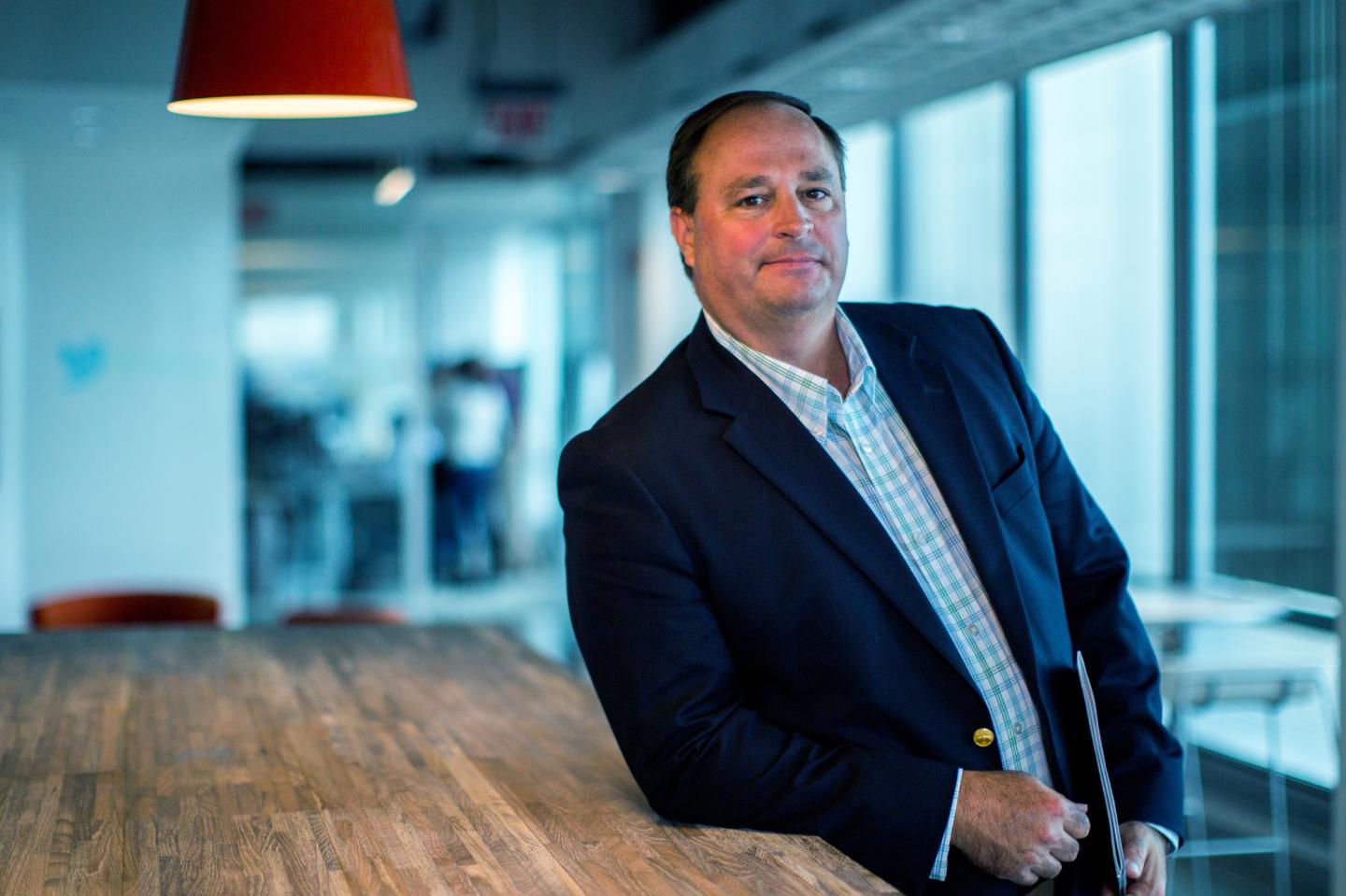
Few things capture Brooks Tingle’s approach to being a longevity warrior like watching him walk on stage in a dark suit jacket and custom Air Force 1 sneakers earlier this month. The CEO of John Hancock was there to kick off the company’s 3rd annual “Longer. Healthier. Better” symposium for brokers, dispensing the kind of common sense one might expect from someone who’s spent the bulk of his career at a life insurer founded in Boston 164 years ago. Not for him the magic elixirs and fads of his biohacking brethren. Tingle, 60, is a man who thinks about actuarial data and probabilities, about how to transform a largely transactional business that’s betting on your lifespan into a partner in boosting your health span, or how long you’ll live well. “Of course it’s good for the business,” he says, “but I’m also passionate about this stuff.”
Longevity is a hot topic as the country is getting older. The median age is now close to 40, and the percentage of Americans over 65 is projected to grow from 17% today to almost one in four Americans by 2050. One in three will be over 50, a figure that may get higher if immigration slows as the fertility rate of 1.6 births is well below replacement level. Policymakers fret about how to pay for it. Some consumers are moving abroad or delaying retirement because of it.

But there’s opportunity, too. With Americans over 55 controlling almost three-quarters of the nation’s wealth, they are investing heavily in trying to live not just longer but better. There’s an explosion of new products like NMN supplements, spa treatments and real or dubious ways for people to biohack their way to preserving it. The global biohacking market is expected to more than double to $69 billion in the next four years, and entrepreneur Bryan Johnson predicts he can make humans immortal by 2039.
But most Americans are not fully prepared for a normal lifespan, never mind one that extends to 100 and beyond. As author and longtime longevity pundit Ken Dychtwald noted at the conference in remarks condensed for Fortune, “for the first time in human history, tens of millions of us can reasonably expect to live into our 80s, 90s, and beyond—yet we’ve barely begun to innovate for what those extra decades should look and feel like.”
The Longevity Preparedness Index
Tingle thinks about all of this a lot. It’s why he just partnered with Joe Coughlin, founder and director of the MIT AgeLab, to create a Longevity Preparedness Index. It measures people’s readiness for aging against eight “domains” of strategies that have been shown to improve the length and quality of life. Taking steps to improve health and wealth are just two of them. The other areas include planning a roster of activities, building social connections, creating a care plan, picking the right community, finding optimal accommodation, and preparing for tough life transitions. In a survey of 1,300 U.S. adults, the average score was 60 out of 100. (Click here to take the quiz yourself.) Americans score especially low when it comes to planning continuing care, even though 70% are likely to need it.

“You can’t always control how you age,” says Coughlin, who famously created the AGNES (Age Gain Now Empathy System) suit that lets people feel what it’s like to navigate the world in an old body. Barring a miracle, most of us won’t be doing power push-ups and racing upstairs in the last years of life. Aspiration and preparation are different. Coughlin points out that having an accessible home and someone to talk to and drive you to appointments are proven factors in determining not just how well you live, but how long. “Ask me if I think death is something that can or should be cured,” said Coughlin, racing by in bright orange pants before answering that existential question. “We have plenty of evidence on how we’re likely to age.”
Added Tingle: “I didn’t want to be just another financial services company that did an annual survey that waves their finger at everyone Americans saying you’re not saving enough for retirement. You need health and wealth but there’s much more to preparing for a long life.”
“What the heck am I going to do?”
Then again, thinking about death is a bummer. A lot of people buy life insurance as protection against the worst, hoping that they’ll never have to use it—or have it pay out after a long and happy life. That’s essentially how John Hancock brokers have sold policies from 1864 to today, where it generated $8.6 billion a year in insurance revenue as a subsidiary of Canada’s Manulife Financial.
That’s how every life insurer makes money—by selling you policies in which you can afford to pay them more than they’ll ever have to pay you. It’s a relationship that customers tend to maintain for more than two decades and yet it rarely extends beyond the act of purchasing a policy. As he put it: “A lot of these planners tend to talk about a transaction, or to the extent it is planning, it’s around planning around one dimension of what we believe is fulsome preparedness to live a longer, healthier, better life.”
Tingle’s goal is to encourage those sellers to become enablers of longevity and build deeper (and more profitable) relationships with customers by giving them incentives to invest in their own longevity. He’s partnered with consumer health-tech companies like Oura and Prenuvo, and also featured ClearCardo, as well as the foundation of Damar Hamlin, a Buffalo Bills player who had a cardiac arrest during a game three years ago, who funds CPR training and external defibrillators in youth sports. “It truly shifted my perspective on life,” Hamlin told Tingle during the conference. “We all have our platforms…you have to lead where you are.”
For Tingle, three years of building out a platform for longevity have prompted some internal reflections on what it means to grow old. “I’ve been at Hancock for 35-plus years now,” he said. “Simple math says there are fewer of those years ahead of me than behind me in terms of this version of my career, and I plan to stay as long as they’ll have me.”
“We have this gift that, frankly, most of our grandparents, and their parents and grandparents, didn’t have, which is decades of life after your first act professionally,” he told me. “If I leave at 65, 67, and live to 87 or 97, I think, ‘What the heck am I going to do?’”
Does he have an answer? Not yet. But he’s living healthier and “I’m certainly going to be prepared.”