

Good morning. On Fortune’s radar today:
- Markets: U.S. futures are down before the open.
- “Something sinister”: Details on the FBI probe into the dead and missing scientists.
- Iran ceasefire extended but peace talks stall.
- What if the Iran war is really about controlling all the world’s pinchpoints?
- Oil companies are having a good war.
- David Zaslav doesn’t want his $550 million exit package.
- The Strait of Hormuz blockade is making condoms more expensive.
THE MARKETS
Wall Street says buy the war, sell the World Cup
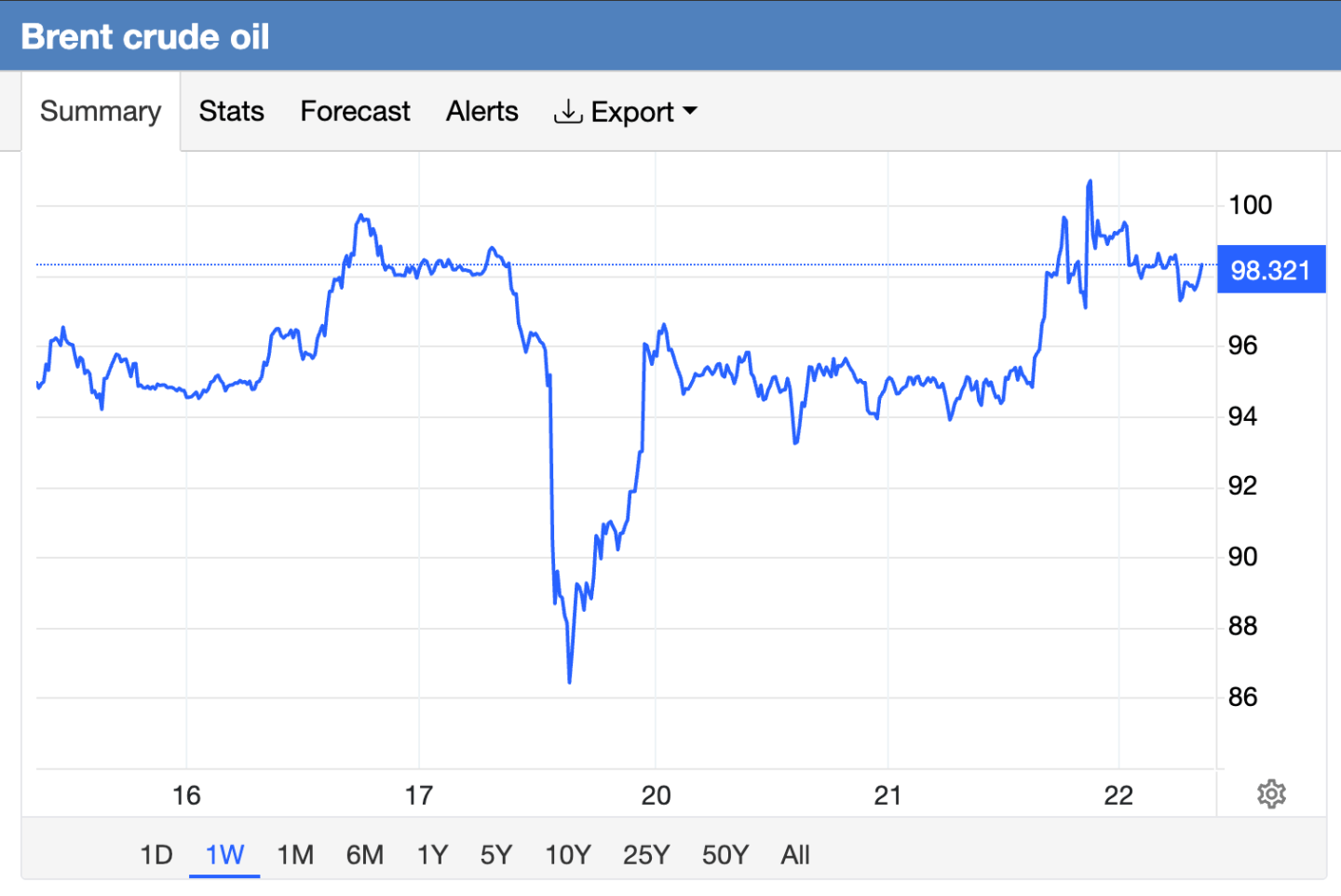
Oil rose to $98 per barrel this morning, up from $95 the day before. S&P 500 futures rose 0.52% before the open in New York. The index closed down 0.63% yesterday at 7,064. Asia was mostly up today. Europe was flat in early trading. Bitcoin remains stuck at $74K.
A bunch of banks upgraded their price targets for the S&P 500:
- Wells Fargo: “We continue to expect [the S&P 500] overshooting to 7,300 by July,” according to Ohsung Kwon and his colleagues. That will be driven by AI monetization, spending from the OBBBA, and the World Cup. But “The World Cup is likely the last stimulative event of the year. Sell the World Cup,” he told clients.
- Goldman Sachs: “We expect a 7% rise in the S&P 500 to a year-end target of 7,600,” Ben Snider said in a recent note.
- J.P. Morgan: Dubravko Lakos-Bujas and his team have also set a new price target of 7,600. But “should geopolitical tensions move toward a swift resolution (‘Blue Sky’ scenario), we would expect…an S&P 500 level of ~8,000.”
Chart from TradingEconomics.com:
ONE BIG THING
“Something sinister”: FBI will look into dead and missing scientists
Two of them simply vanished. One was found shot dead on his front porch earlier this year. Three of them left home without their phones. Two of them set out carrying handguns. But all of them were linked to the military-space industry, officials say. The FBI told Fortune’s Catherina Gioino, “The FBI is spearheading the effort to look for connections into the missing and deceased scientists. We are working with the Department of Energy, Department of War, and with our state and local law enforcement partners to find answers.” U.S. House Committee Chairman James Comer said, “Once you see the facts, it would suggest that something sinister could be happening and it would be a national security concern.”
IRAN
Ceasefire extended, but peace talks stall as White House officials complain about Trump’s social media commentary
Ceasefire, kinda-sorta: President Trump extended the ceasefire with Iran indefinitely, but the Strait of Hormuz remains closed. Two ships in the Strait were fired upon by Iranian forces this morning; one of them, a Greek container ship, suffered heavy damage to its bridge.
Talks wilting. The ceasefire extension is intended to allow the fractured Iranian regime to regroup and organize its negotiating position. So many Tehran officials have been killed it has become genuinely difficult for the remaining leaders to figure out what their government’s position should be.
- JD Vance has not flown to Pakistan yet for the scheduled talks. “Here in Islamabad, arrangements remain in place for another round of talks, with parts of the city still sealed off. But hopes of a meeting this week appear, for now, to have faded,” the BBC says.
Speaking anonymously, some White House officials say the president’s continual Truth Social posts—many of them saying things that contradict his previous posts—are hampering the negotiations, Fortune’s Jake Angelo reports.
What Trump said yesterday on social media: “Iran doesn’t want the Strait of Hormuz closed, they want it open so they can make $500 Million Dollars a day (which is, therefore, what they are losing if it is closed!). They only say they want it closed because I have it totally BLOCKADED (CLOSED!), so they merely want to “save face.” People approached me four days ago, saying, “Sir, Iran wants to open up the Strait, immediately.” But if we do that, there can never be a Deal with Iran, unless we blow up the rest of their Country, their leaders included!”
- The war is a boon to oil companies. The closure of the Strait means that oil companies are scrambling to find new sources in the U.S. and anywhere that isn’t the Middle East. Halliburton CEO Jeff Miller said Africa and South America are likely to see increased activity: “In North America, we already see the early signs of recovery. Outside of the Middle East, we expect our international business to grow.” Fortune’s Jordan Blum has the details.
🤔 The Strait theory: Is Trump's real target China, not Iran?
If you have ever wondered why President Trump was willing to risk the inevitable unpopularity of choosing a war with Iran, and then suffer the negative consequences of higher gas prices and falling ratings in the polls, then Macquarie analysts Thierry Wizman and Gareth Berry have a theory for you: It’s about controlling all the maritime pinchpoints through which China’s imports and exports are shipped. Here it is in their own words:
- “Maybe the economic war was part of the broader geo-strategic plan all along, intended to give the U.S. cover to control the Strait [of Hormuz] indefinitely,” they wrote in a note seen by Fortune. “Controlling Hormuz also makes common cause with the U.S.'s recent attempts to control other critical 'straits', such as Gibraltar, Malacca, the Greenland-Iceland-UK Gap (GIUK), and Panama. If so, the U.S.'s long-term 'goal' may be to prevent China's hegemony by controlling all the physical nodes through which China's economy depends for its flows. Against that goal, having lower oil prices is of secondary importance to the U.S.”
DAVID ZASLAV
The CEO who doesn’t want his $550 million exit package
The Warner Bros. Discovery and Paramount Skydance merger shareholder vote takes place on Thursday, April 23 at 10 a.m. Eastern time. There is some buzz around this, my Fortune colleague Amanda Gerut tells me, because WBD investor David Geffen said that even though WBD CEO David Zaslav is likely to walk away with more than $550 million, he'd rather have a job.
MORE FROM FORTUNE
The housing affordability crisis isn’t just crushing millennials—it’s squeezing out buyers in their 40s, 50s and beyond too - Shawn Tully
Boards say the C-suite owns the AI strategy. The C-suite doesn’t agree - Amanda Gerut
Meet the film school dropout who became a billionaire quantum computing CEO in days thanks to Nvidia - Sasha Rogelberg
Craving work-life balance is a huge red flag, says Fortune 500 CEO—and like Barack Obama, he happily works through the weekends - Orianna Rosa Royle
Palantir published a mini manifesto calling some cultures ‘harmful and middling’ and said Silicon Valley has ‘a moral debt’ to the U.S. - Marco Quiroz-Gutierrez
CHART OF THE DAY
There's a ceiling on the number of people willing to use crypto
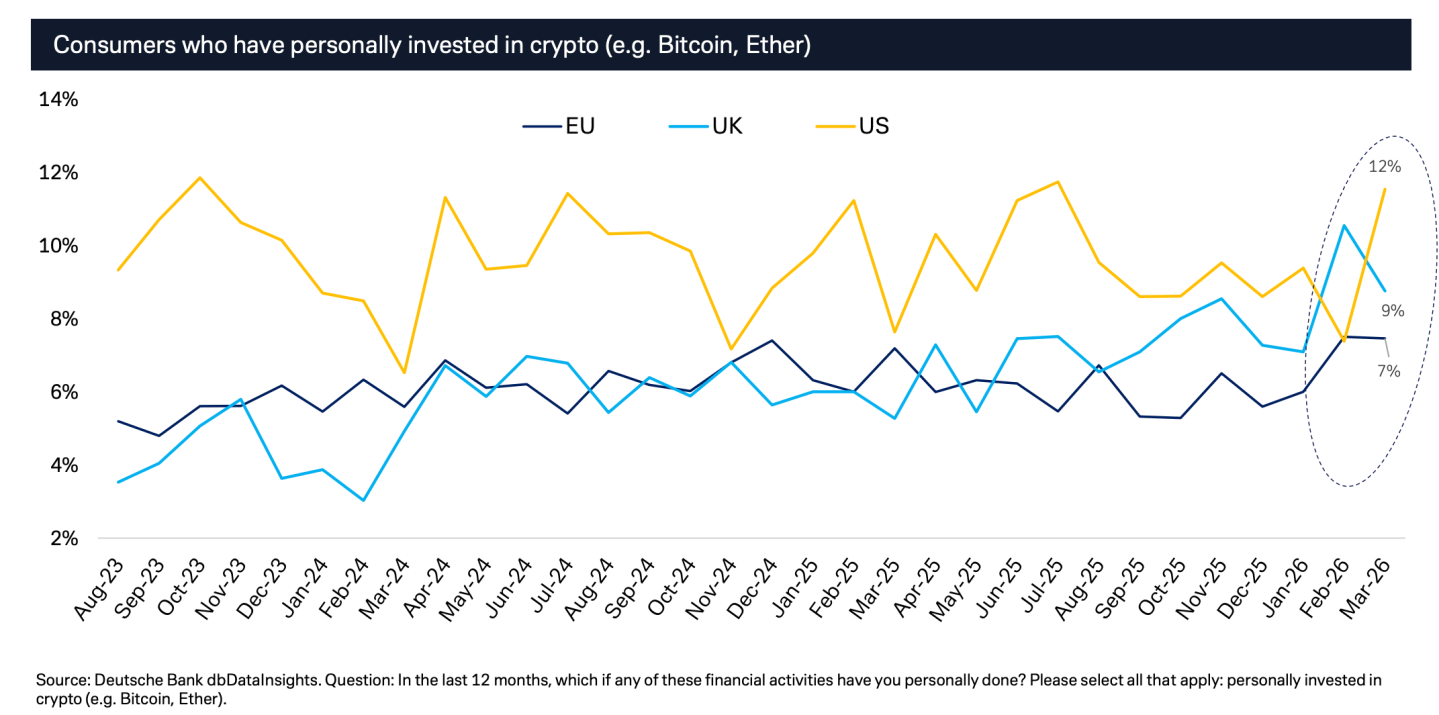
As the price of Bitcoin tanked late last year and in January, the percentage of consumers using it fell, according to research by Deutsche Bank’s Marion Laboure and Camilla Siazon. But recently, adoption rates have ticked up again.
- Big picture: Over the last few years adoption rates have been broadly flat, rarely if ever going above 12%.
NUMBER OF THE DAY
212
The number of Democrats that will win seats in the U.S. House in the upcoming midterm elections, as opposed to only 205 seats for the Republicans, according to polling from 270towin.com and Christopher Hodge, chief U.S. economist at Natixis CIB. The data shows the Dems won’t take the Senate though—that will go 46-51 in favor of the GOP.
THE FRONT PAGES TODAY
It is not clear whether new Apple CEO John Ternus is 50 or 51 - FT
Anthropic’s Mythos Model Is Being Accessed by Unauthorized Users - Bloomberg
SpaceX nears deal with Cursor - Axios
No Peace Plan, No Problem: Why the Wartime Market Keeps Rising - WSJ
Tucker Carlson Says He Is ‘Tormented’ by His Past Support for Trump - NYT
ONE MORE THING
An unexpected effect of closing the Strait of Hormuz? More expensive condoms.
The Malaysian firm Karex, the world's largest producer of condoms, says it will raise prices by up to 30% due to supply chain disruptions from the Iran war. Its customers’ stockpiles are running lower than usual, CEO Goh Miah Kiat told Reuters. Entire industries across Asia are dealing with reduced supplies of plastics and other petrochemical-based products, in everything from packaging to clothing. Taiwan is running out of plastic bags; South Korea is worried about hospitals hoarding syringes.