• Home
  • Latest
  • Fortune 500
  • Finance
  • Tech
  • Leadership
  • Lifestyle
  • Rankings
  • Multimedia

New

Watch Fortune Daily, our new video show that brings you inside the Fortune newsroom and the boardroom

Watch Fortune Daily, our new video show that brings you inside the Fortune newsroom and the boardroom

Watch Fortune Daily, our new video show that brings you inside the Fortune newsroom and the boardroom

Watch Fortune Daily, our new video show that brings you inside the Fortune newsroom and the boardroom

Watch Fortune Daily, our new video show that brings you inside the Fortune newsroom and the boardroom

Watch Fortune Daily, our new video show that brings you inside the Fortune newsroom and the boardroom

Watch Fortune Daily, our new video show that brings you inside the Fortune newsroom and the boardroom

Watch Fortune Daily, our new video show that brings you inside the Fortune newsroom and the boardroom

Watch Fortune Daily, our new video show that brings you inside the Fortune newsroom and the boardroom

Watch Fortune Daily, our new video show that brings you inside the Fortune newsroom and the boardroom

AITariffs

The AI boom is single-handedly carrying the U.S. import market—and adding $200 billion to the trade deficit, Fed study finds

By
Tristan Bove
Tristan Bove
Contributing Reporter
Down Arrow Button Icon
By
Tristan Bove
Tristan Bove
Contributing Reporter
Down Arrow Button Icon
April 22, 2026, 1:16 PM ET
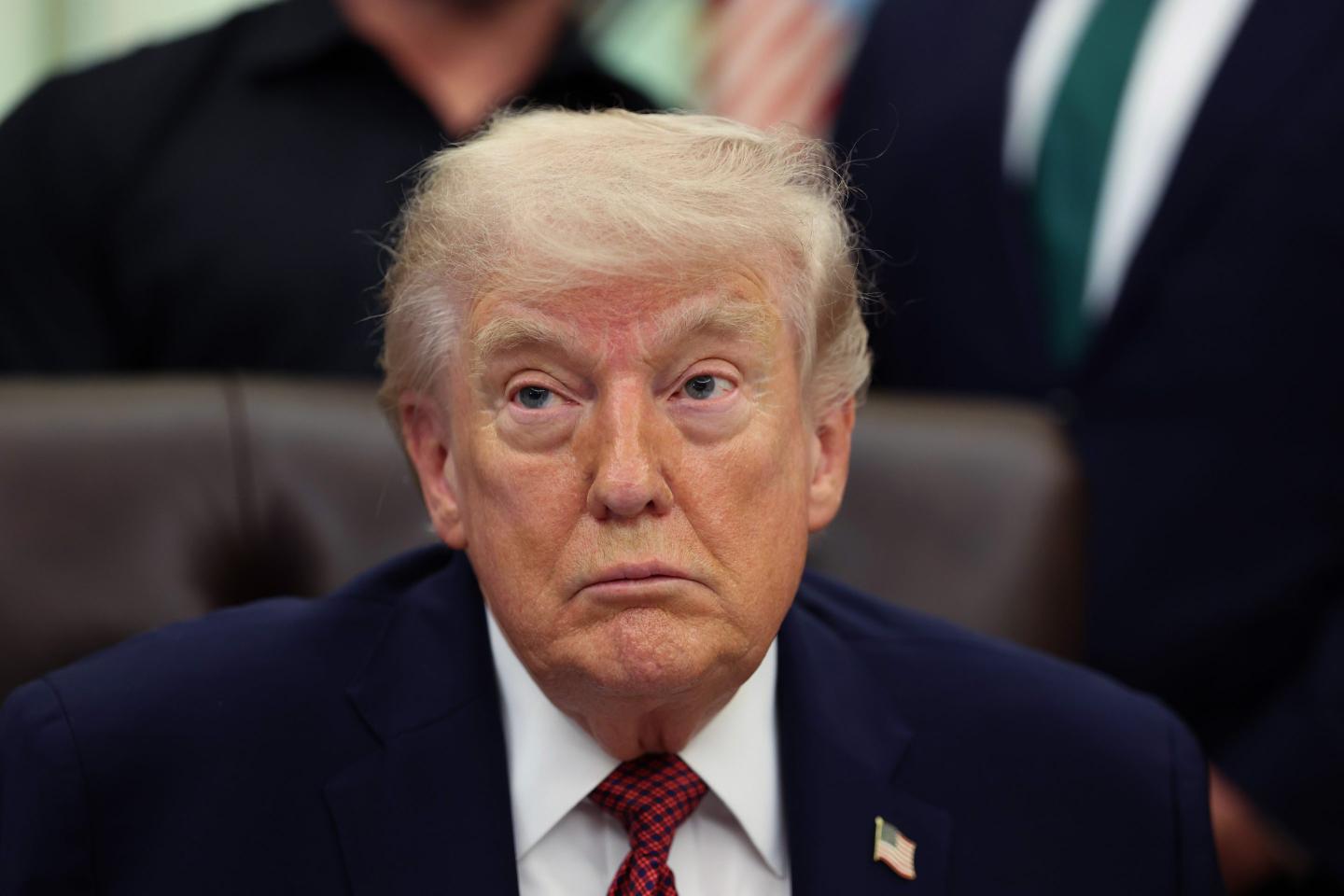
President Donald Trump
President Donald Trump’s tariffs have been unable to reverse America’s reliance on imports for AI.Tasos Katopodis—Getty Images
Add Fortune on Google for similar content.

When President Donald Trump returned to office last year, he framed his tariff policy as a bid to bring manufacturing of strategic materials and equipment back to the U.S. 

Recommended Video

More than a year later, his sweeping trade agenda has indeed forced a crackdown on imports, so much so that a single technological force has grown into the primary engine of the country’s trade economy. 

The AI boom has been the undisputed hotspot of the U.S. economy during the past year. While the technology itself has yet to translate into significant productivity or employment gains, investment in the infrastructure and computing power that has enabled AI’s rollout has been massive. AI-related private investment in the U.S. last year hit $286 billion, according to Stanford University’s AI Index report, about the same as the lifetime cost of the entire Apollo program in today’s dollars.

Infrastructure and research costs accounted for more than $140 billion of that sum, with a large chunk earmarked to build the massive data centers that have been powering the AI boom. That splurge has required enormous amounts of raw construction materials, not all of which can be cheaply sourced in the U.S. The AI boom, in fact, is one of the only factors keeping U.S. import growth in positive territory.

A league of its own

AI-related products accounted for 23% of all U.S. imports last year, according to a study published earlier this month by the Federal Reserve Bank of Minneapolis. Those products include the technical stuff—storage hardware, graphics processing units, and the like. But data centers are buildings first and foremost, and the construction frenzy has led to surging demand for cooling, heating, and ventilation equipment. 

Taken together, imports of AI-related products have grown 73% since 2023, while imports of non-AI-related products have risen only 3% over the same period, the study found. The findings suggest that despite the Trump administration’s tariff pressure—designed in part to bring the AI supply chain to U.S. shores—domestic manufacturing still isn’t enough to satisfy the data center build-out’s needs. 

“Trade in AI-related products is a very important force behind U.S. trade over the past year,” Michael Waugh, the author and an economist at the Federal Reserve, wrote in the study.

“In fact, it might be even more important than dramatic changes in U.S. trade policy.” 

Waugh’s findings point to the AI build-out becoming so dominant it’s offsetting weakness almost everywhere else in the import market. With AI-related products stripped out, non-AI imports in January 2026 were actually 14% below their typical 2023 level.

The largest trading partners for AI products last year were Taiwan and Mexico, which together account for around half of the AI-related trade. Taiwan remains a crucial hardware supplier, particularly when it comes to semiconductor chips, the building blocks underlying the massive computing power required to train and run AI models. Mexico sells computing equipment to the U.S. too, but it’s also a critical provider of electrical wiring and HVAC systems needed to build data centers.

An unmissable trade

The outsize role of AI in the country’s import economy becomes even starker when placed within the context of the trade deficit. If AI imports and exports had grown at the same pace as the non-AI trade since 2023, the U.S. goods trade deficit in 2025 would have been about $194 billion smaller, or nearly 16% lower, than the actual $1.2 trillion gap, a record high.

Waugh’s accounting attributes $265 billion in AI imports last year, compared with $71 billion in AI-related exports, underscoring the AI manufacturing supply chain remains a net drag on the trade balance despite the sweeping scale involved. A year after Trump’s tariffs kicked in, the country’s reliance on imports for AI continues to dog the president’s long-stated goal of shrinking the trade deficit.

The global nature of the AI supply chain isn’t lost on the administration, the study suggests. Waugh found effective tariff rates on AI-related products were only 4.5% at the end of 2025, versus 12.1% for non-AI goods, largely because product-level exemptions carved out much of the AI supply chain from the broader tariff wall. Around 69% of AI-related imports fell on at least one exemption list, according to the study.

Beefing up domestic manufacturing capacity of AI-related products was always going to be a tall order for the administration. Semiconductor facilities, for one, require massive upfront capital costs and specialized labor to operate, and attempts to expand in the U.S. have run into regulatory hurdles. 

Intel has seen a planned facility experience multiple delays, while Taiwanese company TSMC, the world’s largest semiconductor manufacturer, has encountered labor and compliance problems in setting up a chip factory in Arizona. U.S. manufacturing overall has struggled over the past year, with factory employment down since Trump returned to office, in part because of the administration’s immigration crackdown.

The Trump administration is likely well aware of these challenges. Even when the president had a chance to reorganize his trade policy earlier this year (when the administration moved to reinstate some tariffs after the bulk of them were struck down by the Supreme Court), the sweeping exemptions for AI-related products largely remained in place, Waugh found in his study.

Fortune Daily breaks the traditional barrier between audience and newsroom. The show transforms Fortune’s trusted reporting into actionable, conversational, and entertaining insights for an emerging class of business leaders. Watch here.
About the Author
By Tristan BoveContributing Reporter
LinkedIn iconTwitter icon
See full bioRight Arrow Button Icon
Add Fortune on Google for similar content.

Latest in AI

Finance
Lorem ipsum dolor sit amet, consectetur adipiscing elit, sed do eiusmod tempor incididunt ut labore et dolore magna aliqua. Ut enim ad minim veniam
By Fortune Editors
October 20, 2025
Finance
Lorem ipsum dolor sit amet, consectetur adipiscing elit, sed do eiusmod tempor incididunt ut labore et dolore magna aliqua. Ut enim ad minim veniam
By Fortune Editors
October 20, 2025
Finance
Lorem ipsum dolor sit amet, consectetur adipiscing elit, sed do eiusmod tempor incididunt ut labore et dolore magna aliqua. Ut enim ad minim veniam
By Fortune Editors
October 20, 2025
Finance
Lorem ipsum dolor sit amet, consectetur adipiscing elit, sed do eiusmod tempor incididunt ut labore et dolore magna aliqua. Ut enim ad minim veniam
By Fortune Editors
October 20, 2025
Finance
Lorem ipsum dolor sit amet, consectetur adipiscing elit, sed do eiusmod tempor incididunt ut labore et dolore magna aliqua. Ut enim ad minim veniam
By Fortune Editors
October 20, 2025
Finance
Lorem ipsum dolor sit amet, consectetur adipiscing elit, sed do eiusmod tempor incididunt ut labore et dolore magna aliqua. Ut enim ad minim veniam
By Fortune Editors
October 20, 2025

Most Popular

Finance
Lorem ipsum dolor sit amet, consectetur adipiscing elit, sed do eiusmod tempor incididunt ut labore et dolore magna aliqua. Ut enim ad minim veniam
By Fortune Editors
October 20, 2025
Finance
Lorem ipsum dolor sit amet, consectetur adipiscing elit, sed do eiusmod tempor incididunt ut labore et dolore magna aliqua. Ut enim ad minim veniam
By Fortune Editors
October 20, 2025
Finance
Lorem ipsum dolor sit amet, consectetur adipiscing elit, sed do eiusmod tempor incididunt ut labore et dolore magna aliqua. Ut enim ad minim veniam
By Fortune Editors
October 20, 2025
Finance
Lorem ipsum dolor sit amet, consectetur adipiscing elit, sed do eiusmod tempor incididunt ut labore et dolore magna aliqua. Ut enim ad minim veniam
By Fortune Editors
October 20, 2025
Finance
Lorem ipsum dolor sit amet, consectetur adipiscing elit, sed do eiusmod tempor incididunt ut labore et dolore magna aliqua. Ut enim ad minim veniam
By Fortune Editors
October 20, 2025
Finance
Lorem ipsum dolor sit amet, consectetur adipiscing elit, sed do eiusmod tempor incididunt ut labore et dolore magna aliqua. Ut enim ad minim veniam
By Fortune Editors
October 20, 2025
Fortune Secondary Logo
Rankings
  • 100 Best Companies
  • Fortune 500
  • Global 500
  • Fortune 500 Europe
  • Most Powerful Women
  • World's Most Admired Companies
  • See All Rankings
  • Lists Calendar
Sections
  • Finance
  • Fortune Crypto
  • Features
  • Leadership
  • Health
  • Commentary
  • Success
  • Retail
  • Mpw
  • Tech
  • Lifestyle
  • CEO Initiative
  • Asia
  • Politics
  • Conferences
  • Europe
  • Newsletters
  • Personal Finance
  • Environment
  • Magazine
  • Education
Customer Support
  • Frequently Asked Questions
  • Customer Service Portal
  • Privacy Policy
  • Terms Of Use
  • Single Issues For Purchase
  • International Print
Commercial Services
  • Advertising
  • Fortune Brand Studio
  • Fortune Analytics
  • Fortune Conferences
  • Business Development
  • Group Subscriptions
About Us
  • About Us
  • Press Center
  • Work At Fortune
  • Terms And Conditions
  • Site Map
  • About Us
  • Press Center
  • Work At Fortune
  • Terms And Conditions
  • Site Map
  • Facebook icon
  • Twitter icon
  • LinkedIn icon
  • Instagram icon
  • TikTok icon
  • YouTube icon

Latest in AI

agent
CommentaryAI agents
Your AI agent can be a teammate. But it still needs a boss
By Keith Ferrazzi and Wendy SmithAugust 4, 2026
4 hours ago
dan
Commentarydisruption
How AI turned your best work into the bare minimum
By Dan SchawbelAugust 4, 2026
5 hours ago
Cloudflare just launched a permanent ID tool and wallet for AI shopping
AICloudFlare
Cloudflare just launched a permanent ID tool and wallet for AI shopping
By Jeff John RobertsAugust 4, 2026
5 hours ago
JPMorgan Chase, Accenture and others are teaming up on a new venture to standardize how AI token use is measured
AICFO Daily
JPMorgan Chase, Accenture and others are teaming up on a new venture to standardize how AI token use is measured
By Sheryl EstradaAugust 4, 2026
5 hours ago
owen
CommentaryLeadership
Your AI strategy isn’t failing because of bad design. It’s because your team doesn’t believe in you
By Owen FitzpatrickAugust 4, 2026
5 hours ago
from right to left: Javi Palafox, Pablo Palafox, and Luis Paarup stand and smile
NewslettersTerm Sheet
HappyRobot is worth $1.2 billion. Its founder says it’s just ‘getting started’
By Lily Mae LazarusAugust 4, 2026
7 hours ago

Most Popular

How Zohran Mamdani's pied-à-terre tax exposed an epidemic of 'ghost cars' instead
Personal Finance
How Zohran Mamdani's pied-à-terre tax exposed an epidemic of 'ghost cars' instead
By Catherina GioinoAugust 4, 2026
11 hours ago
Bars, bowling alleys, and movie theaters cost too much to run and visit. Americans have run out of places to hang out and we're paying with our health
North America
Bars, bowling alleys, and movie theaters cost too much to run and visit. Americans have run out of places to hang out and we're paying with our health
By Catherina GioinoAugust 2, 2026
2 days ago
Wall Street bulls are starting to admit the earnings bubble is real—and the 60/40 portfolio may be the first casualty
Investing
Wall Street bulls are starting to admit the earnings bubble is real—and the 60/40 portfolio may be the first casualty
By Nick LichtenbergAugust 3, 2026
1 day ago
Current price of oil as of August 3, 2026
Personal Finance
Current price of oil as of August 3, 2026
By Joseph HostetlerAugust 3, 2026
1 day ago
Electric air taxis are finally ready for takeoff
Magazine
Electric air taxis are finally ready for takeoff
By Alexei OreskovicAugust 3, 2026
1 day ago
The Iran war already has a winner: The world’s largest shipbroker notching record earnings from the 'exceptional volatility' in the Strait of Hormuz
Energy
The Iran war already has a winner: The world’s largest shipbroker notching record earnings from the 'exceptional volatility' in the Strait of Hormuz
By Sasha RogelbergAugust 3, 2026
23 hours ago

© 2026 Fortune Media IP Limited. All Rights Reserved. Use of this site constitutes acceptance of our Terms of Use and Privacy Policy | CA Notice at Collection and Privacy Notice | Do Not Sell/Share My Personal Information
FORTUNE is a trademark of Fortune Media IP Limited, registered in the U.S. and other countries. FORTUNE may receive compensation for some links to products and services on this website. Offers may be subject to change without notice.