• Home
  • Latest
  • Fortune 500
  • Finance
  • Tech
  • Leadership
  • Lifestyle
  • Rankings
  • Multimedia
Commentarytrust

Moody’s CEO: AI has a trust problem – better models won’t fix it

By
Rob Fauber
Rob Fauber
Down Arrow Button Icon
By
Rob Fauber
Rob Fauber
Down Arrow Button Icon
April 16, 2026, 7:00 AM ET

Rob Fauber is president and CEO, Moody's Corporation. He previously held senior roles at Citigroup, Salomon Smith Barney and NationsBank.

fauber
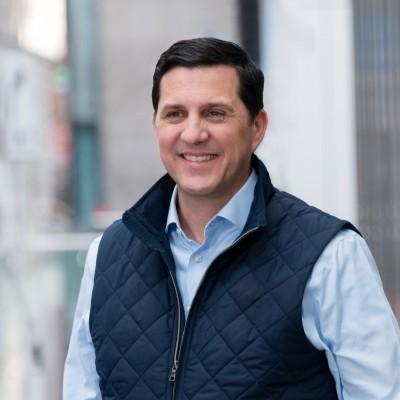
Rob Fauber, Moody's CEO.courtesy of Moody's

Nearly every week, the headlines about AI are dominated by the news of the latest model. A few days ago, Meta announced its newest model called Muse Spark – its first under its revamped AI division. According to their internal benchmarking tests, the new model is competitive with leading rivals across several tasks. 

Recommended Video

However, each new model release reveals something counterintuitive: as more models flood the market, the more they become commodities. If that’s the case, then the question becomes: what is the differentiator for businesses trying to adopt and scale AI? 

The answer comes down to one word – trust. 

Over time, the model that sits on your desk is going to matter less than the trusted, connected intelligence that feeds into it. I think of connected intelligence as curated data drawn from multiple, organized sources. As a result, an AI model can reason across all of the data at once rather than working from a single, incomplete picture.

Here’s another way to think of it: AI models are the cars we’re driving and they’re improving every day. However, data and intelligence are the navigation system – the difference between knowing you’re moving and knowing where you’re going. A basic GPS running on an outdated map might get you somewhere – but will it get you there reliably and quickly? 

Maybe.

But “maybe” isn’t good enough when it comes to high-stakes decisions – especially in financial services. We’re talking about some of the world’s most consequential decisions that impact people’s ability to get a loan, receive affordable insurance, and keep their money safe from financial criminals. These models need a source of truth to reason on – otherwise, we’re not only increasing the odds of poor outcomes, we’re gambling with public trust precisely at a time when trust in institutions is in worldwide decline.

NVIDIA CEO Jensen Huang made this point recently when he said, “Structured data is the ground truth of AI.” He was identifying what the industry has been slow to acknowledge: that a powerful model requires trusted data. And not all data earns that distinction. 

Data needs to be organized, normalized, and calibrated against the way the world actually works. It’s painstaking work and can’t be done just by scraping the web, which is why organizations that marry the best models with this kind of connected intelligence will build trust. In addition, it will also ensure that decisions based on AI can be defensible to boards, regulators, customers, and shareholders. 

The consequences of getting the data foundation wrong are already showing up. According to MIT, 95% of AI pilots are failing to deliver measurable impact. That’s partially because the data foundation is too weak. More powerful models don’t solve this problem – if anything, they make the consequences of producing a bad output harder to detect and more costly to reverse. 

Read the news and the risks of a bad output are obvious: tariffs are reshaping global trade overnight, geopolitics are redrawing supply chains, extreme weather events are defying historical models, and cyberattacks are targeting critical infrastructure. As the World Economic Forum’s Global Risks 2026 report makes clear, risks continue to spiral in scale, interconnectivity, and velocity. 

For banks, insurers, and asset managers, this connectedness is not theoretical – it’s the difference between being reactive to risk and getting ahead of it.  In this era of Exponential Risk, the defining challenge is not only that threats are growing in magnitude – they are also growing in connectedness. For example, an extreme weather event that damages infrastructure could impact a critical supply chain node, which has a derivative impact on economic growth and credit. For a financial services company, using generic AI coupled with fragmented data cannot get you a defensible answer on how to assess those risks. However, connected intelligence – spanning different data sets on climate, credit, and compliance – can get you closer to an answer you can trust. 

As more data sources are unified, a picture of risk emerges that is fuller, more precise, and more actionable than anything a siloed approach can produce. That’s why companies that unite data from third parties alongside the data they own will be the ones who make better, faster decisions – and can defend those decisions when it counts.

Over the last three years, the complexity and capability of models has drastically improved. However, it’s time to start focusing on perfecting the intelligence behind them. These are not decisions reserved exclusively for engineers. They are for anyone serious about unlocking the true power of AI. Every organization deploying AI at scale needs to ask its data teams the same question it asks AI vendors: is this intelligence reliable, connected, and tested against real outcomes?

Because the stakes go beyond revenue and growth, they also matter for anyone who’s concerned about strengthening the institutional trust markets run on. Moody’s was founded over a century ago on the conviction that markets function better when everyone has access to transparent, rigorous, and independent data and analysis. That is as true today as it was then, and AI doesn’t change that principle – it just raises the cost of getting it wrong.

The opinions expressed in Fortune.com commentary pieces are solely the views of their authors and do not necessarily reflect the opinions and beliefs of Fortune.

Join us at the Fortune Workplace Innovation Summit May 19–20, 2026, in Atlanta. The next era of workplace innovation is here—and the old playbook is being rewritten. At this exclusive, high-energy event, the world’s most innovative leaders will convene to explore how AI, humanity, and strategy converge to redefine, again, the future of work. Register now.
About the Author
By Rob Fauber
See full bioRight Arrow Button Icon

Latest in Commentary

Finance
Lorem ipsum dolor sit amet, consectetur adipiscing elit, sed do eiusmod tempor incididunt ut labore et dolore magna aliqua. Ut enim ad minim veniam
By Fortune Editors
October 20, 2025
Finance
Lorem ipsum dolor sit amet, consectetur adipiscing elit, sed do eiusmod tempor incididunt ut labore et dolore magna aliqua. Ut enim ad minim veniam
By Fortune Editors
October 20, 2025
Finance
Lorem ipsum dolor sit amet, consectetur adipiscing elit, sed do eiusmod tempor incididunt ut labore et dolore magna aliqua. Ut enim ad minim veniam
By Fortune Editors
October 20, 2025
Finance
Lorem ipsum dolor sit amet, consectetur adipiscing elit, sed do eiusmod tempor incididunt ut labore et dolore magna aliqua. Ut enim ad minim veniam
By Fortune Editors
October 20, 2025
Finance
Lorem ipsum dolor sit amet, consectetur adipiscing elit, sed do eiusmod tempor incididunt ut labore et dolore magna aliqua. Ut enim ad minim veniam
By Fortune Editors
October 20, 2025
Finance
Lorem ipsum dolor sit amet, consectetur adipiscing elit, sed do eiusmod tempor incididunt ut labore et dolore magna aliqua. Ut enim ad minim veniam
By Fortune Editors
October 20, 2025

Most Popular

Finance
Lorem ipsum dolor sit amet, consectetur adipiscing elit, sed do eiusmod tempor incididunt ut labore et dolore magna aliqua. Ut enim ad minim veniam
By Fortune Editors
October 20, 2025
Finance
Lorem ipsum dolor sit amet, consectetur adipiscing elit, sed do eiusmod tempor incididunt ut labore et dolore magna aliqua. Ut enim ad minim veniam
By Fortune Editors
October 20, 2025
Finance
Lorem ipsum dolor sit amet, consectetur adipiscing elit, sed do eiusmod tempor incididunt ut labore et dolore magna aliqua. Ut enim ad minim veniam
By Fortune Editors
October 20, 2025
Finance
Lorem ipsum dolor sit amet, consectetur adipiscing elit, sed do eiusmod tempor incididunt ut labore et dolore magna aliqua. Ut enim ad minim veniam
By Fortune Editors
October 20, 2025
Finance
Lorem ipsum dolor sit amet, consectetur adipiscing elit, sed do eiusmod tempor incididunt ut labore et dolore magna aliqua. Ut enim ad minim veniam
By Fortune Editors
October 20, 2025
Finance
Lorem ipsum dolor sit amet, consectetur adipiscing elit, sed do eiusmod tempor incididunt ut labore et dolore magna aliqua. Ut enim ad minim veniam
By Fortune Editors
October 20, 2025
Fortune Secondary Logo
Rankings
  • 100 Best Companies
  • Fortune 500
  • Global 500
  • Fortune 500 Europe
  • Most Powerful Women
  • Future 50
  • World’s Most Admired Companies
  • See All Rankings
Sections
  • Finance
  • Fortune Crypto
  • Features
  • Leadership
  • Health
  • Commentary
  • Success
  • Retail
  • Mpw
  • Tech
  • Lifestyle
  • CEO Initiative
  • Asia
  • Politics
  • Conferences
  • Europe
  • Newsletters
  • Personal Finance
  • Environment
  • Magazine
  • Education
Customer Support
  • Frequently Asked Questions
  • Customer Service Portal
  • Privacy Policy
  • Terms Of Use
  • Single Issues For Purchase
  • International Print
Commercial Services
  • Advertising
  • Fortune Brand Studio
  • Fortune Analytics
  • Fortune Conferences
  • Business Development
  • Group Subscriptions
About Us
  • About Us
  • Editorial Calendar
  • Press Center
  • Work At Fortune
  • Diversity And Inclusion
  • Terms And Conditions
  • Site Map
  • About Us
  • Editorial Calendar
  • Press Center
  • Work At Fortune
  • Diversity And Inclusion
  • Terms And Conditions
  • Site Map
  • Facebook icon
  • Twitter icon
  • LinkedIn icon
  • Instagram icon
  • Pinterest icon

Latest in Commentary

Anita Beveridge-Raffo is Head of Retail and Consumer Goods at Palantir Technologies
CommentaryAI agents
Palantir exec: the biggest mistake retailers are making with AI? Trying to do it all with one agent
By Anita Beveridge-RaffoApril 16, 2026
5 hours ago
wyle
CommentaryHealth
‘The Pitt’ reveals why healthcare desperately needs a new front door
By Jeremy MorganApril 16, 2026
5 hours ago
health
CommentaryHealth Care Service
Two physicians on ending the waiting-room era: bring care home
By Benjamin Kornitzer and Bill FristApril 16, 2026
7 hours ago
venezuela
Commentaryhappiness
The world’s most — and least — miserable economies in 2025, ranked
By Steve H. HankeApril 16, 2026
7 hours ago
fauber
Commentarytrust
Moody’s CEO: AI has a trust problem – better models won’t fix it
By Rob FauberApril 16, 2026
7 hours ago
bostrom
CommentaryMedical
Top New York surgeon: Americans have better data for choosing restaurants than surgeons. That has to change
By Mathias P. BostromApril 16, 2026
9 hours ago

Most Popular

Jeff Bezos pledged $10 billion for climate change. With the 2030 clock ticking, his wife, Lauren Sánchez Bezos, is leading the charge to spend it
Environment
Jeff Bezos pledged $10 billion for climate change. With the 2030 clock ticking, his wife, Lauren Sánchez Bezos, is leading the charge to spend it
By Sydney LakeApril 15, 2026
1 day ago
Billionaire philanthropist MacKenzie Scott has donated again—a week after gifting millions to a college, she's just given $70 million to Meals on Wheels America
Success
Billionaire philanthropist MacKenzie Scott has donated again—a week after gifting millions to a college, she's just given $70 million to Meals on Wheels America
By Emma BurleighApril 13, 2026
3 days ago
Current price of oil as of April 15, 2026
Personal Finance
Current price of oil as of April 15, 2026
By Joseph HostetlerApril 15, 2026
1 day ago
The billionaire Anthropic cofounder who majored in literature says knowing how to ask the right questions beats knowing how to code
Success
The billionaire Anthropic cofounder who majored in literature says knowing how to ask the right questions beats knowing how to code
By Marco Quiroz-GutierrezApril 14, 2026
2 days ago
Economists warned California not to raise the minimum wage to $20. They were wrong in almost every way so far, another economist says
Economy
Economists warned California not to raise the minimum wage to $20. They were wrong in almost every way so far, another economist says
By Sasha RogelbergApril 15, 2026
1 day ago
Palantir CEO says working at his $316 billion software company is better than a degree from Harvard or Yale: ‘No one cares about the other stuff’
Success
Palantir CEO says working at his $316 billion software company is better than a degree from Harvard or Yale: ‘No one cares about the other stuff’
By Preston ForeApril 14, 2026
2 days ago

© 2026 Fortune Media IP Limited. All Rights Reserved. Use of this site constitutes acceptance of our Terms of Use and Privacy Policy | CA Notice at Collection and Privacy Notice | Do Not Sell/Share My Personal Information
FORTUNE is a trademark of Fortune Media IP Limited, registered in the U.S. and other countries. FORTUNE may receive compensation for some links to products and services on this website. Offers may be subject to change without notice.