The war in the Middle East has rattled global portfolios and triggered the kind of energy shock investors haven’t seen since Russia invaded Ukraine. But Goldman Sachs’ two most senior international executives have a message for markets: the fundamentals haven’t broken and if you’re waiting for deal activity to freeze — don’t hold your breath.
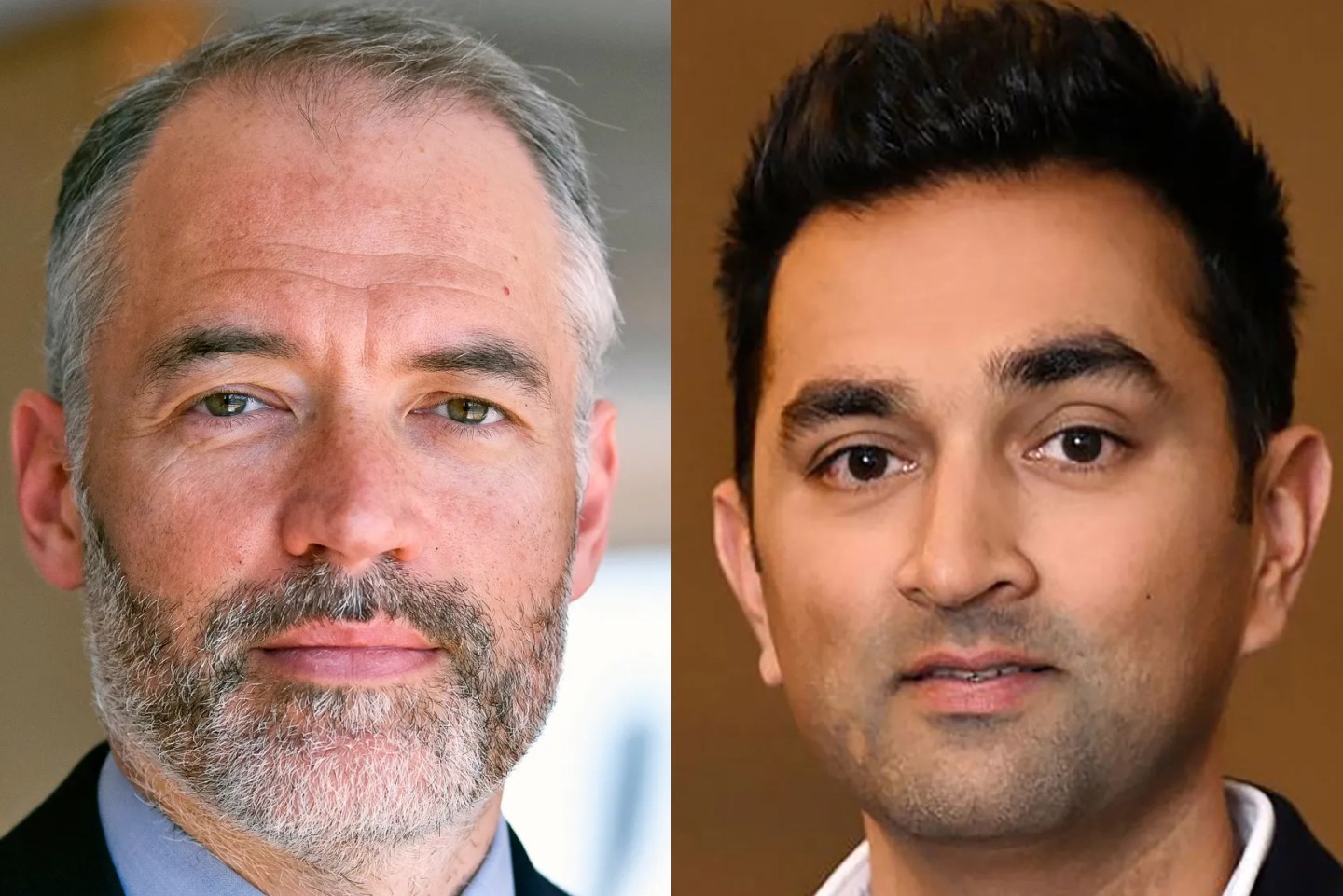
In a new episode of Goldman Sachs Exchanges recorded March 12, Anthony Gutman and Kunal Shah — co-CEOs of Goldman Sachs International and the firm’s global co-heads of Investment Banking and FICC, respectively — offered their most detailed public read yet on what the conflict means for markets, M&A, and the AI era.
‘The parallels are very real’
Shah noted the historical comparison. “The parallels to the Russia/Ukraine shock from 2022 are very real,” he said. “And that playbook is very much in our clients’ minds.”
But he was direct about where the analogy breaks down. In 2022, central bank rates were near historic lows, the global economy was still emerging from the pandemic, and a prolonged supply shock drove one of the worst inflation overshoots in a generation. This time, the starting point is different.
“Monetary policy in most economies is closer to neutral,” Shah said. “And it’s really then a function of how long this shock persists for.”
Goldman’s base case: central banks won’t respond hawkishly unless the conflict becomes protracted or energy markets face renewed pressure — a threshold Shah said remains high. The firm’s economists have already revised their scenario range upward on inflation and downward on growth, Shah noted. “We’re doing a lot of analysis really trying to compare the playbooks.”
He added that the shock arrives at a particularly complicated moment for policymakers already wrestling with AI-driven labor market disruption. “This also comes at a time that was already complicated for central bankers who are still trying to digest what’s going to happen to the labor market given the technology shifts in AI,” he said. “But now coupled with what looks like a stagflationary impulse.”
Record deal volumes. In the middle of a war
The data point that may surprise markets most: European equity issuance has hit record volumes over the past two weeks, even as the conflict escalated. Gutman cited a $5.5 billion deal in which EQT exited its investment in Galderma, plus major transactions from Zurich Insurance and Naturgy — all executed against a backdrop of geopolitical turbulence.
“Activity levels remain elevated,” Gutman said. “It’s consistent with our view that we are in a cyclical upswing.”
The reason, he argued, is that the M&A driving markets right now is fundamentally strategic — Santander buying Webster Financial, Engie acquiring UK Power Networks — deals built on long-term logic that won’t evaporate with a market shock.
“They’re not deals that these corporates are going to do or not do because of AI,” Gutman said. “They’re doing them because they’re growing out their portfolios.”
The bigger AI theme, he added, is actually accelerating M&A rather than slowing it: “What AI is doing is driving a view that scale is critical.”
How business leaders have learned to tune out the noise
That resilience in deal activity reflects something broader that Gutman said he’s observed across his conversations with the world’s top CEOs: a psychological recalibration toward volatility. After COVID, the Ukraine war, and last year’s tariff turbulence, business leaders have simply gotten better at operating through uncertainty — without letting short-term instability derail long-term strategic decisions.
“CEOs and business leaders at large have become a little bit more accustomed to this,” Gutman said. “There’s no question when I talk to CEOs they’ve learnt to work through these risks. And they’ve learnt to work through this volatility. And I think there’s a greater tolerance for it than there has been before.”
This resilience includes reactions to the bearish narrative in markets that have seen software valuations clipped by 20% to 30%. Shah argued the market is conflating genuine disruption risk with companies that have deep enterprise relationships and regulatory moats that won’t disappear overnight. “Someone being able to vibe code is not just going to be able to recreate their business models in any short order,” he said.
The best career advice for the AI era came from a 2003 Internship
Shah offered a memorable moment, too, when the conversation turned to bearish ideas about the prospects for the future, posed by AI. Gutman referred to AI as a “technological revolution,” and his partner pushed back hard on host Allison Nathan’s question about “AI pessimism.” He said, “When I speak to those most involved in that space, they think we hit an inflection point in the last few months. And their enthusiasm has only grown.”
His evidence was personal. As a Goldman intern in 2003, Shah was told to avoid fixed income trading because automation would make the job obsolete. “Back then, there were many people that told me, ‘Don’t become a trader. And especially don’t go into fixed income. And for sure, not the currencies business because the machines are going to take over. You won’t have a career then.”
Two decades later, he said, those predictions were far off the mark. He runs the firm’s global FICC business, and “we still have thriving teams of humans aided by technology.”
The implicit advice for anyone navigating AI disruption today: don’t leave the field — become the person who deploys the tools best. Goldman, Shah said, is “just trying to lead the charge with the applications there so that we can continue to scale and arm our humans with the best technology.”
Gutman closed on a note that cut through the noise of the moment: “Both in structural terms and cyclical terms, we don’t see a basis for us heading into deep-seated recessions around the world.”
For Goldman’s international leadership, the conflict is an event-driven risk layered on top of a structurally sound economy — serious, worth watching, but not a reason to change the thesis.