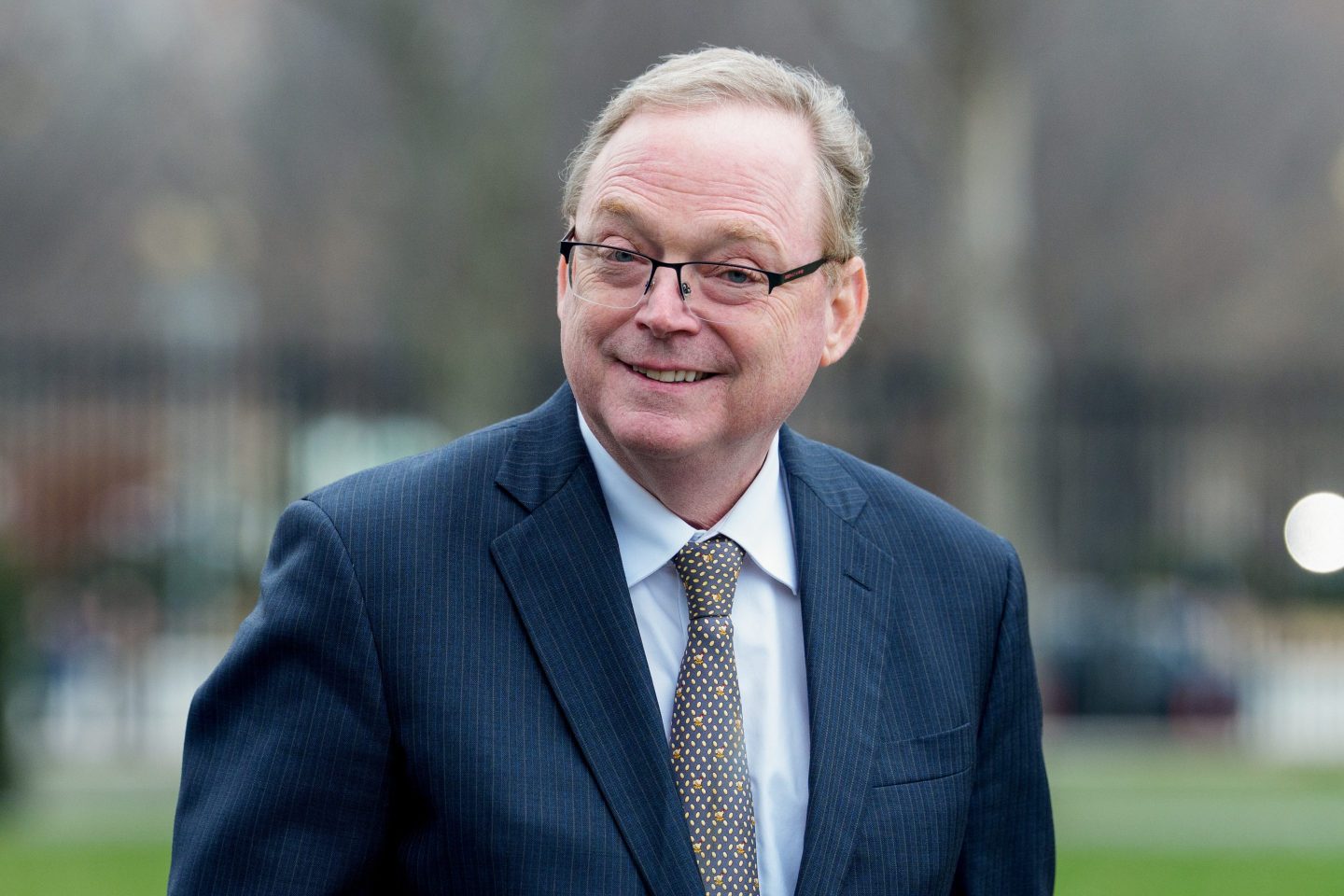
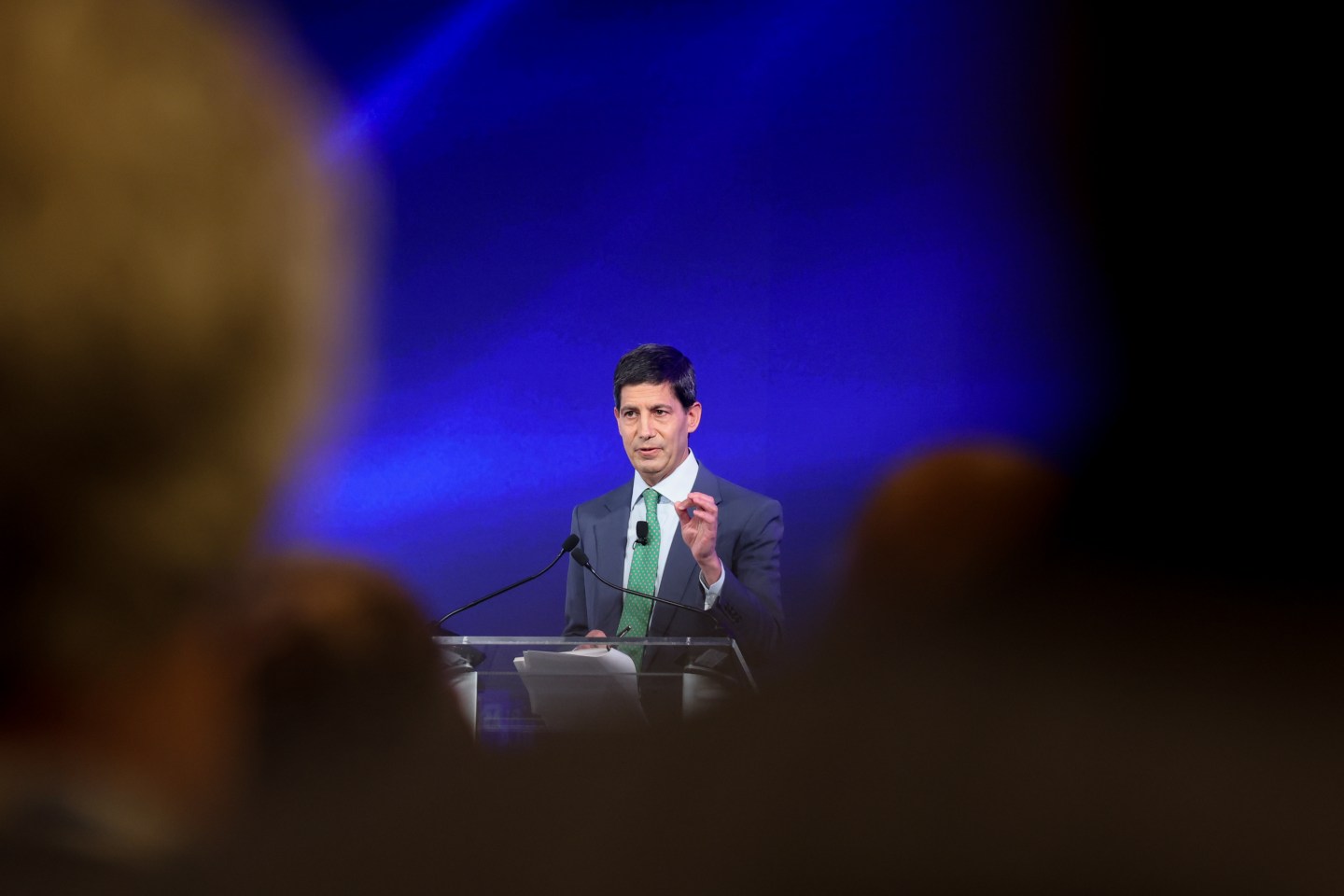
Despite economic data sliding in the favor of Fed nominee Kevin Warsh, the dovish would-be chairman is likely to return to the central bank with something of a battle on his hands.
Warsh, who formerly served as a governor under Chairman Ben Bernanke, landed Trump’s nomination to take over from Jerome Powell this spring—and with it came the implicit signal that the base rate would be moving lower. After all, President Trump made it clear he would be replacing Powell only with someone more open to the rate cuts the Oval Office has been requesting for the past year.
Recent data is supplying the evidence needed to land the argument. At present, inflation expectations are coming in above the target of 2%, but not as hot as economists feared. The Bureau of Labor Statistics (BLS) reported Friday that the Consumer Price Index increased 0.2% in January on a seasonally adjusted basis, bringing the YoY increase to 2.4%. That annual rate is the lowest it’s been since June 2025, suggesting Trump’s tariffs haven’t provided the one-off spike in prices which many consumers feared.
Likewise, while the January jobs report came in better than expected (adding 130,000 roles with the unemployment rate remaining stable), market sentiment is that this rosier report doesn’t signal a change in the underlying base case: the labor market remains in a low-hire, low-fire environment. This would support an argument to cut because inflation is relatively steady (one part of the Fed’s mandate) while employment (another part) is showing signs of weakness, which a base rate cut could help address.
But minutes from the latest Federal Open Market Committee (FOMC) meeting suggest some members aren’t simply resistant to cutting, they’re open-minded about hiking the interest rate if they deem conditions justify the action.
The notes reveal that “almost all” participants support maintaining the current base rate, saying the current level of 3.5% to 3.75% is within the range of a “neutral” level (aka, the equilibirium rate reached when the economy neither needs stimulation or restraining).
This isn’t what the White House wants to hear. Even less popular is the notion that the base rate might be hiked if inflationary conditions worsen. The notes read: “Several participants indicated that they would have supported a two-sided description of the committee’s future interest rate decisions, reflecting the possibility that upward adjustments to the target range for the federal funds rate could be appropriate if inflation remains at above-target levels.”
Of course, one could argue that the 2% target is a moveable object: After all the verbatim figure wasn’t made explicit until 2012, under Warsh’s former boss President Bernanke.
The meeting notes show resistance to deviation from this commitment, and warned about cutting in an inflationary environment: “Several participants cautioned that easing policy further in the context of elevated inflation readings could be misinterpreted as implying diminished policymaker commitment to the 2% inflation objective, perhaps making higher inflation more entrenched.”
If a speculator was to play Devil’s advocate, one might also argue the caution also comes back to Fed independence: If the FOMC is seen to be reducing rates in an environment at-odds with its mandate, questions about motivation—and directive from the political sphere—may be asked.
But the notes also show that some participants think labor market conditions could deteriorate while inflation continues to decline: “These participants cautioned that keeping policy overly restrictive could risk further deterioration in the labor market.”
Warsh’s dynamic
The differing opinions between dovish members (voters backing a cut like Stephen Miran and Chris Waller) and hawkish members “sets up an interesting dynamic if and when Kevin Warsh is confirmed as Fed Chair, succeeding Chair Powell,” noted EY-Parthenon chief economist, Gregory Daco.
Draco continued: “While Warsh may enter with a perceived dovish bias, he will first need to demonstrate that his views are anchored in economic fundamentals rather than politics. He would then need to persuade a committee that appears increasingly hawkish and comfortable with a policy near neutral.”
Of course, Warsh’s view on the economy is one of twelve voting voices (and droves of other economists and regional bank presidents) on the future of the base rate. However, the role of the Fed chairman is, to some extent, to rally the troops toward a consensus.
The Fed minutes show a policy direction as clear as mud, echoed UBS’s chief economist Paul Donovan, who quipped: “The Federal Reserve’s meeting minutes showcased a full range of opinion, with advocates of rate cuts, a long pause, and the possibility of rate increases. Were it not for the inability of the minutes to spell the word ‘labour’ correctly, this level of disagreement would give the impression of a Bank of England rather than a Fed meeting.”
A consensus could be found around opinions of a stabilizing labor market, he added, concluding: “Overall, the minutes still allow for rate cuts, but an immediate easing is unlikely.”