
• Home
  • Latest
  • Fortune 500
  • Finance
  • Tech
  • Leadership
  • Lifestyle
  • Rankings
  • Multimedia
Economy

Trump’s tariffs are a ‘dirty tax’ that will make the $38.6 trillion national debt crisis even worse over the long term, top analyst says

Nick Lichtenberg
By
Nick Lichtenberg
Nick Lichtenberg
Business Editor
Down Arrow Button Icon
Nick Lichtenberg
By
Nick Lichtenberg
Nick Lichtenberg
Business Editor
Down Arrow Button Icon
February 19, 2026, 9:50 AM ET
trump
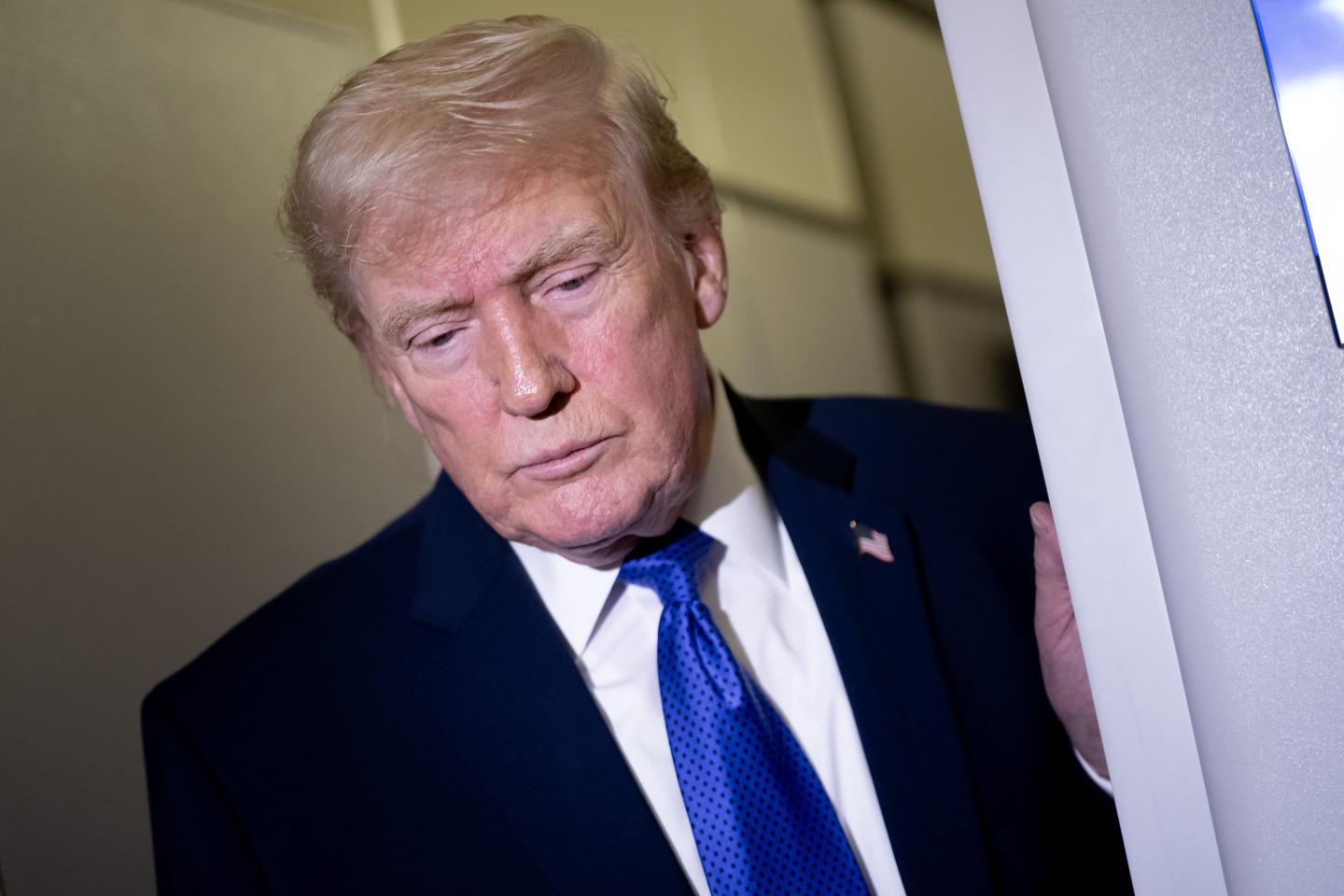
President Donald Trump on Feb. 16, 2026, en route to Washington, D.C. Nathan Howard—Getty Images

Kent Smetters, faculty director of the Penn Wharton Budget Model, is challenging the narrative that tariffs are a tool for protecting domestic industry. In a recent interview with Fortune, Smetters held forth on what he said was his long-held view that broad-based tariffs are a “dirty VAT” (value-added tax)—a policy he believes is significantly more damaging to the U.S. economy than traditional tax increases.

Recommended Video

While economists generally view a broad-based, flat VAT as an efficient method for raising government revenue, Smetters distinguishes tariffs as a “dirty” variation because they are far less uniform. A standard VAT applies broadly, distorting decisions primarily between spending now versus saving for later. Tariffs, however, target specific goods, causing consumers and businesses to shift behavior in inefficient ways to avoid the tax.

Even more, Smetters said, despite the tariffs being pitched as a deficit-reduction tool that will bring in revenue that makes a material difference on the United States’ $38.6 trillion national debt, he sees it another way.

“We have a lot of debt, and we are going to be floating more and more debt along our current baseline,” Smetters said, adding he sees a future ahead in which investors demand a higher return to keep investing in the U.S., and a “feedback effect” that will just keep driving the debt higher, far into the future.

The Supreme Court has been weighing the legality of many of Trump’s tariffs since hearing arguments in November, with several Trump-appointed justices having sharp wording on the issue. Their decision may come down as soon as Friday.

The ‘corporate tax’ in disguise

A central flaw in the tariff strategy, according to Smetters, is a misunderstanding of what America actually imports. He notes 40% of imports are not final goods destined for store shelves, but intermediate inputs used by U.S. companies to manufacture their own products. Consequently, tariffs act as a tax on American producers, raising their costs and making them less competitive globally.

“The idea that this is pro-American is actually just the opposite,” Smetters said. “It hurts American manufacturers.” He cited the example of companies like Deere, arguing the U.S. economy benefits when such firms focus on high-margin intellectual property rather than producing low-margin components like screws or steel strips. By taxing those inputs, the policy effectively penalizes domestic production.

Deere has repeatedly quantified tariffs as a major cost item, revealing roughly half a billion dollars worth of costs for the full 2025 fiscal year and projecting a $1.2 billion hit for 2026. Management has described tariffs (on metals and specific imported components) as causing “margin pressures” and weaker operating profits, even when revenue has held up. To Smetters’s point, Deere has evaluated and renegotiated supply contracts and considered shifting some sourcing and production footprints to reduce tariff exposure and input‑cost increases.

Americans shouldn’t want Deere to be sourcing steel and screws, he argued.

“That’s really low-margin stuff,” he said. “We want them to focus on the really high-margin intellectual property that they do.” He added he thinks this is “really missing” from the wider discourse.

Long-term debt spiral

Smetters shared Penn Wharton Budget Model projections showing that while the immediate impact of tariffs might seem manageable—potentially reducing GDP by only 0.1% in the first year—the long-term outlook is grim. Smetters projected a GDP reduction of roughly 2.5% over 30 years, considering the impact on the debt this dirty tax would add through escalating debt interest payments.

The primary driver of this decline is this “massive feedback effect” on U.S. debt. As American companies become less efficient and the government floats more debt, Smetters explained global investors will demand a higher return (or risk premium) to hold U.S. Treasuries. In that sense, the tariffs problem is really a national debt problem.

“Think about U.S. Treasury bonds,” he said, predicting investors in the U.S. will demand a higher return to invest. “What happens if the private market now has to pay a higher return to attract investments because it has higher costs?”

The only result, he said, is Treasuries will pay a higher yield to investors over a longer and longer time. The U.S. runs a real risk of turning into Japan—a favorite doomsday prediction from macro analysts such as Societe Generale’s Albert Edwards—which has been paying upwards of 25% of its revenue on interest payments since its stock-market bubble popped in the early 1990s. The U.S. is due to pay $1 trillion in interest payments next year, he noted, “and climbing.”

Worse than a corporate tax hike

To illustrate the inefficiency of tariffs, Smetters compared them to a hypothetical hike in the corporate income tax, which is typically considered the least efficient way to raise revenue. He estimates that to raise the same amount of revenue as the proposed tariffs, the U.S. would need to raise the corporate tax rate from 21% to 29%. However, the economic damage caused by the tariffs would be “2.5 times worse” than that corporate tax hike.

Smetters clarified that he’s not in favor of raising corporate income tax revenue—he’s not advocating for any policy in particular—but essentially he’s surprised that Trump has found a new form of the most inefficient tax increase possible: “Well, Trump just found a new one. It’s even more inefficient than that.”

Smetters noted a “destination-based” tax proposed in 2016 could have achieved similar revenue goals more efficiently. However, that proposal was effectively killed by major retailers, including Walmart, which feared it would raise their import costs. Instead, the U.S. is left with what Smetters calls a “dirty” alternative—a sales tax disguised as trade policy that risks hindering the very growth it promises to protect.

Subscribe to Fortune Gulf Brief. Every Tuesday, this new newsletter will deliver clear-eyed, authoritative intelligence on the deals, decisions, policies, and power shifts shaping one of the world’s most consequential regions, written for the people who need to act on it. Sign up here.
About the Author
Nick Lichtenberg
By Nick LichtenbergBusiness Editor
LinkedIn icon

Nick Lichtenberg is business editor and was formerly Fortune's executive editor of global news.

See full bioRight Arrow Button Icon

Latest in Economy

Finance
Lorem ipsum dolor sit amet, consectetur adipiscing elit, sed do eiusmod tempor incididunt ut labore et dolore magna aliqua. Ut enim ad minim veniam
By Fortune Editors
October 20, 2025
Finance
Lorem ipsum dolor sit amet, consectetur adipiscing elit, sed do eiusmod tempor incididunt ut labore et dolore magna aliqua. Ut enim ad minim veniam
By Fortune Editors
October 20, 2025
Finance
Lorem ipsum dolor sit amet, consectetur adipiscing elit, sed do eiusmod tempor incididunt ut labore et dolore magna aliqua. Ut enim ad minim veniam
By Fortune Editors
October 20, 2025
Finance
Lorem ipsum dolor sit amet, consectetur adipiscing elit, sed do eiusmod tempor incididunt ut labore et dolore magna aliqua. Ut enim ad minim veniam
By Fortune Editors
October 20, 2025
Finance
Lorem ipsum dolor sit amet, consectetur adipiscing elit, sed do eiusmod tempor incididunt ut labore et dolore magna aliqua. Ut enim ad minim veniam
By Fortune Editors
October 20, 2025
Finance
Lorem ipsum dolor sit amet, consectetur adipiscing elit, sed do eiusmod tempor incididunt ut labore et dolore magna aliqua. Ut enim ad minim veniam
By Fortune Editors
October 20, 2025

Most Popular

Finance
Lorem ipsum dolor sit amet, consectetur adipiscing elit, sed do eiusmod tempor incididunt ut labore et dolore magna aliqua. Ut enim ad minim veniam
By Fortune Editors
October 20, 2025
Finance
Lorem ipsum dolor sit amet, consectetur adipiscing elit, sed do eiusmod tempor incididunt ut labore et dolore magna aliqua. Ut enim ad minim veniam
By Fortune Editors
October 20, 2025
Finance
Lorem ipsum dolor sit amet, consectetur adipiscing elit, sed do eiusmod tempor incididunt ut labore et dolore magna aliqua. Ut enim ad minim veniam
By Fortune Editors
October 20, 2025
Finance
Lorem ipsum dolor sit amet, consectetur adipiscing elit, sed do eiusmod tempor incididunt ut labore et dolore magna aliqua. Ut enim ad minim veniam
By Fortune Editors
October 20, 2025
Finance
Lorem ipsum dolor sit amet, consectetur adipiscing elit, sed do eiusmod tempor incididunt ut labore et dolore magna aliqua. Ut enim ad minim veniam
By Fortune Editors
October 20, 2025
Finance
Lorem ipsum dolor sit amet, consectetur adipiscing elit, sed do eiusmod tempor incididunt ut labore et dolore magna aliqua. Ut enim ad minim veniam
By Fortune Editors
October 20, 2025
Fortune Secondary Logo
Rankings
  • 100 Best Companies
  • Fortune 500
  • Global 500
  • Fortune 500 Europe
  • Most Powerful Women
  • World's Most Admired Companies
  • See All Rankings
  • Lists Calendar
Sections
  • Finance
  • Fortune Crypto
  • Features
  • Leadership
  • Health
  • Commentary
  • Success
  • Retail
  • Mpw
  • Tech
  • Lifestyle
  • CEO Initiative
  • Asia
  • Politics
  • Conferences
  • Europe
  • Newsletters
  • Personal Finance
  • Environment
  • Magazine
  • Education
Customer Support
  • Frequently Asked Questions
  • Customer Service Portal
  • Privacy Policy
  • Terms Of Use
  • Single Issues For Purchase
  • International Print
Commercial Services
  • Advertising
  • Fortune Brand Studio
  • Fortune Analytics
  • Fortune Conferences
  • Business Development
  • Group Subscriptions
About Us
  • About Us
  • Press Center
  • Work At Fortune
  • Terms And Conditions
  • Site Map
  • About Us
  • Press Center
  • Work At Fortune
  • Terms And Conditions
  • Site Map
  • Facebook icon
  • Twitter icon
  • LinkedIn icon
  • Instagram icon
  • Pinterest icon

Latest in Economy

Ray Dalio: the ‘heart attack’ of America’s debt crisis is just the beginning of a ‘great turbulence’ that will reshape the country
Economynational debt
Ray Dalio: the ‘heart attack’ of America’s debt crisis is just the beginning of a ‘great turbulence’ that will reshape the country
By Nick LichtenbergMay 8, 2026
2 hours ago
Tired hispanic man in a professional suit feeling sad while waiting for the appointment of a job interview at a recruitment office
EconomyJobs
The job market is healing for everyone—except in the office
By Eva RoytburgMay 8, 2026
2 hours ago
trump
EconomyU.S. jobs report
U.S. economy surprises with 115,000 new jobs created in April
By Paul Wiseman and The Associated PressMay 8, 2026
4 hours ago
Current price of oil as of May 8, 2026
Personal FinanceOil
Current price of oil as of May 8, 2026
By Joseph HostetlerMay 8, 2026
4 hours ago
mamdani
Real EstateTaxes
New York is going to tax the wealthy’s second homes, but not tax wealth itself
By Anthony Izaguirre and The Associated PressMay 8, 2026
5 hours ago
Wall Street piles into ‘NACHO’ bet on looming oil shortages in June
EconomyMarkets
Wall Street piles into ‘NACHO’ bet on looming oil shortages in June
By Jim EdwardsMay 8, 2026
7 hours ago

Most Popular

California farmers must destroy 420,000 peach trees after Del Monte closes its canneries and cancels more than $550 million in long-term contracts
North America
California farmers must destroy 420,000 peach trees after Del Monte closes its canneries and cancels more than $550 million in long-term contracts
By Sasha RogelbergMay 7, 2026
21 hours ago
U.S. Treasury will have to borrow $2 trillion this year just to continue functioning—more than $166 billion every month
Economy
U.S. Treasury will have to borrow $2 trillion this year just to continue functioning—more than $166 billion every month
By Eleanor PringleMay 7, 2026
1 day ago
'Blue dot fever' plagues musicians like Post Malone, Meghan Trainor, and Zayn as a growing list of artists cancel tours due to lagging ticket sales
Arts & Entertainment
'Blue dot fever' plagues musicians like Post Malone, Meghan Trainor, and Zayn as a growing list of artists cancel tours due to lagging ticket sales
By Dave Lozo and Morning BrewMay 7, 2026
22 hours ago
A Michigan farm town voted down plans for a giant OpenAI-Oracle data center. Weeks later, construction began
Magazine
A Michigan farm town voted down plans for a giant OpenAI-Oracle data center. Weeks later, construction began
By Sharon GoldmanMay 6, 2026
2 days ago
Airbnb CEO Brian Chesky warns two types of people won’t survive the AI era: ‘pure people managers’ and workers who resist change
Success
Airbnb CEO Brian Chesky warns two types of people won’t survive the AI era: ‘pure people managers’ and workers who resist change
By Emma BurleighMay 7, 2026
1 day ago
Current price of oil as of May 7, 2026
Personal Finance
Current price of oil as of May 7, 2026
By Joseph HostetlerMay 7, 2026
1 day ago

© 2026 Fortune Media IP Limited. All Rights Reserved. Use of this site constitutes acceptance of our Terms of Use and Privacy Policy | CA Notice at Collection and Privacy Notice | Do Not Sell/Share My Personal Information
FORTUNE is a trademark of Fortune Media IP Limited, registered in the U.S. and other countries. FORTUNE may receive compensation for some links to products and services on this website. Offers may be subject to change without notice.