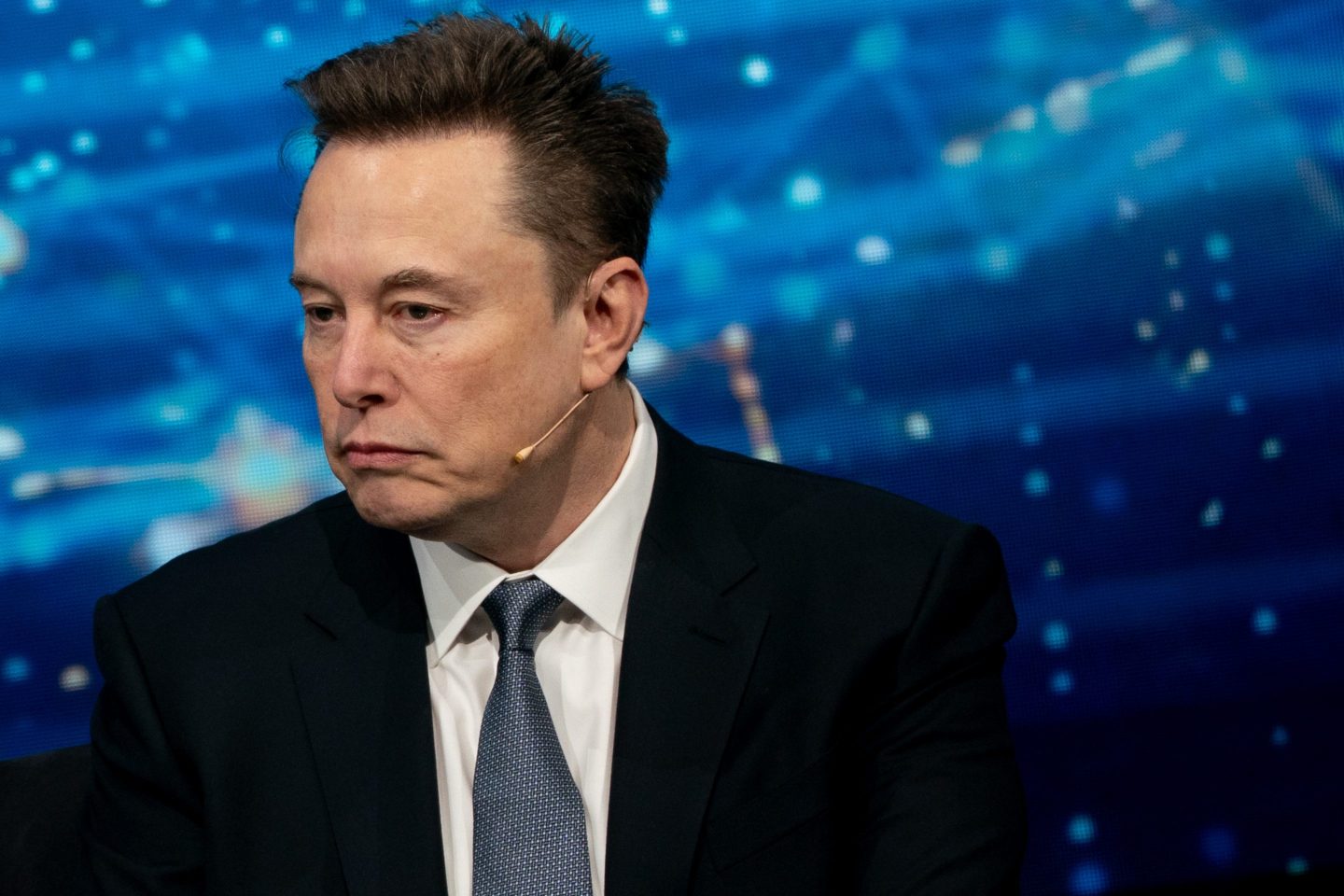
In the future, Elon Musk sees humans as metaphorical vegetable farmers.
The Tesla CEO said at the recent U.S.-Saudi Investment Forum in Washington that in the next 10 to 20 years, work will be optional, likening the decision to have a job to the more laborious upkeep of a vegetable garden.
“My prediction is that work will be optional. It’ll be like playing sports or a video game or something like that,” Musk said. “If you want to work, [it’s] the same way you can go to the store and just buy some vegetables, or you can grow vegetables in your backyard. It’s much harder to grow vegetables in your backyard, and some people still do it because they like growing vegetables.”
The future of optional work will be the result of millions of robots in the workforce able to usher in a wave of enhanced productivity, according to Musk. The tech mogul, worth about $681 billion, has made the recent push to expand Tesla beyond just electric vehicles, working on consolidating his sprawling business interests into his broader vision of an AI-fueled, robotic-powered future. That includes his goal of having 80% of Tesla’s value come from his Optimus robots, despite continuous production delays for the humanoid bots.
These advancements in automation will have other benefits, too, according to Musk. In an episode of the Moonshots with Peter Diamandis podcast earlier this month, the Tesla CEO predicted his automatons would outnumber human surgeons within the decade. These advancements in medical care would exceed the quality of service the president receives, he said.
In Musk’s imagined future, humans would need that exceptional medical care for longer. He told Diamandis overcoming the problem of a limited lifespan is a programming issue, with access to immortality within human reach thanks to AI.
“You’re pre-programmed to die. And so if you change the program, you will live longer,” Musk said.
Addressing growing pains of an automated future
To many others, the notion of an automated future is less bright, particularly amid concerns about and early evidence of AI displacing entry-level jobs, which may be contributing to Gen Z’s job market woes and flatlining income growth—more of a nightmare than a utopian dream.
But in Musk’s automated, job-voluntary future, money won’t be an issue, he said. Musk takes a page from Iain M. Banks’ Culture series of science fiction novels, in which the self-proclaimed socialist author conjures a post-scarcity world filled with superintelligent AI beings and no traditional jobs.
“In those books, money doesn’t exist. It’s kind of interesting,” Musk said. “And my guess is, if you go out long enough—assuming there’s a continued improvement in AI and robotics, which seems likely—money will stop being relevant.”
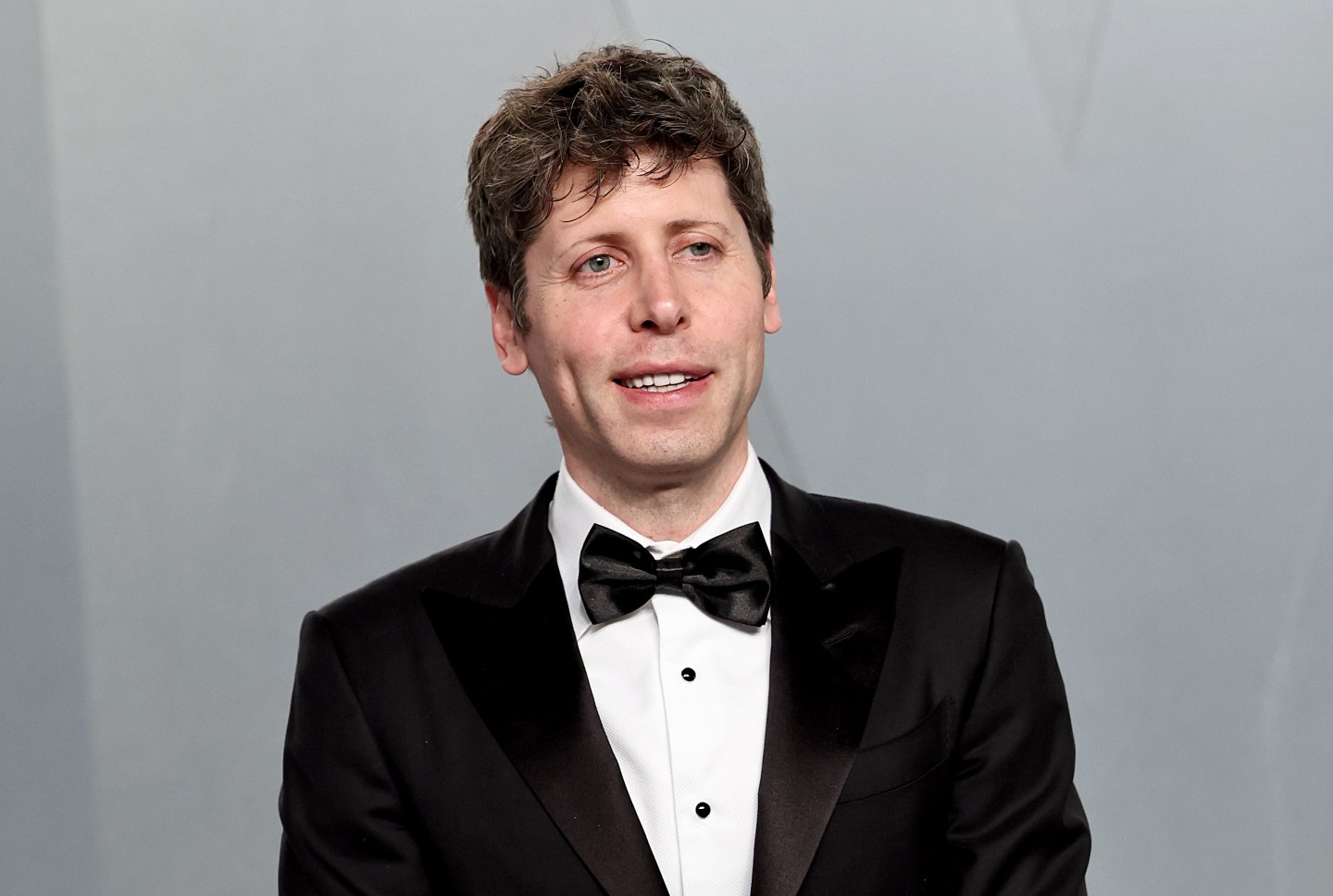
At Viva Technology 2024, Musk suggested “universal high income” would sustain a world without necessary work, though he did not offer details on how this system would function. His reasoning rhymes with that of OpenAI CEO Sam Altman, who has advocated for universal basic income, or regular payments given unconditionally to individuals, usually by the government.
“There would be no shortage of goods or services,” Musk said at last year’s conference.
Tesla did not immediately respond to Fortune’s request for comment.
Is Musk’s optional-work vision possible?
Creating the world Musk is describing will be a challenge, according to economists. First of all, there’s the question of whether the technology to automate jobs will be accessible and affordable in the next couple of decades. While the cost of AI is decreasing, robotics are stubbornly expensive, making them harder to scale, according to Ioana Marinescu, an economist and associate professor of public policy at the University of Pennsylvania, who alongside colleague Konrad Kording published a working paper at the Brookings Institution last year. (For example, AI expense management platform Ramp noted in April 2025 companies are now paying $2.50 per 1 million tokens—the fundamental unit for powering AI—compared with $10 a year ago.)
“We’ve been at it making machines forever, since the industrial revolution, at scale,” Marinescu told Fortune. “We know from economics that … you often run—for these kinds of activities—into decreasing returns, as it gets harder in order to make progress in a line of technology that you’ve been at, in this case, for a couple of centuries.”
AI is progressing rapidly, she said. Large language models can be applied to myriad white-collar careers, while physical machines, which she said are necessary in automated labor, are not only more expensive, but highly specialized, contributing to the slowdown in their workplace implementation.
Marinescu agrees with Musk’s vision of full-scale automation as the future of labor, but she is dubious about his timeline—not only because of the limitations of robotics, but also because AI adoption in the workplace is still not as rapid as anticipated, despite recent tech-related layoffs. A Yale Budget Lab report from October 2025 found that since ChatGPT’s November 2022 public release, the “broader labor market has not experienced a discernible disruption” because of AI automation.
Then there’s the matter of what these sweeping changes in labor will mean for the millions—or possibly billions—of people without jobs. Even with an established need for a universal basic income, finding the political willpower to make it happen is a different issue, said Samuel Solomon, an assistant professor of labor economics at Temple University. He told Fortune the political structure supporting the transformed labor force will be just as important as the technological one.
“AI has already created so much wealth and will continue to,” Solomon said. “But I think one key question is: Is this going to be inclusive? Will it create inclusive prosperity? Will it create inclusive growth? Will everyone benefit?”
The current systems have appeared to widen the gap between the haves and have-nots during this AI industrial revolution, beginning with Musk’s $1 trillion pay package. A ballooning AI bubble has also illuminated class differences, with earnings expectations being revised up for the Magnificent Seven because of the AI boom, while expectations for the rest of the S&P 493 are being revised down, according to Apollo Global Management chief economist Torsten Slok. It suggests that as of today.
“Spending by well-off Americans, driven by their surging stock portfolios, is the single most significant driver of growth,” Slok wrote in a blog post.
Existential changes from AI
Ironing out the complicated logistics of a work-optional world is one thing. Figuring out whether that’s something humans really want is another.
“If the economic value of labor declines so that labor is just not very useful anymore, we’ll have to rethink how our society is structured,” Anton Korinek, professor and faculty director of the Economics of Transformative AI Initiative at the University of Virginia, told Fortune.
Korinek cited research, such as the landmark 1938 Harvard University study that found humans derive satisfaction from meaningful relationships. Most of those relationships right now come from work, he said. In Musk’s imagined future, the coming generations will have to shift the paradigm of establishing meaningful relationships.
Musk offered his own take on the existential future of humans at Viva Technology in 2024.
“The question will really be one of meaning: If the computer and robots can do everything better than you, does your life have meaning?” he said. “I do think there’s perhaps still a role for humans in this—in that we may give AI meaning.”
A version of this story was published on Fortune.com on November 20, 2025.
More on Elon Musk’s vision for the future:
- Elon Musk shares 4 bold predictions for the future of work: Robot surgeons in 3 years, immortality, and no need for retirement savings
- Bad luck, six-figure earners: Elon Musk warns that money will ‘disappear’ in the future as AI makes work (and salaries) irrelevant
- Elon Musk says saving for retirement is irrelevant because AI is going to create a world of abundance: ‘It won’t matter’