One week last autumn, I hit my customer feedback limit.
I had seen my doctor and done some online shopping. Then I went on a vacation to Europe that involved three airlines and three hotel stays. At every turn, I was bombarded with dozens of requests for feedback, often multiple times from the same company, for two or more aspects of the same interaction.
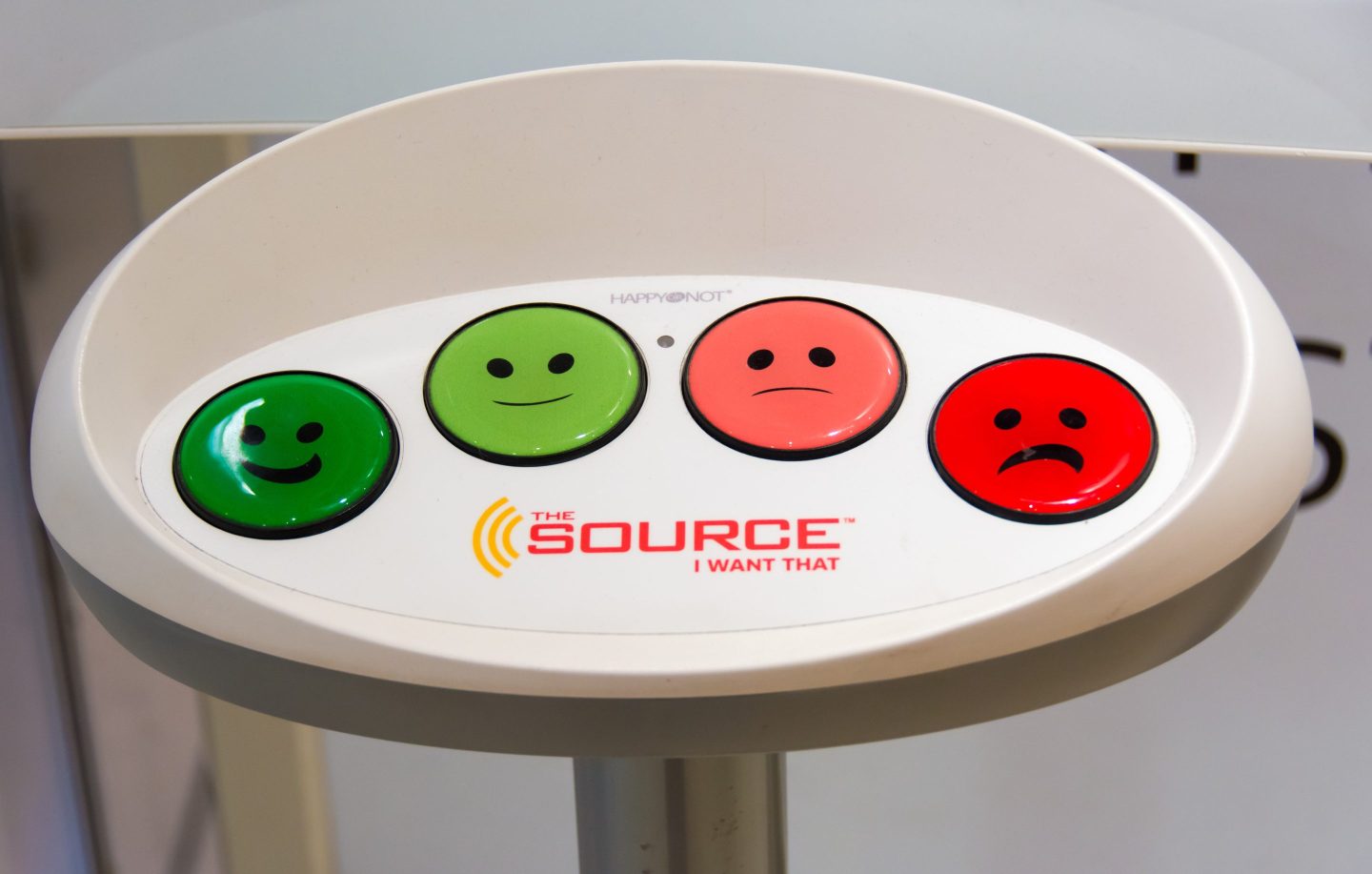
“How did we do?” “How was registration?” “Rate your doctor!” “Tell us about your flight!” “What did you think of our meal offerings in the Terminal 4 lounge?” “How was check-in at your hotel?” And this doesn’t include the little four-facial-expression thingamajigs in airport restrooms that ask you to rank cleanliness by touching them. ENOUGH!!!
Americans have long been bombarded by customer experience surveys. But if you feel that it has gotten worse—much worse—in recent years, it’s not your imagination.
Last month, Qualtrics, a software company that helps organizations collect feedback, said the total number of customer and employee interactions processed on its platform has doubled since 2023, and that it now captures and analyzes more than 3.5 billion conversations and interactions annually. That includes surveys, but also call center conversations, chat logs, survey responses, social media posts, and product reviews. According to research firm IBISWorld, U.S. firms will have spent $36.4 billion this year on market research, an expense that has been rising almost 4% annually.
“Survey fatigue is real,” says Brad Anderson, president of product and engineering at Qualtrics. He acknowledged that many emailed survey requests have devolved into spam, making people feel overwhelmed. “It’s things like the same brand is bombarding an individual over and over again.”
And even as the common consumer becomes increasingly exasperated by the endless stream of feedback request emails, marketing experts say they don’t even work particularly well. “If only all of this email besiegement was leading to meaningful insights,” says Peter Fader, a professor at the Wharton School and an expert in customer analytics. “But it rarely does.”
For one thing, surveys tend to over-index for rants and raves: People are so exasperated with their interaction or with the persistent, nagging emails that they might answer in an angry way. And when consumers are happy with their product or service, they are far likelier to want to fill out a survey to give credit where it’s due. But the large swath of views between those strong opinions are much harder to capture.
“You’re getting a very biased view, simply because there’s survey overload,” says New York University marketing professor Priya Raghubir.
A short history of ‘customer obsession’
Asking customers what they like and dislike after a transaction is nothing new, of course. In the first half of the past century, as businesses grew in scale in the wake of the Industrial Revolution, they would send standardized questionnaires by mail in massive numbers, refining the research tools to glean insights.
Then, by mid-century, focus groups, pioneered by sociologist Robert K. Merton, and a more rigorous analysis of survey results, both qualitative and quantitative, allowed for much more sophisticated research. Many of the early adopters were in the consumer packaged goods sector.
By the turn of the 21st century, the sector saw the emergence of the Net Promoter Score (NPS), pioneered by Bain & Co. consultant Fred Reichheld as a top metric—one that many marketing chiefs still swear by. It measured consumer sentiment by asking one simple question: whether someone would recommend a brand to others. It has become the gold standard, rising just as then Amazon CEO Jeff Bezos’s mantra—“We’re not competitor obsessed, we’re customer obsessed”—was becoming conventional business wisdom.
The NPS was the first time customer feedback became a tool closely followed in the C-suite. Even today, executives love to trot out their NPS results on calls with Wall Street analysts.
But in the age of e-commerce—in which you seem to have to give your email address and create an account with any entity in order to make the simplest transaction, from your neighborhood coffee shop and your favorite museum’s ticketing system to gigantic retailers and food delivery companies—the consumer feedback apparatus has gone into overdrive.
Brands know where to find you at all times, and every interaction seems to lead to a “How are we doing?” email—all in the name of the hallowed “deeper engagement” that supposedly builds customer loyalty.
Watch what customers do, not what they say
Practitioners and consultants say there are ways to reduce the oppressive volume of emails people get without losing any of the valuable insights. Fader of Wharton says brands should pay closer attention to what consumers do, and less to what they say.
“Actions speak louder than words,” says Fader. So instead of asking a busy traveler whether they enjoyed an airport lounge, the airline can examine whether they returned to it on future flights. Corporations have enormous amounts of data from all their interactions with customers that in theory should allow them to understand their behavior on a granular level. It’s a key factor in why companies push loyalty programs so assertively.
There’s also a risk in asking customers what they really think: They might actually tell you. NYU’s Raghubir offered a personal example of how that can backfire. A million-mile flier of a major airline, Raghubir says she is considering ditching the carrier after her detailed, if pointed, feedback in surveys has been consistently ignored. “I have raved and ranted—and there was radio silence on the other side,” she griped.
In this age of technological responsiveness, she said, surveys should have a feature to detect a customer’s extreme displeasure and alert a human on the consumer experience team.
Don’t just ask for feedback; act upon it
Indeed, a big part of making customers feel heard is actually addressing their concerns—doing something with the feedback gleaned from these ubiquitous surveys.
But many surveys take a one-size-fits-all approach, says Qualtrics’ Anderson. If a survey doesn’t zero in on a customer’s particular experience or reflect whether the customer has been surveyed before, “Why should they take the time to fill the survey?” Anderson said.
This is where AI could make a difference, he noted. He sees a future in which surveys allow for more qualitative opinions, and redirect feedback that is irrelevant or minor. For instance, if an airline customer wants to rant about the Transportation Security Administration screening process, Qualtrics’ tech can have the digital survey explain that airline security is out of its control, and link to the TSA’s feedback page.
Generative AI could also allow a survey to automatically add a few questions if the respondent has strong feelings about something. So if a traveler hates an airport lounge, the survey could drill down to find specific reasons, such as not enough vegetarian options, or a messy buffet. Qualtrics’ research shows that often people are happy to answer more questions—if they feel someone is paying attention and acting on their feedback.
AI already allows brands to integrate insights from calls, chats, reviews, and social media to find trends. Given this treasure trove of data and insights that companies already have, says Columbia Business School professor Vicki Morwitz, the surveys companies send to consumers look increasingly outdated.
“They could answer their questions,” she says, “without having to ask us.”
This article appears in the February/March 2026 issue of Fortune with the headline “Companies are inundating customers with surveys—and getting worse results.”