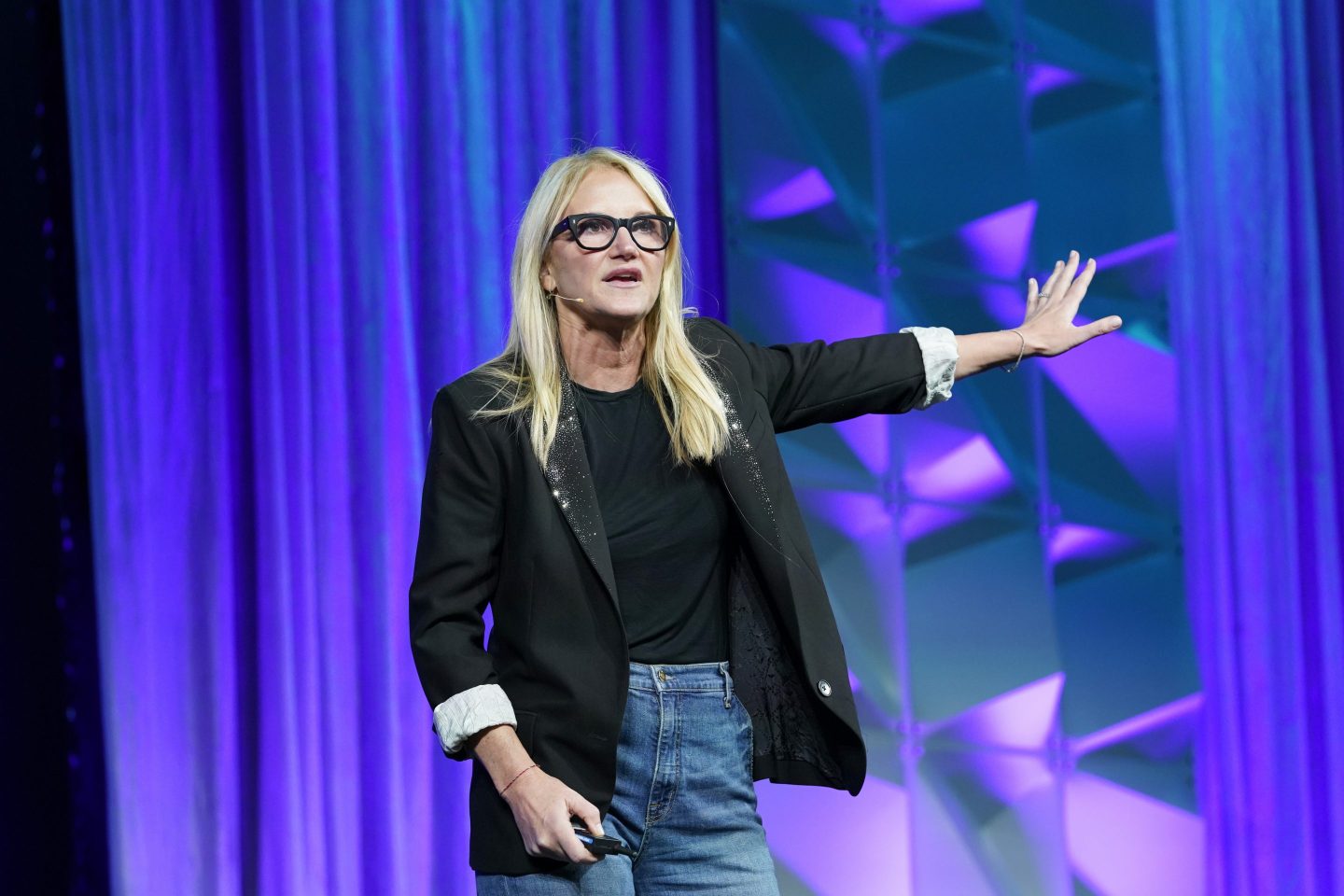
Billionaire Michele Kang has made a splash in women’s sports with her goal of professionalizing women’s soccer. She owns the Washington Spirit, the London City Lionesses, and OL Lyonnes, and in 2024 launched Kynisca, a women’s sports organization to power it all. Now, Fortune is the first to report, she’s launching the Kang Women’s Institute, an organization within U.S. Soccer’s Soccer Forward foundation. It promises to research the needs of female athletes, from their specific requirements for injury recovery and reentry after pregnancy to best practices for coaching girls in youth sports.
Kang started this work through her own organization; after buying three clubs, she noticed problems compared with men’s sports. “Why do we have more ACL injuries? Why don’t we have enough female coaches and referees?” she was asking after entering the space with the capital she earned from selling her health care IT company. Earlier this year, she merged Kynisca’s innovation hub with U.S. Soccer in hopes that the federation’s brand-name convening power would get researchers and study participants on board faster. In total, she’s committed $55 million to this work: $25 million for the new institute, with projects already in the works with UNC and Duke, and $30 million for specific programs for youth sports and coaching. Kang has previously announced her financial commitments and is announcing the launch of the new institute today.
Not just ‘small men’
Only 6% of sports science research globally focuses on women. Kang says that’s because of less attention paid to women both in sports and in health research more broadly. “It’s an overall bias in society,” she says. In sports, women have been treated as “small men,” she says.
Emma Hayes, coach of the U.S. Women’s National Team and former manager of Chelsea Women, where she won seven titles, served as a key advisor on this effort. “The whole system is based on copy and paste from the men’s game,” she says.
Hayes realized the detrimental effects that treating women athletes the same as men could have about a decade ago, when three of her players at Chelsea had ACL injuries in one year. Physical therapists didn’t understand why women weren’t coming back in the same six- to seven-month window as men. They didn’t factor in that “we don’t have as much testosterone, so we don’t build muscle in the same way,” she recalls. If their rehab could have incorporated those factors from the beginning, the players might have been better served. Then when Chelsea was in the FA Cup, several players on the team were all in the final phase of their menstrual cycle, and it affected their reaction times. She wanted to understand how to train across nutrition and performance to account for these realities.
More recently, the U.S. Women’s National Team has had multiple players become pregnant and give birth. She wants to not just support players when they return to play, but help them throughout their pregnancies—like understanding when and how to train, and accounting for that player’s specific experience of pregnancy. When they do come back, their return to play plan should take into account whether they had a vaginal birth or a C-section.
The Kang Institute plans to tackle all of this. At Kang’s clubs, players wear Oura rings to track their health data and train based on those insights.
It’s a radical departure from where U.S. Soccer was just a few years ago—settling a lawsuit with players over their fight for equal pay. The lawsuit was settled in 2022, and Hayes joined as coach in 2024. Kang started getting involved in women’s sports almost four years ago.
The youth pipeline
Some of the most fascinating work, however, will happen at the youth level. The pipeline into women’s soccer starts young; many professional women athletes credit Title IX with creating the opportunity for them to reach the pros. Research shows that girls often drop out of sports around age 12—just as they’re entering puberty and dealing with body confidence issues. Youth sports coaches should be trained in how to handle this sensitive time in girls’ lives, Hayes says. “It’s not as simple as just going to the field with an extra tampon and a sanitary towel, though that would be helpful,” she says. “Everything from ensuring we don’t wear white shorts to what are the best ways for having challenging conversations in what is a really tricky period for young girls? How might we support [them] when body image plays such an important part in their own self-confidence?”
The Kang Institute has officially committed to launching the first nationwide study focused on the needs of female athletes; collaborating with the NWSL and USL, the two main professional leagues, to establish research-backed standards in player health, safety protocols, and training methods; and creating tools and resources to support athletes’ well-being.
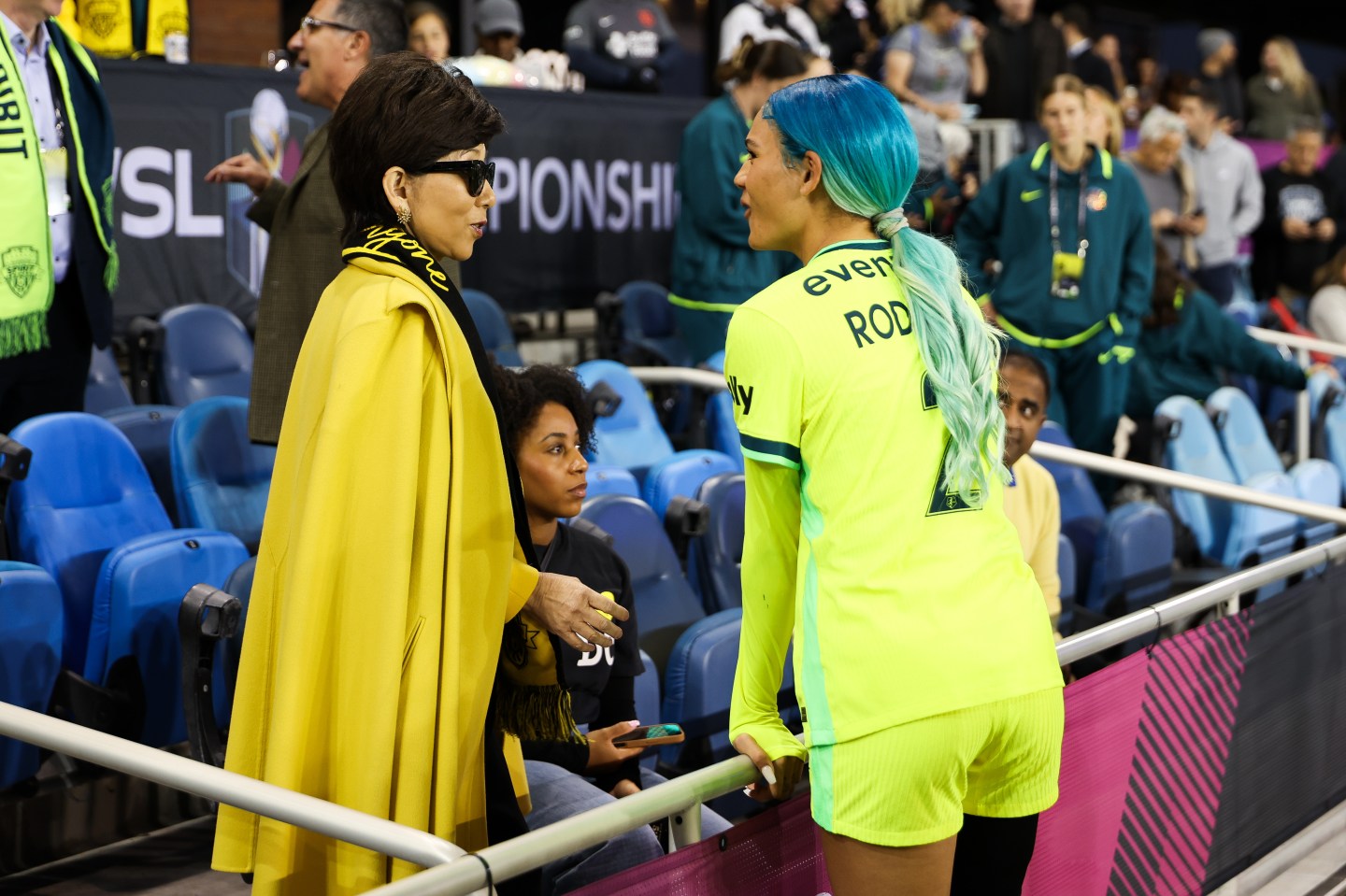
For Kang, the work in youth sports achieves a social mission and future-proofs her own clubs and sport for the decades ahead. Girls’ soccer programs in the U.S. have less infrastructure and support compared with Europe, and American clubs are fighting to keep players like the Washington Spirit’s Trinity Rodman in the U.S., where salary caps limit how much stars can earn.
“We have to make sure that we invest in really showing the clear path,” she says, “so that young girls can aspire to be the next Alex Morgan, the next Trinity Rodman.”