• Home
  • Latest
  • Fortune 500
  • Finance
  • Tech
  • Leadership
  • Lifestyle
  • Rankings
  • Multimedia
Future of WorkManagement

The Hollywood blueprint holds the key to reshaping organizations in the age of AI

Ravi Kumar S
By
Ravi Kumar S
Ravi Kumar S
Down Arrow Button Icon
Ravi Kumar S
By
Ravi Kumar S
Ravi Kumar S
Down Arrow Button Icon
October 29, 2025, 6:00 AM ET
Cognizant

The Hollywood model of work—specialized teams assembling for specific projects, then dissolving and reconfiguring for new ones—is a refreshing alternative to the rigid corporate structures inherited from the industrial era. For decades, this fluid approach seemed impractical for most businesses. Now, it is becoming feasible as AI handles the logistical complexities and knowledge management that once required permanent bureaucracies.

Recommended Video

With agentic technology, next-generation enterprises can use the Hollywood model to reshape organizations into more flexible, dynamic systems that reward performance and create new paths to shared prosperity.

An industry’s evolution for a shifting market

During Hollywood’s “Golden Age,” large studios operated like industrial-era giants, keeping vast talent pools—actors, directors, technicians—under long-term exclusive contracts. This centralized studio model reliably produced a steady flow of films for a uniform market.

As audiences expanded and preferences diversified, however, the rigidity of that system became a liability. The industry needed to produce a broader range of work more quickly. The solution was to dismantle the permanent talent structure in favor of a nimbler model, assembling custom teams for each new project and bringing together the exact expertise required. Once the film wrapped, the team dispersed, ready for the next assignment.

This project-based approach fueled creativity, boosted agility, and made filmmaking more efficient in a fast-changing market.

Friction of form

Business leaders and academics long praised the Hollywood model as a template for adaptive organizational design, yet most enterprises struggled to adopt it. Early digital disruptors in the 2000s made headway, breaking outdated hierarchies and blending internal experts with an expanding gig workforce. They embraced agile networks and organized talent into cross-functional pods and squads with autonomy—applying elements of mission-driven, project-based work.

Still, for most companies, implementing this model generated significant friction. The logistics of sourcing, onboarding, and managing specialized talent on demand proved daunting. Unlike Hollywood, where agencies and unions form a supportive ecosystem, corporations lacked such coordination. Knowledge management was a critical failure point, as expertise vanished when projects ended. Legal and cybersecurity concerns over intellectual property and data access further constrained adoption.

Building block for next-generation enterprises

Agentic AI removes many of these barriers, making the Hollywood model increasingly practical.
In the future, a company’s mission, strategy, methods, and intellectual property can be continuously captured and managed by a central AI system. Synthetic agents can then identify, vet, and match talent—human or AI—to project needs based on certified data, reducing the cost and complexity of team assembly. Work streams can revolve around outcomes rather than departments, with AI sourcing interdisciplinary teams globally based on skills, availability, and performance history.

In this model, agentic capital—the AI core—becomes the structural backbone, while human talent gains greater independence. Teams become purposeful assemblies, converging for specific goals much like film crews brought together for a single production.

The AI-enabled Hollywood model represents the next step in the ongoing decoupling of work. This evolution began with the gig economy, which separated employment from permanent staff structures, and accelerated during the pandemic, when work detached from physical workplaces. Now, by prioritizing skills and performance, this model promises to democratize access to both jobs and talent, lowering barriers to entrepreneurship and broadening shared prosperity.

As expertise becomes increasingly transparent through verifiable project portfolios, reputation emerges as the key currency—priced dynamically by proven success. Experienced professionals gain leverage and earning potential through project-based engagement, while newer workers use AI to ramp up faster and contribute sooner.

Anyone with a strong idea can now assemble elite teams on demand, without a standing organization or major capital investment. This capital-light, outcome-driven framework turns ideas, context, and agents into magnetizing forces that dynamically attract resources.

The Hollywood model is not a universal solution; it fits best where agility, creativity, and specialized talent drive results. Yet, thanks to AI, it is no longer a logistical impossibility. By simplifying coordination and reducing inefficiencies, AI makes it viable at scale.

In early 2025, a Gartner survey found that 61 percent of HR leaders had completed or were in later stages of AI implementation, with recruiting agents and AI-driven candidate matching as core use cases. Meanwhile, independent workers—gig, freelance, and temp—already comprise 36–40 percent of the U.S. workforce, and that number continues to rise. Platforms like Upwork are now applying AI to streamline proposals, optimize pricing, and improve project matching.

As enterprises experiment with more agile structures, leaders must ensure lifelong learning pathways for all workers. In a system where value depends on demonstrable success, how do newcomers gain experience? How do workers learn through failure without penalty? How can we build a future of work that empowers rather than excludes?

The promise ahead is twofold: a new operating model built for agility, and a more human career model defined by creativity, contribution, and purpose. By breaking free from industrial-era constraints, AI enables us to design organizations—and lives of work—that are more adaptive, equitable, and inspired.

The opinions expressed in Fortune.com commentary pieces are solely the views of their authors and do not necessarily reflect the opinions and beliefs of Fortune.

At the Fortune Workplace Innovation Summit, Fortune 500 leaders will convene to explore the defining questions shaping the workforce of the future—delivering bold ideas, powerful connections, and actionable insights for building resilient organizations for the decade ahead. Join Fortune May 19–20 in Atlanta. Register now.
About the Author
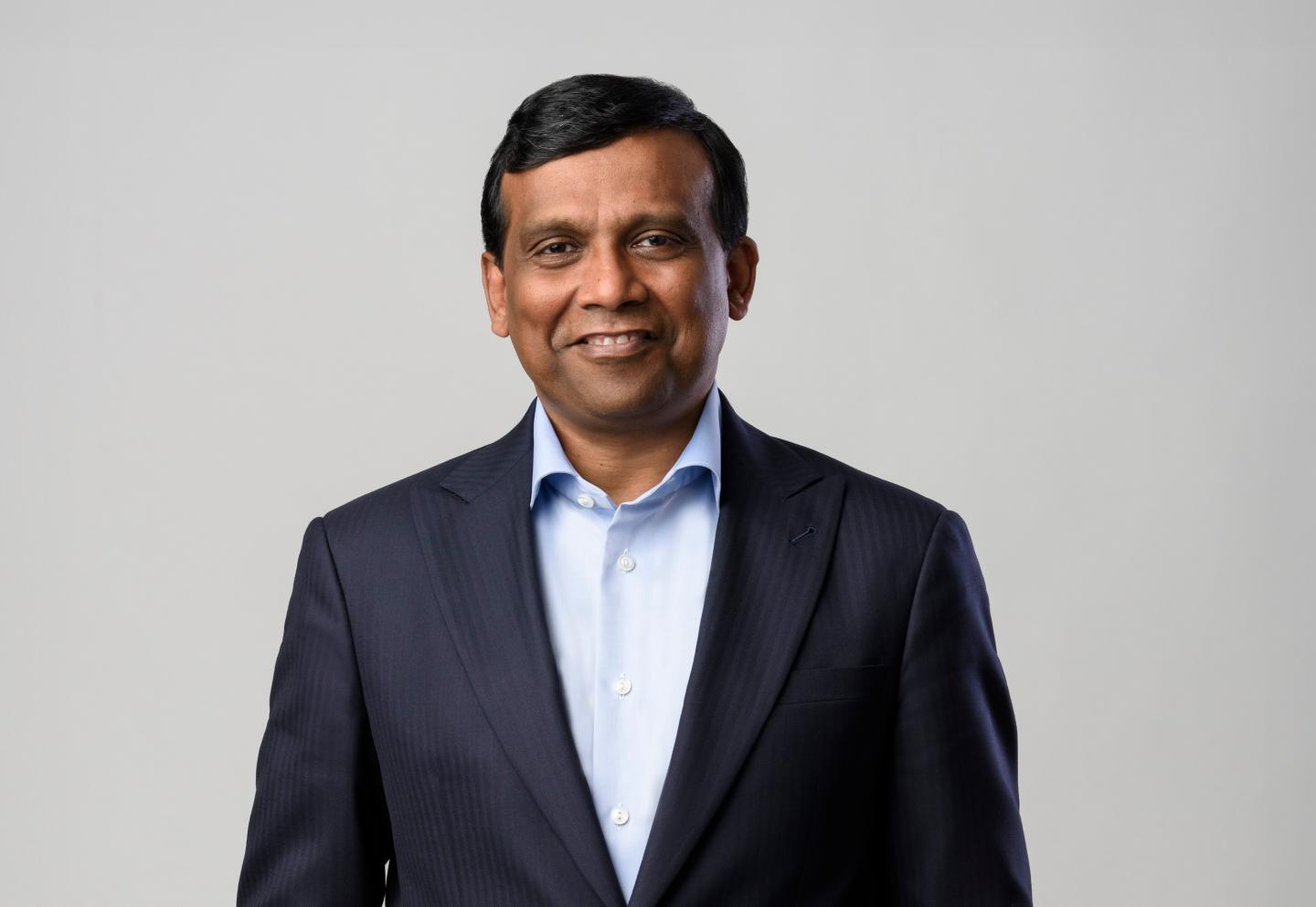
Ravi Kumar S
By Ravi Kumar S
See full bioRight Arrow Button Icon

Latest in Future of Work

Finance
Lorem ipsum dolor sit amet, consectetur adipiscing elit, sed do eiusmod tempor incididunt ut labore et dolore magna aliqua. Ut enim ad minim veniam
By Fortune Editors
October 20, 2025
Finance
Lorem ipsum dolor sit amet, consectetur adipiscing elit, sed do eiusmod tempor incididunt ut labore et dolore magna aliqua. Ut enim ad minim veniam
By Fortune Editors
October 20, 2025
Finance
Lorem ipsum dolor sit amet, consectetur adipiscing elit, sed do eiusmod tempor incididunt ut labore et dolore magna aliqua. Ut enim ad minim veniam
By Fortune Editors
October 20, 2025
Finance
Lorem ipsum dolor sit amet, consectetur adipiscing elit, sed do eiusmod tempor incididunt ut labore et dolore magna aliqua. Ut enim ad minim veniam
By Fortune Editors
October 20, 2025
Finance
Lorem ipsum dolor sit amet, consectetur adipiscing elit, sed do eiusmod tempor incididunt ut labore et dolore magna aliqua. Ut enim ad minim veniam
By Fortune Editors
October 20, 2025
Finance
Lorem ipsum dolor sit amet, consectetur adipiscing elit, sed do eiusmod tempor incididunt ut labore et dolore magna aliqua. Ut enim ad minim veniam
By Fortune Editors
October 20, 2025

Most Popular

Finance
Lorem ipsum dolor sit amet, consectetur adipiscing elit, sed do eiusmod tempor incididunt ut labore et dolore magna aliqua. Ut enim ad minim veniam
By Fortune Editors
October 20, 2025
Finance
Lorem ipsum dolor sit amet, consectetur adipiscing elit, sed do eiusmod tempor incididunt ut labore et dolore magna aliqua. Ut enim ad minim veniam
By Fortune Editors
October 20, 2025
Finance
Lorem ipsum dolor sit amet, consectetur adipiscing elit, sed do eiusmod tempor incididunt ut labore et dolore magna aliqua. Ut enim ad minim veniam
By Fortune Editors
October 20, 2025
Finance
Lorem ipsum dolor sit amet, consectetur adipiscing elit, sed do eiusmod tempor incididunt ut labore et dolore magna aliqua. Ut enim ad minim veniam
By Fortune Editors
October 20, 2025
Finance
Lorem ipsum dolor sit amet, consectetur adipiscing elit, sed do eiusmod tempor incididunt ut labore et dolore magna aliqua. Ut enim ad minim veniam
By Fortune Editors
October 20, 2025
Finance
Lorem ipsum dolor sit amet, consectetur adipiscing elit, sed do eiusmod tempor incididunt ut labore et dolore magna aliqua. Ut enim ad minim veniam
By Fortune Editors
October 20, 2025
Fortune Secondary Logo
Rankings
  • 100 Best Companies
  • Fortune 500
  • Global 500
  • Fortune 500 Europe
  • Most Powerful Women
  • World's Most Admired Companies
  • See All Rankings
  • Lists Calendar
Sections
  • Finance
  • Fortune Crypto
  • Features
  • Leadership
  • Health
  • Commentary
  • Success
  • Retail
  • Mpw
  • Tech
  • Lifestyle
  • CEO Initiative
  • Asia
  • Politics
  • Conferences
  • Europe
  • Newsletters
  • Personal Finance
  • Environment
  • Magazine
  • Education
Customer Support
  • Frequently Asked Questions
  • Customer Service Portal
  • Privacy Policy
  • Terms Of Use
  • Single Issues For Purchase
  • International Print
Commercial Services
  • Advertising
  • Fortune Brand Studio
  • Fortune Analytics
  • Fortune Conferences
  • Business Development
  • Group Subscriptions
About Us
  • About Us
  • Press Center
  • Work At Fortune
  • Terms And Conditions
  • Site Map
  • About Us
  • Press Center
  • Work At Fortune
  • Terms And Conditions
  • Site Map
  • Facebook icon
  • Twitter icon
  • LinkedIn icon
  • Instagram icon
  • Pinterest icon

Latest in Future of Work

Goldman Sachs’ tech boss says tracking individual AI usage isn’t useful. He just watches how fast his 12,000 engineers move from idea to production
AIBanks
Goldman Sachs’ tech boss says tracking individual AI usage isn’t useful. He just watches how fast his 12,000 engineers move from idea to production
By Marco Quiroz-GutierrezMay 8, 2026
13 hours ago
kid on phone
Politicssmartphones and mobile devices
‘Close to zero’: Schools are spending tens of millions banning phones from classrooms, but test scores aren’t improving
By Jake AngeloMay 8, 2026
13 hours ago
golf
Commentarybooks
How playing golf alone can make you better at your job
By Gary BelskyMay 8, 2026
19 hours ago
Apple AirPods Pro in Cupertino, California, on Sept. 9, 2025. (Photo: David Paul Morris/Bloomberg/Getty Images)
NewslettersFortune Tech
Apple AirPods with cameras are coming
By Andrew NuscaMay 8, 2026
21 hours ago
Match Group CEO Spencer Rascoff
SuccessJobs
Match Group’s CEO revived a shuttered Tinder internship program for Gen Z—and received over 30,000 applications for just 27 spots
By Emma BurleighMay 8, 2026
21 hours ago
FARLEY
SuccessCareers
Ford CEO says his Gen Z son is choosing hands-on work: ‘He feels like that’s more fulfilling than doing summer school at some fancy college’
By Nick LichtenbergMay 7, 2026
1 day ago

Most Popular

California farmers must destroy 420,000 peach trees after Del Monte closes its canneries and cancels more than $550 million in long-term contracts
North America
California farmers must destroy 420,000 peach trees after Del Monte closes its canneries and cancels more than $550 million in long-term contracts
By Sasha RogelbergMay 7, 2026
1 day ago
'Blue dot fever' plagues musicians like Post Malone, Meghan Trainor, and Zayn as a growing list of artists cancel tours due to lagging ticket sales
Arts & Entertainment
'Blue dot fever' plagues musicians like Post Malone, Meghan Trainor, and Zayn as a growing list of artists cancel tours due to lagging ticket sales
By Dave Lozo and Morning BrewMay 7, 2026
2 days ago
A Michigan farm town voted down plans for a giant OpenAI-Oracle data center. Weeks later, construction began
Magazine
A Michigan farm town voted down plans for a giant OpenAI-Oracle data center. Weeks later, construction began
By Sharon GoldmanMay 6, 2026
3 days ago
U.S. Treasury will have to borrow $2 trillion this year just to continue functioning—more than $166 billion every month
Economy
U.S. Treasury will have to borrow $2 trillion this year just to continue functioning—more than $166 billion every month
By Eleanor PringleMay 7, 2026
2 days ago
Airbnb CEO Brian Chesky warns two types of people won’t survive the AI era: ‘pure people managers’ and workers who resist change
Success
Airbnb CEO Brian Chesky warns two types of people won’t survive the AI era: ‘pure people managers’ and workers who resist change
By Emma BurleighMay 7, 2026
2 days ago
Current price of oil as of May 8, 2026
Personal Finance
Current price of oil as of May 8, 2026
By Joseph HostetlerMay 8, 2026
18 hours ago

© 2026 Fortune Media IP Limited. All Rights Reserved. Use of this site constitutes acceptance of our Terms of Use and Privacy Policy | CA Notice at Collection and Privacy Notice | Do Not Sell/Share My Personal Information
FORTUNE is a trademark of Fortune Media IP Limited, registered in the U.S. and other countries. FORTUNE may receive compensation for some links to products and services on this website. Offers may be subject to change without notice.