• Home
  • Latest
  • Fortune 500
  • Finance
  • Tech
  • Leadership
  • Lifestyle
  • Rankings
  • Multimedia
CommentaryPolitics

Politicians claim regulation hurts small businesses. When you look at real-world data, the truth is more complicated

By
Francesco Trebbi
Francesco Trebbi
,
Michael Simkovic
Michael Simkovic
, and
Miao Ben Zhang
Miao Ben Zhang
Down Arrow Button Icon
By
Francesco Trebbi
Francesco Trebbi
,
Michael Simkovic
Michael Simkovic
, and
Miao Ben Zhang
Miao Ben Zhang
Down Arrow Button Icon
September 9, 2024, 7:00 AM ET
Both Harris and Trump have promised to cut red tape for small businesses—but data suggests mid-sized businesses bear the brunt of regulation.
Both Harris and Trump have promised to cut red tape for small businesses—but data suggests mid-sized businesses bear the brunt of regulation.Grant Baldwin - Getty Images

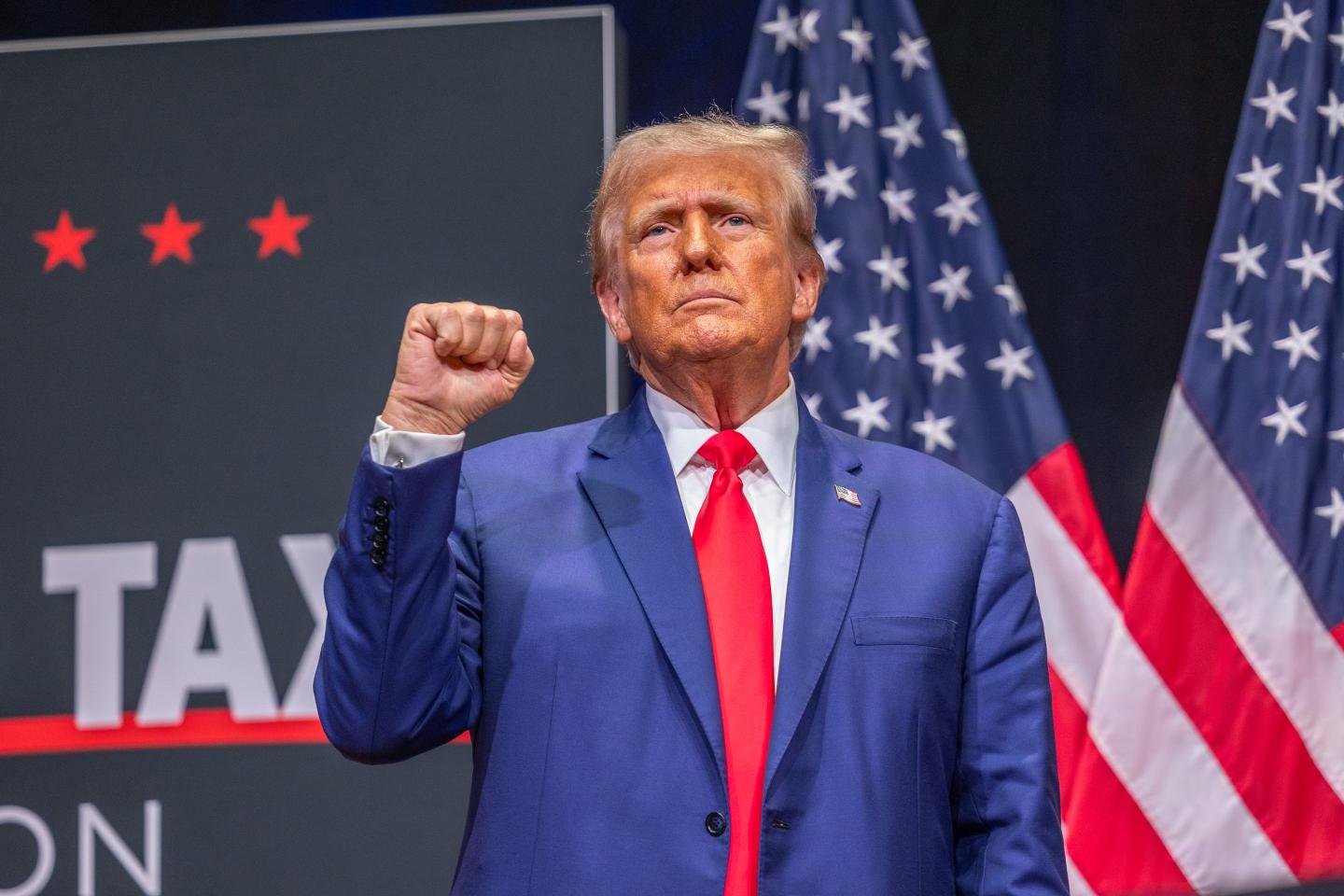
Last week, Kamala Harris released a plan to support small businesses by increasing tax credits and “cutting red tape.” Donald Trump responded by saying he would slash regulation and vowing to eliminate 10 government regulations for every new one enacted.

Politicians like Harris and Trump often lament that small businesses are victims of overly burdensome government regulations. However, our research found that medium-sized businesses are actually hit hardest by the costs of regulatory compliance. Furthermore, agencies rarely assess whether the rules they create achieve their intended goals ex-post—or the real cost of regulation to businesses and the economy.

Public officials should start taking a more data-driven approach to regulation. To this goal, we built an employment-data-driven model that estimates the overall labor and capital costs of regulatory compliance for U.S. companies, using data on more than a million businesses from the U.S. Bureau of Labor Statistics and the Occupational Information Network, or O*NET, a government website that describes the tasks involved in each occupation using information provided by private sector employees and employers. While there are many costs involved in adhering to regulations, we look at one of the biggest: paying employees to manage regulatory compliance (and related equipment expenditures). 

About a third of all U.S. occupations include some regulation-related work, according to O*NET’s description of tasks performed by each occupation and our analysis of the extent to which these tasks are tied to regulatory compliance. These include activities like reviewing regulations, conducting internal audits, and modifying monitoring processes to ensure regulatory compliance.

Some workers devote most of their time to handling regulations: compliance officers, environmental specialists, and lawyers, for example. Other workers practice compliance as one component of their profession, such as nurses who deliver care following regulatory guidelines regarding patient safety and privacy.

We found that regulation-related tasks account for up to 3.3% of total labor costs for the average American establishment—costing all companies combined a total of $239 billion in 2014 ($289 billion including equipment). To give a sense of the scale, U.S. gross business income taxes amounted to $353 billion in the same year. Yet regulatory burdens vary widely across firms of different sizes. Midsize firms with around 500 employees spend, on average, about 47% more on regulatory compliance costs per employee than small firms—and 18% more than large firms. 

Why regulation hits mid-sized firms the hardest

Some regulations only apply to medium to large-size businesses and exclude smaller businesses. This can facilitate entry by small firms but creates a big hill to climb as these businesses wish to expand. 

Meanwhile, large firms benefit from economies of scale that allow them to hire dedicated compliance specialists and put systems in place for managing compliance and reporting efficiently. These practices are more cost-effective than spreading the task among many nonspecialized employees. Large firms may also have a hand in shaping the rules to limit competition.

The uneven impact of government regulations creates a hump that companies must climb as they grow. The high regulatory compliance costs faced by midsize companies could prevent their growth, or even deter them from trying to grow. Companies sometimes bunch below the size threshold at which onerous regulations would begin to apply.

Many regulators do have good intentions, and many regulations do provide benefits, including protections for employees, consumers, and the environment. A model driven by real-world data can help weigh these benefits against the costs. While government agencies (roughly) estimate the costs and benefits of regulations before enacting them, they rarely conduct follow-up analyses to validate their estimates. Follow-up research sometimes finds that regulations that initially seemed promising ultimately turned out to impose costs exceeding the benefits. For example, the Sarbanes-Oxley Act of 2002 was intended to prevent accounting fraud by imposing personal and potentially criminal liability on senior executives when firms’ accounting statements are inaccurate. Work by our group and others suggests that complying with this regulation is time-consuming for executives, lowers stock prices, and likely costs investors more than it saves them in reduced accounting fraud, although other assessments are more optimistic.

Agencies could also test whether individual regulations are truly worth the expense through pilot programs. Before adding a new sanitation requirement for restaurants, for example, a city’s public health department might first roll out the regulation to a subset of establishments. The agency could then track how much the costs of compliance go up, and whether rates of food-borne illness go down relative to restaurants that are not operating under the new regulation. 

This sort of targeted analysis has a precedent. In 2015, the Securities and Exchange Commission implemented a new rule on tick sizes (the smallest increment by which the price of stocks or other exchange-traded instruments can move) for only a subset of publicly traded companies and then tracked how the regulation affected stock trading to inform future public policy changes.  

Our analysis suggests that the conventional political wisdom about which businesses are most affected by regulations is wrong. The smallest firms do not bear the greatest burden, nor do the largest, but rather mid-sized firms with the potential to grow. There may be opportunities to reduce burdens on mid-sized firms by scaling back regulations that produce limited public benefits, or through targeted tax relief.

More must-read commentary published by Fortune:

  • An economic catastrophe is lurking beneath Russia’s GDP growth as Putin ‘throws everything into the fireplace’
  • The ‘sustainability recession’ will end soon—and not by choice
  • ‘Godmother of AI’ says California’s well-intended AI bill will harm the U.S. ecosystem
  • The most underrated leadership skill, according to Jake Sullivan

The opinions expressed in Fortune.com commentary pieces are solely the views of their authors and do not necessarily reflect the opinions and beliefs of Fortune.

Join us at the Fortune Workplace Innovation Summit May 19–20, 2026, in Atlanta. The next era of workplace innovation is here—and the old playbook is being rewritten. At this exclusive, high-energy event, the world’s most innovative leaders will convene to explore how AI, humanity, and strategy converge to redefine, again, the future of work. Register now.
About the Authors
By Francesco Trebbi
See full bioRight Arrow Button Icon
By Michael Simkovic
See full bioRight Arrow Button Icon
By Miao Ben Zhang
See full bioRight Arrow Button Icon

Latest in Commentary

Finance
Lorem ipsum dolor sit amet, consectetur adipiscing elit, sed do eiusmod tempor incididunt ut labore et dolore magna aliqua. Ut enim ad minim veniam
By Fortune Editors
October 20, 2025
Finance
Lorem ipsum dolor sit amet, consectetur adipiscing elit, sed do eiusmod tempor incididunt ut labore et dolore magna aliqua. Ut enim ad minim veniam
By Fortune Editors
October 20, 2025
Finance
Lorem ipsum dolor sit amet, consectetur adipiscing elit, sed do eiusmod tempor incididunt ut labore et dolore magna aliqua. Ut enim ad minim veniam
By Fortune Editors
October 20, 2025
Finance
Lorem ipsum dolor sit amet, consectetur adipiscing elit, sed do eiusmod tempor incididunt ut labore et dolore magna aliqua. Ut enim ad minim veniam
By Fortune Editors
October 20, 2025
Finance
Lorem ipsum dolor sit amet, consectetur adipiscing elit, sed do eiusmod tempor incididunt ut labore et dolore magna aliqua. Ut enim ad minim veniam
By Fortune Editors
October 20, 2025
Finance
Lorem ipsum dolor sit amet, consectetur adipiscing elit, sed do eiusmod tempor incididunt ut labore et dolore magna aliqua. Ut enim ad minim veniam
By Fortune Editors
October 20, 2025

Most Popular

Finance
Lorem ipsum dolor sit amet, consectetur adipiscing elit, sed do eiusmod tempor incididunt ut labore et dolore magna aliqua. Ut enim ad minim veniam
By Fortune Editors
October 20, 2025
Finance
Lorem ipsum dolor sit amet, consectetur adipiscing elit, sed do eiusmod tempor incididunt ut labore et dolore magna aliqua. Ut enim ad minim veniam
By Fortune Editors
October 20, 2025
Finance
Lorem ipsum dolor sit amet, consectetur adipiscing elit, sed do eiusmod tempor incididunt ut labore et dolore magna aliqua. Ut enim ad minim veniam
By Fortune Editors
October 20, 2025
Finance
Lorem ipsum dolor sit amet, consectetur adipiscing elit, sed do eiusmod tempor incididunt ut labore et dolore magna aliqua. Ut enim ad minim veniam
By Fortune Editors
October 20, 2025
Finance
Lorem ipsum dolor sit amet, consectetur adipiscing elit, sed do eiusmod tempor incididunt ut labore et dolore magna aliqua. Ut enim ad minim veniam
By Fortune Editors
October 20, 2025
Finance
Lorem ipsum dolor sit amet, consectetur adipiscing elit, sed do eiusmod tempor incididunt ut labore et dolore magna aliqua. Ut enim ad minim veniam
By Fortune Editors
October 20, 2025
Fortune Secondary Logo
Rankings
  • 100 Best Companies
  • Fortune 500
  • Global 500
  • Fortune 500 Europe
  • Most Powerful Women
  • World's Most Admired Companies
  • See All Rankings
  • Lists Calendar
Sections
  • Finance
  • Fortune Crypto
  • Features
  • Leadership
  • Health
  • Commentary
  • Success
  • Retail
  • Mpw
  • Tech
  • Lifestyle
  • CEO Initiative
  • Asia
  • Politics
  • Conferences
  • Europe
  • Newsletters
  • Personal Finance
  • Environment
  • Magazine
  • Education
Customer Support
  • Frequently Asked Questions
  • Customer Service Portal
  • Privacy Policy
  • Terms Of Use
  • Single Issues For Purchase
  • International Print
Commercial Services
  • Advertising
  • Fortune Brand Studio
  • Fortune Analytics
  • Fortune Conferences
  • Business Development
  • Group Subscriptions
About Us
  • About Us
  • Press Center
  • Work At Fortune
  • Terms And Conditions
  • Site Map
  • About Us
  • Press Center
  • Work At Fortune
  • Terms And Conditions
  • Site Map
  • Facebook icon
  • Twitter icon
  • LinkedIn icon
  • Instagram icon
  • Pinterest icon
Professor Francesco Trebbi is the Bernard T. Rocca Jr. Professor of Business and Public Policy at the University of California, Berkeley’s Haas School of Business. Professor Michael Simkovic is the Leon Benwell Professor of Law and Accounting at the University of Southern California Gould School of Law and Marshall School of Business. Professor Miao Ben Zhang is an Assistant Professor of Finance and Business Economics at USC Marshall School of Business.

Latest in Commentary

joaquin
Commentary250 Years of Innovation
Johnson & Johnson CEO: America’s innovation advantage starts with health 
By Joaquin DuatoMay 9, 2026
10 hours ago
reed
CommentaryRetirement
Tim Cook and Reed Hastings just showed every CEO how to leave gracefully
By Paul HardartMay 9, 2026
12 hours ago
golf
Commentarybooks
How playing golf alone can make you better at your job
By Gary BelskyMay 8, 2026
1 day ago
naomi
Commentarymental health
Naomi Osaka: the things I didn’t do to succeed
By Naomi OsakaMay 8, 2026
1 day ago
amanda
Commentarybatteries
Why energy storage is moving beyond the capex debate
By Amanda SimonianMay 7, 2026
2 days ago
trump
CommentaryMedicare
Auto-enrollment in Medicare Advantage isn’t a nudge. It’s a trap
By Brian KeyserMay 7, 2026
2 days ago

Most Popular

California farmers must destroy 420,000 peach trees after Del Monte closes its canneries and cancels more than $550 million in long-term contracts
North America
California farmers must destroy 420,000 peach trees after Del Monte closes its canneries and cancels more than $550 million in long-term contracts
By Sasha RogelbergMay 7, 2026
2 days ago
A Michigan farm town voted down plans for a giant OpenAI-Oracle data center. Weeks later, construction began
Magazine
A Michigan farm town voted down plans for a giant OpenAI-Oracle data center. Weeks later, construction began
By Sharon GoldmanMay 6, 2026
4 days ago
The CEO of Maersk, which ships 14% of everything you buy, said the Iran war is adding $500 million in monthly costs it's trying not to pass down
Energy
The CEO of Maersk, which ships 14% of everything you buy, said the Iran war is adding $500 million in monthly costs it's trying not to pass down
By Sasha RogelbergMay 8, 2026
1 day ago
Current price of oil as of May 8, 2026
Personal Finance
Current price of oil as of May 8, 2026
By Joseph HostetlerMay 8, 2026
1 day ago
'Blue dot fever' plagues musicians like Post Malone, Meghan Trainor, and Zayn as a growing list of artists cancel tours due to lagging ticket sales
Arts & Entertainment
'Blue dot fever' plagues musicians like Post Malone, Meghan Trainor, and Zayn as a growing list of artists cancel tours due to lagging ticket sales
By Dave Lozo and Morning BrewMay 7, 2026
2 days ago
You're probably safe from the Hantavirus outbreak, but here's what you absolutely must not do, experts say
Politics
You're probably safe from the Hantavirus outbreak, but here's what you absolutely must not do, experts say
By Catherina GioinoMay 8, 2026
1 day ago

© 2026 Fortune Media IP Limited. All Rights Reserved. Use of this site constitutes acceptance of our Terms of Use and Privacy Policy | CA Notice at Collection and Privacy Notice | Do Not Sell/Share My Personal Information
FORTUNE is a trademark of Fortune Media IP Limited, registered in the U.S. and other countries. FORTUNE may receive compensation for some links to products and services on this website. Offers may be subject to change without notice.