• Home
  • Latest
  • Fortune 500
  • Finance
  • Tech
  • Leadership
  • Lifestyle
  • Rankings
  • Multimedia
CommentaryAI

RSA CEO: ‘AI will replace humans in cybersecurity. Our new job will be to protect it’

By
Rohit Ghai
Rohit Ghai
Down Arrow Button Icon
By
Rohit Ghai
Rohit Ghai
Down Arrow Button Icon
October 12, 2023, 7:52 AM ET
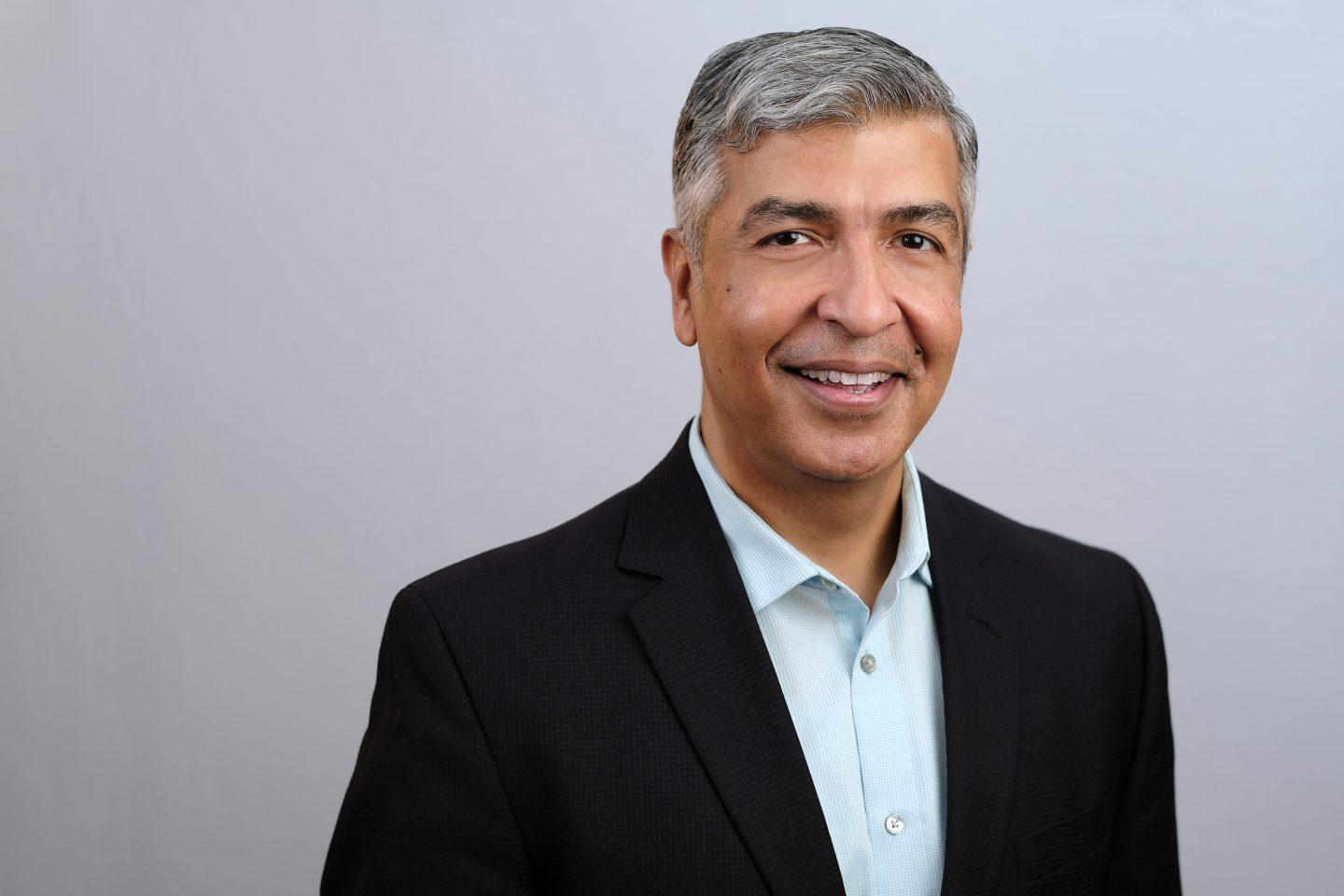
Rohit Ghai is the CEO of RSA.
Rohit Ghai is the CEO of RSA.Courtesy of RSA

The new generation of artificial intelligence (AI) tools are being described as “intelligent assistants” and “copilots”–a way to tell us that we still have a role in the cockpit. While that may be true today, it won’t hold for much longer, at least in the field of cybersecurity.

More than 60 startups and major vendors, including my company, have recently announced AI-powered products. Compelling as those announcements are, they’re insignificant compared to what’s coming next: Forrester Research expects the AI software market to expand to $64 billion by 2024, with cybersecurity being the fastest-growing category at a compound annual growth rate of 22.3%.

Largely, that’s good for cybersecurity and the organizations we protect. There are only 69 cybersecurity personnel for every 100 job openings. And even if we could fill all those empty seats, humans today simply can’t defend everything we need to protect on our own. We need AI to respond at the speed and scale that complex IT environments demand.

But just because cybersecurity needs AI doesn’t mean that adapting to its use will be easy. For decades, White Hat defenders have been charged with protecting everything from an organization’s printers to its most treasured intellectual property. Human ingenuity, ability, and no small amount of blood, sweat, and tears built, maintained and secured the platforms we use to live, work, and play. Being asked to turn all that over to bots is no small feat. Cybersecurity faces an identity crisis: Who we are, what we do, and the roles we play are all set to fundamentally change with the advent of AI.

For years, it’s only been humans flying the plane. In the next few years, we’ll fly alongside robot copilots. But our time in the cockpit is inevitably ending. We must begin planning our exit. While we’ll still have a role after we leave flying behind, what we do and the value we bring will be very different going forward.

The threshold at which AI will replace human defenders

For the next few years, AI will still need our help to operate. The majority of cybersecurity breaches today result in part because of the human element, including error, privilege misuse, stolen passwords, and social engineering attacks.

Without getting too deep in the weeds, AI and some basic cybersecurity hygiene (like multi-factor authentication, or MFA) can handle the majority of those incidents. AI can automate what happens when a new user joins an organization, provide them with the accounts they need to do their work, ensure that they have enabled MFA, and watch their account usage for any irregularities. While AI can manage the day-to-day, human cybersecurity professionals will supervise the more impactful decisions and handle exceptions, like what happens if a user needs some specific resource that others in the organization don’t require.

Eventually, AI will be able to handle those high-stakes decisions and exceptions as well. That’s the threshold at which we’ll need to exit the cockpit and trust AI to handle critical incidents faster and more effectively than human actors.

Even then, we’ll still have a role training, supervising, and monitoring the AI. Consider what happened with Microsoft’s Tay, which went from “innocent AI chatbot” to racist, misogynist troll in less than 24 hours. AI needs humans to set, monitor, refine, and change its parameters, the degree to which it can adapt, and the ways it interacts with other AI.

From AI’s teacher to its guardian

It’s not just that humans will need to set AI’s parameters and dictate how it should work. Humans also need to decide why AI is working: We need to present it with the right challenges and ask it the right questions.

Today’s cutting-edge AI represents a significant leap in our ability to use new technologies to solve complex problems. But that’s only possible if human researchers ask it the right questions in the right way and feed it the right information. One of the oldest rules in AI is “garbage in, garbage out.” If AI is trained on low-fidelity, mislabeled, or inaccurate data, then the outputs it creates will be worthless.

And that points to the next role we’ll need to assume once AI takes over day-to-day cybersecurity operations. As AI becomes part of our cybersecurity architecture, threat actors will try to target it with data poisoning and prompt injections. They’ll work to make AI hallucinate or turn against us. AI will protect us–and we’ll need to protect it.

The cybersecurity industry has always found ways to adapt to the newest threats and account for the latest technologies–but AI represents a new order that will test us, pushing us to evolve to a greater degree than we ever have before.

All things change–and we must change with them.

Rohit Ghai is the CEO of RSA, a global leader in identity and access management (IAM) solutions for security-first organizations. Around the world, more than 9,000 organizations rely on RSA to manage more than 60 million identities.

More must-read commentary published by Fortune:

  • Return-to-office mandates: Why tax breaks are not a reason for companies in states such as Texas, Utah, and New Jersey to force employees back
  • We analyzed 2 years of performance reviews for 13,000 workers. Here’s the proof that low-quality feedback is driving employee retention down
  • Burnout is attacking our brains and making it harder to excel at work. ‘Deliberate calm’ can help us adapt
  • The growing case for doing less: How harmless cancers are being overdiagnosed in America

The opinions expressed in Fortune.com commentary pieces are solely the views of their authors and do not necessarily reflect the opinions and beliefs of Fortune.

Join us at the Fortune Workplace Innovation Summit May 19–20, 2026, in Atlanta. The next era of workplace innovation is here—and the old playbook is being rewritten. At this exclusive, high-energy event, the world’s most innovative leaders will convene to explore how AI, humanity, and strategy converge to redefine, again, the future of work. Register now.
About the Author
By Rohit Ghai
See full bioRight Arrow Button Icon

Latest in Commentary

Finance
Lorem ipsum dolor sit amet, consectetur adipiscing elit, sed do eiusmod tempor incididunt ut labore et dolore magna aliqua. Ut enim ad minim veniam
By Fortune Editors
October 20, 2025
Finance
Lorem ipsum dolor sit amet, consectetur adipiscing elit, sed do eiusmod tempor incididunt ut labore et dolore magna aliqua. Ut enim ad minim veniam
By Fortune Editors
October 20, 2025
Finance
Lorem ipsum dolor sit amet, consectetur adipiscing elit, sed do eiusmod tempor incididunt ut labore et dolore magna aliqua. Ut enim ad minim veniam
By Fortune Editors
October 20, 2025
Finance
Lorem ipsum dolor sit amet, consectetur adipiscing elit, sed do eiusmod tempor incididunt ut labore et dolore magna aliqua. Ut enim ad minim veniam
By Fortune Editors
October 20, 2025
Finance
Lorem ipsum dolor sit amet, consectetur adipiscing elit, sed do eiusmod tempor incididunt ut labore et dolore magna aliqua. Ut enim ad minim veniam
By Fortune Editors
October 20, 2025
Finance
Lorem ipsum dolor sit amet, consectetur adipiscing elit, sed do eiusmod tempor incididunt ut labore et dolore magna aliqua. Ut enim ad minim veniam
By Fortune Editors
October 20, 2025

Most Popular

Finance
Lorem ipsum dolor sit amet, consectetur adipiscing elit, sed do eiusmod tempor incididunt ut labore et dolore magna aliqua. Ut enim ad minim veniam
By Fortune Editors
October 20, 2025
Finance
Lorem ipsum dolor sit amet, consectetur adipiscing elit, sed do eiusmod tempor incididunt ut labore et dolore magna aliqua. Ut enim ad minim veniam
By Fortune Editors
October 20, 2025
Finance
Lorem ipsum dolor sit amet, consectetur adipiscing elit, sed do eiusmod tempor incididunt ut labore et dolore magna aliqua. Ut enim ad minim veniam
By Fortune Editors
October 20, 2025
Finance
Lorem ipsum dolor sit amet, consectetur adipiscing elit, sed do eiusmod tempor incididunt ut labore et dolore magna aliqua. Ut enim ad minim veniam
By Fortune Editors
October 20, 2025
Finance
Lorem ipsum dolor sit amet, consectetur adipiscing elit, sed do eiusmod tempor incididunt ut labore et dolore magna aliqua. Ut enim ad minim veniam
By Fortune Editors
October 20, 2025
Finance
Lorem ipsum dolor sit amet, consectetur adipiscing elit, sed do eiusmod tempor incididunt ut labore et dolore magna aliqua. Ut enim ad minim veniam
By Fortune Editors
October 20, 2025
Fortune Secondary Logo
Rankings
  • 100 Best Companies
  • Fortune 500
  • Global 500
  • Fortune 500 Europe
  • Most Powerful Women
  • World's Most Admired Companies
  • See All Rankings
  • Lists Calendar
Sections
  • Finance
  • Fortune Crypto
  • Features
  • Leadership
  • Health
  • Commentary
  • Success
  • Retail
  • Mpw
  • Tech
  • Lifestyle
  • CEO Initiative
  • Asia
  • Politics
  • Conferences
  • Europe
  • Newsletters
  • Personal Finance
  • Environment
  • Magazine
  • Education
Customer Support
  • Frequently Asked Questions
  • Customer Service Portal
  • Privacy Policy
  • Terms Of Use
  • Single Issues For Purchase
  • International Print
Commercial Services
  • Advertising
  • Fortune Brand Studio
  • Fortune Analytics
  • Fortune Conferences
  • Business Development
  • Group Subscriptions
About Us
  • About Us
  • Press Center
  • Work At Fortune
  • Terms And Conditions
  • Site Map
  • About Us
  • Press Center
  • Work At Fortune
  • Terms And Conditions
  • Site Map
  • Facebook icon
  • Twitter icon
  • LinkedIn icon
  • Instagram icon
  • Pinterest icon

Latest in Commentary

reed
CommentaryRetirement
Tim Cook and Reed Hastings just showed every CEO how to leave gracefully
By Paul HardartMay 9, 2026
20 minutes ago
golf
Commentarybooks
How playing golf alone can make you better at your job
By Gary BelskyMay 8, 2026
21 hours ago
naomi
Commentarymental health
Naomi Osaka: the things I didn’t do to succeed
By Naomi OsakaMay 8, 2026
23 hours ago
amanda
Commentarybatteries
Why energy storage is moving beyond the capex debate
By Amanda SimonianMay 7, 2026
2 days ago
trump
CommentaryMedicare
Auto-enrollment in Medicare Advantage isn’t a nudge. It’s a trap
By Brian KeyserMay 7, 2026
2 days ago
nyse
CommentaryAI agents
Your trusted advocate or your rebellious Frankenstein: how you deploy agentic AI determines which one you get
By Jeffrey Sonnenfeld, Stephen Henriques, Yevheniia Podurets and Jasmine GarryMay 7, 2026
2 days ago

Most Popular

California farmers must destroy 420,000 peach trees after Del Monte closes its canneries and cancels more than $550 million in long-term contracts
North America
California farmers must destroy 420,000 peach trees after Del Monte closes its canneries and cancels more than $550 million in long-term contracts
By Sasha RogelbergMay 7, 2026
2 days ago
'Blue dot fever' plagues musicians like Post Malone, Meghan Trainor, and Zayn as a growing list of artists cancel tours due to lagging ticket sales
Arts & Entertainment
'Blue dot fever' plagues musicians like Post Malone, Meghan Trainor, and Zayn as a growing list of artists cancel tours due to lagging ticket sales
By Dave Lozo and Morning BrewMay 7, 2026
2 days ago
A Michigan farm town voted down plans for a giant OpenAI-Oracle data center. Weeks later, construction began
Magazine
A Michigan farm town voted down plans for a giant OpenAI-Oracle data center. Weeks later, construction began
By Sharon GoldmanMay 6, 2026
3 days ago
Current price of oil as of May 8, 2026
Personal Finance
Current price of oil as of May 8, 2026
By Joseph HostetlerMay 8, 2026
20 hours ago
U.S. Treasury will have to borrow $2 trillion this year just to continue functioning—more than $166 billion every month
Economy
U.S. Treasury will have to borrow $2 trillion this year just to continue functioning—more than $166 billion every month
By Eleanor PringleMay 7, 2026
2 days ago
Airbnb CEO Brian Chesky warns two types of people won’t survive the AI era: ‘pure people managers’ and workers who resist change
Success
Airbnb CEO Brian Chesky warns two types of people won’t survive the AI era: ‘pure people managers’ and workers who resist change
By Emma BurleighMay 7, 2026
2 days ago

© 2026 Fortune Media IP Limited. All Rights Reserved. Use of this site constitutes acceptance of our Terms of Use and Privacy Policy | CA Notice at Collection and Privacy Notice | Do Not Sell/Share My Personal Information
FORTUNE is a trademark of Fortune Media IP Limited, registered in the U.S. and other countries. FORTUNE may receive compensation for some links to products and services on this website. Offers may be subject to change without notice.