• Home
  • Latest
  • Fortune 500
  • Finance
  • Tech
  • Leadership
  • Lifestyle
  • Rankings
  • Multimedia

Trendingnow

1

The Pentagon said Iran War costs $29 billion, but the real cost is closer to $200 billion—and counting

2

Now worth $200 million, Sarah Jessica Parker credits being ‘one of eight kids that struggled financially’ for her hunger, ambition, and work ethic

3

After forcing workers back to the office, Goldman Sachs and JPMorgan Chase are now letting their staff work remotely—but only for the World Cup

1

The Pentagon said Iran War costs $29 billion, but the real cost is closer to $200 billion—and counting

2

Now worth $200 million, Sarah Jessica Parker credits being ‘one of eight kids that struggled financially’ for her hunger, ambition, and work ethic

3

After forcing workers back to the office, Goldman Sachs and JPMorgan Chase are now letting their staff work remotely—but only for the World Cup
CommentaryBanks

The Fed may be running out of ammunition–but U.S. banks have never been healthier. It’s time to admit Dodd-Frank is paying off

By
Til Schuermann
Til Schuermann
Down Arrow Button Icon
By
Til Schuermann
Til Schuermann
Down Arrow Button Icon
October 19, 2022, 6:51 AM ET
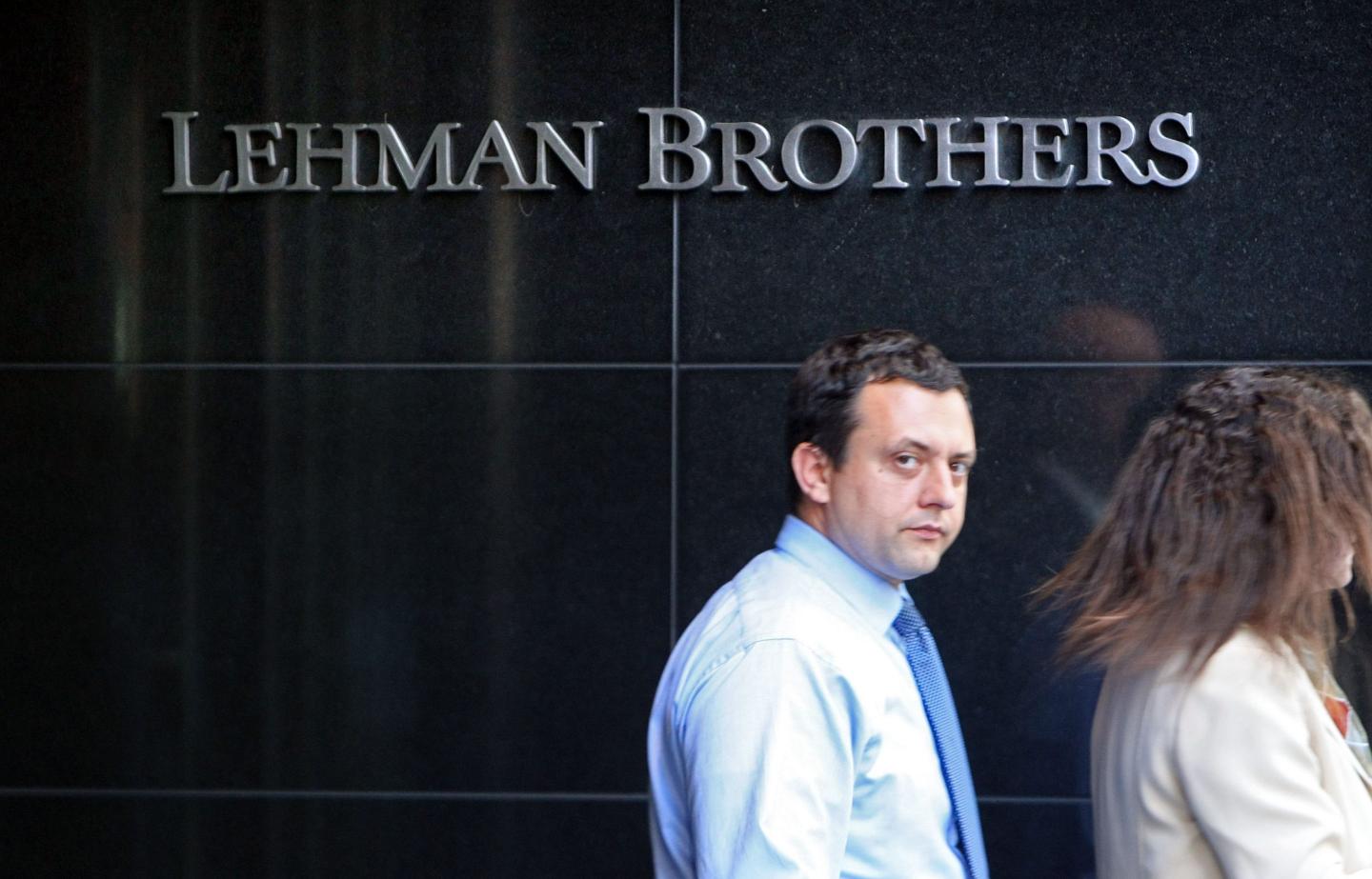
People walk past the headquarters of Lehman Brothers in Manhattan, days before the investment bank filed for Chapter 11 bankruptcy, triggering the Great Financial Crisis of 2008.
People walk past the headquarters of Lehman Brothers in Manhattan, days before the investment bank filed for Chapter 11 bankruptcy, triggering the Great Financial Crisis of 2008.Mario Tama—Getty Images
Add Fortune on Google for similar content.

The architects of the financial system overhaul known as Dodd-Frank suffered numerous slings and arrows while crafting their historic legislation. The final rules put in place in 2010 to stabilize the system after the ravages of the financial crisis were highly controversial in many corners of the banking world–and hotly contested in Washington.

However, as the economy heads into another period of potential weakness, the fruits of that labor are now becoming apparent.

Before Dodd-Frank, problems in the banking system helped spark a wildfire that led to the worst global recession since the Great Depression. Both liquidity and capital dried up, starving both mom-and-pop shops and large corporations of much-needed financing.

Today, by contrast, liquidity and capital are in abundant supply. The banking system is so strong, in fact, that it is able to function as a shock absorber for the rest of the economy. By using their considerable balance sheets to continue financing growth while absorbing loan losses, banks now have the firepower to blunt the effects of an economic slowdown and help hasten recovery.

To be sure, people of goodwill can debate whether some of Dodd-Frank’s more aggressive initiatives, such as stress-testing, living wills, and the Volcker Rule, were overkill, underdone, or just right. Similarly, they can question whether the ideal balance of safety vs. profitability has been achieved.

But there is no doubt that, at least directionally, lawmakers got it right. The regulatory overhaul, part of a globally coordinated set of reforms, has helped transform the economy’s once-sickest patients into some of its healthiest.

Banks showed remarkable resiliency in the early days of the pandemic–and they continue to display that strength now. Despite supply chain disruptions, rising inflation and other headwinds, banks continued to increase lending to consumers and businesses in the second quarter. Overall, they posted better-than-expected earnings, in large part because of higher interest rates. In July, the four largest U.S. banks said their net interest income (or the difference between the interest revenue they collect and the interest they pay on deposits and other liabilities) increased by 14% to 26% in the second quarter from the same quarter a year earlier.

What’s more, the Federal Reserve stress-testing process of the last several years gives tons of comfort that bank solvency won’t be a concern if the real economy takes a tumble. All of the big U.S. banks that are subject to stress-testing–and they passed with flying colors. Even under the most stressful scenario, the results showed the banking system would have twice the capital required.  

The banking system’s strength is especially fortuitous now because monetary policymakers are out of recession-fighting bullets. In a typical downturn, the Federal Reserve cuts interest rates to encourage households and businesses to increase spending and borrowing. This time, the Fed is raising interest rates to snuff out inflation at the expense of economic growth.

Households and businesses are unlikely to find much relief from Washington–but banks, buoyed by higher interest rates, can tap their considerable capital and liquidity to help.

In terms of capital, U.S. banks have enough on hand to sustain major loan losses. The most recent stress test showed that the largest 33 banks were able to comfortably absorb over $600 billion in losses and continue to lend to households and businesses. That’s more loan losses than all U.S. banks suffered in the five years during and after the financial crisis.

Banks also have more than enough liquidity to ensure that their clients will be able to get the short-term money they need to fund their operations. The share of liquid assets on bank balance sheets is about 15% today, compared with less than 3% in the depths of the financial crisis, according to data compiled by CEIC.

In short, there is very little concern today over the possibility of a run on a bank or a widening contagion. That means banks should be able to continue to serve their essential role in capital formation: arranging for new and growing businesses to get the money they need to create new products and services and to innovate, even in a fairly steep downturn.

In the runup to 2008, much of the economy’s “innovation” took place in the banking sector itself, in the form of asset securitization, generating massive profits for banks but doing little for the broader economy. All of that stopped in 2008 as banks scrambled to shore up their balance sheets. This time, in sharp contrast, banks will be able to continue arranging financing for the businesses of the future, whether that be climate transition, the Metaverse, artificial intelligence or housing.  

Of course, the entire financial system isn’t bulletproof. Trouble may well lurk in the shadows. Financial institutions outside of regulators’ purview could pose problems in the months ahead.

The banking system itself likely won’t cause economists to lose much sleep. When the economy inevitably slows down or enters the next recession, businesses will turn to banks for financing–and this time, banks will be ready, willing, and able to help.

Til Schuermann is a partner and co-head of the Americas finance, risk, and public policy practice at consultancy Oliver Wyman, and a former senior vice president at the Federal Reserve Bank of New York during the financial crisis.

The opinions expressed in Fortune.com commentary pieces are solely the views of their authors and do not necessarily reflect the opinions and beliefs of Fortune.

More must-read commentary published by Fortune:

  • The Fed is oversteering on inflation–every signal suggests it’s already cooling
  • The IFRC wants to leverage financial markets to keep up with the world’s unprecedented humanitarian needs. Here’s how
  • I got rich by betting that inequality would destroy the U.S. and U.K. I’m sorry
  • Remote work isn’t hurting our mental well-being. The lack of work-life boundaries is
Sign up for the Fortune Features email list so you don’t miss our biggest features, exclusive interviews, and investigations.
About the Author
By Til Schuermann
See full bioRight Arrow Button Icon
Add Fortune on Google for similar content.

Latest in Commentary

Finance
Lorem ipsum dolor sit amet, consectetur adipiscing elit, sed do eiusmod tempor incididunt ut labore et dolore magna aliqua. Ut enim ad minim veniam
By Fortune Editors
October 20, 2025
Finance
Lorem ipsum dolor sit amet, consectetur adipiscing elit, sed do eiusmod tempor incididunt ut labore et dolore magna aliqua. Ut enim ad minim veniam
By Fortune Editors
October 20, 2025
Finance
Lorem ipsum dolor sit amet, consectetur adipiscing elit, sed do eiusmod tempor incididunt ut labore et dolore magna aliqua. Ut enim ad minim veniam
By Fortune Editors
October 20, 2025
Finance
Lorem ipsum dolor sit amet, consectetur adipiscing elit, sed do eiusmod tempor incididunt ut labore et dolore magna aliqua. Ut enim ad minim veniam
By Fortune Editors
October 20, 2025
Finance
Lorem ipsum dolor sit amet, consectetur adipiscing elit, sed do eiusmod tempor incididunt ut labore et dolore magna aliqua. Ut enim ad minim veniam
By Fortune Editors
October 20, 2025
Finance
Lorem ipsum dolor sit amet, consectetur adipiscing elit, sed do eiusmod tempor incididunt ut labore et dolore magna aliqua. Ut enim ad minim veniam
By Fortune Editors
October 20, 2025

Most Popular

Finance
Lorem ipsum dolor sit amet, consectetur adipiscing elit, sed do eiusmod tempor incididunt ut labore et dolore magna aliqua. Ut enim ad minim veniam
By Fortune Editors
October 20, 2025
Finance
Lorem ipsum dolor sit amet, consectetur adipiscing elit, sed do eiusmod tempor incididunt ut labore et dolore magna aliqua. Ut enim ad minim veniam
By Fortune Editors
October 20, 2025
Finance
Lorem ipsum dolor sit amet, consectetur adipiscing elit, sed do eiusmod tempor incididunt ut labore et dolore magna aliqua. Ut enim ad minim veniam
By Fortune Editors
October 20, 2025
Finance
Lorem ipsum dolor sit amet, consectetur adipiscing elit, sed do eiusmod tempor incididunt ut labore et dolore magna aliqua. Ut enim ad minim veniam
By Fortune Editors
October 20, 2025
Finance
Lorem ipsum dolor sit amet, consectetur adipiscing elit, sed do eiusmod tempor incididunt ut labore et dolore magna aliqua. Ut enim ad minim veniam
By Fortune Editors
October 20, 2025
Finance
Lorem ipsum dolor sit amet, consectetur adipiscing elit, sed do eiusmod tempor incididunt ut labore et dolore magna aliqua. Ut enim ad minim veniam
By Fortune Editors
October 20, 2025
Fortune Secondary Logo
Rankings
  • 100 Best Companies
  • Fortune 500
  • Global 500
  • Fortune 500 Europe
  • Most Powerful Women
  • World's Most Admired Companies
  • See All Rankings
  • Lists Calendar
Sections
  • Finance
  • Fortune Crypto
  • Features
  • Leadership
  • Health
  • Commentary
  • Success
  • Retail
  • Mpw
  • Tech
  • Lifestyle
  • CEO Initiative
  • Asia
  • Politics
  • Conferences
  • Europe
  • Newsletters
  • Personal Finance
  • Environment
  • Magazine
  • Education
Customer Support
  • Frequently Asked Questions
  • Customer Service Portal
  • Privacy Policy
  • Terms Of Use
  • Single Issues For Purchase
  • International Print
Commercial Services
  • Advertising
  • Fortune Brand Studio
  • Fortune Analytics
  • Fortune Conferences
  • Business Development
  • Group Subscriptions
About Us
  • About Us
  • Press Center
  • Work At Fortune
  • Terms And Conditions
  • Site Map
  • About Us
  • Press Center
  • Work At Fortune
  • Terms And Conditions
  • Site Map
  • Facebook icon
  • Twitter icon
  • LinkedIn icon
  • Instagram icon
  • Pinterest icon

Latest in Commentary

Asia’s defense boom is rewiring the global arms supply chain
Commentaryarms, weapons, and defense
Asia’s defense boom is rewiring the global arms supply chain
By Chris OberoiJune 24, 2026
9 hours ago
steve
Commentary250 Years of Innovation
Steve Case: America was built by entrepreneurs. Here’s how we keep that edge for the next 250 years
By Steve CaseJune 24, 2026
18 hours ago
t
CommentaryWhite House
Trump mistakes the bully pulpit for bullying leadership — history’s villains were never heroes
By Jeffrey Sonnenfeld and Steven TianJune 24, 2026
18 hours ago
mg
CommentaryHealth
The ‘tech neck’ time bomb: why 43 million young Americans could cripple U.S. health care within a generation
By Michael GerlingJune 24, 2026
19 hours ago
sb
Commentaryclimate change
The climate policy triangle: why leaders can no longer choose between growth, security and sustainability
By Sebastian BuckupJune 23, 2026
1 day ago
brett
CommentaryManagement
Middle managers aren’t going extinct—they’re evolving into something more powerful
By Brett HurtJune 23, 2026
2 days ago

Most Popular

The Pentagon said Iran War costs $29 billion, but the real cost is closer to $200 billion—and counting
Economy
The Pentagon said Iran War costs $29 billion, but the real cost is closer to $200 billion—and counting
By Jacqueline MunisJune 24, 2026
23 hours ago
Now worth $200 million, Sarah Jessica Parker credits being ‘one of eight kids that struggled financially’ for her hunger, ambition, and work ethic
Success
Now worth $200 million, Sarah Jessica Parker credits being ‘one of eight kids that struggled financially’ for her hunger, ambition, and work ethic
By Orianna Rosa RoyleJune 24, 2026
23 hours ago
After forcing workers back to the office, Goldman Sachs and JPMorgan Chase are now letting their staff work remotely—but only for the World Cup
Success
After forcing workers back to the office, Goldman Sachs and JPMorgan Chase are now letting their staff work remotely—but only for the World Cup
By Orianna Rosa RoyleJune 23, 2026
2 days ago
Amazon's record Prime Day masks a darker truth: Americans are spending more and getting less
Retail
Amazon's record Prime Day masks a darker truth: Americans are spending more and getting less
By Nick LichtenbergJune 24, 2026
16 hours ago
Ray Dalio just finished a 10-day trip to China. He says global leaders know America ‘doesn’t have what it takes to fight to maintain its empire’
Asia
Ray Dalio just finished a 10-day trip to China. He says global leaders know America ‘doesn’t have what it takes to fight to maintain its empire’
By Nick LichtenbergJune 24, 2026
17 hours ago
Current price of gold as of June 23, 2026
Personal Finance
Current price of gold as of June 23, 2026
By Danny BakstJune 23, 2026
2 days ago

© 2026 Fortune Media IP Limited. All Rights Reserved. Use of this site constitutes acceptance of our Terms of Use and Privacy Policy | CA Notice at Collection and Privacy Notice | Do Not Sell/Share My Personal Information
FORTUNE is a trademark of Fortune Media IP Limited, registered in the U.S. and other countries. FORTUNE may receive compensation for some links to products and services on this website. Offers may be subject to change without notice.