
Stacey Abrams’s new book isn’t a traditional political memoir.
Like works by most candidates for office, Abrams’s book does outline her vision for the country. But that vision reaches far into the future—and the past—going beyond the realm of her own political career.
Abrams may be helped in bucking tradition by the fact that she is not, at the moment, technically running for office. The former Georgia House of Representatives minority leader and 2018 gubernatorial candidate, who lost that race in an election marred by questions of voter suppression, has turned her attention in the years since to securing voting rights through her organization, Fair Fight. Abrams’s name has come up, however, in discussions of who could join Joe Biden’s Democratic ticket as Vice President in November; Abrams, unlike most potential VP picks, has said publicly that she would accept the position if asked.
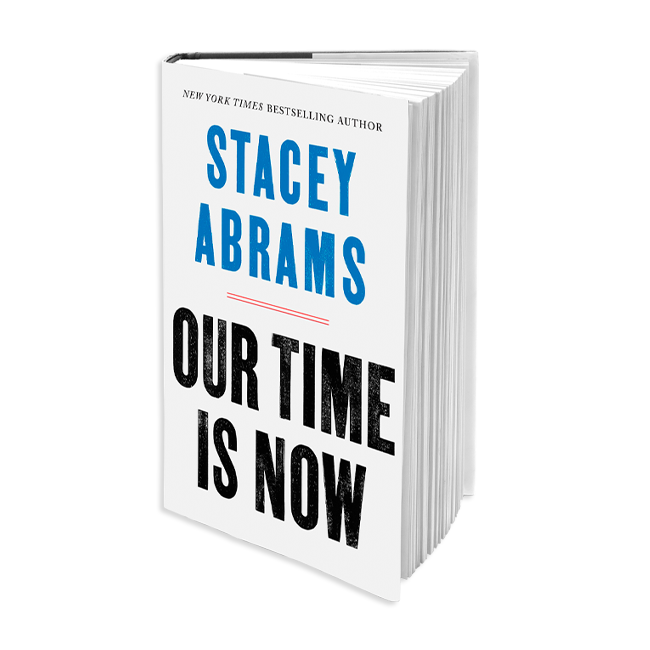
Our Time Is Now: Power, Purpose, and the Fight for a Fair America is an in-depth history of voting rights in this country and an analysis of what the future may hold if lawmakers fix voter suppression nationwide—or if they do not. The book gets into the nitty-gritty of each aspect of safeguarding the right to vote: voter registration, access to the ballot box, ballot counting, and even the importance of the U.S. Census in shaping the electorate. It’s a work that looks beyond Abrams’s own political career to the future of U.S. politics for generations to come.
“We cannot stop the future, but if we are wise, we will prepare for variations in outcomes,” Abrams writes in the book. “If we are smart and nimble, we will shape the future as we can—because our time is now.”
Abrams spoke to Fortune last week about Our Time Is Now, nationwide protests over racism and police brutality, and the recent primary election in her home state of Georgia.
This conversation has been edited and condensed.
Fortune: You open the book with the story of your grandmother exercising her right to vote after the passage of the Voting Rights Act—and her fears about doing so. What would she make of the protests that have exploded across the country?
Stacey Abrams: What I tried to illuminate with her story is that the right to vote came about in part because of protests her children participated in. My father was arrested as a teenager helping to register black people to vote in Mississippi, and he and my mother were both very active in protests. She would understand the urgency and the despair that drives the protests. My father is now 71; he was 14 when he was arrested. This weekend, he and my mother and my 13-year-old niece participated in a community protest. They raised me to understand that protest is part of our democracy. It’s how we draw attention to the needs that we have when the normal lines of communication don’t work or are ignored.
This book takes the long view—offering solutions that may take decades, resolving well past the point of your own political career. Why was this the book you wanted to write?
I was urged to write a retrospective on my campaign for governor, which did not feel to me to be sufficient. The issue [of voter suppression] that may have been singular in its disposition [in the 2018 Georgia election] was emblematic of a larger problem in our country. It’s the reason I do what I do—the reason as a teenager I became involved in activism, the reason as an adult I ran for office. This book was an encapsulation of my vision of what we can be as a country. The subtitle means something to me: Power, Purpose, and the Fight for a Fair America. That’s what wakes me up, what galvanizes me through the day, what I think about as I go to sleep. This book was not supposed to be about my campaign; my campaign is an incident. The larger challenge is what permitted suppression to happen in Georgia and what permitted the murders of too many black people. What permitted the grotesque reaction and inaction to COVID-19. These are all part of the narrative—and the book was designed to capture the why.
What did the challenges in Georgia’s election last week say about what the nation will face in November?
There has been skepticism about what I described as the challenges of the 2018 election. I think the real-time display we saw on Tuesday should rip away the blinders from the eyes of anyone who said I was making it up. What it signaled is that this wasn’t just about a single election—it was about a system that is broken, and in this case, it was so grotesquely broken that it harmed voters of every race, every degree of partisanship. The system itself is not structured to deliver the democracy it should.
But it should also show that progress is possible, especially when we don’t allow voter suppression to defeat us and instead use it to galvanize us. We saw record turnout. That record turnout did not diminish the existence of suppression, but it challenged it. We have the power now to demand better. We are seeing that in the demonstrations, and we saw that on Tuesday. The issue is making sure we have full access to the power of citizenship, and until we fix voter suppression, we don’t.
In recent weeks, we’ve heard leaders urge protesters to vote to make a difference, and others registering skepticism that voting can enact the kind of change that is needed. What would you say to those who question how much voting can achieve?
Going to vote is a critical part of the solution—it’s just not the only thing. We need to understand what it can accomplish. Voting is an essential part of the solution. It feels inadequate. It certainly sounds inadequate when it is offered as an alternative to protest—and that’s what I push back on. I do not believe it is “don’t protest, go vote.” It is “protest in the streets, and then protest at the ballot boxes.” We have to see this as a continuum as opposed to antithetical to one another.
It’s incumbent on those who hold public office and urge voting as a remedy to explain that it operates much like medicine. There is not an instantaneous cure. It often takes repetition, and there may be setbacks. There will certainly be counterattacks by whatever disease or virus it is—in this case, systemic racism and inequity—so we can’t ever stop taking the medicine. We’ve got to keep doing it until we’ve reached the actual defeat of the illness. That’s going to take a very long time because it’s been baked into the notion of America since its inception.
You’ve said before that you would make “an excellent running mate.” How have the past few weeks affected your view of the upcoming Biden ticket and vice presidential slot?
[Laughs] What I’ve said for 14 months remains true: Yes, I would, and yes, I can. But it is up to the Vice President to determine who he believes is the right partner for him in both this campaign and in governance.
As protests over racism in the U.S. continue, Vice President Biden is hearing renewed calls that he choose a black woman as his running mate. You write in your book about “identity politics” as a logical means of political choice and a powerful tool. Is it important for Biden to choose a black woman to join him on his ticket, and what would it mean to do so?
Vice President Biden began this process by declaring his intention to select a woman, which meant he recognized the salience of the identity of gender and of the lived experience of women in our country, who have been denied autonomy and power and access for too long. By the same token, there is certainly a signal to be sent by recognizing the roiling anger and despair that pervades communities of color and particularly black communities.
A short afterword in the book addresses the coronavirus pandemic. Is the pandemic creating further threats to voting access, and what do we need to be concerned about in November?
We should be concerned about whether our states have the resources to scale elections to meet not only the pandemic, but the pressure that will be brought to bear on the system. We need the resources to make sure people can vote by mail so they are not forced to choose between their health and the right to vote. We need resources so we can expand access to early voting in every state. We need the resources for in-person early voting. All those things are critical, and they require resources. We are in the midst of an economic collapse. It is a constitutional requirement that we hold this election, therefore this is a responsibility on the part of the federal government to invest in making sure those elections can happen. We need the passage of the HEROES Act and the buy-in of our secretaries of state to execute these elections on behalf of their citizens.
You’ve mentioned participating in protests after the beating of Rodney King by law enforcement in 1992. What do these two experiences and protest movements say to you about how far the country has come, or not, over the past three decades?
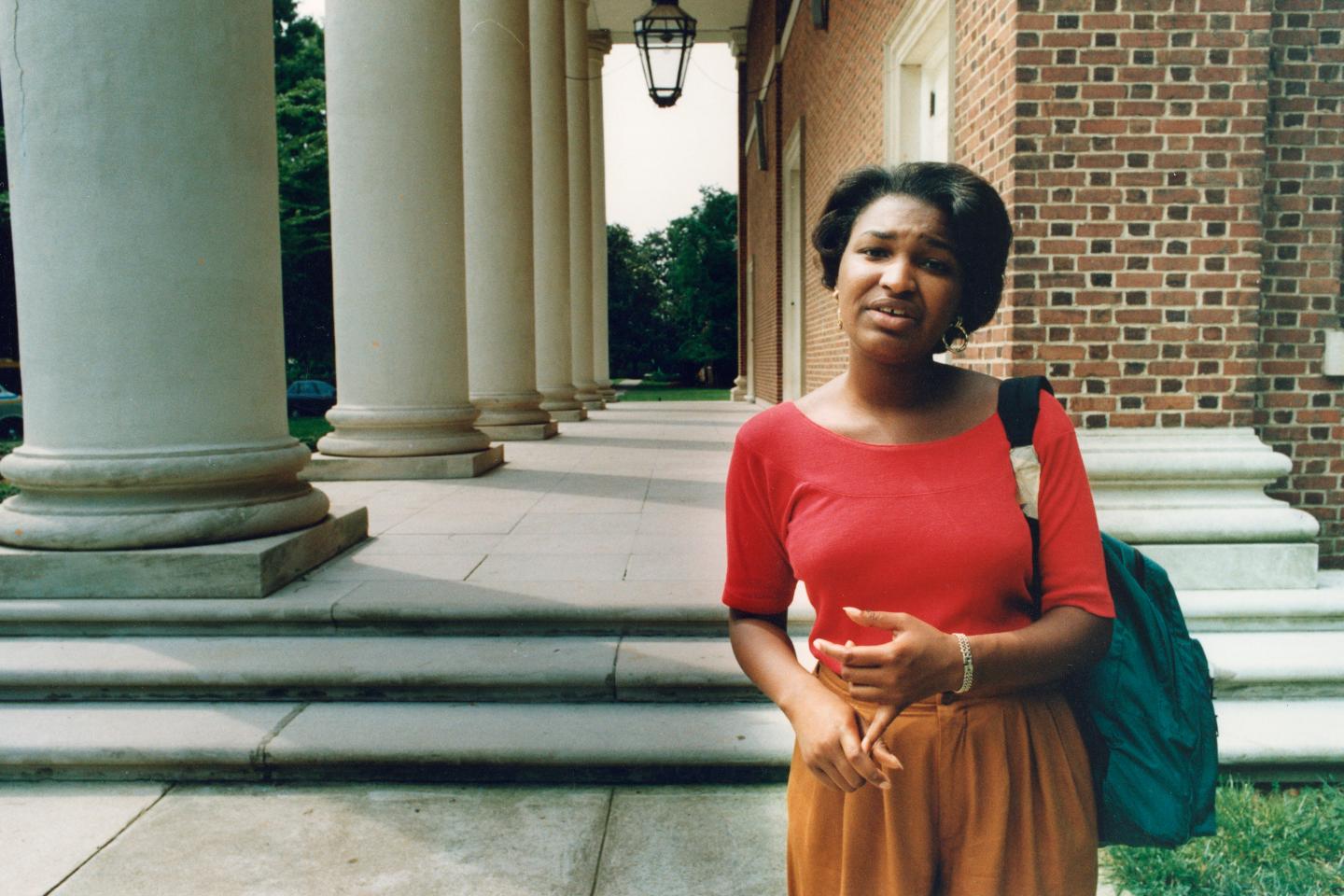
In 1992, I was a college freshman who helped lead a quiet march from the Atlanta university center to City Hall. The next day there were demonstrations that resulted in the city of Atlanta cordoning off our campus and teargassing students and residents of the community. At the time, I was disturbed on behalf of those community members until I realized, there but for the grace of God go I. That renewed in that moment my commitment to trying to find solutions.
The difference is that in 1992, the demonstrations were done in a few days. The presidential election that followed unfortunately did not attempt to challenge what we saw. That’s different now. This presidential election is going to be defined in part by this moment. What makes me most hopeful is that this energy and determination can be brought to the ballot boxes and we will see real change.
Our Time Is Now describes challenges to the right to vote facing all kinds of communities of color in this country. What specific challenges do women of color face exercising their right to vote?
Women of color are more likely to be caregivers. They’re more likely to be in the essential worker category of nurses or home health aides, which means that their schedules are not their own. They’re more likely to be underpaid for their employment, which means when they have to sacrifice their time standing in a line that can last up to eight hours, they lose a day’s wage, which can mean the difference between making rent and buying food. While these are grotesque challenges that affect communities of color writ large, for women of color in particular, the effects of voter suppression, the incompetence of poor management of elections reverberates throughout their lives. Not only do they face harm trying to participate, they face the consequences of their inability to vote or the inability of their community to vote because change doesn’t come.
Voter suppression has to be understood not simply as blocking access to an action, but blocking access to change. That’s why it takes up half the book. It is the point of entry to the kind of fairness, equality, and equity we need to demand, particularly for women of color.
More on the most powerful women in business from Fortune:
- How one company manages supply chains for every single “essential” industry
- The 2.5 million jobs the economy gained in May went to almost everyone except black women
- Women are more worried than men about the coronavirus. Cecile Richards doesn’t want that to keep female voters from the polls
- Why Citi offered full-time jobs to its interns—before summer even started
- Stitch Fix’s new growth strategy: Letting non-clients shop directly, too