• Home
  • Latest
  • Fortune 500
  • Finance
  • Tech
  • Leadership
  • Lifestyle
  • Rankings
  • Multimedia
Commentary

What Clinton and Trump Get Wrong About America’s Super Rich

By
Gary Shapiro
Gary Shapiro
Down Arrow Button Icon
By
Gary Shapiro
Gary Shapiro
Down Arrow Button Icon
September 20, 2016, 3:22 PM ET
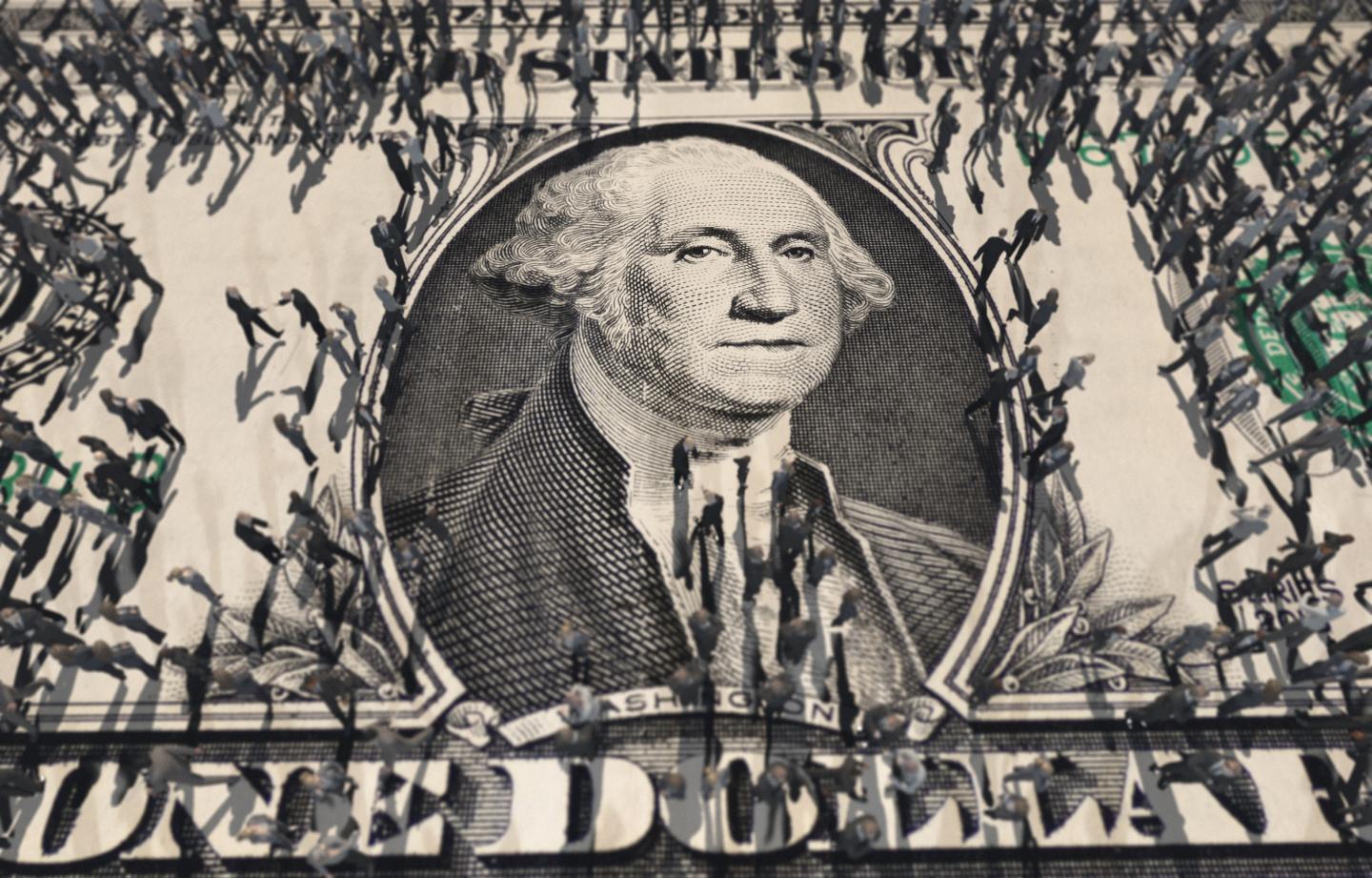
Executives on One Dollar Bill
Conducting business on American money.Benjamin Shearn—Getty Images

In this presidential election season, the debate rages over whether our nation is still the land of opportunity. Does everyone have a chance of doing better? Do hard work, sacrifice and a bit of luck still give us a chance of moving up the economic ladder? Will our children have a better life than we do, or do you have to be born privileged?

Put another way, is our idea of the American Dream dead? Many of these questions stem from years of rhetoric that the system is “rigged;” that the rich are getting richer and the average American doesn’t stand a chance of getting ahead.

The sense of responsibility and of determining one’s own destiny that marked the 1950s and 1960s has been replaced with blaming the system and other people. Hillary Clinton criticizes the 1%, blaming corporations and CEOs for making record pay while the majority of Americans’ paychecks remain stagnant. And it’s no longer just the Democrats who preach this brand of politics – it’s the mainstay of Republican nominee Donald Trump’s presidential campaign.

So, let’s address the underlying premise: Is income inequality in fact growing?

The Gini coefficient, the most common measure of income inequality, suggests this to be true. A zero Gini coefficient represents complete equality; a score of 100 reflects complete inequality (one person owning all the wealth).

According to the U.S. Census Bureau, the Gini coefficient has increased 5.9% since 1993, the earliest year accurate data was available, and currently stands at 48. The trend appears clear – income inequality is growing in this country at a slow, but steady rate.

But the Gini coefficient is imperfect. Although America’s income disparity may be real, at least some of it is explained by changes in demographics, as millions of baby boomers retire and leave the work force. And some of the disparity is affected by the unprecedented financial success of Americans who created or invested in phenomenally successful Internet companies.

The coefficient also may overweight the disparity by ignoring vast numbers of Americans who are paid in part or full in cash, such as child care providers, some taxi drivers, valets, waiters and more.

Also, the coefficient measures only income and not actual wealth, a problem common to most federal statistics based on data from the Internal Revenue Service. According to the Bureau of Labor Statistics, about 62% of homeowners between the ages of 65-74 and 83% of homeowners over the age of 75 do not have mortgage debt. And 10,000 baby boomers reach the retirement age of 65 every day. Should older Americans who may be retired with little income, but have mortgage-free homes and few other expenses, be counted as poor?

Celebrities, professional athletes, Wall Street financiers and CEOs who are at the peak of their careers making seven-figure incomes are defined as “rich” and often accused of not paying their “fair share.”


What the Gini coefficient and vocal billionaires like Warren Buffett and Bill Gates who argue for higher personal income taxes conveniently ignore is that they have the majority of the nation’s wealth – and it’s almost totally shielded from income taxes via complex trust arrangements and charitable foundations. In Buffett’s case, his trust not only hides his wealth from high taxes, but it employs his progeny. These billionaires are not alone.

In other words, the current income tax rate is not the real issue. The real issue is that our current tax structure doesn’t factor in and capitalize on accumulated wealth. The discussion of income inequality could more appropriately be about wealth inequality, since a good portion of America is owned by billionaires, most of whom use trusts to effectively limit their federal income taxes. With most of the public discussion on income equality – what the Gini coefficient measures – the real issue of wealth inequality is frequently overlooked.

Rather than vilify the top 1% of income earners, we should recognize their significant contribution as a source of federal revenue. At the same time, we should at least discuss accumulated wealth as a basis for federal revenue. This way, those who actually enjoy the benefits of American security, infrastructure and our legal system, can be asked to contribute. Many are paying almost nothing for the benefits they get as U.S. citizens. Forty-five percent of Americans – about 77.5 million households – pay no federal income tax. The top one percent of earners pay 38 percent of all individual income tax revenue.

It’s time to shore up our tax code – closing loopholes at the top and bottom to level the playing field – and ensure the American Dream lives on in each and every one of us.

Gary Shapiro is president and CEO of the Consumer Technology Association (CTA), a U.S. trade association representing more than 2,200 consumer technology companies, and author of the book, Ninja Innovation: The Ten Killer Strategies of the World’s Most Successful Businesses.


About the Author
By Gary Shapiro
See full bioRight Arrow Button Icon

Latest in Commentary

Finance
Lorem ipsum dolor sit amet, consectetur adipiscing elit, sed do eiusmod tempor incididunt ut labore et dolore magna aliqua. Ut enim ad minim veniam
By Fortune Editors
October 20, 2025
Finance
Lorem ipsum dolor sit amet, consectetur adipiscing elit, sed do eiusmod tempor incididunt ut labore et dolore magna aliqua. Ut enim ad minim veniam
By Fortune Editors
October 20, 2025
Finance
Lorem ipsum dolor sit amet, consectetur adipiscing elit, sed do eiusmod tempor incididunt ut labore et dolore magna aliqua. Ut enim ad minim veniam
By Fortune Editors
October 20, 2025
Finance
Lorem ipsum dolor sit amet, consectetur adipiscing elit, sed do eiusmod tempor incididunt ut labore et dolore magna aliqua. Ut enim ad minim veniam
By Fortune Editors
October 20, 2025
Finance
Lorem ipsum dolor sit amet, consectetur adipiscing elit, sed do eiusmod tempor incididunt ut labore et dolore magna aliqua. Ut enim ad minim veniam
By Fortune Editors
October 20, 2025
Finance
Lorem ipsum dolor sit amet, consectetur adipiscing elit, sed do eiusmod tempor incididunt ut labore et dolore magna aliqua. Ut enim ad minim veniam
By Fortune Editors
October 20, 2025

Most Popular

Finance
Lorem ipsum dolor sit amet, consectetur adipiscing elit, sed do eiusmod tempor incididunt ut labore et dolore magna aliqua. Ut enim ad minim veniam
By Fortune Editors
October 20, 2025
Finance
Lorem ipsum dolor sit amet, consectetur adipiscing elit, sed do eiusmod tempor incididunt ut labore et dolore magna aliqua. Ut enim ad minim veniam
By Fortune Editors
October 20, 2025
Finance
Lorem ipsum dolor sit amet, consectetur adipiscing elit, sed do eiusmod tempor incididunt ut labore et dolore magna aliqua. Ut enim ad minim veniam
By Fortune Editors
October 20, 2025
Finance
Lorem ipsum dolor sit amet, consectetur adipiscing elit, sed do eiusmod tempor incididunt ut labore et dolore magna aliqua. Ut enim ad minim veniam
By Fortune Editors
October 20, 2025
Finance
Lorem ipsum dolor sit amet, consectetur adipiscing elit, sed do eiusmod tempor incididunt ut labore et dolore magna aliqua. Ut enim ad minim veniam
By Fortune Editors
October 20, 2025
Finance
Lorem ipsum dolor sit amet, consectetur adipiscing elit, sed do eiusmod tempor incididunt ut labore et dolore magna aliqua. Ut enim ad minim veniam
By Fortune Editors
October 20, 2025
Fortune Secondary Logo
Rankings
  • 100 Best Companies
  • Fortune 500
  • Global 500
  • Fortune 500 Europe
  • Most Powerful Women
  • World's Most Admired Companies
  • See All Rankings
  • Lists Calendar
Sections
  • Finance
  • Fortune Crypto
  • Features
  • Leadership
  • Health
  • Commentary
  • Success
  • Retail
  • Mpw
  • Tech
  • Lifestyle
  • CEO Initiative
  • Asia
  • Politics
  • Conferences
  • Europe
  • Newsletters
  • Personal Finance
  • Environment
  • Magazine
  • Education
Customer Support
  • Frequently Asked Questions
  • Customer Service Portal
  • Privacy Policy
  • Terms Of Use
  • Single Issues For Purchase
  • International Print
Commercial Services
  • Advertising
  • Fortune Brand Studio
  • Fortune Analytics
  • Fortune Conferences
  • Business Development
  • Group Subscriptions
About Us
  • About Us
  • Press Center
  • Work At Fortune
  • Terms And Conditions
  • Site Map
  • About Us
  • Press Center
  • Work At Fortune
  • Terms And Conditions
  • Site Map
  • Facebook icon
  • Twitter icon
  • LinkedIn icon
  • Instagram icon
  • Pinterest icon

Latest in Commentary

reed
CommentaryRetirement
Tim Cook and Reed Hastings just showed every CEO how to leave gracefully
By Paul HardartMay 9, 2026
33 minutes ago
golf
Commentarybooks
How playing golf alone can make you better at your job
By Gary BelskyMay 8, 2026
22 hours ago
naomi
Commentarymental health
Naomi Osaka: the things I didn’t do to succeed
By Naomi OsakaMay 8, 2026
23 hours ago
amanda
Commentarybatteries
Why energy storage is moving beyond the capex debate
By Amanda SimonianMay 7, 2026
2 days ago
trump
CommentaryMedicare
Auto-enrollment in Medicare Advantage isn’t a nudge. It’s a trap
By Brian KeyserMay 7, 2026
2 days ago
nyse
CommentaryAI agents
Your trusted advocate or your rebellious Frankenstein: how you deploy agentic AI determines which one you get
By Jeffrey Sonnenfeld, Stephen Henriques, Yevheniia Podurets and Jasmine GarryMay 7, 2026
2 days ago

Most Popular

California farmers must destroy 420,000 peach trees after Del Monte closes its canneries and cancels more than $550 million in long-term contracts
North America
California farmers must destroy 420,000 peach trees after Del Monte closes its canneries and cancels more than $550 million in long-term contracts
By Sasha RogelbergMay 7, 2026
2 days ago
'Blue dot fever' plagues musicians like Post Malone, Meghan Trainor, and Zayn as a growing list of artists cancel tours due to lagging ticket sales
Arts & Entertainment
'Blue dot fever' plagues musicians like Post Malone, Meghan Trainor, and Zayn as a growing list of artists cancel tours due to lagging ticket sales
By Dave Lozo and Morning BrewMay 7, 2026
2 days ago
A Michigan farm town voted down plans for a giant OpenAI-Oracle data center. Weeks later, construction began
Magazine
A Michigan farm town voted down plans for a giant OpenAI-Oracle data center. Weeks later, construction began
By Sharon GoldmanMay 6, 2026
3 days ago
Current price of oil as of May 8, 2026
Personal Finance
Current price of oil as of May 8, 2026
By Joseph HostetlerMay 8, 2026
21 hours ago
U.S. Treasury will have to borrow $2 trillion this year just to continue functioning—more than $166 billion every month
Economy
U.S. Treasury will have to borrow $2 trillion this year just to continue functioning—more than $166 billion every month
By Eleanor PringleMay 7, 2026
2 days ago
Airbnb CEO Brian Chesky warns two types of people won’t survive the AI era: ‘pure people managers’ and workers who resist change
Success
Airbnb CEO Brian Chesky warns two types of people won’t survive the AI era: ‘pure people managers’ and workers who resist change
By Emma BurleighMay 7, 2026
2 days ago

© 2026 Fortune Media IP Limited. All Rights Reserved. Use of this site constitutes acceptance of our Terms of Use and Privacy Policy | CA Notice at Collection and Privacy Notice | Do Not Sell/Share My Personal Information
FORTUNE is a trademark of Fortune Media IP Limited, registered in the U.S. and other countries. FORTUNE may receive compensation for some links to products and services on this website. Offers may be subject to change without notice.