• Home
  • Latest
  • Fortune 500
  • Finance
  • Tech
  • Leadership
  • Lifestyle
  • Rankings
  • Multimedia
Commentary

Here’s What the U.S. and Canada Can Do About Those Trade Problems

By
Alan Wolff
Alan Wolff
and
Bethany Cianciolo
Bethany Cianciolo
Down Arrow Button Icon
By
Alan Wolff
Alan Wolff
and
Bethany Cianciolo
Bethany Cianciolo
Down Arrow Button Icon
March 1, 2016, 5:00 AM ET
G20 Turkey Leaders Summit - Welcoming Ceremony
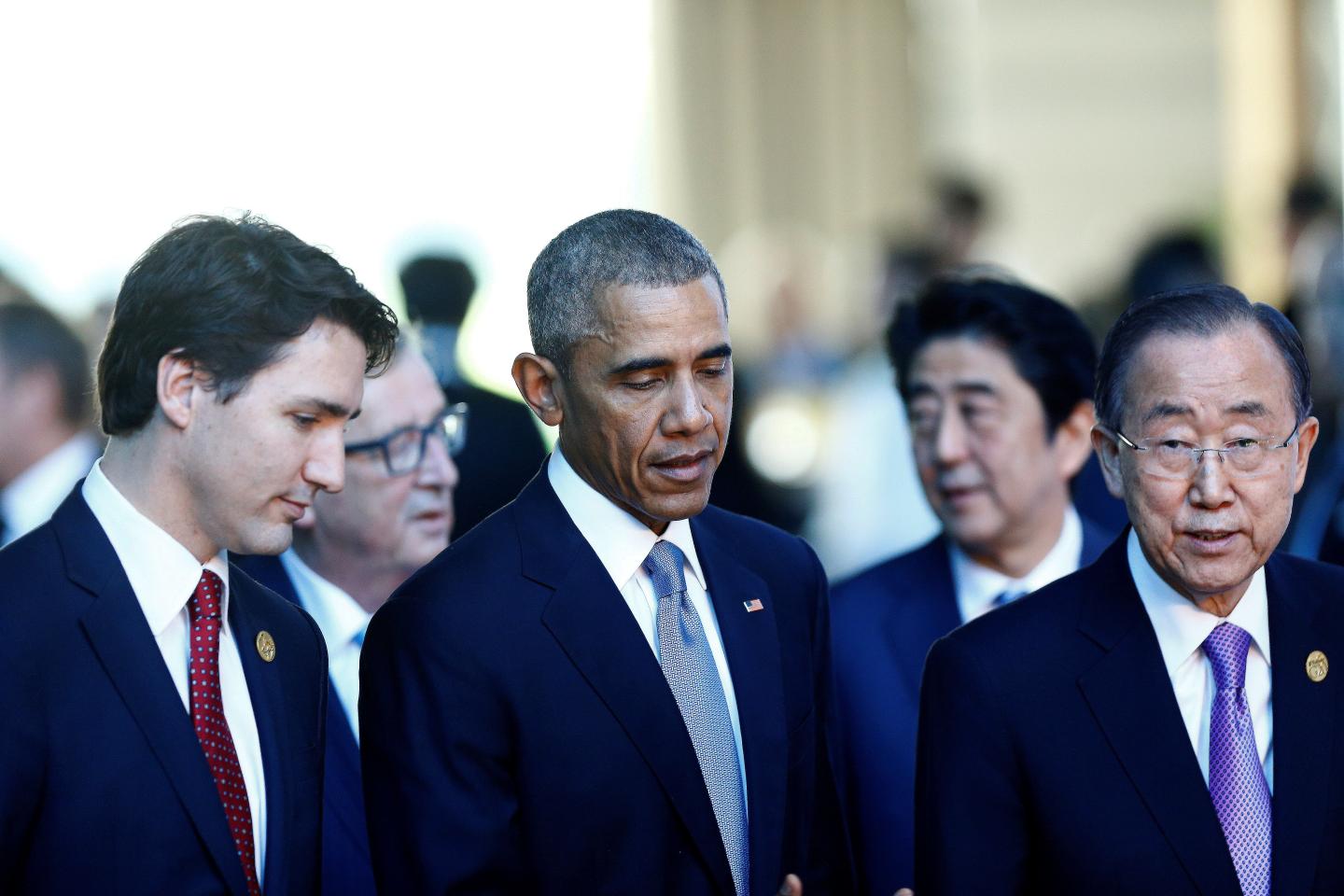
ANTALYA, TURKEY - NOVEMBER 15 : Canadian Prime Minister Justin Trudeau (L), US President Barack Obama (C) and UN Secretary-General Ban Ki-moon are seen before the 'Welcoming Ceremony' prior to the G20 Turkey Leaders Summit on November 15, 2015 in Antalya, Turkey. (Photo by Mehmet Ali Ozcan/Anadolu Agency/Getty Images)Photograph by Mehmet Ali Ozcan — Anadolu Agency via Getty Images

Recently-elected Canadian Prime Minister Justin Trudeau is visiting Washington on March 10th. He will be the first Canadian prime minister to be given a state dinner in 19 years. It might seem odd that it’s taken this long to invite a neighbor in for a formal meal, but relations between Ottawa and Washington have too often been bedeviled by trade issues. Trudeau has made it clear that he wants to set a new and better tone between the two countries, but a series of trade-related irritants can stand in the way of it.

The handling of the extension of the Keystone Pipeline is one. For seven years, the U.S. considered the economics and safety of carrying heavy crude oil from the oil sands of Alberta, Canada further into the south of the United States for refining in Houston. The American debate was almost entirely about balancing domestic interests. However, what was to flow through the pipe was a major Canadian export. The U.S. government ultimately chose not to issue a permit for the construction, and is now being sued by Canadian private investors under the North American Free Trade Agreement (NAFTA)—an agreement that is in itself not free from controversy—for $15 billion in damages.

Then there is COOL, or Country of Origin Labeling. This is a U.S. law that requires U.S. stores to provide customers with information on the source of meat—including ground meats—and other foods. In 2008, the U.S. adopted a provision that increased the requirements: Beef and pork could not be considered “domestic” unless from an animal exclusively born, raised, and slaughtered in the United States. Problem: Genetically very fine quality Canadian piglets come south to grow on less expensive feed available in the U.S. where they will ultimately be consumed. This required a lot of record-keeping in order to get the label right on each package of meat sold in U.S. supermarkets. The World Trade Organization (WTO) ruled in 2012 that the measure was excessively burdensome, discriminatory, and a restriction on trade. Three years later, as the U.S. still had not changed its law, the WTO ruled that Canada could impose retaliatory measures against $1 billion of U.S. exports to Canada. Under this threat, Congress late last year repealed the measure.

Canada is not blameless in bilateral trade problems. It has negotiated an agreement with Europe that will adversely affect U.S. companies’ sales in Canada of certain food products (such as feta cheese), and more generally will discriminate against U.S. products procured by provincial governments. And in recent years, Canada’s courts have unfairly cancelled patents issued years earlier to pharmaceutical companies for drugs proven to be safe and effective, undermining continued investment in research in Canada.


The oldest, largest, and hardiest of trade disputes between the two countries concerns softwood lumber. The two countries have different ownership patterns (more public, provincial lands in Canada; more heavily private and federal timberland in the United States) and differing approaches to log markets and log trade. As reliable as Old Faithful, every few years, U.S. trade cases are brought against Canadian softwood lumber imports, additional duties are imposed by U.S. authorities, and after some acrimony and avoidable trade disruption, a settlement agreement is entered into between the two countries. In a year or so, the fifth round of the lumber dispute is more likely than not to begin. The bottom line is that Canada and the United States have to come to a common understanding that works for both economies.

There is no reason why an attempt cannot be made to head off readily anticipated issues. The trading relationship is the most important each of the two countries has. Nearly $2.4 billion worth of trade in goods and services moves across the border in both directions daily. Canada buys more from America than all of the 28 EU member states combined. It is reported that more trade flows back and forth across one bridge to Canada each year than all U.S. exports to Japan during the same period.

The U.S. and Canada agree on a lot. In 1988, Canada was the first major U.S. trading partner to enter into a free-trade agreement with the United States, and bilateral trade has tripled since then. The two countries are partners in the NAFTA and in the recently concluded Trans-Pacific Partnership Agreement. Nevertheless, a “Buy America” provision—in the recent highway bill Congress passed—will discriminate further against Canada’s exports, and, for its part, Canada plans to further tighten its import restrictions on dairy. Each of these measures carries an added sting, because each affects its closest neighbor’s trade.

It may be that the two countries take each other for granted. Despite having so much of the same heritage and outlook, the U.S. and Canada are too insensitive to the commercial interests of each other.

Trudeau and Obama should establish a high-level bilateral trade policy forum that meets regularly to seek to head off trade disputes before they occur. It is time that both countries take into account the other’s trade interests, whether in domestic legislation, administrative measures, or in negotiations with other countries. The world’s largest trading relationship deserves no less.

Ambassador Alan Wm. Wolff is Chairman of the National Foreign Trade Council (NFTC) and a Senior Counsel with the global law firm Dentons. He served as U.S. Deputy Trade Representative in the Carter Administration.

About the Authors
By Alan Wolff
See full bioRight Arrow Button Icon
By Bethany Cianciolo
See full bioRight Arrow Button Icon

Latest in Commentary

Finance
Lorem ipsum dolor sit amet, consectetur adipiscing elit, sed do eiusmod tempor incididunt ut labore et dolore magna aliqua. Ut enim ad minim veniam
By Fortune Editors
October 20, 2025
Finance
Lorem ipsum dolor sit amet, consectetur adipiscing elit, sed do eiusmod tempor incididunt ut labore et dolore magna aliqua. Ut enim ad minim veniam
By Fortune Editors
October 20, 2025
Finance
Lorem ipsum dolor sit amet, consectetur adipiscing elit, sed do eiusmod tempor incididunt ut labore et dolore magna aliqua. Ut enim ad minim veniam
By Fortune Editors
October 20, 2025
Finance
Lorem ipsum dolor sit amet, consectetur adipiscing elit, sed do eiusmod tempor incididunt ut labore et dolore magna aliqua. Ut enim ad minim veniam
By Fortune Editors
October 20, 2025
Finance
Lorem ipsum dolor sit amet, consectetur adipiscing elit, sed do eiusmod tempor incididunt ut labore et dolore magna aliqua. Ut enim ad minim veniam
By Fortune Editors
October 20, 2025
Finance
Lorem ipsum dolor sit amet, consectetur adipiscing elit, sed do eiusmod tempor incididunt ut labore et dolore magna aliqua. Ut enim ad minim veniam
By Fortune Editors
October 20, 2025

Most Popular

Finance
Lorem ipsum dolor sit amet, consectetur adipiscing elit, sed do eiusmod tempor incididunt ut labore et dolore magna aliqua. Ut enim ad minim veniam
By Fortune Editors
October 20, 2025
Finance
Lorem ipsum dolor sit amet, consectetur adipiscing elit, sed do eiusmod tempor incididunt ut labore et dolore magna aliqua. Ut enim ad minim veniam
By Fortune Editors
October 20, 2025
Finance
Lorem ipsum dolor sit amet, consectetur adipiscing elit, sed do eiusmod tempor incididunt ut labore et dolore magna aliqua. Ut enim ad minim veniam
By Fortune Editors
October 20, 2025
Finance
Lorem ipsum dolor sit amet, consectetur adipiscing elit, sed do eiusmod tempor incididunt ut labore et dolore magna aliqua. Ut enim ad minim veniam
By Fortune Editors
October 20, 2025
Finance
Lorem ipsum dolor sit amet, consectetur adipiscing elit, sed do eiusmod tempor incididunt ut labore et dolore magna aliqua. Ut enim ad minim veniam
By Fortune Editors
October 20, 2025
Finance
Lorem ipsum dolor sit amet, consectetur adipiscing elit, sed do eiusmod tempor incididunt ut labore et dolore magna aliqua. Ut enim ad minim veniam
By Fortune Editors
October 20, 2025
Fortune Secondary Logo
Rankings
  • 100 Best Companies
  • Fortune 500
  • Global 500
  • Fortune 500 Europe
  • Most Powerful Women
  • World's Most Admired Companies
  • See All Rankings
  • Lists Calendar
Sections
  • Finance
  • Fortune Crypto
  • Features
  • Leadership
  • Health
  • Commentary
  • Success
  • Retail
  • Mpw
  • Tech
  • Lifestyle
  • CEO Initiative
  • Asia
  • Politics
  • Conferences
  • Europe
  • Newsletters
  • Personal Finance
  • Environment
  • Magazine
  • Education
Customer Support
  • Frequently Asked Questions
  • Customer Service Portal
  • Privacy Policy
  • Terms Of Use
  • Single Issues For Purchase
  • International Print
Commercial Services
  • Advertising
  • Fortune Brand Studio
  • Fortune Analytics
  • Fortune Conferences
  • Business Development
  • Group Subscriptions
About Us
  • About Us
  • Press Center
  • Work At Fortune
  • Terms And Conditions
  • Site Map
  • About Us
  • Press Center
  • Work At Fortune
  • Terms And Conditions
  • Site Map
  • Facebook icon
  • Twitter icon
  • LinkedIn icon
  • Instagram icon
  • Pinterest icon

Latest in Commentary

joaquin
Commentary250 Years of Innovation
Johnson & Johnson CEO: America’s innovation advantage starts with health 
By Joaquin DuatoMay 9, 2026
4 hours ago
reed
CommentaryRetirement
Tim Cook and Reed Hastings just showed every CEO how to leave gracefully
By Paul HardartMay 9, 2026
7 hours ago
golf
Commentarybooks
How playing golf alone can make you better at your job
By Gary BelskyMay 8, 2026
1 day ago
naomi
Commentarymental health
Naomi Osaka: the things I didn’t do to succeed
By Naomi OsakaMay 8, 2026
1 day ago
amanda
Commentarybatteries
Why energy storage is moving beyond the capex debate
By Amanda SimonianMay 7, 2026
2 days ago
trump
CommentaryMedicare
Auto-enrollment in Medicare Advantage isn’t a nudge. It’s a trap
By Brian KeyserMay 7, 2026
2 days ago

Most Popular

California farmers must destroy 420,000 peach trees after Del Monte closes its canneries and cancels more than $550 million in long-term contracts
North America
California farmers must destroy 420,000 peach trees after Del Monte closes its canneries and cancels more than $550 million in long-term contracts
By Sasha RogelbergMay 7, 2026
2 days ago
A Michigan farm town voted down plans for a giant OpenAI-Oracle data center. Weeks later, construction began
Magazine
A Michigan farm town voted down plans for a giant OpenAI-Oracle data center. Weeks later, construction began
By Sharon GoldmanMay 6, 2026
3 days ago
'Blue dot fever' plagues musicians like Post Malone, Meghan Trainor, and Zayn as a growing list of artists cancel tours due to lagging ticket sales
Arts & Entertainment
'Blue dot fever' plagues musicians like Post Malone, Meghan Trainor, and Zayn as a growing list of artists cancel tours due to lagging ticket sales
By Dave Lozo and Morning BrewMay 7, 2026
2 days ago
Current price of oil as of May 8, 2026
Personal Finance
Current price of oil as of May 8, 2026
By Joseph HostetlerMay 8, 2026
1 day ago
The CEO of Maersk, which ships 14% of everything you buy, said the Iran war is adding $500 million in monthly costs it's trying not to pass down
Energy
The CEO of Maersk, which ships 14% of everything you buy, said the Iran war is adding $500 million in monthly costs it's trying not to pass down
By Sasha RogelbergMay 8, 2026
22 hours ago
Airbnb CEO Brian Chesky warns two types of people won’t survive the AI era: ‘pure people managers’ and workers who resist change
Success
Airbnb CEO Brian Chesky warns two types of people won’t survive the AI era: ‘pure people managers’ and workers who resist change
By Emma BurleighMay 7, 2026
2 days ago

© 2026 Fortune Media IP Limited. All Rights Reserved. Use of this site constitutes acceptance of our Terms of Use and Privacy Policy | CA Notice at Collection and Privacy Notice | Do Not Sell/Share My Personal Information
FORTUNE is a trademark of Fortune Media IP Limited, registered in the U.S. and other countries. FORTUNE may receive compensation for some links to products and services on this website. Offers may be subject to change without notice.