• Home
  • Latest
  • Fortune 500
  • Finance
  • Tech
  • Leadership
  • Lifestyle
  • Rankings
  • Multimedia

Trendingnow

1

Now worth $200 million, Sarah Jessica Parker credits being ‘one of eight kids that struggled financially’ for her hunger, ambition, and work ethic

2

The Pentagon said Iran War costs $29 billion, but the real cost is closer to $200 billion—and counting

3

After forcing workers back to the office, Goldman Sachs and JPMorgan Chase are now letting their staff work remotely—but only for the World Cup

1

Now worth $200 million, Sarah Jessica Parker credits being ‘one of eight kids that struggled financially’ for her hunger, ambition, and work ethic

2

The Pentagon said Iran War costs $29 billion, but the real cost is closer to $200 billion—and counting

3

After forcing workers back to the office, Goldman Sachs and JPMorgan Chase are now letting their staff work remotely—but only for the World Cup
CommentaryYuan

The one thing holding back China’s yuan

By
Jerry Nickelsburg
Jerry Nickelsburg
Down Arrow Button Icon
By
Jerry Nickelsburg
Jerry Nickelsburg
Down Arrow Button Icon
October 19, 2015, 8:00 PM ET
China Scraps Yuan Peg To US dollar
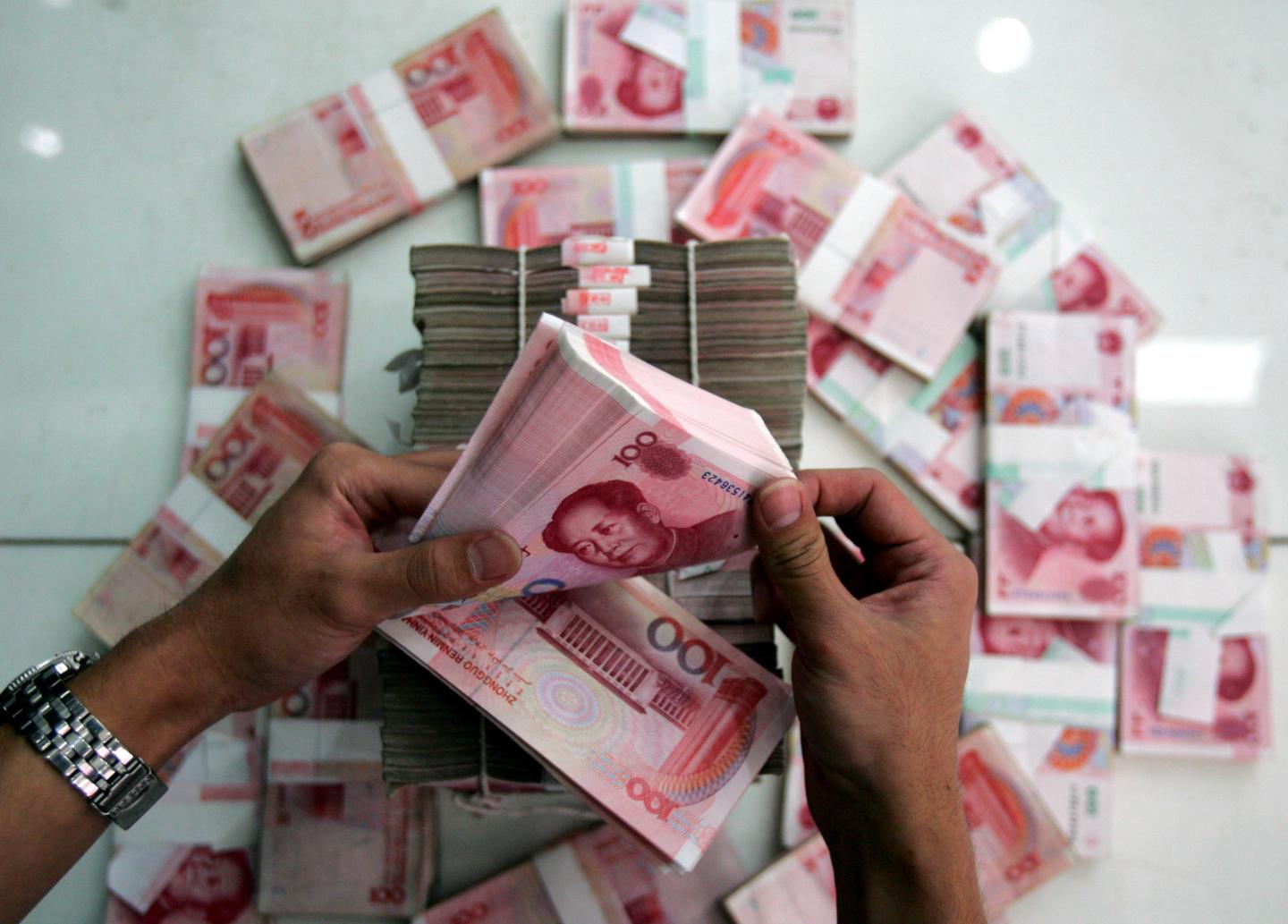
A clerk counts stacks of Chinese yuan at a bank on July 22, 2005 in Beijing, China. Photograph by China Photos/Getty Images
Add Fortune on Google for similar content.

Earlier this fall, the IMF postponed a scheduled update of the designated basket of reserve currencies, a basket that is used by member countries for Special Drawing Rights (SDR). Though SDR’s, a form of borrowing for purposes of currency stabilization, are part of the arcane mechanism of international currency transactions, this was big news. It was seen as a rebuff of China in the wake of last summer’s intervention in the Shanghai Stock Exchange and devaluation of the Chinese Yuan. However, being a reserve currency is both more and less than meets the eye. The more is the political struggle between Chinese ascendency in the world economy and US dominance in international organizations. The less is the relatively minor role that the yuan as an IMF-designated reserve currency would play in the world economy.

The ostensible reason for the IMF inaction was to “ensure the smooth functioning of SDR-related operations,” and to respond to SDR users feedback on the timing of any changes. This is a bit disingenuous as a continuation of the current four currencies; the US dollar, Japanese Yen, Euro, and UK Pound Sterling, would not have caused disruption. Clearly it is all about the yuan. At a time when the yuan’s value and liquidity were uncertain, a postponement until the dust settled was prudent.

The IMF ostensibly has an objective process for being designated a reserve currency. The first criterion is based on the volume of international transactions cleared in the currency. The IMF specifies that currencies qualifying are those “issued by members or currency unions that play a central role in the global economy.” The yuan is fourth among currencies used in transactions at 2.8% (August 2015). Thus, there is no doubt on this basis it qualifies.

The second is that currencies must be “freely usable.” While there are clarifying statements in the IMF Charter, they are subject to interpretation. Herein is the crux of the debate. To be part of the market basket of currencies, each currency has to be useful to those who borrow SDR’s to stabilize fluctuations in their own currency. A country with a fixed, managed float or freely floating exchange rate may qualify as may one with limited capital controls. It is clear that some currencies do not meet the definition, but the dividing line between those that are “freely usable” and those that are not is fuzzy at best.


This is a difficult nut to crack objectively because the designation of “reserve currency,” changes the demand for that currency. As well, not being a reserve currency might be a disincentive for holding the same currency. One can argue whether the data on the current and future demand for the yuan as a useful currency for members’ foreign exchange portfolios support inclusion or not, but in the end the discussion is based on political perspective as much as economic evidence.

The consequence of designating the yuan as a reserve currency if in fact it does not ex-post meet the criteria of “freely usable” is that once in, removal is difficult. If countries do not want to hold the yuan due to concerns about its liquidity or concerns about its future value, then its presence in the basket of currencies (one has to take the entire basket) will make SDR’s a less efficient mechanism for providing liquidity in the event of an exchange crisis. However, the yuan’s percentage of the basket will be relatively small and this efficiency cost might be negligible.

In December, the IMF will make a leap of faith and decide that either because China has trading relations with most countries, has a large economy, and is a major trading economy, having the Chinese yuan as a small part of the basket would be a good thing, or that the conditions are not yet ripe for the yuan to be in the SDR basket of reserve currencies. Either choice currently has political implications, and as the Chinese-sponsored Asian Insfrastructure Investment Bank demonstrated, implications for the institutional framework for international exchange.

Alternatively, the IMF could cut the Gordian Knot with a mechanism to decide changes in the basket of currencies by having an SDR1, which maintains the old basket, perhaps with changes in the percentages based on some criteria, and an SDR2, which includes some new currency(ies). The first SDR2 basket would contain the yuan. These baskets can run parallel for a set period of time. Based on the preferences of countries using SDR’s, SDR2 would, if better than SDR1, replace SDR1 de facto.

At the next periodic evaluation, the more popular of SDR1 and SDR2 would then become SDR1 and the environment of the day would determine if a new SDR2 be created. Such a mechanism would take the politics out of reserve currency determination and let the market decide the basket. The current geopolitical maneuvering to enhance or diminish the prestige and economic power of one country in favor of another would not enter the equation. The IMF ought to be as apolitical as possible, and a reform of the SDR is an obvious step in that direction.

Jerry Nickelsburg is an adjunct professor of economics at UCLA’s Anderson School of Management.

About the Author
By Jerry Nickelsburg
See full bioRight Arrow Button Icon
Add Fortune on Google for similar content.

Latest in Commentary

Finance
Lorem ipsum dolor sit amet, consectetur adipiscing elit, sed do eiusmod tempor incididunt ut labore et dolore magna aliqua. Ut enim ad minim veniam
By Fortune Editors
October 20, 2025
Finance
Lorem ipsum dolor sit amet, consectetur adipiscing elit, sed do eiusmod tempor incididunt ut labore et dolore magna aliqua. Ut enim ad minim veniam
By Fortune Editors
October 20, 2025
Finance
Lorem ipsum dolor sit amet, consectetur adipiscing elit, sed do eiusmod tempor incididunt ut labore et dolore magna aliqua. Ut enim ad minim veniam
By Fortune Editors
October 20, 2025
Finance
Lorem ipsum dolor sit amet, consectetur adipiscing elit, sed do eiusmod tempor incididunt ut labore et dolore magna aliqua. Ut enim ad minim veniam
By Fortune Editors
October 20, 2025
Finance
Lorem ipsum dolor sit amet, consectetur adipiscing elit, sed do eiusmod tempor incididunt ut labore et dolore magna aliqua. Ut enim ad minim veniam
By Fortune Editors
October 20, 2025
Finance
Lorem ipsum dolor sit amet, consectetur adipiscing elit, sed do eiusmod tempor incididunt ut labore et dolore magna aliqua. Ut enim ad minim veniam
By Fortune Editors
October 20, 2025

Most Popular

Finance
Lorem ipsum dolor sit amet, consectetur adipiscing elit, sed do eiusmod tempor incididunt ut labore et dolore magna aliqua. Ut enim ad minim veniam
By Fortune Editors
October 20, 2025
Finance
Lorem ipsum dolor sit amet, consectetur adipiscing elit, sed do eiusmod tempor incididunt ut labore et dolore magna aliqua. Ut enim ad minim veniam
By Fortune Editors
October 20, 2025
Finance
Lorem ipsum dolor sit amet, consectetur adipiscing elit, sed do eiusmod tempor incididunt ut labore et dolore magna aliqua. Ut enim ad minim veniam
By Fortune Editors
October 20, 2025
Finance
Lorem ipsum dolor sit amet, consectetur adipiscing elit, sed do eiusmod tempor incididunt ut labore et dolore magna aliqua. Ut enim ad minim veniam
By Fortune Editors
October 20, 2025
Finance
Lorem ipsum dolor sit amet, consectetur adipiscing elit, sed do eiusmod tempor incididunt ut labore et dolore magna aliqua. Ut enim ad minim veniam
By Fortune Editors
October 20, 2025
Finance
Lorem ipsum dolor sit amet, consectetur adipiscing elit, sed do eiusmod tempor incididunt ut labore et dolore magna aliqua. Ut enim ad minim veniam
By Fortune Editors
October 20, 2025
Fortune Secondary Logo
Rankings
  • 100 Best Companies
  • Fortune 500
  • Global 500
  • Fortune 500 Europe
  • Most Powerful Women
  • World's Most Admired Companies
  • See All Rankings
  • Lists Calendar
Sections
  • Finance
  • Fortune Crypto
  • Features
  • Leadership
  • Health
  • Commentary
  • Success
  • Retail
  • Mpw
  • Tech
  • Lifestyle
  • CEO Initiative
  • Asia
  • Politics
  • Conferences
  • Europe
  • Newsletters
  • Personal Finance
  • Environment
  • Magazine
  • Education
Customer Support
  • Frequently Asked Questions
  • Customer Service Portal
  • Privacy Policy
  • Terms Of Use
  • Single Issues For Purchase
  • International Print
Commercial Services
  • Advertising
  • Fortune Brand Studio
  • Fortune Analytics
  • Fortune Conferences
  • Business Development
  • Group Subscriptions
About Us
  • About Us
  • Press Center
  • Work At Fortune
  • Terms And Conditions
  • Site Map
  • About Us
  • Press Center
  • Work At Fortune
  • Terms And Conditions
  • Site Map
  • Facebook icon
  • Twitter icon
  • LinkedIn icon
  • Instagram icon
  • Pinterest icon

Latest in Commentary

Asia’s defense boom is rewiring the global arms supply chain
Commentaryarms, weapons, and defense
Asia’s defense boom is rewiring the global arms supply chain
By Chris OberoiJune 24, 2026
11 hours ago
steve
Commentary250 Years of Innovation
Steve Case: America was built by entrepreneurs. Here’s how we keep that edge for the next 250 years
By Steve CaseJune 24, 2026
19 hours ago
t
CommentaryWhite House
Trump mistakes the bully pulpit for bullying leadership — history’s villains were never heroes
By Jeffrey Sonnenfeld and Steven TianJune 24, 2026
20 hours ago
mg
CommentaryHealth
The ‘tech neck’ time bomb: why 43 million young Americans could cripple U.S. health care within a generation
By Michael GerlingJune 24, 2026
20 hours ago
sb
Commentaryclimate change
The climate policy triangle: why leaders can no longer choose between growth, security and sustainability
By Sebastian BuckupJune 23, 2026
1 day ago
brett
CommentaryManagement
Middle managers aren’t going extinct—they’re evolving into something more powerful
By Brett HurtJune 23, 2026
2 days ago

Most Popular

Now worth $200 million, Sarah Jessica Parker credits being ‘one of eight kids that struggled financially’ for her hunger, ambition, and work ethic
Success
Now worth $200 million, Sarah Jessica Parker credits being ‘one of eight kids that struggled financially’ for her hunger, ambition, and work ethic
By Orianna Rosa RoyleJune 24, 2026
1 day ago
The Pentagon said Iran War costs $29 billion, but the real cost is closer to $200 billion—and counting
Economy
The Pentagon said Iran War costs $29 billion, but the real cost is closer to $200 billion—and counting
By Jacqueline MunisJune 24, 2026
1 day ago
After forcing workers back to the office, Goldman Sachs and JPMorgan Chase are now letting their staff work remotely—but only for the World Cup
Success
After forcing workers back to the office, Goldman Sachs and JPMorgan Chase are now letting their staff work remotely—but only for the World Cup
By Orianna Rosa RoyleJune 23, 2026
2 days ago
Amazon's record Prime Day masks a darker truth: Americans are spending more and getting less
Retail
Amazon's record Prime Day masks a darker truth: Americans are spending more and getting less
By Nick LichtenbergJune 24, 2026
17 hours ago
Ray Dalio just finished a 10-day trip to China. He says global leaders know America ‘doesn’t have what it takes to fight to maintain its empire’
Asia
Ray Dalio just finished a 10-day trip to China. He says global leaders know America ‘doesn’t have what it takes to fight to maintain its empire’
By Nick LichtenbergJune 24, 2026
18 hours ago
Trump’s international student crackdown kicked off a domino effect that could shave nearly $500 billion off the economy
Economy
Trump’s international student crackdown kicked off a domino effect that could shave nearly $500 billion off the economy
By Tristan BoveJune 24, 2026
13 hours ago

© 2026 Fortune Media IP Limited. All Rights Reserved. Use of this site constitutes acceptance of our Terms of Use and Privacy Policy | CA Notice at Collection and Privacy Notice | Do Not Sell/Share My Personal Information
FORTUNE is a trademark of Fortune Media IP Limited, registered in the U.S. and other countries. FORTUNE may receive compensation for some links to products and services on this website. Offers may be subject to change without notice.