• Home
  • Latest
  • Fortune 500
  • Finance
  • Tech
  • Leadership
  • Lifestyle
  • Rankings
  • Multimedia
Commentary

The Fed knows what it’s doing by teasing rate hikes

By
Thomas More Smith
Thomas More Smith
and
Bethany Cianciolo
Bethany Cianciolo
Down Arrow Button Icon
By
Thomas More Smith
Thomas More Smith
and
Bethany Cianciolo
Bethany Cianciolo
Down Arrow Button Icon
September 18, 2015, 5:12 PM ET
Janet Yellen
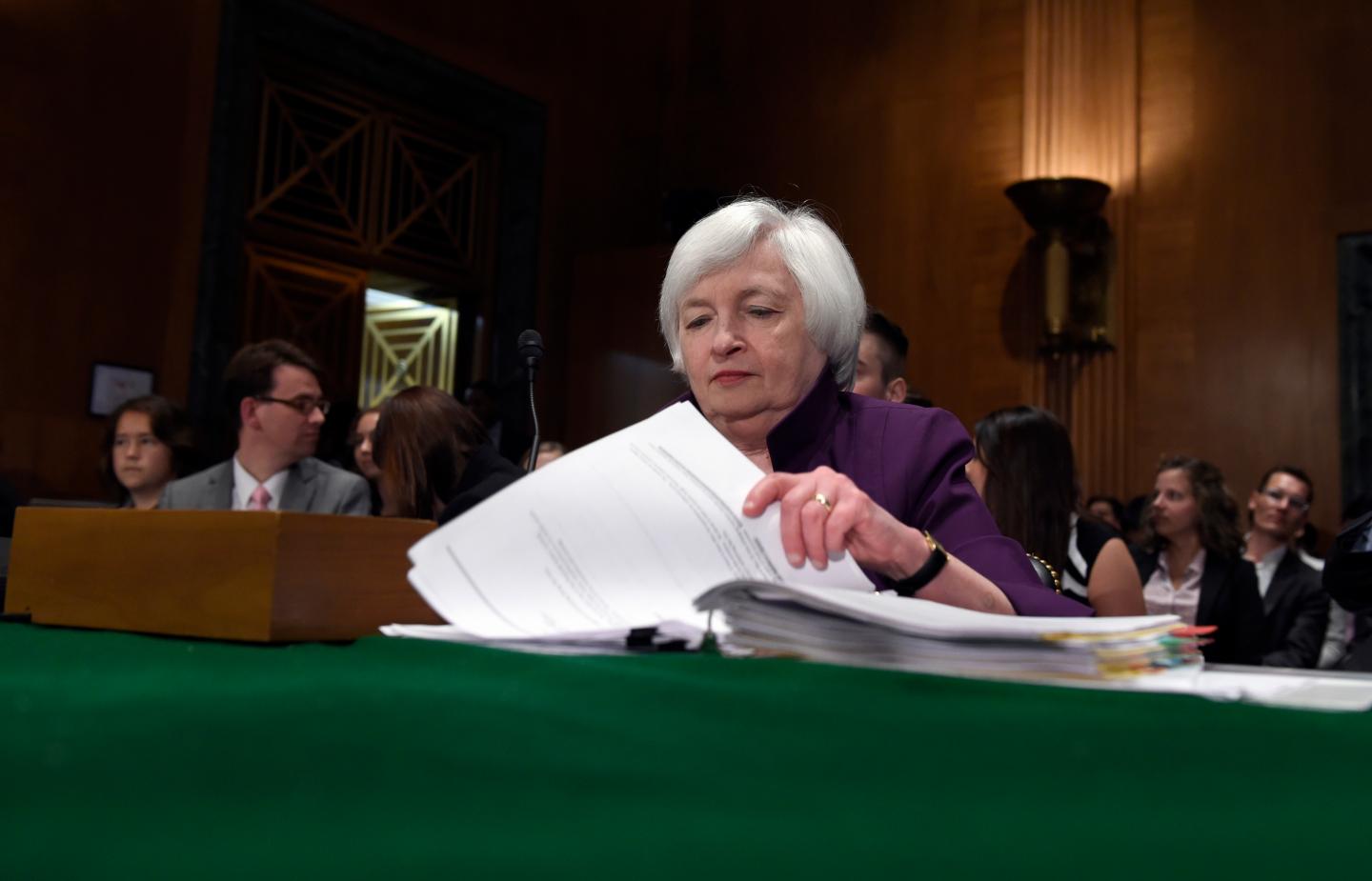
Federal Reserve Chair Janet Yellen prepares to testify on Capitol Hill in Washington, Thursday, July 16, 2015, before the Senate Banking Committee hearing on: "The Semiannual Monetary Policy Report to the Congress." (AP Photo/Susan Walsh)Photograph by Susan Walsh — AP

The Federal Reserve is the central bank of the United States and sets monetary policy to steer the direction of the economy. Traditionally, the Fed has had three policy choices: increase its target interest rate, lower it or do nothing.

But because the federal funds rate has been at or near zero since 2008, the Fed has really only had two choices — increase its target or do nothing.

Last month, I predicted the Fed would pick the first option when it ended its two-day policy meeting yesterday. I was wrong. Instead, the central bank said that it would keep the rate at about zero.

I have read a number of articles and, depending on the writer, the Fed either got it wildly right or wildly wrong. Each of these articles is based on the premise that the Fed had those two remaining choices mentioned above. But I think there is another third option (perhaps, the choice between the two, really), which is what the Fed did. I call this purposeful inactivity.

The Fed has been charged with three often counter-acting policy goals: to keep prices stable (control inflation), maximize employment and moderate long-term interest rates via the Federal Reserve Act.

These goals are counter-acting in that actions the Fed takes to increase employment — by targeting a lower interest rate, for example, as it has done since the financial crisis — often have the effect of creating inflation over the long run. Or, when the Fed tackles inflation, as then-Chair Paul Volcker did beginning in early 1980, it can have devastating effects on employment (we saw this in what is now referred to as the Volcker Recession).

People have been a bit riled by the Fed’s easy monetary policy for quite a while, suggesting that low interest rate targets and quantitative easing are causing inflation.

But the evidence is that inflation is pretty well under control. Looking at the inflation rate using either the consumer price index (CPI) or the GDP Deflator shows inflation below the Fed’s 2% target.

At the same time, people are a bit antsy about unemployment. Although the unemployment rate has consistently decreased since April 2010, the labor force participation rate has also fallen — in other words, the unemployment picture is good but not great.

So why would anyone even think that the Fed might increase rates given that there are no inflation worries and the employment picture could get better? One reason is that the Fed has been hinting that the economy might be ready for a rate hike. This is where the third play comes in.

The purposefully inactive policy

Purposeful inactivity sounds a little like an oxymoron. But, for an institution that doesn’t have many options, it’s actually perfect. Here’s how it works:

The Fed has been waiting and watching — observing the economy move. It doesn’t want to increase rates just for the purpose of a rate hike (that’s not the Fed’s job) but wants sound policy that will resonate within the economy (keeping prices stable or helping the employment picture). It sends out feelers into the economy to see how people will react in the event that it did make a move. Of course, nobody takes the Fed seriously. Why should they? The Fed hasn’t made an overt policy move in nearly six years.

But last month the Fed received the feedback it was looking for. Investors and traders read the minutes of its July meetings — which hinted at a rate increase while expressing concern about the global economy — and stocks dropped.

People have been talking about a market correction for a while. This is just what the market needed. The Fed wants the actors and agents in the economy to start taking notice of where the economy is and where it is likely to be. Other actors in the economy have been really comfortable with easy, cheap money. By pushing the prospect of a rate hike as a policy tool, the Fed was able to get people to take notice.

Mortgage applications, for example, spiked a bit right after the August 19 release of the minutes. That week, applications rose almost 4% over the prior seven-day period and were up 20% from a year earlier.

In other words, the market was saying: “Wait, is the Fed really serious about this? If so, we might want to rethink what an interest rate hike will mean for us in a month (or a quarter or a year).”

Corrective action without action

The Fed pushed everybody’s buttons when it released the details of its deliberations last month. Fed Chair Janet Yellen and her colleagues then sat back and watched. In the process, though, they laid the groundwork for what we got yesterday. Perhaps it isn’t quite the right time for an interest rate hike, as the market still has work to do before it’s ready. But the Fed has made clear that it could happen at any moment given current national and international economic conditions.

If, as I expect the Fed is anticipating, agents in the economy start believing that the Fed will raise rates before the end of the year, then businesses will take on more capital purchases, people will buy more homes, and more economic activity will be engaged sooner rather than later. These activities can create an economic environment that would be consistent with an interest rate hike.

It may be that I am giving Fed officials way too much credit. Perhaps they aren’t trying to move the economic needle by doing nothing. But these are some the smartest and craftiest central bankers we’ve ever seen, so I think it’s safe to give them the benefit of the doubt.

Thomas More Smith is an associate professor in the practice of finance at Emory University. This article was originally published on The Conversation.

The Conversation

The Conversation

About the Authors
By Thomas More Smith
See full bioRight Arrow Button Icon
By Bethany Cianciolo
See full bioRight Arrow Button Icon

Latest in Commentary

Finance
Lorem ipsum dolor sit amet, consectetur adipiscing elit, sed do eiusmod tempor incididunt ut labore et dolore magna aliqua. Ut enim ad minim veniam
By Fortune Editors
October 20, 2025
Finance
Lorem ipsum dolor sit amet, consectetur adipiscing elit, sed do eiusmod tempor incididunt ut labore et dolore magna aliqua. Ut enim ad minim veniam
By Fortune Editors
October 20, 2025
Finance
Lorem ipsum dolor sit amet, consectetur adipiscing elit, sed do eiusmod tempor incididunt ut labore et dolore magna aliqua. Ut enim ad minim veniam
By Fortune Editors
October 20, 2025
Finance
Lorem ipsum dolor sit amet, consectetur adipiscing elit, sed do eiusmod tempor incididunt ut labore et dolore magna aliqua. Ut enim ad minim veniam
By Fortune Editors
October 20, 2025
Finance
Lorem ipsum dolor sit amet, consectetur adipiscing elit, sed do eiusmod tempor incididunt ut labore et dolore magna aliqua. Ut enim ad minim veniam
By Fortune Editors
October 20, 2025
Finance
Lorem ipsum dolor sit amet, consectetur adipiscing elit, sed do eiusmod tempor incididunt ut labore et dolore magna aliqua. Ut enim ad minim veniam
By Fortune Editors
October 20, 2025

Most Popular

Finance
Lorem ipsum dolor sit amet, consectetur adipiscing elit, sed do eiusmod tempor incididunt ut labore et dolore magna aliqua. Ut enim ad minim veniam
By Fortune Editors
October 20, 2025
Finance
Lorem ipsum dolor sit amet, consectetur adipiscing elit, sed do eiusmod tempor incididunt ut labore et dolore magna aliqua. Ut enim ad minim veniam
By Fortune Editors
October 20, 2025
Finance
Lorem ipsum dolor sit amet, consectetur adipiscing elit, sed do eiusmod tempor incididunt ut labore et dolore magna aliqua. Ut enim ad minim veniam
By Fortune Editors
October 20, 2025
Finance
Lorem ipsum dolor sit amet, consectetur adipiscing elit, sed do eiusmod tempor incididunt ut labore et dolore magna aliqua. Ut enim ad minim veniam
By Fortune Editors
October 20, 2025
Finance
Lorem ipsum dolor sit amet, consectetur adipiscing elit, sed do eiusmod tempor incididunt ut labore et dolore magna aliqua. Ut enim ad minim veniam
By Fortune Editors
October 20, 2025
Finance
Lorem ipsum dolor sit amet, consectetur adipiscing elit, sed do eiusmod tempor incididunt ut labore et dolore magna aliqua. Ut enim ad minim veniam
By Fortune Editors
October 20, 2025
Fortune Secondary Logo
Rankings
  • 100 Best Companies
  • Fortune 500
  • Global 500
  • Fortune 500 Europe
  • Most Powerful Women
  • World's Most Admired Companies
  • See All Rankings
  • Lists Calendar
Sections
  • Finance
  • Fortune Crypto
  • Features
  • Leadership
  • Health
  • Commentary
  • Success
  • Retail
  • Mpw
  • Tech
  • Lifestyle
  • CEO Initiative
  • Asia
  • Politics
  • Conferences
  • Europe
  • Newsletters
  • Personal Finance
  • Environment
  • Magazine
  • Education
Customer Support
  • Frequently Asked Questions
  • Customer Service Portal
  • Privacy Policy
  • Terms Of Use
  • Single Issues For Purchase
  • International Print
Commercial Services
  • Advertising
  • Fortune Brand Studio
  • Fortune Analytics
  • Fortune Conferences
  • Business Development
  • Group Subscriptions
About Us
  • About Us
  • Press Center
  • Work At Fortune
  • Terms And Conditions
  • Site Map
  • About Us
  • Press Center
  • Work At Fortune
  • Terms And Conditions
  • Site Map
  • Facebook icon
  • Twitter icon
  • LinkedIn icon
  • Instagram icon
  • Pinterest icon

Latest in Commentary

joaquin
Commentary250 Years of Innovation
Johnson & Johnson CEO: America’s innovation advantage starts with health 
By Joaquin DuatoMay 9, 2026
13 hours ago
reed
CommentaryRetirement
Tim Cook and Reed Hastings just showed every CEO how to leave gracefully
By Paul HardartMay 9, 2026
15 hours ago
golf
Commentarybooks
How playing golf alone can make you better at your job
By Gary BelskyMay 8, 2026
2 days ago
naomi
Commentarymental health
Naomi Osaka: the things I didn’t do to succeed
By Naomi OsakaMay 8, 2026
2 days ago
amanda
Commentarybatteries
Why energy storage is moving beyond the capex debate
By Amanda SimonianMay 7, 2026
2 days ago
trump
CommentaryMedicare
Auto-enrollment in Medicare Advantage isn’t a nudge. It’s a trap
By Brian KeyserMay 7, 2026
3 days ago

Most Popular

Ted Cruz says the quiet part out loud: Trump accounts are Social Security personal accounts as GOP senator reveals 'dirty little secret'
Politics
Ted Cruz says the quiet part out loud: Trump accounts are Social Security personal accounts as GOP senator reveals 'dirty little secret'
By Jason MaMay 9, 2026
7 hours ago
'Employers are increasingly turning to degree and GPA' in hiring: Recruiters retreat from ‘talent is everywhere,’ double down on top colleges
Future of Work
'Employers are increasingly turning to degree and GPA' in hiring: Recruiters retreat from ‘talent is everywhere,’ double down on top colleges
By Jake AngeloMay 9, 2026
11 hours ago
A Michigan farm town voted down plans for a giant OpenAI-Oracle data center. Weeks later, construction began
Magazine
A Michigan farm town voted down plans for a giant OpenAI-Oracle data center. Weeks later, construction began
By Sharon GoldmanMay 6, 2026
4 days ago
California farmers must destroy 420,000 peach trees after Del Monte closes its canneries and cancels more than $550 million in long-term contracts
North America
California farmers must destroy 420,000 peach trees after Del Monte closes its canneries and cancels more than $550 million in long-term contracts
By Sasha RogelbergMay 7, 2026
2 days ago
You're probably safe from the Hantavirus outbreak, but here's what you absolutely must not do, experts say
Politics
You're probably safe from the Hantavirus outbreak, but here's what you absolutely must not do, experts say
By Catherina GioinoMay 8, 2026
1 day ago
The CEO of Maersk, which ships 14% of everything you buy, said the Iran war is adding $500 million in monthly costs it's trying not to pass down
Energy
The CEO of Maersk, which ships 14% of everything you buy, said the Iran war is adding $500 million in monthly costs it's trying not to pass down
By Sasha RogelbergMay 8, 2026
1 day ago

© 2026 Fortune Media IP Limited. All Rights Reserved. Use of this site constitutes acceptance of our Terms of Use and Privacy Policy | CA Notice at Collection and Privacy Notice | Do Not Sell/Share My Personal Information
FORTUNE is a trademark of Fortune Media IP Limited, registered in the U.S. and other countries. FORTUNE may receive compensation for some links to products and services on this website. Offers may be subject to change without notice.