• Home
  • Latest
  • Fortune 500
  • Finance
  • Tech
  • Leadership
  • Lifestyle
  • Rankings
  • Multimedia

Trendingnow

1

After forcing workers back to the office, Goldman Sachs and JPMorgan Chase are now letting their staff work remotely—but only for the World Cup

2

Markets tumble worldwide as Fed resets expectations: $400 billion wiped off SpaceX stock

3

Current price of oil as of June 23, 2026

1

After forcing workers back to the office, Goldman Sachs and JPMorgan Chase are now letting their staff work remotely—but only for the World Cup

2

Markets tumble worldwide as Fed resets expectations: $400 billion wiped off SpaceX stock

3

Current price of oil as of June 23, 2026
Commentary

Iran nuclear deal: why investors should beware

By
Sanjay Sanghoee
Sanjay Sanghoee
Down Arrow Button Icon
By
Sanjay Sanghoee
Sanjay Sanghoee
Down Arrow Button Icon
April 7, 2015, 11:51 AM ET
A picture taken on August 20, 2010 shows
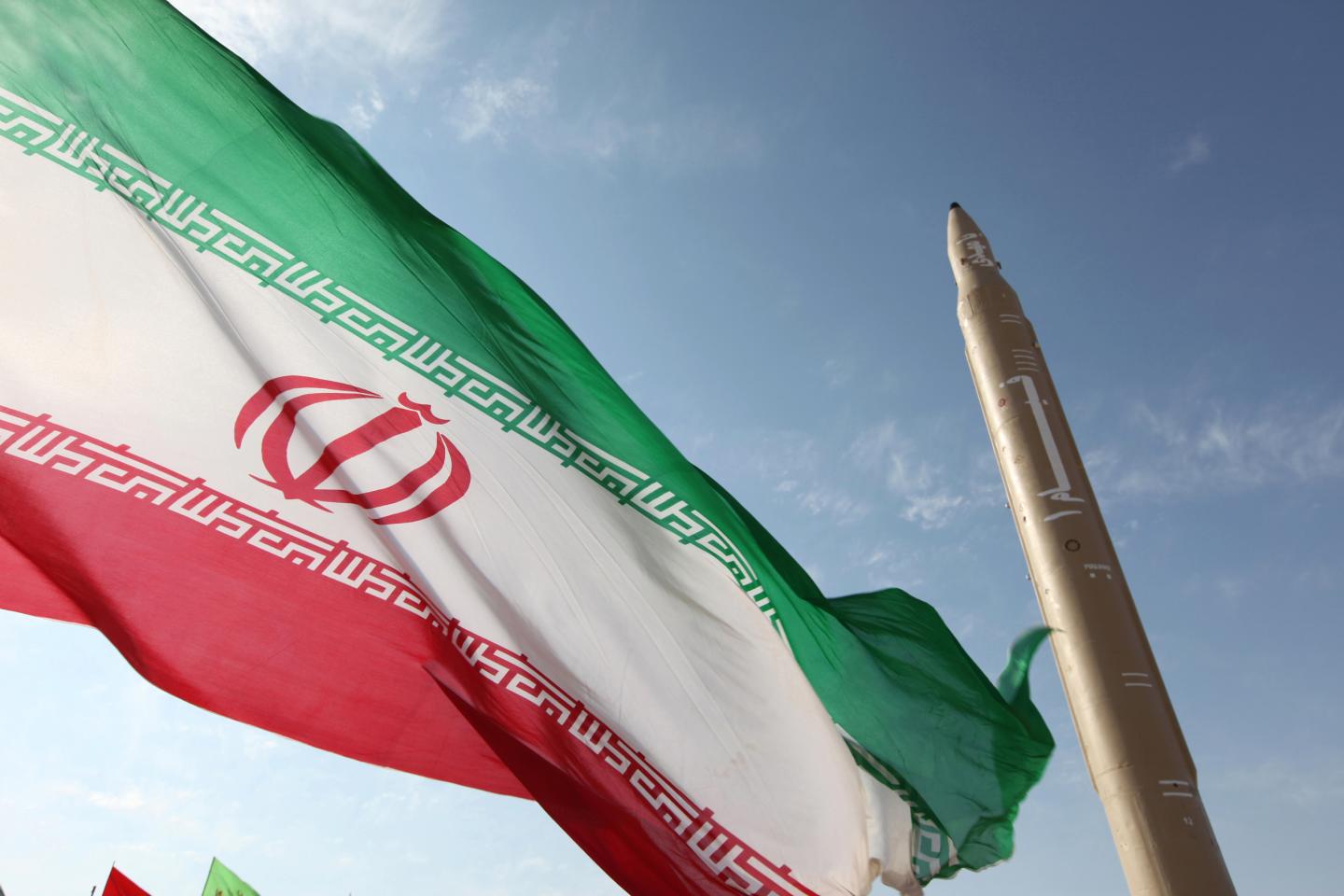
A picture taken on August 20, 2010 shows an Iranian flag fluttering at an undisclosed location in the Islamic republic next to a surface-to-surface Qiam-1 (Rising) missile which was test fired a day before Iran was due to launch its Russian-built first nuclear power plant. Photograph by Vahid Reza Alaei — AFP/Getty Images
Add Fortune on Google for similar content.

Since U.S. President Barack Obama struck a tentative deal with world leaders last week to curb Iran’s nuclear ambitions in exchange for lifting economic sanctions, the business community has been getting excited about commercial possibilities in the energy-rich nation. Though the deal is not yet final and Congress could very well reject it altogether, Iran could become the biggest country to rejoin the global economy since the fall of Communism in Eastern Europe in the early 1990s.

On the surface, the optimism makes sense: removing sanctions against Iran could increase its GDP growth by two percentage points to 5%, according to economist Mehrdad Emadi of London’s Betamatrix consultancy. Thereafter, Iran’s economy is predicted to grow 7% to 8%, generating business opportunities in the region. Iran’s export of an extra one million barrels of oil per day could eventually reduce oil prices further, helping industries and consumers worldwide. Most importantly, the deal could pave the way for an Iranian Spring that would open the economy to free market trade.

But the euphoria may be outpacing reality, and investors should beware.

First, the idea of preventing Iran from developing nuclear weapons through an ongoing regime of international inspections is great in theory, but the plan will be extremely difficult to execute.

Expecting a proudly sovereign nation like Iran that has been immensely secretive about its nuclear program to radically change its policies and give inspectors full access is naïve and potentially an invitation to subterfuge. As recently as October of 2014, the nation was criticized by the International Atomic Energy Agency for stonewalling UN weapons inspectors even after a year of negotiations. Nor is this the first time that Iran has reneged on its promises; the fact is that the Iranian government, despite President Hassan Rouhani’s moderate rhetoric, is not a very credible counter-party.

That doesn’t mean there is no hope for a successful deal, but the possibility of failure is high and anyone who wants to do business there should factor that in. Under the new agreement struck in Lausanne, Switzerland, if Iran fails to keep its end of the bargain, sanctions will automatically snap back into place, sending any economic progress quickly down the drain.

Second, it’s important to remember that religious hardliners hold considerable sway in the Persian nation, and have been vocal about their reluctance to agree to a nuclear deal with the West. Even though a final plan will probably win the tacit approval of Iran’s supreme leader, Ayatollah Ali Khamenei, such approval will be far from an eager endorsement but more likely motivated by the immediate need to ease the pressure on Iran’s economy. That’s a tenuous motivation that can change in the long run.

The danger here is that once Iran’s economy begins to improve and the pressure on the government eases, the hardliners might seek to regain lost ground and reverse some of the reforms that would make the new agreement work. While it’s hard to predict how powerful the religious hawks will be in the future, given that a nuclear threat remains the most powerful tool for Tehran to exert clout on the international stage, it’s hard to believe that hardliners would give up their advantage so easily in the long term.

In addition, even if an Iranian Spring does happen, the results may not be as rosy as investors hope. Any major upheaval could lead to chaos and political instability the way it did in Egypt, Libya, and Yemen in the aftermath of the Arab Spring, and take a long time to resolve.

The other possibility, as Quartz points out, is that the hardliners could take over an economically stronger Iran under the guise of a democratic government and turn the place into another Saudi Arabia, with even greater resources and power to threaten the West. This could lead to some short-term profits for businesses and investors, but damage their long-term interests if Iran has greater control over the wider Middle East and its oil reserves.

Given Iran’s totalitarian past, it’s unlikely that lifting sanctions would create a real free market, but rather a pseudo (state-controlled) free market where strict restrictions could frustrate foreigner investors faced with sudden changes in government policies, such as commercial or banking restrictions and anti-capitalist laws.

In this environment, service providers like financial advisors or consultants, who can work with Iranian clients remotely or through a small local office, might still do well. But manufacturers, retailers, and anyone who needs to invest heavily in local infrastructure, such as factories or stores, or investors who commit their capital to Iranian companies, are taking a big risk.

A nuclear deal may be welcome news for geopolitics and a step forward in international diplomacy, but it may not usher in the incredible new emerging market opportunity that some are assuming it will.

Sanjay Sanghoee is a business commentator. He has worked at investment banks Lazard Freres and Dresdner Kleinwort Wasserstein, as well as at hedge fund Ramius Capital.

Watch more business news from Fortune:

About the Author
By Sanjay Sanghoee
See full bioRight Arrow Button Icon
Add Fortune on Google for similar content.

Latest in Commentary

Finance
Lorem ipsum dolor sit amet, consectetur adipiscing elit, sed do eiusmod tempor incididunt ut labore et dolore magna aliqua. Ut enim ad minim veniam
By Fortune Editors
October 20, 2025
Finance
Lorem ipsum dolor sit amet, consectetur adipiscing elit, sed do eiusmod tempor incididunt ut labore et dolore magna aliqua. Ut enim ad minim veniam
By Fortune Editors
October 20, 2025
Finance
Lorem ipsum dolor sit amet, consectetur adipiscing elit, sed do eiusmod tempor incididunt ut labore et dolore magna aliqua. Ut enim ad minim veniam
By Fortune Editors
October 20, 2025
Finance
Lorem ipsum dolor sit amet, consectetur adipiscing elit, sed do eiusmod tempor incididunt ut labore et dolore magna aliqua. Ut enim ad minim veniam
By Fortune Editors
October 20, 2025
Finance
Lorem ipsum dolor sit amet, consectetur adipiscing elit, sed do eiusmod tempor incididunt ut labore et dolore magna aliqua. Ut enim ad minim veniam
By Fortune Editors
October 20, 2025
Finance
Lorem ipsum dolor sit amet, consectetur adipiscing elit, sed do eiusmod tempor incididunt ut labore et dolore magna aliqua. Ut enim ad minim veniam
By Fortune Editors
October 20, 2025

Most Popular

Finance
Lorem ipsum dolor sit amet, consectetur adipiscing elit, sed do eiusmod tempor incididunt ut labore et dolore magna aliqua. Ut enim ad minim veniam
By Fortune Editors
October 20, 2025
Finance
Lorem ipsum dolor sit amet, consectetur adipiscing elit, sed do eiusmod tempor incididunt ut labore et dolore magna aliqua. Ut enim ad minim veniam
By Fortune Editors
October 20, 2025
Finance
Lorem ipsum dolor sit amet, consectetur adipiscing elit, sed do eiusmod tempor incididunt ut labore et dolore magna aliqua. Ut enim ad minim veniam
By Fortune Editors
October 20, 2025
Finance
Lorem ipsum dolor sit amet, consectetur adipiscing elit, sed do eiusmod tempor incididunt ut labore et dolore magna aliqua. Ut enim ad minim veniam
By Fortune Editors
October 20, 2025
Finance
Lorem ipsum dolor sit amet, consectetur adipiscing elit, sed do eiusmod tempor incididunt ut labore et dolore magna aliqua. Ut enim ad minim veniam
By Fortune Editors
October 20, 2025
Finance
Lorem ipsum dolor sit amet, consectetur adipiscing elit, sed do eiusmod tempor incididunt ut labore et dolore magna aliqua. Ut enim ad minim veniam
By Fortune Editors
October 20, 2025
Fortune Secondary Logo
Rankings
  • 100 Best Companies
  • Fortune 500
  • Global 500
  • Fortune 500 Europe
  • Most Powerful Women
  • World's Most Admired Companies
  • See All Rankings
  • Lists Calendar
Sections
  • Finance
  • Fortune Crypto
  • Features
  • Leadership
  • Health
  • Commentary
  • Success
  • Retail
  • Mpw
  • Tech
  • Lifestyle
  • CEO Initiative
  • Asia
  • Politics
  • Conferences
  • Europe
  • Newsletters
  • Personal Finance
  • Environment
  • Magazine
  • Education
Customer Support
  • Frequently Asked Questions
  • Customer Service Portal
  • Privacy Policy
  • Terms Of Use
  • Single Issues For Purchase
  • International Print
Commercial Services
  • Advertising
  • Fortune Brand Studio
  • Fortune Analytics
  • Fortune Conferences
  • Business Development
  • Group Subscriptions
About Us
  • About Us
  • Press Center
  • Work At Fortune
  • Terms And Conditions
  • Site Map
  • About Us
  • Press Center
  • Work At Fortune
  • Terms And Conditions
  • Site Map
  • Facebook icon
  • Twitter icon
  • LinkedIn icon
  • Instagram icon
  • Pinterest icon

Latest in Commentary

sb
Commentaryclimate change
The climate policy triangle: why leaders can no longer choose between growth, security and sustainability
By Sebastian BuckupJune 23, 2026
13 hours ago
brett
CommentaryManagement
Middle managers aren’t going extinct—they’re evolving into something more powerful
By Brett HurtJune 23, 2026
22 hours ago
ravi
CommentaryAI agents
Yale School of Management: surveillance pricing is just the beginning. AI agents will be the real test of corporate trust
By Ravi Dhar and Jon IwataJune 23, 2026
23 hours ago
elon
CommentaryElon Musk
Elon Musk’s trillion dollars aren’t real — and that’s the point
By Douglas P. McCormickJune 23, 2026
23 hours ago
gen z
CommentaryCareers
Gen Z: if you want to succeed at work, you need to start friction-maxxing
By Michelle SobelJune 23, 2026
23 hours ago
rp
CommentaryLaw
Cooley CEO: Big Law won’t survive if it treats AI as just an efficiency tool
By Rachel ProffittJune 23, 2026
24 hours ago

Most Popular

After forcing workers back to the office, Goldman Sachs and JPMorgan Chase are now letting their staff work remotely—but only for the World Cup
Success
After forcing workers back to the office, Goldman Sachs and JPMorgan Chase are now letting their staff work remotely—but only for the World Cup
By Orianna Rosa RoyleJune 23, 2026
22 hours ago
Markets tumble worldwide as Fed resets expectations: $400 billion wiped off SpaceX stock
Banking
Markets tumble worldwide as Fed resets expectations: $400 billion wiped off SpaceX stock
By Jim EdwardsJune 23, 2026
1 day ago
Current price of oil as of June 23, 2026
Personal Finance
Current price of oil as of June 23, 2026
By Joseph HostetlerJune 23, 2026
21 hours ago
Meet the 2 men putting New York's $300 billion pension fund in play for the first time in 20 years
Investing
Meet the 2 men putting New York's $300 billion pension fund in play for the first time in 20 years
By Nick LichtenbergJune 22, 2026
2 days ago
Former U.S. Secret Service agent says bringing your authentic self to work stifles teamwork: 'You don’t get high performers, you get sloppiness'
Success
Former U.S. Secret Service agent says bringing your authentic self to work stifles teamwork: 'You don’t get high performers, you get sloppiness'
By Sydney LakeJune 21, 2026
3 days ago
Texas and Charlotte used to build huge McMansions—now they're copying the California design tricks they once mocked
Real Estate
Texas and Charlotte used to build huge McMansions—now they're copying the California design tricks they once mocked
By Sydney LakeJune 22, 2026
2 days ago

© 2026 Fortune Media IP Limited. All Rights Reserved. Use of this site constitutes acceptance of our Terms of Use and Privacy Policy | CA Notice at Collection and Privacy Notice | Do Not Sell/Share My Personal Information
FORTUNE is a trademark of Fortune Media IP Limited, registered in the U.S. and other countries. FORTUNE may receive compensation for some links to products and services on this website. Offers may be subject to change without notice.