• Home
  • Latest
  • Fortune 500
  • Finance
  • Tech
  • Leadership
  • Lifestyle
  • Rankings
  • Multimedia
Commentary

A stronger U.S. dollar: the winners and losers

By
Barry Bosworth
Barry Bosworth
Down Arrow Button Icon
By
Barry Bosworth
Barry Bosworth
Down Arrow Button Icon
February 17, 2015, 11:27 AM ET
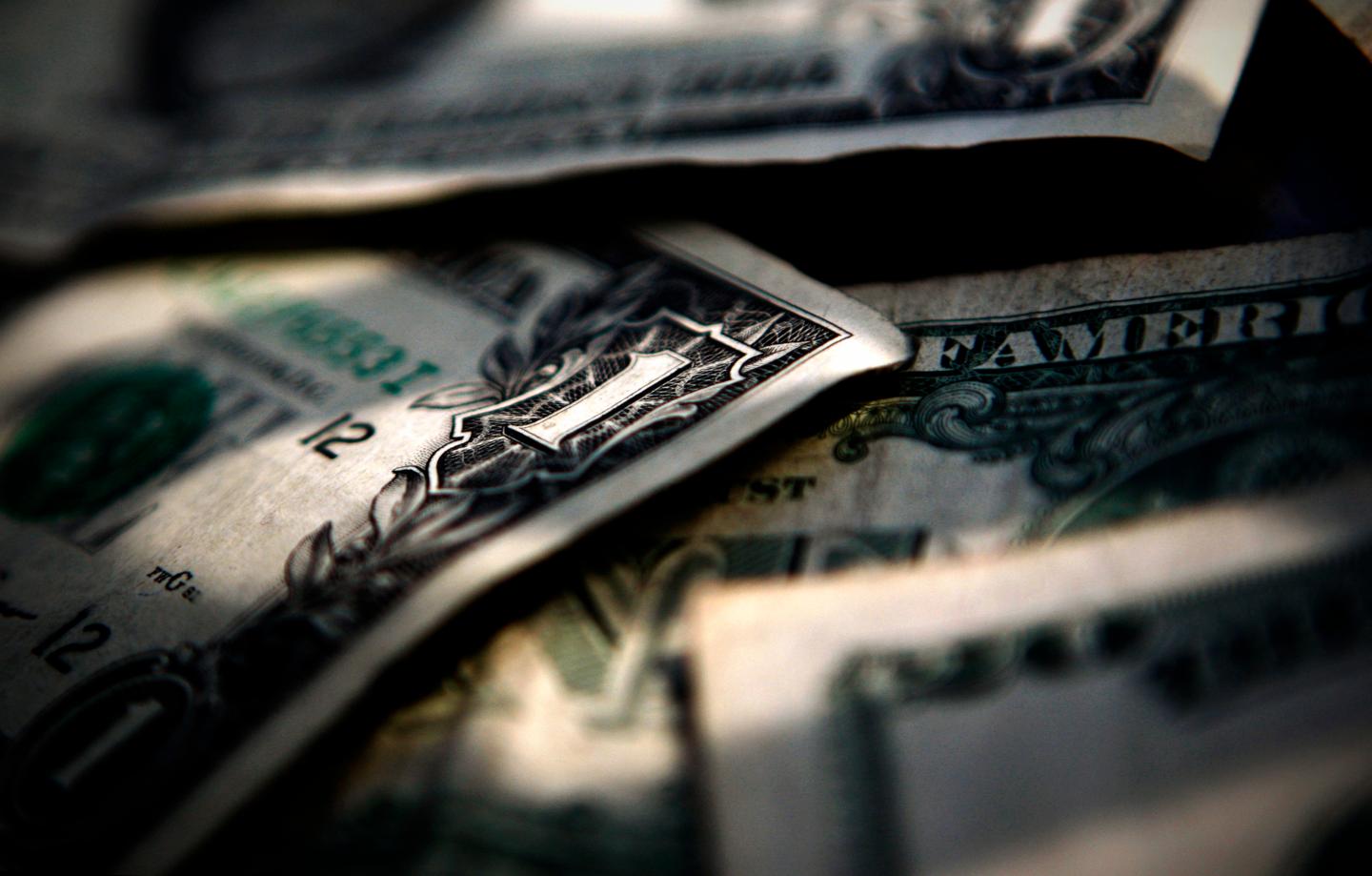
U.S. dollar bills are displayed in Toronto in this posed photo
U.S. dollar bills are displayed in Toronto in this posed photo, March 26, 2008. REUTERS/Mark Blinch (CANADA) - RTR1YSM8Photograph by Mark Blinch — Reuters

Like most changes, the surging value of the dollar is creating both winners and losers. It is a blessing for American consumers and those of us who would like a spring vacation in Europe. On the other hand, in the future, it could be a bane in the lives of Americans looking for jobs in manufacturing because it causes the price of American exports to go up, and imports to become cheaper.

The stronger greenback is a reflection of the strength of the U.S. economic recovery, but maybe even more so the weakness of the economies of the Eurozone and Japan. In a global economy, it is important to focus on broad trade-weighted measures of the exchange rate that reflect the relative importance of America’s trade with other countries.

Thus, the fact that Russia’s ruble has lost half its value against the U.S. dollar means little to America’s economy since trade with Russia is minimal. It’s a different story with the euro and yen, since the U.S. considers Japan and Europe major trading partners. Adjusted for inflation differences, the trade-weighted dollar has risen by 30 % from its low in 2011—about the same increase it saw during the dot com boom of 1995 to 2002, but it remains far below the prior peaks of 1985 and 2002.

The U.S. and China stand out as two countries whose currencies have experienced the largest appreciation. Japan has witnessed the largest depreciation; the value of the yen has dropped about 30% over the past three years, as Prime Minister Shinzo Abe’s government aims to rejuvenate Japan’s economy. The euro has fallen nearly 20% against the dollar over the past year, but its trade-weighted decline is actually half that or less than 10%, as other trading partners have followed its value down.

Exchange rates are largely determined by basic forces of supply and demand, but their changing values are frustratingly hard to predict, and large fortunes have been won and lost in bets in their future values. To the extent that foreign exchange is desired for the purpose of purchasing the goods and services of other countries, exchange rates will reflect the relative strength of countries’ business activity and differences in rates of price inflation, basic determinants of the demand for exports and imports.

With the growing openness of international capital markets, exchange rates have become more reflective of perceived differences in investment opportunities and they are often dominated by developments in financial markets. That change is particularly true in recent years as innovations in monetary policy, such as various versions of large-scale bond purchases known as quantitative easing, reflect a commitment to an accommodative monetary policy stance extending far into the future, which can have strong effects on exchange rates.

Expectations that interest rates will stay low lead to reduced demand for assets denominated in the domestic currency, and as a result, exchange rate depreciation. With the shift away from quantitative easing in the United States, and its expansion in Japan and the Eurozone, the price of the dollar can be expected to rise even further in relative terms.

To date, these large realignments of currency values among the major economies have had surprisingly small effects on trade flows. Substantial increases in the real value of the dollar in the early 1980s and 2000s were both associated with the emergence of large trade deficits, and the subsequent declines moved the trade balance back toward zero. We came to associate a 10% rise in the real exchange rate with a fall in in the trade balance of 1-1½% of GDP.

The lack of change in the U.S. trade balance might be attributed to a lagging response to what has been a fairly recent turnaround — the dollar had been declining in value prior to 2012. And, the U.S. trade deficit will be held down in the short-run by the abrupt drop in the price of imported oil.

The failure of Japan to generate a larger improvements in its trade is more puzzling. More than two years have passed since so-called “Abenomics” initiated a sharp yen depreciation, yet the trade balance shows little evidence of change. Economic developments within the eurozone are also disappointing. The European Union needs a realignment of competition among its members – an effective devaluation in the South and relative price appreciation in the North. Yet, with a common exchange rate, improved competitiveness with the rest of the world brings only ever-growing surpluses for Germany, while the peripheral countries continue to struggle.

Ongoing exchange realignments and shifting trade balances could become more divisive in future months now that the European Central Bank has joined the Bank of Japan in a large program of monetary expansion. As lagged effects of the exchange rate changes work through the trading system, the negative effects on U.S. growth will become pronounced and competitive tensions over exchange rate policies will rise.

Barry Bosworth is a senior fellow in Economic Studies at the Brookings Institution.

About the Author
By Barry Bosworth
See full bioRight Arrow Button Icon

Latest in Commentary

Finance
Lorem ipsum dolor sit amet, consectetur adipiscing elit, sed do eiusmod tempor incididunt ut labore et dolore magna aliqua. Ut enim ad minim veniam
By Fortune Editors
October 20, 2025
Finance
Lorem ipsum dolor sit amet, consectetur adipiscing elit, sed do eiusmod tempor incididunt ut labore et dolore magna aliqua. Ut enim ad minim veniam
By Fortune Editors
October 20, 2025
Finance
Lorem ipsum dolor sit amet, consectetur adipiscing elit, sed do eiusmod tempor incididunt ut labore et dolore magna aliqua. Ut enim ad minim veniam
By Fortune Editors
October 20, 2025
Finance
Lorem ipsum dolor sit amet, consectetur adipiscing elit, sed do eiusmod tempor incididunt ut labore et dolore magna aliqua. Ut enim ad minim veniam
By Fortune Editors
October 20, 2025
Finance
Lorem ipsum dolor sit amet, consectetur adipiscing elit, sed do eiusmod tempor incididunt ut labore et dolore magna aliqua. Ut enim ad minim veniam
By Fortune Editors
October 20, 2025
Finance
Lorem ipsum dolor sit amet, consectetur adipiscing elit, sed do eiusmod tempor incididunt ut labore et dolore magna aliqua. Ut enim ad minim veniam
By Fortune Editors
October 20, 2025

Most Popular

Finance
Lorem ipsum dolor sit amet, consectetur adipiscing elit, sed do eiusmod tempor incididunt ut labore et dolore magna aliqua. Ut enim ad minim veniam
By Fortune Editors
October 20, 2025
Finance
Lorem ipsum dolor sit amet, consectetur adipiscing elit, sed do eiusmod tempor incididunt ut labore et dolore magna aliqua. Ut enim ad minim veniam
By Fortune Editors
October 20, 2025
Finance
Lorem ipsum dolor sit amet, consectetur adipiscing elit, sed do eiusmod tempor incididunt ut labore et dolore magna aliqua. Ut enim ad minim veniam
By Fortune Editors
October 20, 2025
Finance
Lorem ipsum dolor sit amet, consectetur adipiscing elit, sed do eiusmod tempor incididunt ut labore et dolore magna aliqua. Ut enim ad minim veniam
By Fortune Editors
October 20, 2025
Finance
Lorem ipsum dolor sit amet, consectetur adipiscing elit, sed do eiusmod tempor incididunt ut labore et dolore magna aliqua. Ut enim ad minim veniam
By Fortune Editors
October 20, 2025
Finance
Lorem ipsum dolor sit amet, consectetur adipiscing elit, sed do eiusmod tempor incididunt ut labore et dolore magna aliqua. Ut enim ad minim veniam
By Fortune Editors
October 20, 2025
Fortune Secondary Logo
Rankings
  • 100 Best Companies
  • Fortune 500
  • Global 500
  • Fortune 500 Europe
  • Most Powerful Women
  • World's Most Admired Companies
  • See All Rankings
  • Lists Calendar
Sections
  • Finance
  • Fortune Crypto
  • Features
  • Leadership
  • Health
  • Commentary
  • Success
  • Retail
  • Mpw
  • Tech
  • Lifestyle
  • CEO Initiative
  • Asia
  • Politics
  • Conferences
  • Europe
  • Newsletters
  • Personal Finance
  • Environment
  • Magazine
  • Education
Customer Support
  • Frequently Asked Questions
  • Customer Service Portal
  • Privacy Policy
  • Terms Of Use
  • Single Issues For Purchase
  • International Print
Commercial Services
  • Advertising
  • Fortune Brand Studio
  • Fortune Analytics
  • Fortune Conferences
  • Business Development
  • Group Subscriptions
About Us
  • About Us
  • Press Center
  • Work At Fortune
  • Terms And Conditions
  • Site Map
  • About Us
  • Press Center
  • Work At Fortune
  • Terms And Conditions
  • Site Map
  • Facebook icon
  • Twitter icon
  • LinkedIn icon
  • Instagram icon
  • Pinterest icon

Latest in Commentary

joaquin
Commentary250 Years of Innovation
Johnson & Johnson CEO: America’s innovation advantage starts with health 
By Joaquin DuatoMay 9, 2026
16 hours ago
reed
CommentaryRetirement
Tim Cook and Reed Hastings just showed every CEO how to leave gracefully
By Paul HardartMay 9, 2026
18 hours ago
golf
Commentarybooks
How playing golf alone can make you better at your job
By Gary BelskyMay 8, 2026
2 days ago
naomi
Commentarymental health
Naomi Osaka: the things I didn’t do to succeed
By Naomi OsakaMay 8, 2026
2 days ago
amanda
Commentarybatteries
Why energy storage is moving beyond the capex debate
By Amanda SimonianMay 7, 2026
3 days ago
trump
CommentaryMedicare
Auto-enrollment in Medicare Advantage isn’t a nudge. It’s a trap
By Brian KeyserMay 7, 2026
3 days ago

Most Popular

'Employers are increasingly turning to degree and GPA' in hiring: Recruiters retreat from ‘talent is everywhere,’ double down on top colleges
Future of Work
'Employers are increasingly turning to degree and GPA' in hiring: Recruiters retreat from ‘talent is everywhere,’ double down on top colleges
By Jake AngeloMay 9, 2026
14 hours ago
Ted Cruz says the quiet part out loud: Trump accounts are Social Security personal accounts as GOP senator reveals 'dirty little secret'
Politics
Ted Cruz says the quiet part out loud: Trump accounts are Social Security personal accounts as GOP senator reveals 'dirty little secret'
By Jason MaMay 9, 2026
10 hours ago
You're probably safe from the Hantavirus outbreak, but here's what you absolutely must not do, experts say
Politics
You're probably safe from the Hantavirus outbreak, but here's what you absolutely must not do, experts say
By Catherina GioinoMay 8, 2026
1 day ago
A Michigan farm town voted down plans for a giant OpenAI-Oracle data center. Weeks later, construction began
Magazine
A Michigan farm town voted down plans for a giant OpenAI-Oracle data center. Weeks later, construction began
By Sharon GoldmanMay 6, 2026
4 days ago
California farmers must destroy 420,000 peach trees after Del Monte closes its canneries and cancels more than $550 million in long-term contracts
North America
California farmers must destroy 420,000 peach trees after Del Monte closes its canneries and cancels more than $550 million in long-term contracts
By Sasha RogelbergMay 7, 2026
2 days ago
The CEO of Maersk, which ships 14% of everything you buy, said the Iran war is adding $500 million in monthly costs it's trying not to pass down
Energy
The CEO of Maersk, which ships 14% of everything you buy, said the Iran war is adding $500 million in monthly costs it's trying not to pass down
By Sasha RogelbergMay 8, 2026
1 day ago

© 2026 Fortune Media IP Limited. All Rights Reserved. Use of this site constitutes acceptance of our Terms of Use and Privacy Policy | CA Notice at Collection and Privacy Notice | Do Not Sell/Share My Personal Information
FORTUNE is a trademark of Fortune Media IP Limited, registered in the U.S. and other countries. FORTUNE may receive compensation for some links to products and services on this website. Offers may be subject to change without notice.