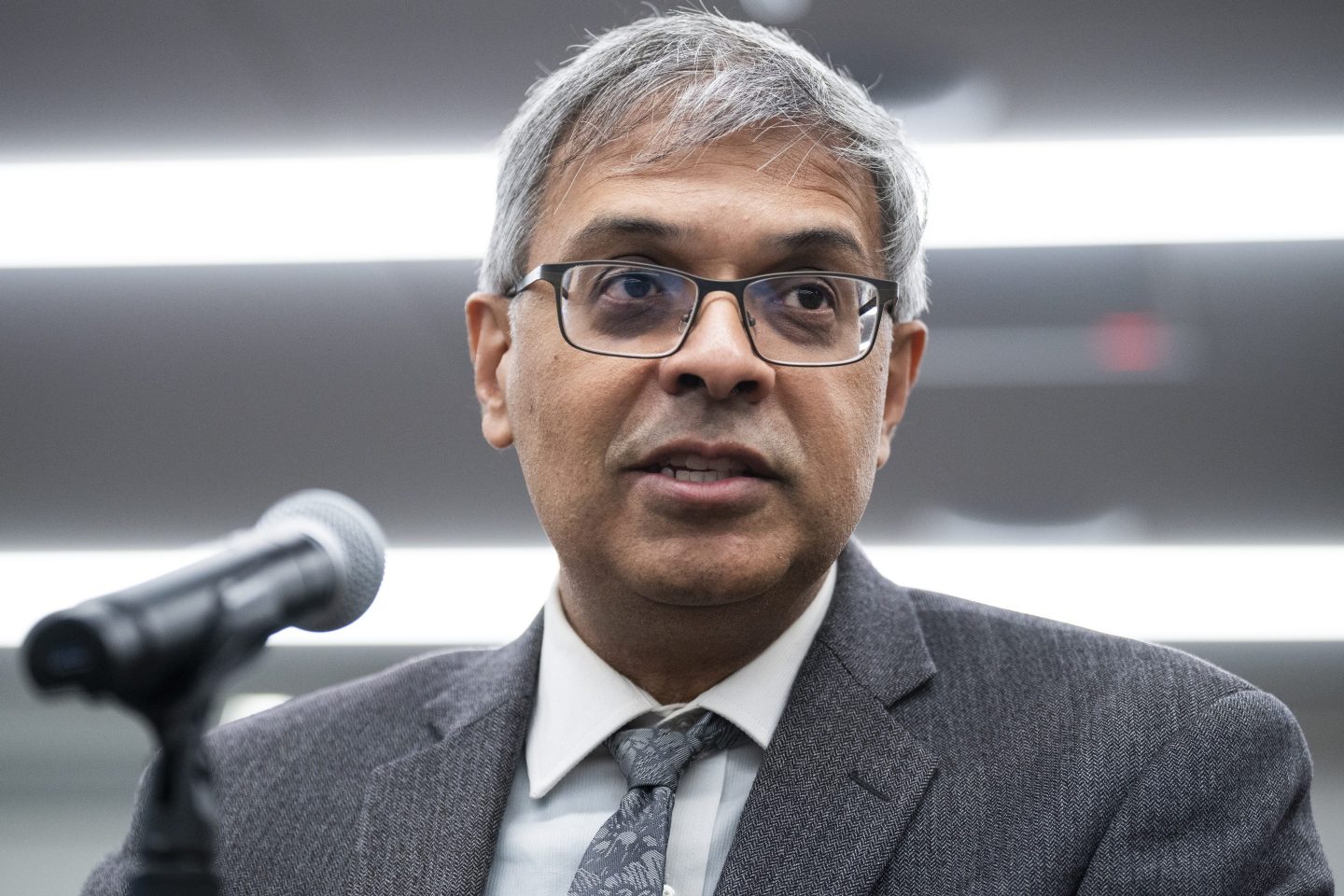
In October, Stanford University professor Jay Bhattacharya hosted a conference on the lessons of COVID-19 in order “to do better in the next pandemic.” He invited scholars, journalists, and policy wonks who, like him, have criticized the U.S. management of the crisis as overly draconian.
Bhattacharya also invited public health authorities who had considered his alternative approach reckless. None of them showed up.
Now, the “contrarians” are seizing the reins: President Donald Trump has nominated Bhattacharya to lead the National Institutes of Health and Johns Hopkins University surgeon Marty Makary to run the Food and Drug Administration. Yet the polarized disagreements about what worked and what didn’t in the fight against the biggest public health disaster in modern times have yet to be aired in a nonpartisan setting — and it seems unlikely they ever will be.
“The whole COVID discussion turned into culture war dialogue, with one side saying, ‘I believe in the economy and liberty,’ and the other saying, ‘I believe in science and saving people’s lives,’” said Philip Zelikow, a scholar and former diplomat based at Stanford’s Hoover Institution.
Frances Lee, a Princeton University political scientist, has a book coming out that calls for a national inquiry to determine the lockdown and mandate approaches that were most effective.
“This is an open question that needs to be confronted,” she said. “Why not look back?”
For now, even with the threat of an H5N1 bird flu pandemic on the horizon, and some other plague waiting in the wings of a bat or goose in a far-flung corner of the world, U.S. public health officials face ebbing public trust as well as a disruptive new health administration led by skeptics of established medicine.
Zelikow led the 34-member COVID Crisis Group, funded by four private foundations in 2021, whose work was intended to inform an independent inquiry along the lines of the 9/11 Commission, which Zelikow headed.
The COVID group published a book detailing its findings, after Congress and the Biden administration abandoned initiatives to create a commission.
That was a shame, said Jennifer Nuzzo, director of the Pandemic Center at the Brown University School of Public Health, because “while there are some real ideological battles over COVID, there’s also lots of stuff that potentially could be fixed related to government efficiency and policy.”
Bhattacharya, Makary, and others in 2023 called for a larger study of the pandemic. It’s not known whether the Trump administration would support one, Lee said.
The new CIA director, John Ratcliffe, however, has reopened the Wuhan lab leak theory, an issue that Republicans have used to try to cast blame on Anthony Fauci, an infectious disease expert and a top COVID adviser to both the first Trump and Biden administrations. Sen. Ron Johnson (R-Wis.), the new head of the Senate’s Permanent Subcommittee on Investigations, says he’ll investigate what he described as a cover-up of COVID vaccine safety problems.
Bhattacharya declined to respond to questions for this article. Makary did not respond to requests for comment.
Stanford epidemiologist John Ioannidis said his colleague Bhattacharya has an opportunity to advance understanding of the pandemic.
“Until now it has been mostly a war on impressions and media, kind of mobilizing the troops. That’s not really how science should be done,” Ioannidis said. “We need to move forward with some calm reflection, with no retaliation.”
Mistakes were made
In October 2020, Bhattacharya co-authored the “Great Barrington Declaration” with Trump White House support. It called for people to ignore COVID and go about their business while protecting the old and vulnerable—without specifics about how.
Bhattacharya and Makary championed the policies of Sweden, which did not impose a harsh lockdown but emerged with a death rate far lower than that of the United States. The Swedes had advantages including lower poverty rates, greater access to health care, and high levels of social trust. For instance, by April 2022, 87% of Swedes ages 12 and over were vaccinated against COVID—without mandates. The U.S. figure, for adults over 18, was 76% at the time.
After Bhattacharya’s earlier research was rebuffed by most of the public health establishment, he “curdled into a theological position that the risk wasn’t that severe and the economic costs were so high that we had to roll the dice, or segregate the elderly—which you cannot do,” Zelikow said.
Ten experts interviewed for this article largely agreed that the health establishment lost public trust after bungling the initial handling of the pandemic. Existing pandemic plans were faulty or ignored. Shortages of protective gear and inadequate testing rendered containment of the virus impossible. As time wore on, government scientists failed to emphasize that their recommendations would change as new data came in.
“We totally blew it,” former NIH Director Francis Collins said, in a discussion sponsored by Braver Angels, a group that promotes dialogue among political opponents. Though he blamed disinformation about vaccines for many deaths, he also wished public health officials had said “we don’t know” more often.
Collins said he didn’t pay enough attention to the socioeconomic impact of lockdowns. “You attach infinite value to stopping the disease and saving a life,” he said. “You attach zero value to whether this actually totally disrupts people’s lives, ruins the economy, and has many kids kept out of school in a way that they never quite recover from.”
While Fauci and other public health officials did express worries about collateral damage from mandates, U.S. measures were stricter than in much of the world. That’s left unresolved issues, such as how long schools should have been shuttered, whether mask mandates worked, and whether the public was misled about the efficacy of vaccines.
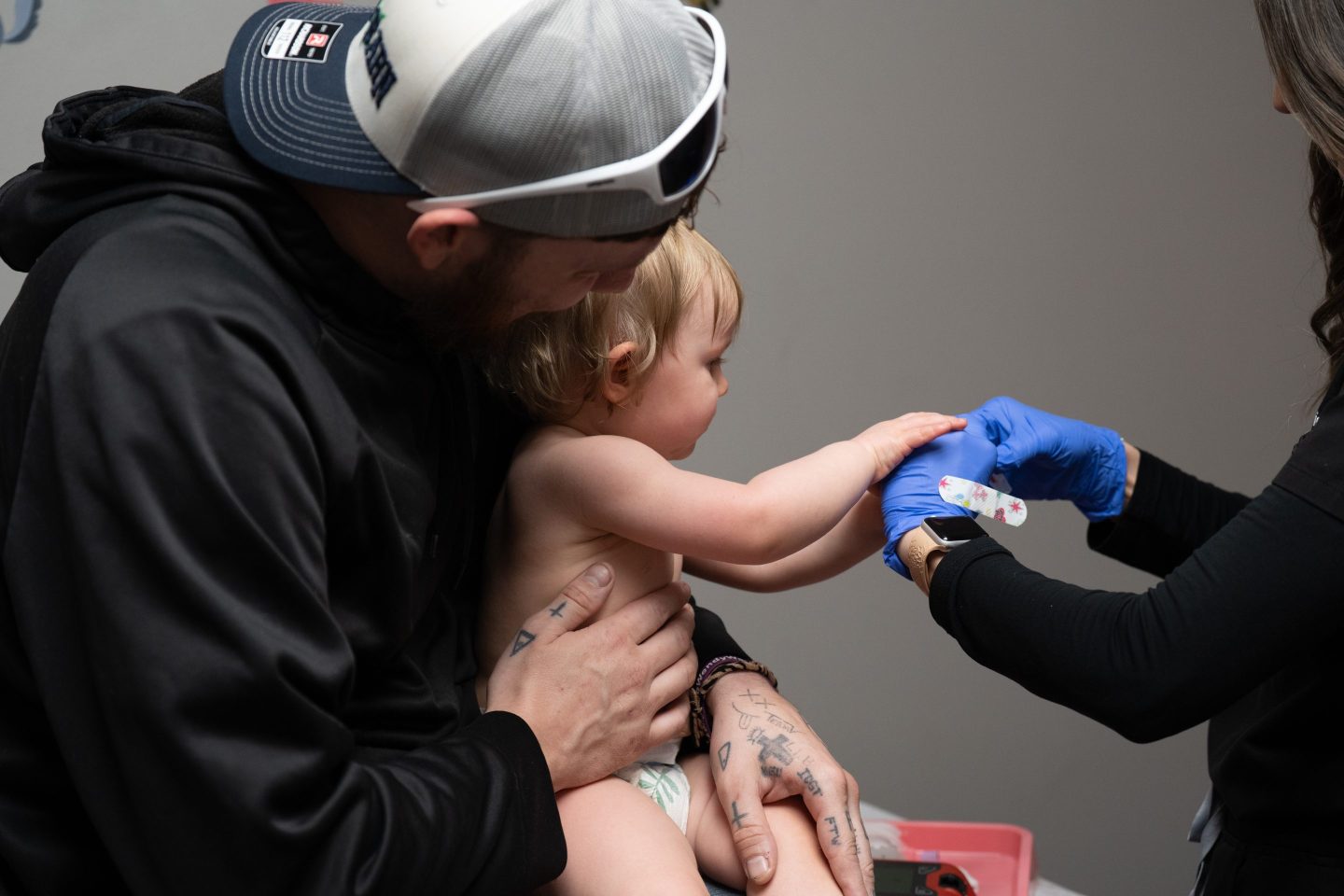
At the same time, U.S. officials failed to communicate clearly that vaccines prevented most deaths and hospitalizations. An estimated 232,000 unvaccinated Americans died from COVID during the first 15 months in which shots were freely available.
Experiences with HIV control taught public health officials not to moralize about behavior, to focus on harm reduction, and to use the least restrictive methods possible, Nuzzo said. Yet politicization led to shaming of people who wouldn’t mask or refused vaccination.
Harm reduction was top of mind for infectious disease doctor Monica Gandhi when she defied lockdown orders by keeping open Ward 86, the clinic she runs for 2,600 HIV patients at Zuckerberg San Francisco General Hospital. Her patients—many poor or homeless— had to be treated in person to keep their HIV in check, she said.
In general, the lockdowns hurt low-income people most, she said. The wealthy “were happy to be shut down, and the poor struggled and struggled.” Gandhi’s two children attended a private school that quickly reopened, she said. Yet she recalled how a medical assistant burst into tears when asked how her family was doing.
“My eight-year-old is at home, on Zoom, all by himself,” the woman told Gandhi. “I have to work and he doesn’t know how to learn that way. There’s no one to give him food.”
Despite strictures, including school closures that were longer than in most European countries, the U.S.’ death rate from COVID was the highest in the world, except for Bulgaria, according to an Ioannidis study of countries with reliable data.
Part of the blame lies with the first Trump administration, which “more or less just said, ‘You states manage this crisis,’” Zelikow said. “They went through a lot of somersaults. They did a lot of feckless things and then they basically just gave up,” he said. Pandemic deaths peaked in the four months after the November 2020 election that Trump lost.
Read more from Fortune
Ioannidis, a critic of lockdowns, said the United States was doomed to a bad outcome in any case because of vulnerabilities in the population including poverty, inequality, lack of health care access, poorly protected nursing homes, high rates of obesity, and low levels of trust.
But the disappearance of viral diseases such as respiratory syncytial virus and flu in late 2020 showed how much worse it could have been without lockdowns, said Paul Offit, director of the Vaccine Education Center at Children’s Hospital of Philadelphia, who has noted that, while children were the least vulnerable to COVID, it killed 1,700 of them by April 2023. More than a million American children had long COVID as of 2022, according to a new Centers for Disease Control and Prevention study.
Consensus never arrived
After arising by accidental passage from bats and other animals to humans (or, alternatively, from a Chinese lab accident), the coronavirus was uncannily adept at frustrating containment efforts—and aggravating political tensions. Its ability to infect up to 50% of people asymptomatically, infection outcomes ranging from sniffles to death, waning immunity after infection and vaccination, and the shifting health impact of new variants meant “the deck was stacked against public health,” said biology professor Joshua Weitz of the University of Maryland.
In the end, teams formed along political lines. Conservatives attacked governors for depriving them of liberty, and Trump’s erroneous ramblings about curing the disease with bleach and ultraviolet light inspired intolerance on the left.
“If anyone else was president we would have had a better result,” Gandhi said. “But if Trump said the sky was blue, then goddamn it, the infection disease doctors disagreed.”
The right and left don’t even agree on the correct questions to ask about the pandemic, said Josh Sharfstein, a vice dean of the Bloomberg School of Public Health at Johns Hopkins University.
“Everyone knew that 9/11 was a terrorist attack,” he said. “But what the pandemic was and represents—there’s so much disagreement still.”
“We let children down, we let poor people down,” Ioannidis said in closing remarks at the Stanford conference. “We let our future down.”