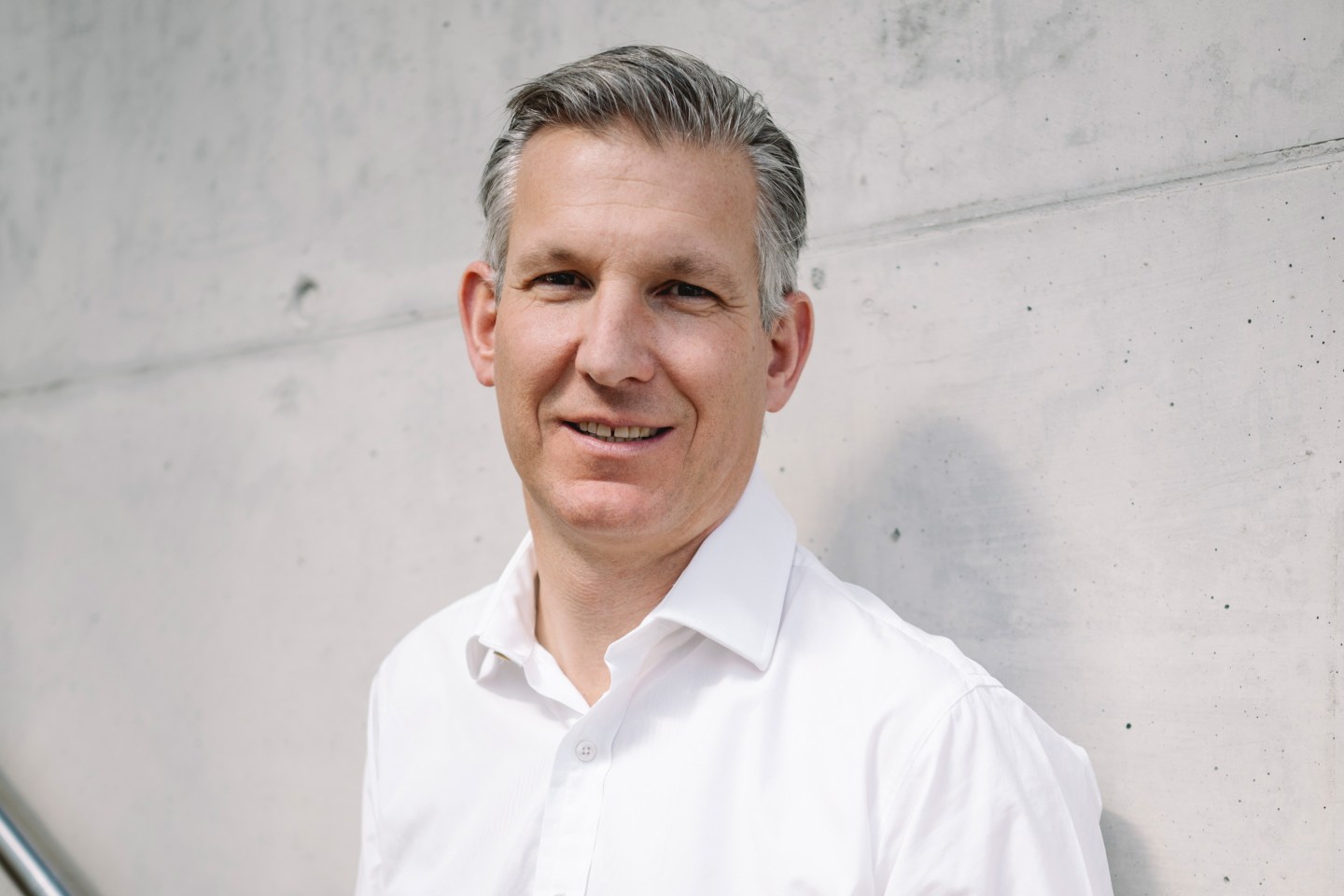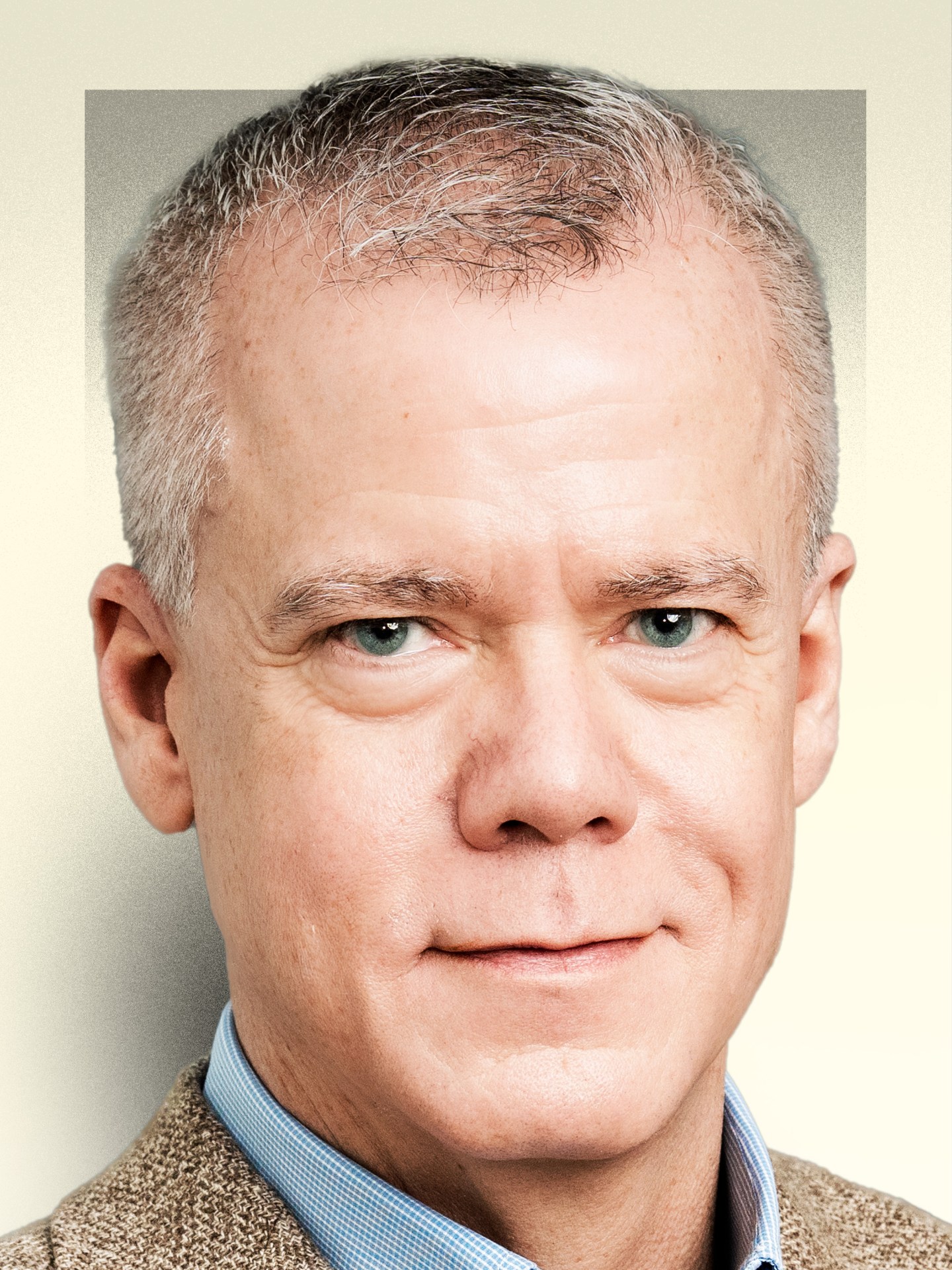
When Chris Boerner became CEO and board chair of Bristol Myers Squibb (No. 94 on the Fortune 500) two years ago, he took over a storied pharmaceutical company with roots in supplying pain medication to Union soldiers on Civil War battlefields. He also arrived at a time when the company was facing a looming ‘patent cliff,’ as key cancer drugs like Yervoy and Opdivo, as well as the blood thinner Eliquis, were close to losing exclusivity. Together, those three made up about half of Bristol Myers Squibb’s revenue last year, and the loss of patent protection could cost the company billions a year. But Boerner, an Arkansas native who studied economics and has a PhD in business, tells Fortune he’s optimistic about the pipeline of innovation, his team and the opportunities to create a more equitable landscape for patients and the pricing of his products.
This interview has been edited and condensed for clarity.
We’re on the cusp of such an interesting period of innovation. What should we focus on?
I don’t think I’ve ever been in an industry at a time like this, where science is moving incredibly fast. We are on the verge of being able to get after some very difficult-to-treat diseases: Alzheimer’s, dementia, parts of cancer that have proven intractable to cures, never mind being able to treat them chronically, like we do a lot of areas of cancer.
I just gave a talk on AI and its potential to accelerate treatments and give us the ability to do things faster, more efficiently, and ultimately discover medicines that wouldn’t have been discovered otherwise.
How do you navigate what’s going on in Washington?
When there’s so much uncertainty in the world, there’s a tendency to hunker down and not want to engage. I think one of the most important things is to challenge that instinct aggressively, because in periods like this, you have to find a way to engage.
We made the decision three years ago to staff up significantly. We changed almost our entire team over in D.C., and we said this is an area we need to have a greater presence to be able to not only work through the trade associations and the like, but be able to have our own position to ensure that we were getting our own message out, that we could tell our story and do that directly. Number one, you’ve got to engage. Number two, you’ve got to be clear on what your priorities are. We’ve got to do the right thing for the company, but there’s the right thing for the company within the context of this industry.
We’re weeks away from that potentially going backwards (About 10.9 million Americans could lose access to health insurance under the Big Beautiful Bill, according to the nonpartisan Congressional Budget Office).
Absolutely. We’ve got to do more in terms of ensuring that patients can afford our medicines. I’ll give you one example. Growing up in Arkansas, this is particularly important to me. We just launched this medicine last year, roughly around this time, which is the first new mechanism of action to treat schizophrenia in three decades. This is a truly transformational medicine. Fifty percent of the counties in the United States don’t have a practicing psychiatrist. Over 50% of the counties in the United States have severe mental health shortages. Those are patients who cannot get access to this medicine (because they can’t see a doctor to prescribe it). Addressing those real challenges is super important, and it’s not going to be done by relying on the states or relying on the federal government. It’s going to be a lot of different constituencies coming together to make that happen. Technology has an important role to play. So I think that while we are addressing the real issues—of pricing and access, notably—we’ve got to do it in a context where we don’t kill the goose that’s laying the golden egg, and we keep the United States as a leader in this industry, and that’s something I’m particularly fixated on.
I speak with a lot of leaders at health insurers, hospital systems, players like Philips that are working on technology and other players in this health care ecosystem. How do you feel other stakeholders are navigating this environment?
If you’re going to make meaningful progress in treating and changing health care, it’s going to be done with a lot of constituents coming together. The health care industry is too often a sick care industry. We wait until people get very sick before we treat them. So there is a piece of, for example, the MAHA (Make America Healthy Again) movement, that I think makes infinite sense. How can we keep people healthier?
Through GLP-1 medications and things like that?
I think it’s even more basic than that. How do you ensure people have access to nutritious food? To the extent that GLP-1s help people maintain an active life and lose weight, that’s part of the equation. We work in the space where, when people get sick, you want to have our medicines. You want to have a company like ours that’s doing really hard work in that space. But you have to look at the health care system in totality and have multiple constituencies come together to try to tackle some of these hard problems. I was just at an event in Arkansas; Alice Walton is building a new medical school.
I’ve heard about that. Her holistic approach to community medicine and wellness is incredibly exciting.
Very exciting. At this meeting, you had representatives of all the constituencies that have to come together to make meaningful change in health care. That’s how you ultimately are going to begin to see progress. It’s not going to be one constituency alone.
How is your role evolving?
We historically have said, when a physician writes a script for one of our medicines, we’re done. That’s the wrong way to look at it. We’re done when a patient benefits from the medicine that we have. So we’ve spent a lot of time and energy over the last number of years saying, how do we make sure that once a medicine is made available, we address issues like the fact that you don’t have a psychiatrist in half of the counties in the United States to prescribe that medicine?
Is that a matter of working more closely with the insurers, with the hospital systems, all of the above?
It’s a bit ‘all of the above.’ Some of it, we’re working with third parties to ensure that we can find patients where they are, and that we make those medicines available. When we launched our immunotherapy Opdivo for lung cancer, we were the first company to launch IO (immuno-oncology) into lung cancer, and it was a big deal. Lung cancer, back in 2015-16, was a very dark, nihilistic setting. There hadn’t been really anything fundamentally new in a long time. Enter immunotherapy and we were getting a lot of kudos for having brought this medicine to market.
But I will never forget going to Kentucky (which has the country’s highest rate of new lung cancer diagnoses.) We had a dinner with people from all parts of the health care ecosystem, from the governor and academics all the way down to patient advocates, and it was a celebration of bringing this product to market. At the very end of that dinner, a nurse practitioner said, ‘This has been a lovely evening, but I’ll tell you, it’s disconnected from my reality, because where I practice in Appalachia, patients don’t have access to basic health care, never mind oncology. If they do know anything about an oncologist, they’re traveling hundreds of miles to see that person. They don’t know anything about this medicine, and if they did, they couldn’t afford it or have access to it any way.’ It was a very short but beautiful speech that essentially said, this isn’t working for me.
So we set about getting screening programs to these patients. Let’s work with not just the big academic centers, but the primary care physicians in these communities. We began working with church groups to get bulletins to church-goers, vans to help us get patients to treatment. So we began taking a much more holistic look at how we could make Opdivo available to patients who need it, irrespective of where they where they live. That same mindset has now flashed forward to the schizophrenia example I gave you. One of the reasons I’m keenly interested in working with Alice’s team is to see how they can help us begin to tackle access to care in rural communities.
I want to turn the spotlight back to you for second. You studied economics and did a PhD in how biotech companies are influenced by organizational factors when developing new products. I’m curious how that work has impacted your strategy or thinking as a leader.
There’s a lot of stuff you just can’t anticipate. You can have a plan, but it’s the old Mike Tyson statement: Everybody has a plan until they get punched in the mouth.
Coming into this job as CEO (two years ago), I had a plan. We had to navigate through a period of LOEs (loss of exclusivity, when a drug’s patent protection expires.). [Eli] Lilly went through a period like this, as did AstraZeneca. You can learn a lot from case histories and how they dealt with it. We knew we had a great pipeline, fantastic drugs on the market that are treating important disease areas, and we need to maximize the opportunity there. We’re in a very strong financial position with great people. I had sort of mapped out the plan.
What I didn’t do in that period, which I’ve spent a lot of time on since, is figure how we keep everyone focused on executing against that. We’ve spent a lot of time on the culture of the company. How do we give people an opportunity to talk about what’s happening in the workplace, but then get them back to controlling what they can control, staying focused on the mission of the company? That was problem solving. We have to figure out how to how to navigate this. You have to step back and say, ‘let’s take a long-term view.’ My dad used to tell me all the time, ‘Hey, settle down.’
Stay calm! That’s what doctors learn to do in a crisis, right?
Exactly. Sit down, think about the long term, spend a little bit of time, have a set of principles that guide how you’re going to operate, and then go about solving the problem.
Warren Buffett, in his farewell shareholder letter, starts off with the fact that he would have died as a kid had he not had an emergency appendectomy, thanks to a diligent doctor. How do we meet our obligations as a nation to make sure the greatest number of people benefit from this system?
For the longest time, we’ve tried to solve the problem of health care in rural America by saying, well, let’s train people to go work in rural America. That is a laudable goal, but we have to have a dose of reality that it hasn’t worked.
Why not?
Well, I think some of it is people. These are communities that don’t attract people who want to go back and work in those communities. A lot of people where I grew up left my hometown.
Well, your career would be very different if you hadn’t done that.
That’s right. You can do a lot to try to keep people back. I think Alice is doing some of that through the new medical school. But you’ve got to have something beyond that. And that’s where I think technology can be hugely helpful. If there’s one good thing that came out of Covid, it is that the availability of digital tools and the utilization of those tools skyrocketed in a very short window of time. You then add on to that technology like AI and the ability to identify where these health care deserts are and become very precise about the needs of patients in those communities. Put those two things together and here’s a huge opportunity to expand the potential for accessibility to high-quality medicine for people in those communities.
In the rest of the world, you often find single-payer health insurance systems that can exert real pressure on drug prices. There’s a perception that the rest of the world gets subsidized by the U.S., which bears a higher cost when it comes to prescription drugs. Are others paying their share for expensive drug development?
First, if you look at this industry critically, one of the things we have totally lost the narrative on is the life cycle of our medicines. Over 90% of the medicines that are prescribed in the United States are generics. What do we know about generics? Generics are actually less expensive in the United States than they are in most of industrialized Europe because of the unique dynamics here and, frankly, how those other countries treat generics. So when we talk about the price of medicines in the United States, let’s keep in mind that you don’t get a generic if you don’t have a vibrant, branded pharmaceutical industry.
So how do we ensure that we’re doing the right thing across the entire continuum of the medicines that patients have access to? We absolutely have to do a better job at bringing down the prices of medicines for that part of the equation. But, as we do that, we need to make sure that we don’t damage the ecosystem that enables us to bring those world-class medicines to market in the first place, because you don’t get the generic versions of those if you don’t have that ecosystem.
Second, we have got to do a better job of equalizing prices between the United States and outside of the United States, particularly in industrialized countries that can and should be paying more. I got to give this administration a lot of credit, because they are one of the first administrations to approach that issue in a very practical way, to have conversations where we say, ‘Look, if you don’t start spending more of your GDP on innovative medicines, then we will use the lever of trade to enforce penalties for that.’
How does that help you?
What that gives us is the ability to have a much more direct conversation during pricing negotiations, to say, ‘You’ve got to pay more.’ When you’re negotiating with a sovereign, and in many cases you run up against the obligation you feel to make these medicines available, it’s sort of a take-it-or-leave-it position. I think the administration has been quite constructive in saying we need to see prices come up outside of the U.S., and we need to do more in the U.S. to bring prices down. And we’ve had very good discussions with the administration to do that.
“You have to have a great team of leaders. It’s also being able to inspire people and know how to manage the complexities that we face.”
Chris Boerner
Have you had any traction in negotiating with particular countries yet?
We’ve had good discussions in the U.K., for example. Next up will be German and Japan. We’ve had a number of very good discussions outside the U.S. We’ll see whether they turn into something. But at least we’re having the discussions, which is unique.
We had announced that we would make COBENFY, the schizophrenia drug, available in the U.K. next year but that we would make it available at the U.S. price. We’ve had quite a few conversations with the U.K. government about how we do that.
Have we shortened the time for medicines to come to market under this administration?
I don’t think we’ve seen that yet. What has the potential to truncate that timeline is technology. We are looking aggressively to say, how can we significantly cut down the time from first in humans to approval, which can be upwards of seven years? Through the application of AI, we think we can take two to three years off of that, and we think that we can significantly increase the likelihood of success for a Phase 3 (clinical trial) to almost 100%.
Longitudinal studies, by their nature, track humans and how they react to drug. How would AI allow you to take two to three years off that process?
First, you can target where you administer these clinical studies. You can have much more precise identification of patients. You can make sure that you’ve got the right investigators. You can identify problems that happen in clinical trials before they exist. You can optimize clinical trial design. This is where regulators become important. We can begin to design studies with synthetic control arms, for example, using this technology. We can have much more truncated looks at different endpoints using this technology. We’ve already proven, for example, that you can take months off the time needed to write regulatory documents, using this technology. If you add all of those things up, the cumulative effect is quite dramatic, and that’s without even talking about the potential application of AI to research and on the commercial end.
Many of your colleagues are motivated by a deep love of science. I think it’s fair to say that the zeitgeist right now is not about a deep love of science. Does that impact your messaging internally or externally?
It doesn’t in so far as it is part of the noise in the system. We have to remind ourselves that this isn’t our first rodeo. We’ve been around 170 years. That doesn’t mean you ignore it. But it does mean that when the first medicines this company made were used on the battlefield of the Civil War, and we were one of the largest manufacturers of penicillin during the Second World War, we’ve seen some stuff.
A mentor of mine said, leadership is like a house of lights. The most important thing for the senior leaders is that they flip their light switch on—you set the vision and strategy—and the next layer of light switches go on, and they’ll let the layer after that do their job.
So choose your team wisely. And then it’s ultimately about replacing yourself, right?
The connection for me was, this was an ex-McKinsey partner, actually. He said, ‘Chris, when you’re running a small team and a light goes out, you replace it yourself. When you’re running a team at that scale, it’s got to be mechanical.’ You have to have a great team of leaders. It’s also being able to inspire people and know how to manage the complexities that we face.
During the Civil War, we had this first burst of medical records in which you saw people in their 20s having diseases that we now associate with people in their 50s or 60s. If you look at today, what do you think we will look back on and marvel at what we put up with that?
I’m an optimist by nature. You have to take moments in time to step back and say ‘Look at what we’ve accomplished.’ Think about your last physician visit. Now think about that same visit 10 years ago. One was probably not transformationally different than the other, but in that same period of time, we’ve launched maybe 500 new medicines and changed the outcome for many cancers. My hope would be that the future generation of medicines will have the same outcomes with Alzheimer’s, with schizophrenia. We have an ambition to be a leader in brain health. I hope that we’re not talking about health care deserts anymore. We’re talking about everyone having access irrespective of your zip code.