If you’re a professional who prioritizes natural options over synthetic as part of your approach to wellness, and you’re seeking a mattress to help you feel rested and ready to tackle the day’s projects, you might be considering Birch.
The Birch line of mattresses is designed for shoppers who want the peace of mind that comes with more natural materials. Birch focuses on breathable organic cotton and wool, Talalay latex, and sturdy pocketed coils to create beds that sleep cooler than most all‑foam options while still offering strong pressure relief and edge support.
For this 2026 review, our testers rigorously tried and evaluated several Birch mattress models to see how they perform in real-world conditions. We’ll break down our findings on comfort, support, cooling, durability, and value so you can decide which Birch mattress is the best fit for your sleep.
Best Birch Mattresses of 2026
- Best Birch Mattress Overall: Birch Luxe Natural
- Best Birch Mattress for Couples: Birch Natural
- Best Birch Mattress for Kids: Birch Kids
Best Birch Mattress Comparison Table
Best Birch Mattress Overall: Birch Luxe Natural
Birch Natural
| Fortune score | 4/5 |
at Birch
- Our thoughts: A luxe, eco-focused upgrade
- What it does: The five-layer design uses natural wool and latex to provide plush support
- Who it’s for: Side and combo sleepers, hot sleepers, and folks who are looking for premium natural materials
- What makes it different: Euro-top with extra wool and zoned coils for more cushioning and lumbar support than the standard Birch
Pros
- Excellent pressure relief for back and side sleepers
- Sleeps cool
- Strong edge support
Cons
- More expensive than the Birch Natural
- Buoyant, “on‑top” feel won’t suit fans of deep memory‑foam hug
- Has some motion transfer and bounce
Our Thoughts on the Birch Luxe Natural
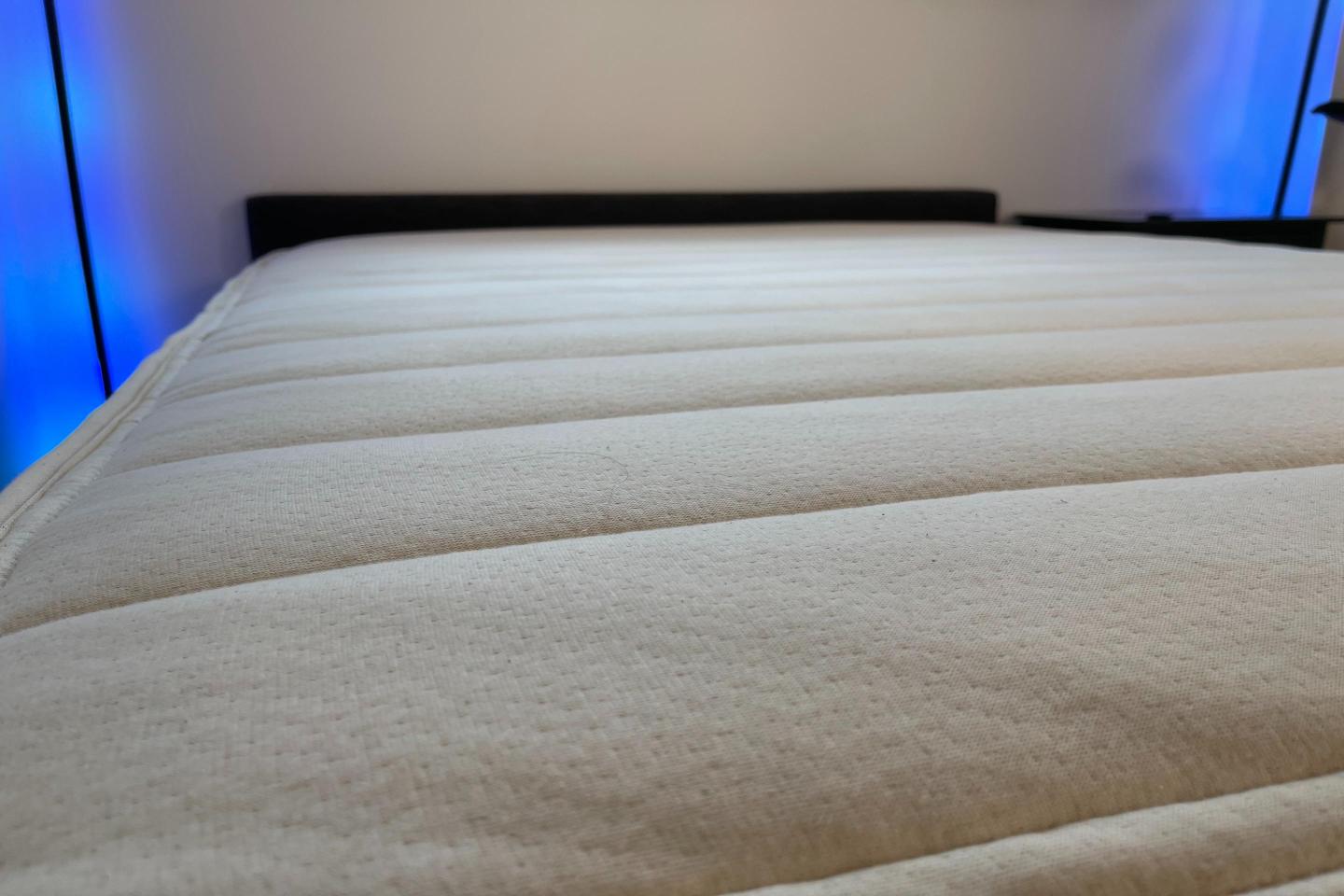
The Birch Luxe Natural is our pick for the best Birch mattress overall because it layers a plush Euro‑top and extra comfort materials on top of a supportive latex‑and‑coil core, creating a more cushioned feel than the standard Birch without losing lift or edge stability. It offers a firmer, “on‑top” orientation with just enough contouring for pressure relief, plus strong edge support and good responsiveness, so it can comfortably accommodate a wide range of sleep positions and body types.
In testing, Courtney, a 29‑year‑old stomach/side combo sleeper in the average weight category (130 to 220 pounds for our purposes), experienced the Birch Luxe Natural as a fairly firm, mostly “on‑top” mattress with moderate contouring. On pressure and firmness, she rated side‑sleeping pressure relief a 4 out of 5—which is expected, given the bed has an industry firmness rating of 7 out of 10.
Courtney noted that on her side she felt “a slight sink into the mattress, but I mostly feel like I’m lying on top of it.” While she sensed some pressure at her mid to lower back, she still described the feel overall as supportive.
In the solo motion test, she rated the Birch Luxe Natural a 4 out of 5, explaining that as she shifted to her side, there was some movement of the balls used in the test, though none popped out of the container at any point.

In the partner motion test, she rated it a 3.5 out of 5. “I did not notice when my testing partner first began to get on the mattress,” Courtney wrote. “But I felt some movement when they shifted positions and when they got off.” In other words, sleepers likely won’t feel every small move, but you will probably notice more pronounced changes.
Courtney also found the Luxe’s edge support and cooling performance top-notch for a plusher, upgraded Birch model. She rated subjective edge support a 4 out of 5, noting that when she stood up from sitting she felt “a mild spring assist me,” and that while sitting she did “slightly sink,” her knees still felt supported and she could get up with ease.
For cooling, she rated the Luxe a 4 out of 5 and commented that it “felt comfortable and did not feel like it conducted heat at a significant degree,” saying the area where she had been sitting felt only “a smidge warmer,” a good sign for sleepers who run warm but still want a plusher, more luxurious top.
Best Birch Mattress for Couples: Birch Natural
Birch Natural
| Fortune score | 4/5 |
at Birch
- Our thoughts: A versatile, eco-friendly mattress
- What it does: Keeps sleepers “on top” of the bed, limits overheating, and gives couples room to spread out
- Who it’s for: Couples who prefer a firmer, responsive feel
- What makes it different: Buoyant latex‑and‑coil design with strong edges and natural materials
Pros
- Medium-firm support that works well for most back and stomach sleepers
- Strong edge support
- Breathable, natural materials
Cons
- More bounce and motion transfer than foam beds
- May feel too firm or too “on top” for some folks
- Price is still premium compared to non-organic hybrids
Our Thoughts on the Birch Natural
The Birch Natural is our pick for the best Birch mattress for couples because it pairs a supportive medium‑firm latex‑and‑coil design with strong edge support and very good responsiveness, all at a more accessible price than the Luxe. Its bouncy surface makes it easy to change positions, the perimeter feels stable enough for two people to use the full width of the bed, and the breathable cotton, wool, and latex help keep shared sleep reasonably cool without trapping heat the way some foams can. Together, these traits make it a versatile, durable option for many two‑person households.
In testing, Courtney found that the Birch Natural delivered a balanced feel across different sleeping positions. On pressure relief, she rated side‑sleeping pressure relief a 4 out of 5. She described the feel as “a gentle caress with a nice subtle sink” and said her weight felt evenly distributed once she settled in, especially noting that on her stomach she felt supported without lower‑back strain.
In the solo motion test, Courtney gave the mattress a 4 out of 5, explaining that the balls moved more when she made big shifts, but there was not a great disturbance during small movements and that they settled more slowly than on some other beds.
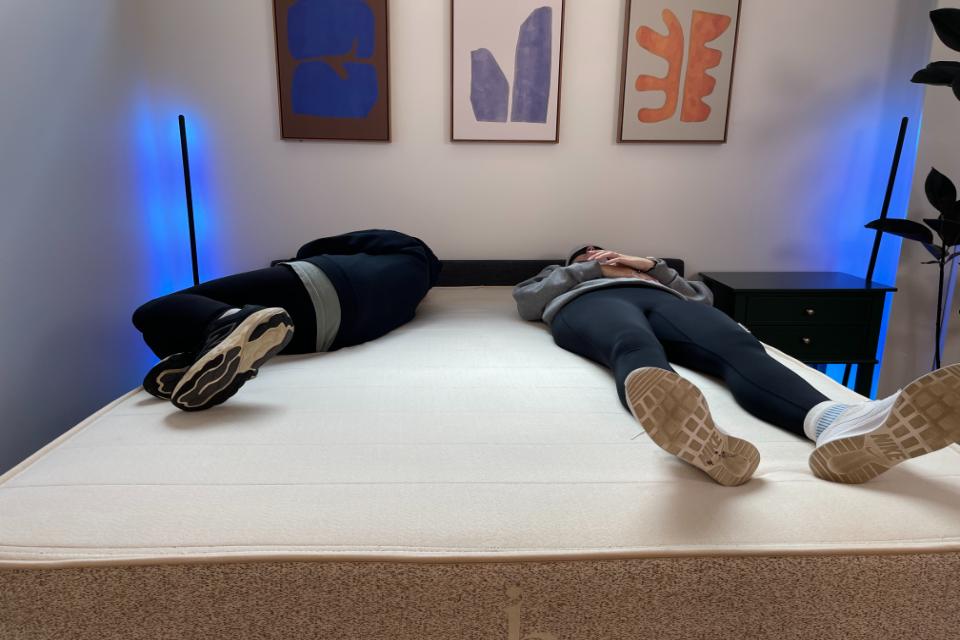
In the partner motion test, she again rated performance a 4.5 out of 5. “When my testing partner initially got on and off the mattress, I did not notice the movement,” she said. “During position changes, I felt an increase in movement,” adding that even then, “If I were a light sleeper I don’t think it would have bothered me.”
Courtney also highlighted the mattress’s edge support and cooling, both of which matter for couples sharing space. On the edge test she rated subjective edge support a 4 out of 5, noting that while sitting she felt “slight sinking but it did not hinder my ability to stand up,” and that when lying near the side she never felt like she was going to roll off. “The edge is like an above-ground pool, where the top ring is blown up so the entire pool rises with the water,” Courtney said. Overall, the mattress felt like it had a ring surrounding the top to create edge support.
For cooling, she rated performance a 3 out of 5 and reported that it didn’t feel either hot or particularly cool but stayed at a comfortable temperature, with the surface not feeling warm after she got up, which should suit many couples who run neutral to slightly warm at night.
Best Birch Mattress for Kids: Birch Kids
Birch Kids
| Fortune score | 4/5 |

at Birch
- Our thoughts: A thoughtfully firm, supportive bed to keep your child comfortable
- What it does: Provides age-appropriate support on each side and uses breathable, non-toxic materials
- Who it’s for: Kids from early childhood through the tween years
- What makes it different: Two-sided design with different firmness levels plus certified organic and low-VOC construction
Pros
- Dual-firmness design that adapts as kids grow
- Uses organic, non-toxic materials
- Supportive, bouncy feel
Cons
- Not plush enough for teens or adults who want extra cushioning
- ome kids may notice more bounce than on foam beds
- Higher price than many conventional kids’ mattresses
Our Thoughts on the Birch Kids
The Birch Kids mattress is our pick for the best Birch option for children because its flippable, dual‑firmness layout, supportive coil‑and‑latex core, and strong edge support are all tuned to kids’ safety and longevity. The design balances a bouncy, responsive feel that is easy for kids to move around on with a solid perimeter that helps them get in and out of bed more confidently. Paired with breathable natural materials and moderate cooling performance, it’s built to handle years of use as children grow.
In our testing, Kate, a 25‑year‑old lightweight (130 pounds and under) side sleeper, found the Birch Kids mattress very responsive and a bit livelier than many all‑foam kids’ beds. During the motion‑isolation test, she rated it a 3.5 out of 5, writing that “the bouncy balls were movin’ and groovin’ on this mattress,” and that the high responsiveness meant movement on one side was easy to feel across the surface. On the dedicated bounce test, she measured a bounce height of 19.5 inches and gave it a 5 out of 5 for bounce, reinforcing that this is a springy mattress that active kids can move around on with ease as they change sleeping positions.
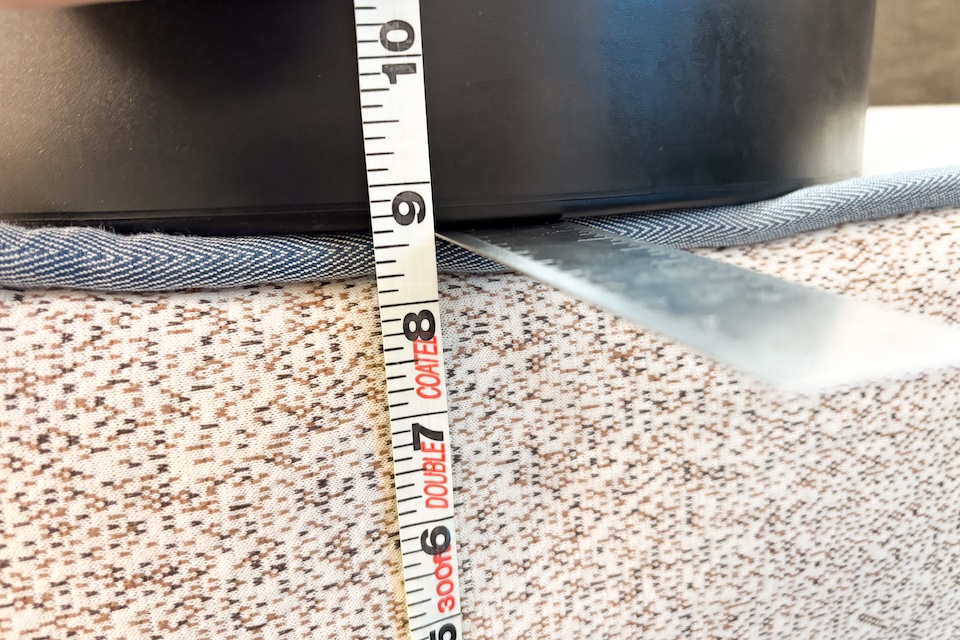
Edge support was a standout for Kate, especially for a softer‑feeling kids’ bed. She recorded an average starting height of 9 inches with edge sinkage of about 8.75 inches and still rated subjective edge support a 5 out of 5. “This edge support is incredible! You can feel a hard edge right at the seam,” she said. Kate also noted that she had “no issue getting in and out of bed,” and even felt assisted by it, which she thought could be great for young kids and helped push her back toward the center when lying near the edge.
For pressure relief and firmness, Kate described herself as a medium‑size sleeper though she falls into the lightweight category of our tester demographics, and she felt this was a moderate option—not firm, not overly soft. This was no surprise, given that it has an industry standard rating of 6 out of 10 for firmness.
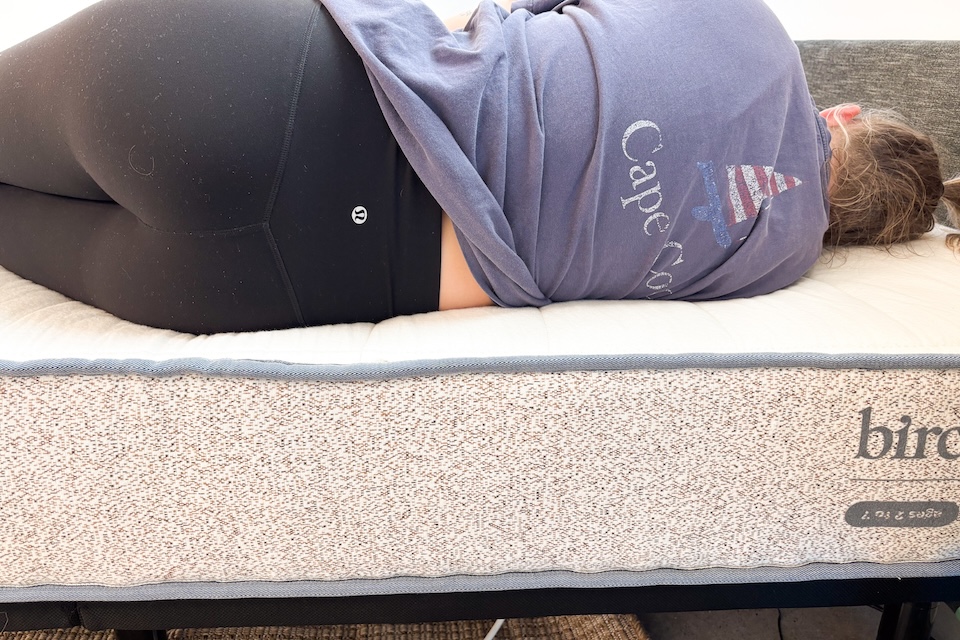
Side‑sleeping pressure relief came in at 3.5 out of 5, with Kate saying, “For how soft this mattress feels, I didn’t sink as much as I wanted to near my shoulders,” which caused some neck discomfort.
On her back, she rated pressure relief 3.5 out of 5 and noted a small gap at the lower back because her hips were slightly more elevated, wishing that this mattress had a more plush top “because it could help contour.”
Stomach sleeping was her best‑feeling position with a 4 out of 5 rating. “I could feel my hips elevated to my shoulders so my back was not arching in a crazy way or straight like a board,” Kate said, concluding, “This would be good for a kid at any age that likes to sleep on their stomach.”
How We Tested and Selected the Best Birch Mattresses
Choosing the right Birch mattress comes down to matching each model’s feel and features with how you sleep. Within a single brand, small differences in firmness, comfort layers, and coil design can make one Birch bed better for side sleepers, another more suitable for couples, and another ideal for kids.
Pressure Relief
For pressure relief, we look at how well each Birch mattress cushions common pressure points like shoulders and hips while keeping your spine aligned. Testers of different body types and sleep positions (side, back, stomach, and combination) lie in each position and record where they feel tension or discomfort, then score pressure relief on a 1–5 scale. We pay special attention to how Birch’s latex and wool comfort layers distribute weight, since these materials tend to feel more “on top” than slow‑moving memory foam.
Cooling
All Birch mattresses are built with naturally breathable materials, but they don’t all feel the same for temperature. To evaluate cooling, testers lie on each bed for a set period and note how warm the surface feels over time, then rate the experience on a 1–5 scale. We also consider how quickly the mattress loses that built‑up warmth once you get up, which helps distinguish “temperature neutral” from truly cool‑sleeping options.
Motion Isolation
Motion isolation is crucial for sleepers who share a bed, so we run targeted tests on each Birch hybrid. One tester changes positions, gets in and out of bed, and performs controlled movements while another person (and in some tests, objects like bouncy balls) monitors how much disturbance reaches the other side. Testers then rate motion isolation on a 1–5 scale based on what they feel and see.
Because Birch mattresses combine responsive latex with pocketed coils, they naturally have some bounce, which can mean a bit more movement than an all‑foam mattress. We use our motion scores to highlight which Birch models do the best job of dampening partner movement while keeping the responsive feel that many sleepers like.
Bounce
Bounce testing helps us understand how “lively” each Birch mattress feels and how easy it is to move around on. We measure how high an object rebounds off the surface and pair that with each tester’s impression of responsiveness—how quickly the mattress recovers when they switch positions or sit up. These results are rated on a 1–5 scale for bounce.
This is especially important for combination sleepers and couples who value ease of movement and prefer not to feel stuck in the bed.
Edge Support
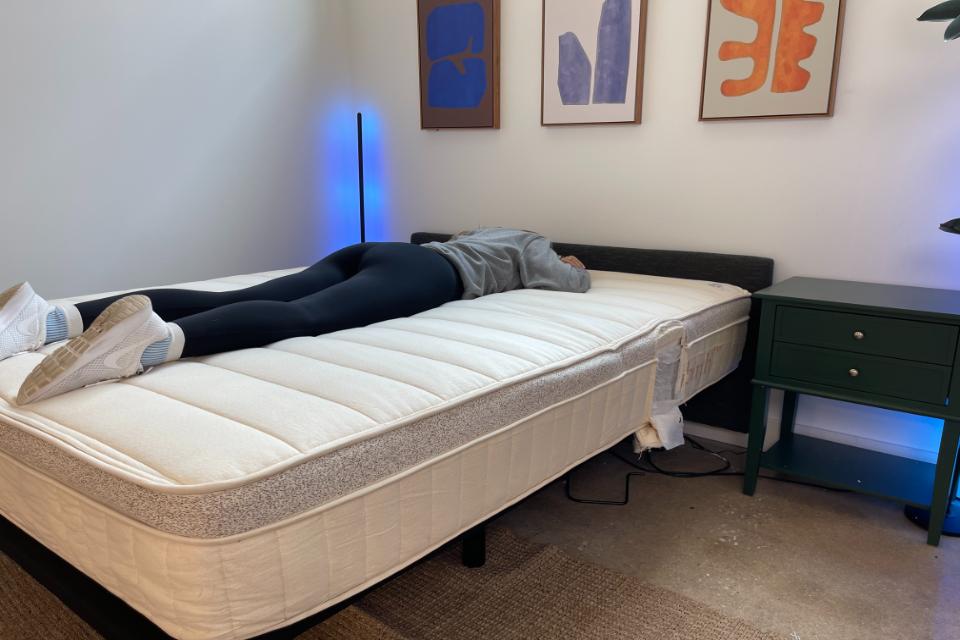
To assess edge support, testers sit and lie right along the perimeter of each Birch mattress and measure how much the edge compresses. We track sinkage depth, how secure the tester feels when lying near the side, and how easy it is to stand up from a seated position. Testers then assign 1–5 ratings for edge support.
Durability & Materials
With Birch, materials are a big part of the story, so we examine each model’s construction and ingredient list alongside our performance tests. We look at the type and thickness of latex used, coil gauge and zoning, and the quality of the organic cotton and wool, as well as any third‑party safety or sustainability certifications.
To read more about how latex is used in mattress construction, check out our best latex mattresses page.
Value
Finally, we weigh price against performance and materials to judge value for money within the Birch lineup. We compare each mattress’s cost to its test scores across pressure relief, cooling, motion isolation, bounce, edge support, and construction quality to see where it over‑ or under‑delivers for the price.
This helps us identify which Birch mattresses are worth a splurge and which options provide the strongest balance of comfort, support, and sustainability at a lower cost. Our “best” picks are the ones that combine the right feel for their target sleeper with strong test results and fair pricing for what you’re getting.
How to Find the Best Birch Mattress for You
Finding the right Birch mattress comes down to matching each model’s feel and features with your body type, sleep style, and bedroom setup.
Weight and Height
Your weight can change how each Birch mattress feels. Lighter sleepers tend to experience Birch’s latex hybrids as a bit firmer, because they don’t sink as deeply into the comfort layers, while heavier sleepers compress more and feel more contouring. In general:
- Lightweight sleepers (under about 130 pounds) may prefer slightly plusher Birch constructions for better shoulder and hip relief.
- Average‑weight sleepers (around 130–230 pounds) often do well on the brand’s medium‑firm designs.
- Heavier sleepers (above ~230 pounds) usually benefit from firmer, more supportive builds and robust coil units.
Taller sleepers and larger couples often find a king Birch mattress more comfortable simply for the extra space. A California king can be helpful for very tall folks who need more length rather than width.
Room Size
Birch mattresses follow standard sizing, and the larger ones take up a lot of floor space. A king mattress is typically 76 by 80 inches, and a California king is about 72 by 84 inches, not including the extra footprint of a bed frame. Before ordering a bigger Birch mattress, measure your room and allow clearance for walking, nightstands, and drawers.
Also remember that some platform bases, foundations, and headboards add a few inches to the overall dimensions, so make sure your frame and mattress together will fit comfortably in your space.
Mattress Material
Birch focuses on natural and organic materials, and each layer contributes to the feel:
- Latex: Very responsive and bouncy, sleeps cooler than most foams, offers a more “on‑top” feel; less hugging than memory foam.
- Pocketed coils: Provide strong support, better airflow, and reinforced edges; add bounce, which some couples and combination sleepers like.
- Wool and cotton: Help with moisture‑wicking and temperature regulation, add a soft, breathable surface without relying on synthetic foams.
If you want more contouring and a slightly plusher surface, look at Birch models with thicker wool or comfort layers; if you prioritize support and bounce, pay more attention to the coil design and firmness level.
Prior Aches and Pains
People with existing back, hip, or shoulder issues may notice bigger differences between Birch models. Firmer, more supportive builds can help keep the spine in a neutral position, while plusher tops can reduce pressure around sensitive joints.
Because pain conditions are highly individual, mattresses are ultimately a matter of personal preference, and it’s wise to consult your doctor or other medical professional about any preexisting conditions or chronic pain before changing your sleep setup. A doctor or physical therapist can help you interpret how a specific Birch firmness and construction might interact with your body.
Certifications
One of Birch’s key selling points is its use of third‑party certifications for materials like organic cotton, wool, and latex. These certifications help verify claims around organic sourcing, low emissions, and the absence of certain harmful chemicals. For shoppers sensitive to off‑gassing or focused on sustainability, these labels add confidence that the mattress has been independently evaluated rather than just marketed as “natural.”
Cost
Birch mattresses sit in a premium price tier compared to many conventional beds, largely because of their natural materials and coil‑and‑latex builds. Budgets vary, but it’s worth remembering that a mattress is something you use every night for many years.
Frequently asked questions
Is a Birch mattress worth the money?
For shoppers who value natural and organic materials, strong support, and cooler, more responsive sleep, Birch can offer good value relative to its higher price, especially given its coil‑and‑latex construction and certifications.
What is the life expectancy of a Birch mattress?
With their combination of latex and steel coils, Birch mattresses are generally designed to last several years longer than many basic foam beds, assuming normal use and proper support from an appropriate base.
Is Birch or Saatva better?
Neither brand is universally better; Birch leans more into latex‑hybrid designs and natural materials, while Saatva offers a broader range of coil‑based and foam‑hybrid options. The better choice depends on whether you prioritize Birch’s eco‑focused construction and latex feel or Saatva’s wider variety of firmnesses and models.