• Home
  • Latest
  • Fortune 500
  • Finance
  • Tech
  • Leadership
  • Lifestyle
  • Rankings
  • Multimedia
C-SuiteNext to Lead

Meet the executive behind AT&T’s $250 billion bid to become essential AI infrastructure

By
Ruth Umoh
Ruth Umoh
Editor, Next to Lead
Down Arrow Button Icon
By
Ruth Umoh
Ruth Umoh
Editor, Next to Lead
Down Arrow Button Icon
March 13, 2026, 8:30 AM ET
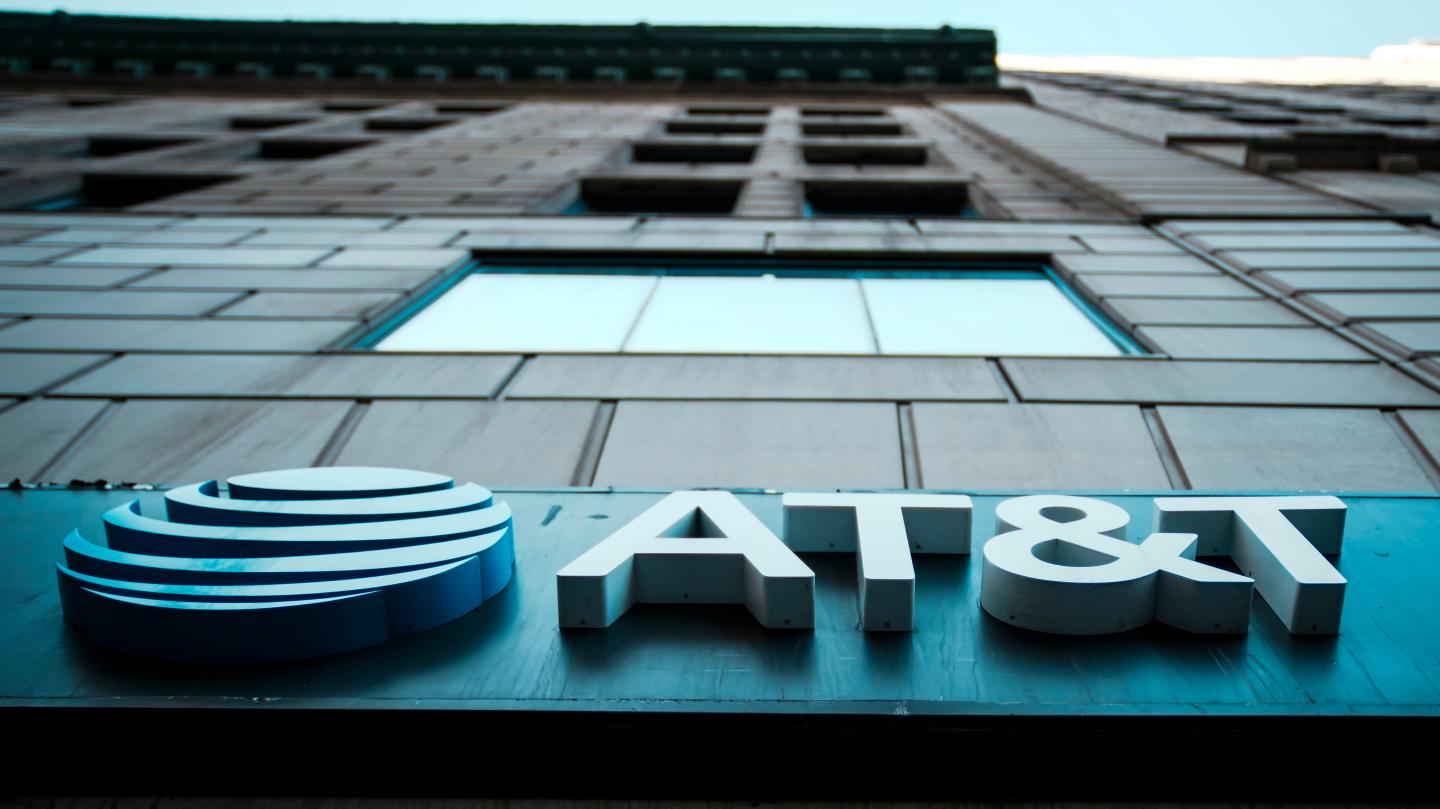
AT&T is staking $250 billion o transform from a legacy telecom utility into the essential physical highway for the AI era.
AT&T is staking $250 billion o transform from a legacy telecom utility into the essential physical highway for the AI era.VIEW press / Contributor

For generations, AT&T has occupied a familiar place in American business: the phone company, the network operator, the connective tissue behind much of daily communication. But in COO Jeff McElfresh’s telling, that description is no longer big enough. The company’s latest move, a sweeping $250 billion commitment through 2030 tied to fiber, 5G, resilience, public safety, workforce development, and AI era infrastructure, is meant to do more than reinforce its position in telecom. It is designed to position AT&T as the infrastructure layer beneath commerce and AI workloads.

Recommended Video

That ambition is framed internally not so much as a pivot but as an escalation. McElfresh describes the decision as a reaffirmation of a role the company has played for decades: investing in the systems that made the modern internet possible in the first place.

He argues that many people still misunderstand what the internet actually is, seeing only the services on top of it rather than the networks that connect servers, devices, and the end users and locations. It is also the pathway through which people and businesses reach cloud computing resources, data centers, AI workloads, and large language models.

That framing matters because it speaks to a deeper strategic question facing AT&T, and really every incumbent in an era defined by AI exuberance. Is the company still best understood as a traditional telecom operator, or is it becoming something more like a connectivity platform or essential digital infrastructure? McElfresh’s answer is expansive. “All the above,” he says.

AT&T remains a telecom company, but one whose future depends on blending wireless and fiber into a single connectivity platform. More than that, McElfresh is making the case that AT&T wants to be the essential network layer of the AI economy. “Our vision is that AT&T becomes the highway upon which commerce and AI workloads traverse,” he tells Fortune.

It is a remark that captures both the scale of the opportunity and the risk. In the AI economy, attention tends to flow toward model makers, chip designers, hyperscale cloud companies, and app developers. But none of those businesses operate in a vacuum. They depend on resilient, high-capacity networks that can quickly and reliably move vast amounts of data. If McElfresh is right, the winners in the next phase of AI will include both those building the intelligence and those building the roads.

From AT&T’s perspective, the company has already been laying the groundwork for that thesis. McElfresh, who has spent some 30 years at AT&T, points to a strategic refocusing over the past several years on its core business of connectivity and convergence, with the company investing heavily in high-performing fiber. Today, he says, AT&T has connected 36 million locations with fiber and aims to reach more than 60 million endpoints, spanning homes, apartment buildings, schools, and government facilities.

The scale of the physical project is striking. Every month, McElfresh says, AT&T is physically installing more than 3,300 miles of fiber optic cable, roughly the distance from New York to Los Angeles. That analogy cuts through the abstraction that often surrounds conversations about AI. Somebody still has to build the underlying network. Permits have to be filed, trenches have to be dug, fiber has to be laid, workers have to be hired, and capital has to be allocated.

That is where the AI narrative shifts from theoretical to operational. McElfresh argues that AT&T is not only building the infrastructure required for an AI-driven economy, but also using AI internally to improve its ability to do so. The company uses AI to support technicians during home visits, assist engineers in determining where to place cell sites, and optimize fiber deployment. He says those tools are already improving productivity and enabling more accurate capital allocation decisions than the company was making just a few years ago.

For all the anxiety surrounding AI’s impact on jobs, McElfresh frames the technology first as a productivity engine that augments work already being done. AI is also becoming part of the machinery that helps AT&T execute its enormous spending plan more efficiently.

The company is already seeing AI begin to alter how data moves across its systems. During the pandemic, AT&T watched remote work redirect network use from downtown business districts to suburban neighborhoods in real time. Now, in the AI era, AT&T is seeing more data fed into the network rather than simply pulled from it, as connected cars and AI-driven software systems upload video, images, and other information to train models or receive their next instructions.

That emerging reality requires AT&T to transform itself alongside the network it is expanding. And that is where one of the interview’s central tensions comes into focus. Spending $250 billion over a decade suggests ambition. Still, it also raises a classic corporate problem: How can a company with the scale and infrastructure footprint of a utility maintain the speed and adaptability of a tech firm?

McElfresh says the challenge is not new, noting that AT&T’s longevity over roughly 150 years has depended on its repeated ability to reinvent itself. He traces that evolution from copper-based voice service to data over copper, then to mobility, and now to fiber-optics and gigabit-speed connectivity.

Perhaps the clearest sign of AT&T’s seriousness about its AI plans is the accounting. McElfresh says that beginning in 2026, AT&T will separate its financial reporting into an advanced connectivity profit-and-loss statement and a legacy one, giving investors a clearer view of where future services are growing and where older parts of the business are shrinking. That move suggests a company trying to force discipline around transformation. Separate reporting creates visibility for investors and gives management a scoreboard, making it harder to hide behind the inertia of a mixed legacy-and-growth portfolio.

There is a cultural dimension to all of this that McElfresh returns to repeatedly. He is a second-generation AT&T employee and has spent roughly three decades at the company, a fact that seems to inform both his reverence for the institution and his impatience with complacency. Asked what a company with this much history needs to guard against if it wants to define the next era rather than merely preserve the last one, he answers without hesitation.

“It’s being too comfortable with maintaining the status quo and managing the company that you have today, as opposed to stepping forward with a clear lens on the market, what kind of competition or technology is orbiting around your industry, and charging ahead on that to go build the company you want.”

That, he suggests, is the central challenge behind AT&T’s infrastructure push. The risk is not any single threat. Cyber threats, infrastructure failures, and geopolitical disruptions are real, but familiar. What keeps McElfresh up at night is the organization’s pace. “What AI is doing to us as a publicly-traded company, as an industry, or just in general, is the expectation that we can all move at a quicker clock speed, which requires a little level of discomfort.”

That brings him back to the $250 billion commitment, which he describes as a bet that AT&T, as both a telecom company and a connectivity platform, will remain central to the future it is helping build.

Subscribe to Fortune Gulf Brief. Every Tuesday, this new newsletter will deliver clear-eyed, authoritative intelligence on the deals, decisions, policies, and power shifts shaping one of the world’s most consequential regions, written for the people who need to act on it. Sign up here.
About the Author
By Ruth UmohEditor, Next to Lead
LinkedIn icon

Ruth Umoh is the Next to Lead editor at Fortune, covering the next generation of C-Suite leaders. She also authors Fortune’s Next to Lead newsletter.

See full bioRight Arrow Button Icon

Latest in C-Suite

Finance
Lorem ipsum dolor sit amet, consectetur adipiscing elit, sed do eiusmod tempor incididunt ut labore et dolore magna aliqua. Ut enim ad minim veniam
By Fortune Editors
October 20, 2025
Finance
Lorem ipsum dolor sit amet, consectetur adipiscing elit, sed do eiusmod tempor incididunt ut labore et dolore magna aliqua. Ut enim ad minim veniam
By Fortune Editors
October 20, 2025
Finance
Lorem ipsum dolor sit amet, consectetur adipiscing elit, sed do eiusmod tempor incididunt ut labore et dolore magna aliqua. Ut enim ad minim veniam
By Fortune Editors
October 20, 2025
Finance
Lorem ipsum dolor sit amet, consectetur adipiscing elit, sed do eiusmod tempor incididunt ut labore et dolore magna aliqua. Ut enim ad minim veniam
By Fortune Editors
October 20, 2025
Finance
Lorem ipsum dolor sit amet, consectetur adipiscing elit, sed do eiusmod tempor incididunt ut labore et dolore magna aliqua. Ut enim ad minim veniam
By Fortune Editors
October 20, 2025
Finance
Lorem ipsum dolor sit amet, consectetur adipiscing elit, sed do eiusmod tempor incididunt ut labore et dolore magna aliqua. Ut enim ad minim veniam
By Fortune Editors
October 20, 2025

Most Popular

Finance
Lorem ipsum dolor sit amet, consectetur adipiscing elit, sed do eiusmod tempor incididunt ut labore et dolore magna aliqua. Ut enim ad minim veniam
By Fortune Editors
October 20, 2025
Finance
Lorem ipsum dolor sit amet, consectetur adipiscing elit, sed do eiusmod tempor incididunt ut labore et dolore magna aliqua. Ut enim ad minim veniam
By Fortune Editors
October 20, 2025
Finance
Lorem ipsum dolor sit amet, consectetur adipiscing elit, sed do eiusmod tempor incididunt ut labore et dolore magna aliqua. Ut enim ad minim veniam
By Fortune Editors
October 20, 2025
Finance
Lorem ipsum dolor sit amet, consectetur adipiscing elit, sed do eiusmod tempor incididunt ut labore et dolore magna aliqua. Ut enim ad minim veniam
By Fortune Editors
October 20, 2025
Finance
Lorem ipsum dolor sit amet, consectetur adipiscing elit, sed do eiusmod tempor incididunt ut labore et dolore magna aliqua. Ut enim ad minim veniam
By Fortune Editors
October 20, 2025
Finance
Lorem ipsum dolor sit amet, consectetur adipiscing elit, sed do eiusmod tempor incididunt ut labore et dolore magna aliqua. Ut enim ad minim veniam
By Fortune Editors
October 20, 2025
Fortune Secondary Logo
Rankings
  • 100 Best Companies
  • Fortune 500
  • Global 500
  • Fortune 500 Europe
  • Most Powerful Women
  • World's Most Admired Companies
  • See All Rankings
  • Lists Calendar
Sections
  • Finance
  • Fortune Crypto
  • Features
  • Leadership
  • Health
  • Commentary
  • Success
  • Retail
  • Mpw
  • Tech
  • Lifestyle
  • CEO Initiative
  • Asia
  • Politics
  • Conferences
  • Europe
  • Newsletters
  • Personal Finance
  • Environment
  • Magazine
  • Education
Customer Support
  • Frequently Asked Questions
  • Customer Service Portal
  • Privacy Policy
  • Terms Of Use
  • Single Issues For Purchase
  • International Print
Commercial Services
  • Advertising
  • Fortune Brand Studio
  • Fortune Analytics
  • Fortune Conferences
  • Business Development
  • Group Subscriptions
About Us
  • About Us
  • Press Center
  • Work At Fortune
  • Terms And Conditions
  • Site Map
  • About Us
  • Press Center
  • Work At Fortune
  • Terms And Conditions
  • Site Map
  • Facebook icon
  • Twitter icon
  • LinkedIn icon
  • Instagram icon
  • Pinterest icon

Latest in C-Suite

‘Employers are increasingly turning to degree and GPA’ in hiring: Recruiters retreat from ‘talent is everywhere,’ double down on top colleges
Future of WorkEducation
‘Employers are increasingly turning to degree and GPA’ in hiring: Recruiters retreat from ‘talent is everywhere,’ double down on top colleges
By Jake AngeloMay 9, 2026
6 hours ago
Protester at Jeffrey Epstein hearing
LawJeffrey Epstein
How Jeffrey Epstein leveraged a prestigious U.N.-affiliated nonprofit—and the Gates Foundation—to control women and keep them in his orbit
By Jessica MathewsMay 9, 2026
7 hours ago
Red flag test: former CEO explains why he rejects job candidates who say they can start right away
SuccessThe Interview Playbook
Red flag test: former CEO explains why he rejects job candidates who say they can start right away
By Orianna Rosa RoyleMay 9, 2026
7 hours ago
Qualcomm’s CEO is working with ‘pretty much all’ major AI players on top-secret devices—and powering OpenAI’s first push into hardware
AIQualcomm
Qualcomm’s CEO is working with ‘pretty much all’ major AI players on top-secret devices—and powering OpenAI’s first push into hardware
By Eva RoytburgMay 9, 2026
9 hours ago
‘If he tells you he can beat me, I’ll sue!’: Inside the $9 billion friendship between the CEOs of Amex and Delta
C-SuiteFinance
‘If he tells you he can beat me, I’ll sue!’: Inside the $9 billion friendship between the CEOs of Amex and Delta
By Shawn TullyMay 9, 2026
11 hours ago
Goldman Sachs’ tech boss says tracking individual AI usage isn’t useful. He just watches how fast his 12,000 engineers move from idea to production
AIBanks
Goldman Sachs’ tech boss says tracking individual AI usage isn’t useful. He just watches how fast his 12,000 engineers move from idea to production
By Marco Quiroz-GutierrezMay 8, 2026
1 day ago

Most Popular

California farmers must destroy 420,000 peach trees after Del Monte closes its canneries and cancels more than $550 million in long-term contracts
North America
California farmers must destroy 420,000 peach trees after Del Monte closes its canneries and cancels more than $550 million in long-term contracts
By Sasha RogelbergMay 7, 2026
2 days ago
A Michigan farm town voted down plans for a giant OpenAI-Oracle data center. Weeks later, construction began
Magazine
A Michigan farm town voted down plans for a giant OpenAI-Oracle data center. Weeks later, construction began
By Sharon GoldmanMay 6, 2026
4 days ago
The CEO of Maersk, which ships 14% of everything you buy, said the Iran war is adding $500 million in monthly costs it's trying not to pass down
Energy
The CEO of Maersk, which ships 14% of everything you buy, said the Iran war is adding $500 million in monthly costs it's trying not to pass down
By Sasha RogelbergMay 8, 2026
1 day ago
'Blue dot fever' plagues musicians like Post Malone, Meghan Trainor, and Zayn as a growing list of artists cancel tours due to lagging ticket sales
Arts & Entertainment
'Blue dot fever' plagues musicians like Post Malone, Meghan Trainor, and Zayn as a growing list of artists cancel tours due to lagging ticket sales
By Dave Lozo and Morning BrewMay 7, 2026
2 days ago
Current price of oil as of May 8, 2026
Personal Finance
Current price of oil as of May 8, 2026
By Joseph HostetlerMay 8, 2026
1 day ago
You're probably safe from the Hantavirus outbreak, but here's what you absolutely must not do, experts say
Politics
You're probably safe from the Hantavirus outbreak, but here's what you absolutely must not do, experts say
By Catherina GioinoMay 8, 2026
23 hours ago

© 2026 Fortune Media IP Limited. All Rights Reserved. Use of this site constitutes acceptance of our Terms of Use and Privacy Policy | CA Notice at Collection and Privacy Notice | Do Not Sell/Share My Personal Information
FORTUNE is a trademark of Fortune Media IP Limited, registered in the U.S. and other countries. FORTUNE may receive compensation for some links to products and services on this website. Offers may be subject to change without notice.