
• Home
  • Latest
  • Fortune 500
  • Finance
  • Tech
  • Leadership
  • Lifestyle
  • Rankings
  • Multimedia

Trendingnow

1

The millennial generation has split, new Fed research shows: Those over 35 are edging toward boomer-style wealth, while everyone else falls behind

2

Mark Cuban says he has the solution to growing income inequality, and it's to reward every employee—from CEO to janitor—with company stock

3

Scott Bessent casually says the U.S. has more than $1 trillion in gold—and that it doesn’t matter for the dollar

1

The millennial generation has split, new Fed research shows: Those over 35 are edging toward boomer-style wealth, while everyone else falls behind

2

Mark Cuban says he has the solution to growing income inequality, and it's to reward every employee—from CEO to janitor—with company stock

3

Scott Bessent casually says the U.S. has more than $1 trillion in gold—and that it doesn’t matter for the dollar
Economynational debt
Asia

The $39 trillion U.S. national debt isn’t as high as Japan’s and Singapore’s relative to economy size—and yet it’s still worse somehow

Sasha Rogelberg
By
Sasha Rogelberg
Sasha Rogelberg
Reporter
Down Arrow Button Icon
Sasha Rogelberg
By
Sasha Rogelberg
Sasha Rogelberg
Reporter
Down Arrow Button Icon
July 23, 2026, 11:10 AM ET
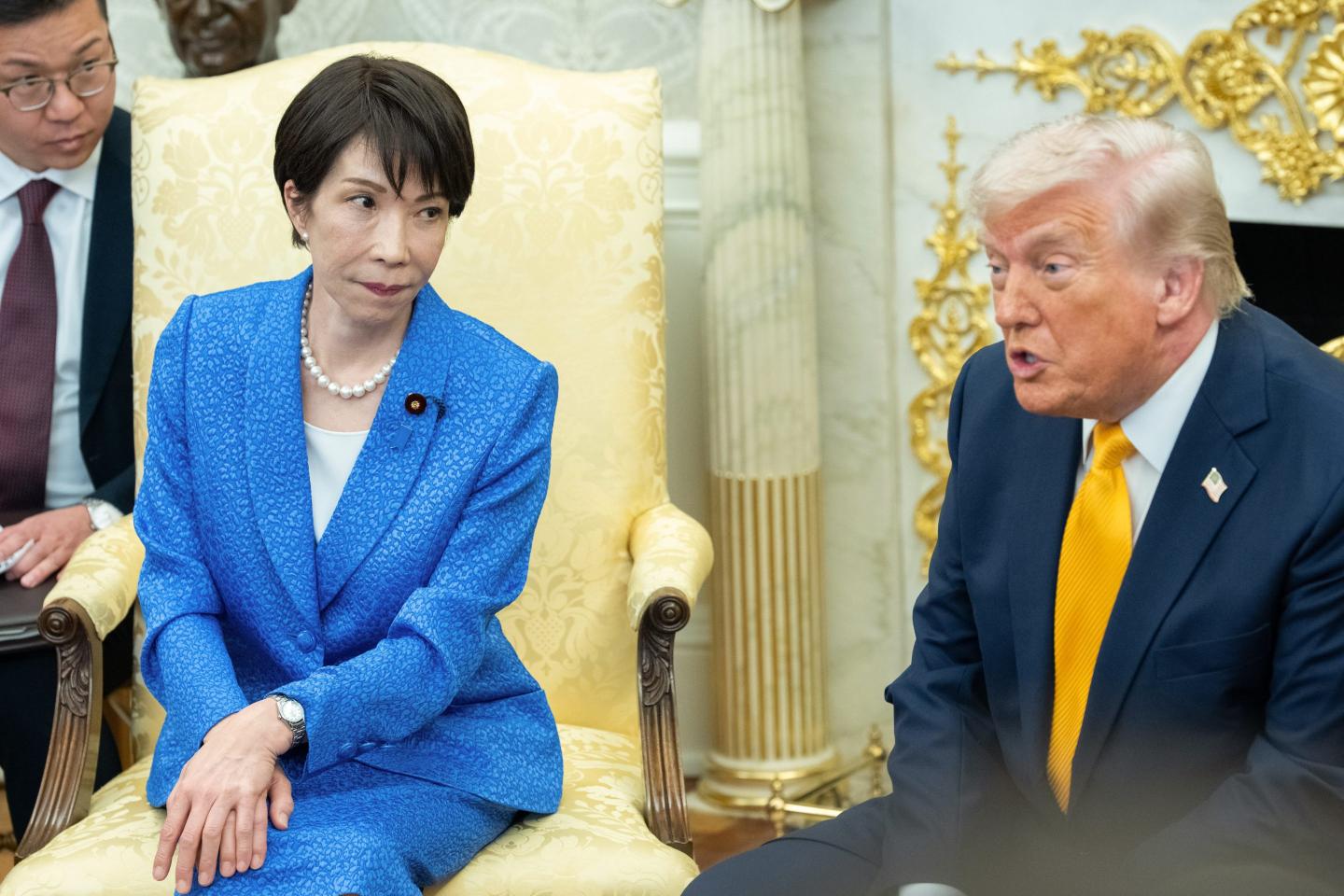
Japanese Prime Minister Sanae Takaichi and U.S. President Donald Trump sit in the Oval Office.
Japanese Prime Minister Sanae Takaichi and U.S. President Donald Trump during a White House visit in March.aron Schwartz/CNP/Bloomberg—Getty Images
Add Fortune on Google for similar content.

Statistics don’t always tell the full story, and the U.S. national debt is evidence as to why. 

Recommended Video

Despite its $39 trillion national debt, the U.S. barely cracks the top 10 in countries for debt relative to the size of their economies. While on the surface this may seem like a good thing, economists warn that actually, the U.S. still has more to worry about than even the countries with ballooning debt-to-GDP ratios.

The U.S. still has the largest national debt of any other country—with the total topping $39 trillion in May—more than double China’s $18.7 trillion debt, according to the most recent IMF World Economic Outlook data published in April. However, relative to the size of the economy, America’s debt ratio, about 126%, is still considerably smaller than Japan’s 204% and Singapore’s 172%. 

There’s no magic number for when a debt-to-GDP ratio becomes dangerous, but Japan’s 200% signifies that the country’s national public double is double the size of its economy. In other words, if a country were to devote all economic gains toward paying off its debt, it would still take two years to pay the debt down completely. 

Even with a lower 122% debt-to-GDP ratio, the U.S.’s borrowing is still greater than the size of its entire economy. Apollo chief economist Torsten Slok warned the staggering rate at which the U.S. is accumulating debt—about $7 billion per day—is atrophying the U.S.’s ability to respond to a recession. That’s because the U.S. can’t readily add stimulus to the economy, such as tax cuts or infrastructure spending, lest it goes deeper into the hole. But the Federal Reserve also can’t cut rates to incentivize borrowing because it runs the risk of hiking inflation and disrupting the demand balance for new bonds.

“The U.S. has never entered a recession with this little fiscal buffer,” Slok wrote in a blog post. “The standard recession playbook that growth slows, the Fed cuts, rates fall, and multiples expand breaks down when the sovereign borrower is already stretched.”

Yet economists aren’t sounding the alarm on Japan’s debt levels like they are with the U.S.—and others are calling foul on the use of debt-to-GDP ratio as a valid measurement of economic stability altogether.

Why Japan‘s debt is different from the U.S.

Japan has defied the logic of expanding its debt without toppling its economy primarily because of how its debt is structured. About 90% of the country’s government debt is held domestically, in local banks and insurance funds, meaning there are few foreign investors who could dump bonds in moments of global economic panic. Japan also has a household saving rate worth about one-third of the country’s GDP—double that of the U.S.—with households saving more aggressively for longer retirements, further reducing Japan’s reliance on overseas bondholders.

“Japan’s debt dynamics are fundamentally different from those of the United States,” Jack Salmon, a research fellow at the Mercatus Center at George Mason University, wrote in a Substack post. “Japan is the world’s largest creditor nation. The U.S. is the world’s largest debtor.” 

But just because Japan isn’t as vulnerable to a recession doesn’t mean it’s a perfect example of why debt can continue to balloon under the right circumstances. Japan’s yen is depreciating— exacerbated by the Iran war pushing up oil prices, U.S. inflation concerns, and increasing demand for the dollar—and long-term bond yields are increasing. To fight this inflation, Japan must increase interest rates, which also raises the cost of service debt. Prime Minister Sanae Takaichi intends to increase deficit spending to spark economic growth, but risks stoking inflation further.

“Japan was never a comforting counterexample to concerns about U.S. debt,” Salmon said. “The fact that even Japan is now testing the limits of debt tolerance should finally end the fantasy that advanced economies can borrow without consequence forever.”

Some economists have taken issue with the entire validity of debt-to-GDP as a viable measure of economic health. Stanford Graduate School of Business professor and economist Jonathan Berk said in an interview with the college the measure is similar to dividing a home mortgage balance by a year’s rental income; it ignores other variables like maintenance and insurance and doesn’t indicate if one can afford the mortgage in the first place.

“I don’t think it is necessarily the doomsday scenario that people paint,” he said. 

Subscribe to Fortune Gulf Brief. Every Tuesday, this new newsletter delivers clear-eyed, authoritative intelligence on the deals, decisions, policies, and power shifts shaping one of the world’s most consequential regions, written for the people who need to act on it. Sign up here.
About the Author
Sasha Rogelberg
By Sasha RogelbergReporter
LinkedIn iconTwitter icon

Sasha Rogelberg is a reporter and former editorial fellow on the news desk at Fortune, covering retail and the intersection of business and popular culture.

See full bioRight Arrow Button Icon
Add Fortune on Google for similar content.

Latest in Economy

Finance
Lorem ipsum dolor sit amet, consectetur adipiscing elit, sed do eiusmod tempor incididunt ut labore et dolore magna aliqua. Ut enim ad minim veniam
By Fortune Editors
October 20, 2025
Finance
Lorem ipsum dolor sit amet, consectetur adipiscing elit, sed do eiusmod tempor incididunt ut labore et dolore magna aliqua. Ut enim ad minim veniam
By Fortune Editors
October 20, 2025
Finance
Lorem ipsum dolor sit amet, consectetur adipiscing elit, sed do eiusmod tempor incididunt ut labore et dolore magna aliqua. Ut enim ad minim veniam
By Fortune Editors
October 20, 2025
Finance
Lorem ipsum dolor sit amet, consectetur adipiscing elit, sed do eiusmod tempor incididunt ut labore et dolore magna aliqua. Ut enim ad minim veniam
By Fortune Editors
October 20, 2025
Finance
Lorem ipsum dolor sit amet, consectetur adipiscing elit, sed do eiusmod tempor incididunt ut labore et dolore magna aliqua. Ut enim ad minim veniam
By Fortune Editors
October 20, 2025
Finance
Lorem ipsum dolor sit amet, consectetur adipiscing elit, sed do eiusmod tempor incididunt ut labore et dolore magna aliqua. Ut enim ad minim veniam
By Fortune Editors
October 20, 2025

Most Popular

Finance
Lorem ipsum dolor sit amet, consectetur adipiscing elit, sed do eiusmod tempor incididunt ut labore et dolore magna aliqua. Ut enim ad minim veniam
By Fortune Editors
October 20, 2025
Finance
Lorem ipsum dolor sit amet, consectetur adipiscing elit, sed do eiusmod tempor incididunt ut labore et dolore magna aliqua. Ut enim ad minim veniam
By Fortune Editors
October 20, 2025
Finance
Lorem ipsum dolor sit amet, consectetur adipiscing elit, sed do eiusmod tempor incididunt ut labore et dolore magna aliqua. Ut enim ad minim veniam
By Fortune Editors
October 20, 2025
Finance
Lorem ipsum dolor sit amet, consectetur adipiscing elit, sed do eiusmod tempor incididunt ut labore et dolore magna aliqua. Ut enim ad minim veniam
By Fortune Editors
October 20, 2025
Finance
Lorem ipsum dolor sit amet, consectetur adipiscing elit, sed do eiusmod tempor incididunt ut labore et dolore magna aliqua. Ut enim ad minim veniam
By Fortune Editors
October 20, 2025
Finance
Lorem ipsum dolor sit amet, consectetur adipiscing elit, sed do eiusmod tempor incididunt ut labore et dolore magna aliqua. Ut enim ad minim veniam
By Fortune Editors
October 20, 2025
Fortune Secondary Logo
Rankings
  • 100 Best Companies
  • Fortune 500
  • Global 500
  • Fortune 500 Europe
  • Most Powerful Women
  • World's Most Admired Companies
  • See All Rankings
  • Lists Calendar
Sections
  • Finance
  • Fortune Crypto
  • Features
  • Leadership
  • Health
  • Commentary
  • Success
  • Retail
  • Mpw
  • Tech
  • Lifestyle
  • CEO Initiative
  • Asia
  • Politics
  • Conferences
  • Europe
  • Newsletters
  • Personal Finance
  • Environment
  • Magazine
  • Education
Customer Support
  • Frequently Asked Questions
  • Customer Service Portal
  • Privacy Policy
  • Terms Of Use
  • Single Issues For Purchase
  • International Print
Commercial Services
  • Advertising
  • Fortune Brand Studio
  • Fortune Analytics
  • Fortune Conferences
  • Business Development
  • Group Subscriptions
About Us
  • About Us
  • Press Center
  • Work At Fortune
  • Terms And Conditions
  • Site Map
  • About Us
  • Press Center
  • Work At Fortune
  • Terms And Conditions
  • Site Map
  • Facebook icon
  • Twitter icon
  • LinkedIn icon
  • Instagram icon
  • TikTok icon
  • YouTube icon

Latest in Economy

t
EconomyWhite House
Trump dismissed affordability as a word ‘made up by the Democrats’ and promised oil would come ‘tumbling down’—then it hit $100 a barrel
By Nick LichtenbergJuly 23, 2026
1 hour ago
Japanese Prime Minister Sanae Takaichi and U.S. President Donald Trump sit in the Oval Office.
Economynational debt
The $39 trillion U.S. national debt isn’t as high as Japan’s and Singapore’s relative to economy size—and yet it’s still worse somehow
By Sasha RogelbergJuly 23, 2026
1 hour ago
glp
Commentaryobesity
The GLP-1 paradox: too expensive to cover, too effective to cut
By Bryan Sivak and Elina OnitskanskyJuly 23, 2026
5 hours ago
President Donald Trump makes a statement on the census with Secretary of Commerce Wilbur Ross (L) in the Rose Garden of the White House on July 11, 2019 in Washington, DC.
EconomyIran
Trump faces a catch-22 on Iran because of midterms, says his former commerce secretary: Face inflation furor or withdraw and look weak
By Eleanor PringleJuly 23, 2026
6 hours ago
Current price of Bitcoin for July 23, 2026
Personal FinanceCryptocurrency
Current price of Bitcoin for July 23, 2026
By Joseph HostetlerJuly 23, 2026
6 hours ago
Current price of oil as of July 23, 2026
Personal FinanceOil
Current price of oil as of July 23, 2026
By Joseph HostetlerJuly 23, 2026
6 hours ago

Most Popular

The millennial generation has split, new Fed research shows: Those over 35 are edging toward boomer-style wealth, while everyone else falls behind
Real Estate
The millennial generation has split, new Fed research shows: Those over 35 are edging toward boomer-style wealth, while everyone else falls behind
By Nick LichtenbergJuly 22, 2026
24 hours ago
Mark Cuban says he has the solution to growing income inequality, and it's to reward every employee—from CEO to janitor—with company stock
Success
Mark Cuban says he has the solution to growing income inequality, and it's to reward every employee—from CEO to janitor—with company stock
By Sasha RogelbergJuly 20, 2026
3 days ago
Scott Bessent casually says the U.S. has more than $1 trillion in gold—and that it doesn’t matter for the dollar
Economy
Scott Bessent casually says the U.S. has more than $1 trillion in gold—and that it doesn’t matter for the dollar
By Sasha RogelbergJuly 22, 2026
21 hours ago
Mathematicians grapple with a ‘very rapid and very unsettling change’ as AI cracks yet another century-old problem
AI
Mathematicians grapple with a ‘very rapid and very unsettling change’ as AI cracks yet another century-old problem
By Eva RoytburgJuly 21, 2026
2 days ago
Despite a $156 million contract, Knicks star Jalen Brunson still calls his parents for financial advice any time he makes a big purchase
Success
Despite a $156 million contract, Knicks star Jalen Brunson still calls his parents for financial advice any time he makes a big purchase
By Emma BurleighJuly 21, 2026
2 days ago
'The man who dies rich dies disgraced': The last time America had such wealth inequality, Andrew Carnegie knew he had to give it all away
Success
'The man who dies rich dies disgraced': The last time America had such wealth inequality, Andrew Carnegie knew he had to give it all away
By Nick LichtenbergJuly 22, 2026
24 hours ago

© 2026 Fortune Media IP Limited. All Rights Reserved. Use of this site constitutes acceptance of our Terms of Use and Privacy Policy | CA Notice at Collection and Privacy Notice | Do Not Sell/Share My Personal Information
FORTUNE is a trademark of Fortune Media IP Limited, registered in the U.S. and other countries. FORTUNE may receive compensation for some links to products and services on this website. Offers may be subject to change without notice.