
• Home
  • Latest
  • Fortune 500
  • Finance
  • Tech
  • Leadership
  • Lifestyle
  • Rankings
  • Multimedia

Trendingnow

1

Venezuela abandoning the bolivar and adopting the U.S. dollar would be the biggest currency switch since the advent of the euro, Hanke says

2

American billionaires are showing off their farmland for elaborate hobbies, but a buying spree among the ultrarich risks pricing farmers out

3

The Treasury's recent moves in the bond and currency markets add up to 'soft-form financial repression' to lower debt costs, economist warns

1

Venezuela abandoning the bolivar and adopting the U.S. dollar would be the biggest currency switch since the advent of the euro, Hanke says

2

American billionaires are showing off their farmland for elaborate hobbies, but a buying spree among the ultrarich risks pricing farmers out

3

The Treasury's recent moves in the bond and currency markets add up to 'soft-form financial repression' to lower debt costs, economist warns
AIInflation

AI’s productivity gains are years away, but if it doesn’t deliver, it could make unsustainable debt levels even worse, Deutsche Bank economist says

Sasha Rogelberg
By
Sasha Rogelberg
Sasha Rogelberg
Reporter
Down Arrow Button Icon
Sasha Rogelberg
By
Sasha Rogelberg
Sasha Rogelberg
Reporter
Down Arrow Button Icon
July 8, 2026, 3:00 AM ET
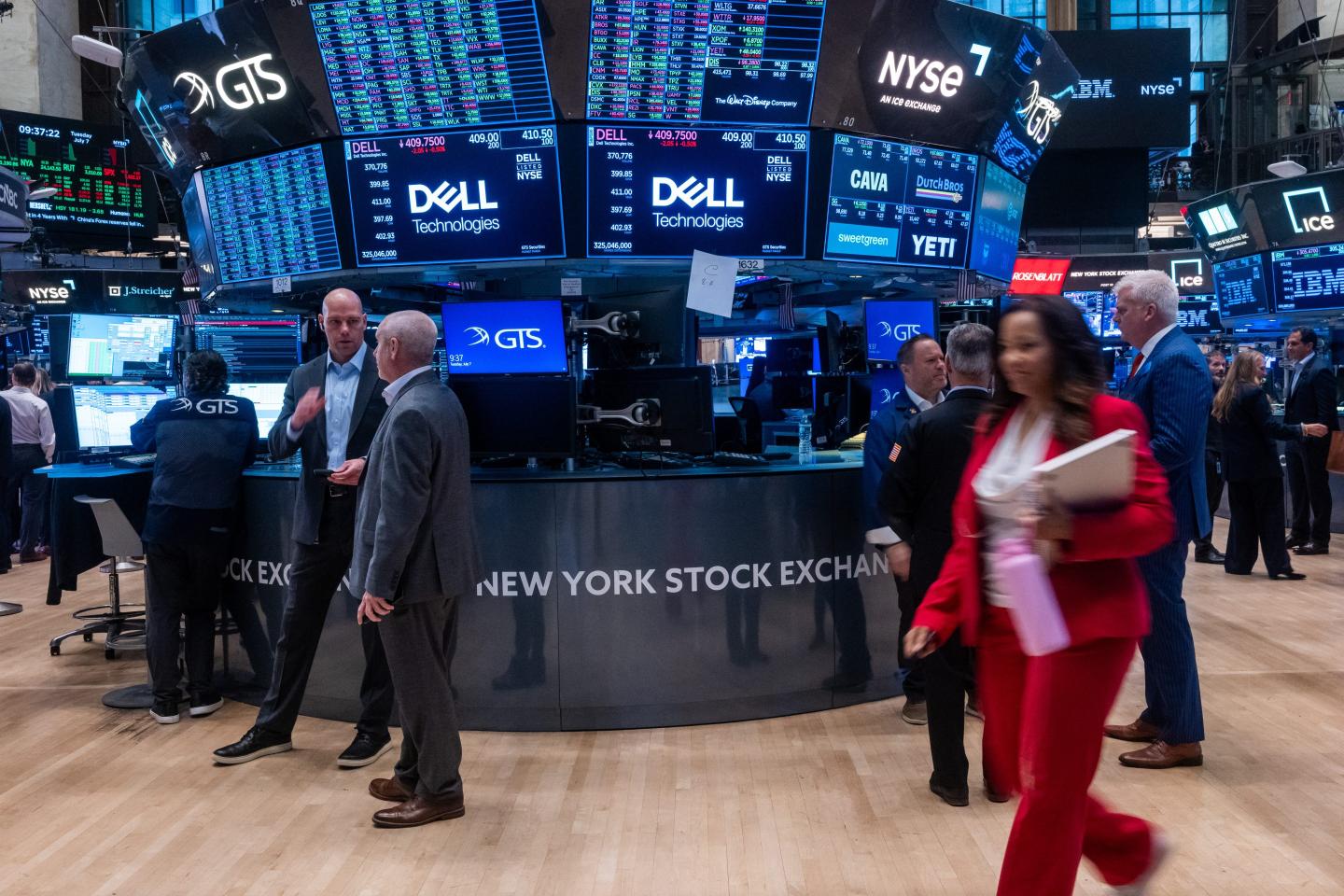
People work on the floor of the New York Stock Exchange (NYSE) on July 07, 2026 in New York City. The Dow was up slightly in morning trading after it closed Monday above 53,000 for the first time.
People work on the floor of the New York Stock Exchange (NYSE) on July 07, 2026 in New York City. The Dow was up slightly in morning trading after it closed Monday above 53,000 for the first time. Spencer Platt/Getty Images
Add Fortune on Google for similar content.

Economists are waiting for data to indicate AI has delivered on its promises of productivity gains, but that moment is likely years away, according to Jim Reid, Deutsche Bank Research Institute global head of macro and thematic research.

Recommended Video

Reid predicted that AI would, indeed, create new jobs and increase workplace efficiency, but said people are being a little overambitious in their timelines of when the technology will have a rippling impact on the economy.

“In my career I haven’t seen anything like AI in terms of potential for productivity,” Reid told Bloomberg Television on Tuesday. “But I would probably caution that it is going to take a number of years for us to properly embed it into enterprises to really get the benefits of that.”

Multiple economic indicators suggest that despite tech leaders touting AI’s ability to overhaul the workforce, there’s little evidence of its widespread impact so far. As of last month, the Yale Budget Lab noted no significant changes in occupational mix or length of unemployment for roles with high AI exposure, leading researchers to conclude no evidence of AI-related labor market disruptions. Apollo chief economist Torsten Slok noted in a recent blog post, citing Bloomberg and Macrobond data, that while profit margins for the Magnificent Seven increased from about 15% to 25% between the first quarters of 2023 and 2026, margins for the rest of the S&P 500 index were around 10% over the same period. The data suggests that while tech companies are able to more easily integrate new technology into their operations, other industries have been slow to deploy the technology, let alone see its benefits.

As investors continue to pour money into the Magnificent Seven, there’s increasing concern that AI may not offer quick returns on investment, leading to a “painful repricing” for financial markets that threaten to further decelerate the proliferation of AI, Slok warned.

“The bottom line is that a mismatch between current earnings expectations and the actual time firms need to generate ROI on AI investments could have significant implications for many AI company valuations today,” Slok said.

Reid’s read on the future of AI

Reid shares this concern. He said that AI will likely be inflationary in the short- and medium-term, and that if the technology fails to deliver on its promises despite hefty investments, it could worsen the already precarious levels of debt around the world. He pointed to data published last year by the Federal Reserve Bank of Dallas showing three outcomes for the future of AI: a modest increase in GDP as a result of productivity gains, skyrocketing productivity as AI gains superhuman capabilities, or human extinction as a result of an AI singularity.

“Everybody knows that debt levels aren’t sustainable for a lot of countries,” Reid said. “If you were trying to find hope, you would say that AI is a productivity miracle that you can grow into your debt, that would be the bullish view. I suppose the bearish view is that if anything lifts interest rates or long-term interest rates much above current levels, you start to get into kind of debt sustainability levels that just make no sense whatsoever.”

The economist, however, was optimistic about the eventual impact of AI, arguing humans have been effective at innovation for more than three centuries through a series of industrial revolutions. Tech CEOs like OpenAI’s Sam Altman and Anthropic’s Dario Amodei have recently likewise toned down their own promonitions of AI’s mass displacement of white-collar jobs, similarly saying the technology will transform, rather than roil, the nature of work.

“My view on AI and jobs is slightly skewed by what economic history tells us,” Reid said. “At every point of a new breakthrough in innovation, we’ve been really scared about jobs, about new technology destroying jobs, and it has never happened in aggregate.”

Fortune Daily breaks the traditional barrier between audience and newsroom. The show transforms Fortune’s trusted reporting into actionable, conversational, and entertaining insights for an emerging class of business leaders. Watch here.
About the Author
Sasha Rogelberg
By Sasha RogelbergReporter
LinkedIn iconTwitter icon

Sasha Rogelberg is a reporter and former editorial fellow on the news desk at Fortune, covering retail and the intersection of business and popular culture.

See full bioRight Arrow Button Icon
Add Fortune on Google for similar content.

Latest in AI


Most Popular

Fortune Secondary Logo
Rankings
  • 100 Best Companies
  • Fortune 500
  • Global 500
  • Fortune 500 Europe
  • Most Powerful Women
  • World's Most Admired Companies
  • See All Rankings
  • Lists Calendar
Sections
  • Finance
  • Fortune Crypto
  • Features
  • Leadership
  • Health
  • Commentary
  • Success
  • Retail
  • Mpw
  • Tech
  • Lifestyle
  • CEO Initiative
  • Asia
  • Politics
  • Conferences
  • Europe
  • Newsletters
  • Personal Finance
  • Environment
  • Magazine
  • Education
Customer Support
  • Frequently Asked Questions
  • Customer Service Portal
  • Privacy Policy
  • Terms Of Use
  • Single Issues For Purchase
  • International Print
Commercial Services
  • Advertising
  • Fortune Brand Studio
  • Fortune Analytics
  • Fortune Conferences
  • Business Development
  • Group Subscriptions
About Us
  • About Us
  • Press Center
  • Work At Fortune
  • Terms And Conditions
  • Site Map
  • About Us
  • Press Center
  • Work At Fortune
  • Terms And Conditions
  • Site Map
  • Facebook icon
  • Twitter icon
  • LinkedIn icon
  • Instagram icon
  • TikTok icon
  • YouTube icon

    Latest in AI


    Most Popular

    © 2026 Fortune Media IP Limited. All Rights Reserved. Use of this site constitutes acceptance of our Terms of Use and Privacy Policy | CA Notice at Collection and Privacy Notice | Do Not Sell/Share My Personal Information
    FORTUNE is a trademark of Fortune Media IP Limited, registered in the U.S. and other countries. FORTUNE may receive compensation for some links to products and services on this website. Offers may be subject to change without notice.