
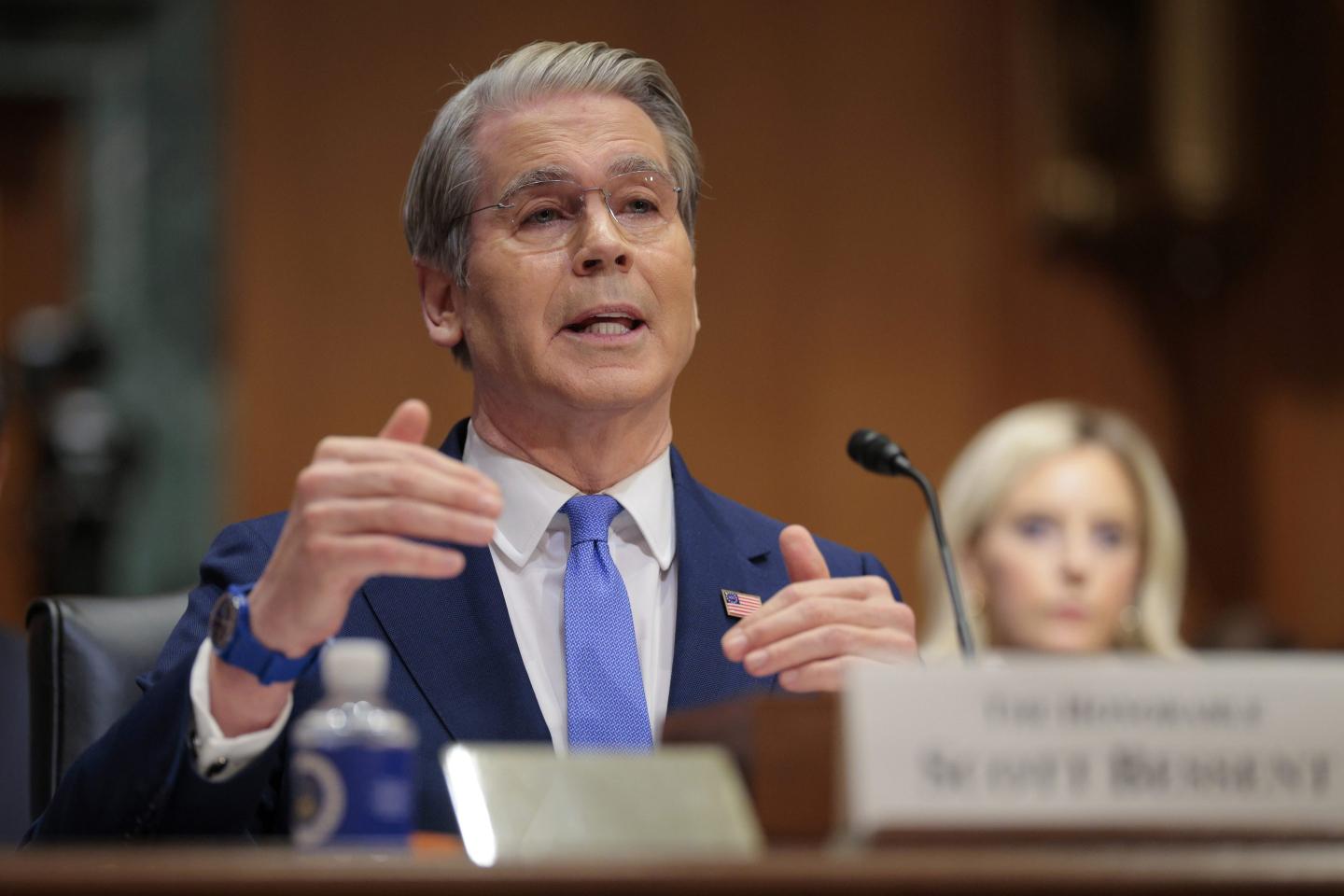
Testifying before the Senate Finance Committee on Wednesday, Treasury Secretary Scott Bessent leaned hard into a boom narrative, telling lawmakers the country is “having a manufacturing renaissance.”
He pointed to roughly 90,000 new non‑residential construction jobs tied to factories, a 50% expansion of Boeing’s plant in Charleston, S.C., that he said will translate into 1,000 high‑paying manufacturing jobs, new John Deere facilities in Indiana and North Carolina, and pharmaceutical companies reshoring production.
Taken together, it’s the picture of a genuine build‑out: Trade groups count more than 130 semiconductor‑related projects worth over $600 billion announced since 2020, while clean‑energy trackers show record battery and solar capacity coming online, heavily concentrated in a few states.
Bessent credited Trump’s Working Families Tax Cuts and full‑expensing provisions for tilting investment decisions in America’s favor, citing Winnebago’s choice to build a battery research facility in Florida after the tax code boosted its internal rate of return, which he said means more jobs in the “Sunshine State.”
On the other end of the financial spectrum, Apollo Global Management chief economist Torsten Slok has been telling clients a remarkably similar story, minus the partisan edge. In recent notes and presentations, Slok has argued the U.S. is in the midst of an “industrial renaissance,” driven by a wave of factory construction, mega-projects in semiconductors, batteries, and clean energy, and a multi‑year capital‑expenditure boom.
In his 2026 outlook, Slok placed industrial surge as a key “tailwind,” alongside AI investment and fiscal stimulus, as key reasons the economy has remained more resilient than expected, even after a bruising inflation scare and sharply higher interest rates. There’s just one problem: Where are most of the jobs?
A rare point of consensus
Where Bessent and Slok diverge is in how cleanly this renaissance story fits with the inflation backdrop. And while they agree a boom is in the making, the labor market tells a murkier story about who is benefitting. What neither side has fully resolved is why a so‑called renaissance still feels like stagnation—or worse—for many workers.
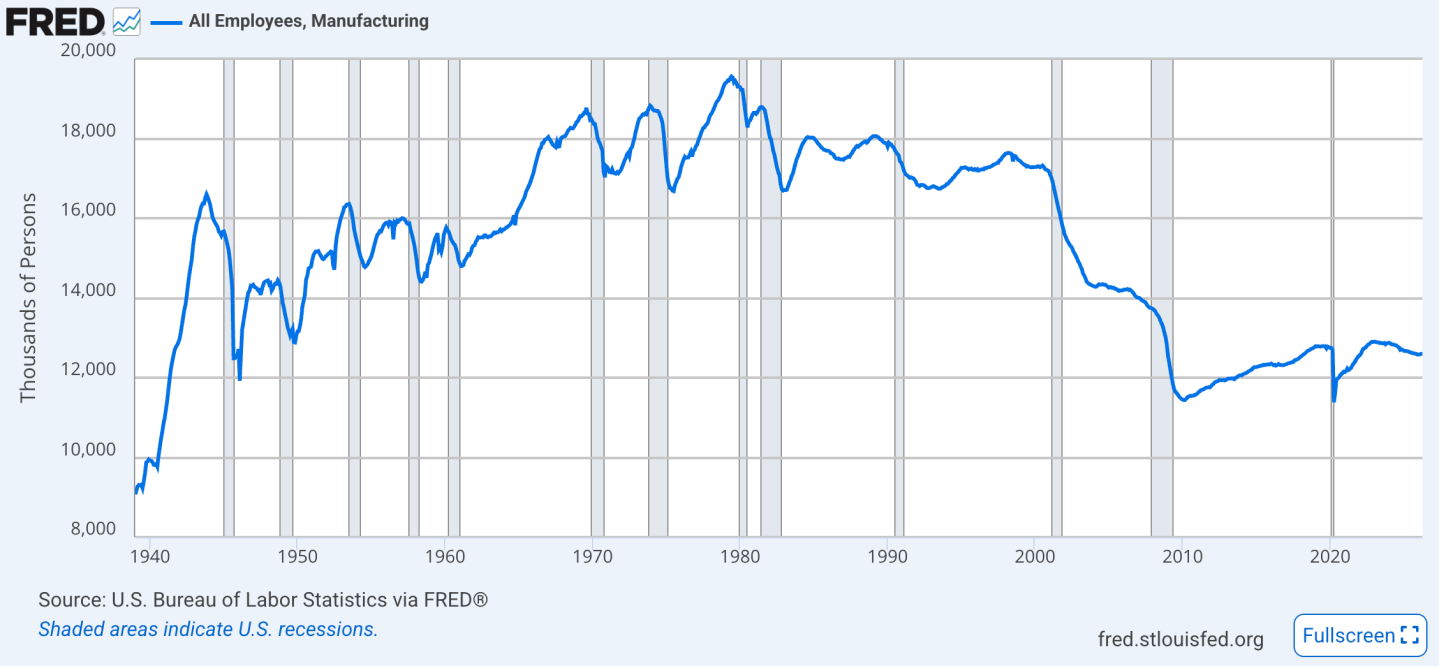
Manufacturing, despite Bessent’s anecdotes, is the key example, with employment in the sector today only slightly above its pre‑pandemic level, even after massive investment announcements, and BLS projections still show the sector’s share of total employment drifting down over the next decade. In fact, manufacturing saw persistent declines in 2024 and 2025 and fresh monthly declines this year, suggesting it feels really lousy at the early stages of the renaissance, especially for entry‑level workers shut out of the capital‑heavy projects they see in the headlines.
Part of the answer may be that the country is not just living through an industrial build‑out, but through a broader era of “jobless growth.” Goldman Sachs economists David Mericle and Pierfrancesco Mei argued last year “jobless growth is probably the new normal,” with solid GDP increasingly driven by productivity gains, AI adoption, and capital spending rather than broad-based hiring. In that world, a manufacturing renaissance can be real in capex, construction, and strategic capacity terms without producing anything like an old-fashioned employment surge. That sounds a lot like the “renaissance” seen by the Treasury Secretary and the chief economist.
It also helps explain why the labor market can look so weak underneath the crane shots. Goldman described a “low-hire, low-fire” economy in which hiring outside health care had turned net negative in recent months, younger workers were having a harder time finding jobs, and management teams were increasingly focused on using AI to streamline operations and cut labor costs. Those trends have persisted, and even worsened, since.
‘Short-term blip’ or structural issue?
On Capitol Hill, Bessent and Trump allies argue Biden‑era price spikes in housing, health care, and child care were larger and more persistent, and the new tax code is now giving working families breathing room. Republican questioning repeatedly returned to the idea tax cuts and deregulation are helping households cope with the cost of living rather than stoking a new inflationary spiral. In fact, Bessent told Congress—in direct response to a question on manufacturing jobs—he believes inflation will be a “short-term blip” and disagreed that the numbers on manufacturing were soft.
Slok sees the same investment wave but talks about inflation with more caveats. In his 2026 outlook, he has reduced his estimate of recession odds to around one in 10 and moved away from earlier warnings about stagflation, arguing sustained capital spending and industrial policy have made the U.S. economy more resilient than many feared. At the same time, he has emphasized large tariffs, persistent fiscal deficits and strong investment demand can keep upward pressure on prices and interest rates, even as headline inflation retreats from its peak.
In media appearances, Slok tends to describe a two‑track economy: an industrial and corporate sector “going great” thanks to data‑center build‑outs, energy, infrastructure, and defense, and a consumer sector that remains more sensitive to higher borrowing costs and the cumulative effect of past inflation.
Slok is more explicit than Bessent that a once‑in‑a‑generation investment boom carries a price: stronger trend growth and more strategic capacity, but also a higher‑for‑longer rate environment and inflation risks that cannot simply be dismissed as a “blip.”
Bessent is betting tax cuts, tariffs, and deregulation can deliver more factories and only a fleeting inflation hit. Slok is treating the same forces as a genuine tailwind—but one that comes with higher rates, stickier prices and a recovery whose benefits are unevenly shared. The unanswered question for both men is: a renaissance for who, exactly?