Sheryl Sandberg has a habit of joining tech firms before they become household names. She joined Google at roughly 250 employees and Facebook at 550. When Josh Payne set out to recruit her to the board of his AI infrastructure startup Nscale, it was a letter to his management team that convinced her she’d found another one.
“The only person I’d ever seen write like that was Mark [Zuckerberg],” Sandberg tells Fortune. “It was so clear, so thorough, but so big in its vision.”
Payne wants Nscale to become the “foundation layer” beneath the global AI market. He got Sandberg on board, along with former UK Deputy Prime Minister Nick Clegg and former Yahoo president Susan Decker. “I wanted a board that had experience building a trillion-dollar company,” says Payne, “because I believe that we can do the same.”

This board was another step in Nscale’s breakneck climb to the top of the UK’s AI scene. In just two years, the company has gone from a crypto-mining spinout to one of the most prominent companies in Europe’s AI data center push.
The company builds and operates computer centers and rents the processing power to firms that need to train and run large AI models. As Europe scrambles to close the gap with the U.S. in AI computing capacity, Nscale has become a vital part of the region’s bid to become a global player.
Such companies are being dubbed “neoclouds”: providers that build or finance AI-ready data centers and rent the computing power to anyone who needs it—from AI labs to governments. (Other well-known neoclouds include CoreWeave and Nebius.) Nscale’s pitch is that it locks in long-term access to cheap renewable energy, building its own data centers, and owning the hardware and software stack on top.
Like most neoclouds, Nscale is also piling on debt to fund its build-out. Since the start of 2026, the company has taken on a $1.4 billion GPU-backed loan and a $790 million financing facility in Norway. The only public accounts on record, covering the early stages of the business from seven months to December 2024, show a $24 million loss.
“You always have some negative commentators. But every dollar is backed by real revenues.”
Josh Payne, CEO, Nscale
Huge demand for data centers has made Nscale one of the most closely watched newcomers in Europe’s AI efforts, but it has also faced questions about whether its rapid rise and $14.6 billion valuation are built on solid foundations.
A rapid rise
Spun out of Arkon Energy in 2024, Nscale has become one of Europe’s best-funded AI bets.
Nscale has raised almost $4 billion from companies including Dell, Nokia, and Nvidia; signed sweeping contracts with several tech giants; and been dubbed a “national champion for AI infrastructure” by Nvidia CEO Jensen Huang. This year it closed a $2 billion Series C round at a $14.6 billion valuation, one of the largest amounts ever raised at this stage by a European company.
Nscale’s rapid rise has, in part, been bound up with Europe’s anxiety around its lagging AI build-out. But the company has plans for sites across the U.S. and has leaned heavily on American technology giants and customers for investment and reputation. Payne describes his ambitions as global and believes Nscale could become “the next great AI platform.” While today it may be a “picks and shovels” infrastructure company, he wants to move up the stack to deliver services.
Sandberg, meanwhile, defines her role as guiding the startup through the kind of global scaling challenge she has seen before. Her focus is on helping Payne build the company without slowing it down. She is advising on how to hire and structure teams and working to establish “the right systems that create the right controls.”

Nscale’s growth has required more than money and high-profile board members, however. It has also depended on proximity to the companies controlling the AI supply chain, particularly Nvidia.
The chipmaker is both an investor and a strategic partner, a relationship that has cemented Nscale’s reputation. Huang has been explicit about Nvidia’s role in this. “Neoclouds wouldn’t exist” without Nvidia’s support, Huang said on a recent podcast: “If we didn’t support Nscale, they wouldn’t be where they are today.”
The relationship also shows how interdependent the AI infrastructure ecosystem has become. Company accounts show Nvidia agreed to guarantee up to $860.3 million of Nscale’s obligations under a lease for a Texas facility—in exchange for warrants to acquire a stake in the company—where Nscale is deploying Nvidia chips for Microsoft. The arrangement has helped Nscale scale faster, while demonstrating how deeply young AI infrastructure companies are tied to the chipmaker’s success.
Europe’s AI build-out
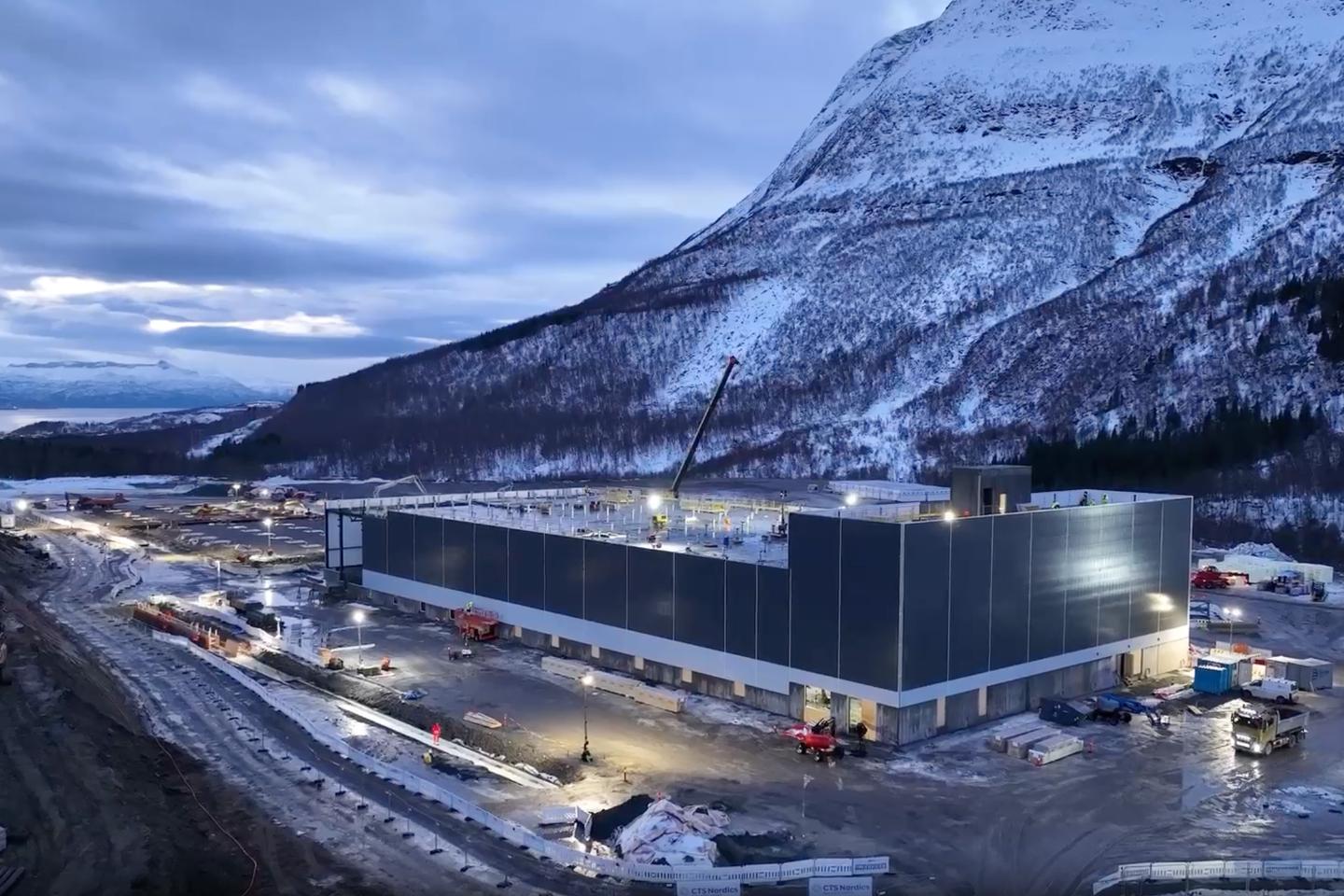
Nscale’s public European footprint now includes operational sites in Norway and Portugal, a planned AI campus in Narvik, Norway; multiple sites in the UK; and a large planned deployment in Iceland.
Europe is trying to build up its own computing power, in part to establish a stronger sense of AI sovereignty, and it’s easy to see why. As of May 2025, according to data from the research institute Epoch AI, the U.S. had three-quarters of the world’s AI computing power, with China in second place at around 15%. The EU, despite being home to some of the world’s largest economies, held less than 5%. That has started to feel like a strategic vulnerability.
But Europe’s ambition is running hard into physical limits. Grid connection queues in the continent’s most sought-after markets now stretch seven to 10 years on average, rising to 13 in the most congested cities. Ireland has imposed strict rules on new data center connections in Dublin, while the Netherlands and Frankfurt have effectively banned new connections until at least 2030. Researchers have warned that without reform, Europe’s AI ambitions could end up as costly stranded assets.
Energy is the core of Nscale’s pitch. When he founded the business, Payne went looking for “the lowest-cost renewable power in the world.” In Northern Norway, power is cheap and fully renewable. Instead of concentrating only in traditional data center hubs such as Frankfurt, Amsterdam, and Dublin, Nscale is betting on a more distributed network. In practice, says Philippe Sachs, Nscale’s president for EMEA and global affairs, this means large AI campuses in places such as Norway, combined with smaller national sites for sensitive or low-latency workloads.
A German customer, for example, might keep strictly regulated workloads (such as medical records or core banking systems) on servers in Germany, but push large training runs or less sensitive jobs to giant server farms in the Nordics. Sachs calls this a “federated” approach. “You need to reconcile the need for control with the need for competitiveness. For us, it’s a false binary,” Sachs says. “The pendulum has gone from one extreme to another, and the right solution is somewhere in the middle.”
Nidhi Chappell, Nscale’s president of AI infrastructure and a former Microsoft executive who helped build its global AI fleet, says Nscale has designed its stack to offer a spectrum of choices, so customers can decide how ‘sovereign’ they want to be—from having Nscale run the entire stack as a trusted operator to running the whole thing end-to-end themselves.
Stargate hits gridlock
One of Nscale’s most prominent deals was its involvement in Stargate, OpenAI’s global infrastructure push. Unveiled in January 2025, the initiative was pitched as a sprawling, half‑trillion‑dollar network of sites, from massive campuses in Texas to sovereign compute projects in the UK and Norway.
Nscale was part of the UK’s Stargate plans, which included 8,000 GPUs for OpenAI in an initial phase and potential expansion to 31,000 GPUs. In Norway, OpenAI said it had found the right conditions to bring Stargate to Europe through the project in Narvik, a site being developed by Nscale and Norwegian industrial investment group Aker.
But parts of the Stargate project have since begun to unravel, complicating some of Nscale’s most high‑profile deals. OpenAI paused Stargate UK, citing energy costs and regulatory uncertainty, and pulled back from plans to establish Stargate Norway. Microsoft has since stepped in to take additional capacity meant for OpenAI at the Narvik campus, and the Stargate branding has been removed, while Google has taken over the UK capacity meant for OpenAI, according to a source familiar with the company.
Beyond Stargate, Nscale is running into familiar questions about AI’s physical footprint. Pushback against data centers in Europe has not yet reached the intensity seen in some towns in the U.S., but the company is already facing scrutiny over how much power its sites will use.
Wins to be had
As spending on infrastructure continues to grow, there is a clear opportunity for Europe to get a slice of the action.
75%
of the world’s AI supercomputer performance is hosted by the U.S.
$7 trillion
total spending on AI data center infrastructure by 2030
Sources: Epoch AI, Analyst estimates
In Norway, Nscale’s projects have faced criticism from some politicians and political parties over its access to renewable energy. Critics, including representatives of the left-wing Red Party, argue that Norway’s abundant hydroelectric power should be prioritized for domestic industry and national digital infrastructure rather than large foreign-backed AI data centers.
In Loughton, Essex, where the company has promised to build a sovereign AI “supercomputer,” a recent Guardian report found that the site was still a working scaffolding yard even as ministers and company spokespeople touted it as soon-to-be one of the most powerful AI facilities ever built. Nscale initially hoped to complete the project by the end of 2026, but has since pushed this back to 2027. A spokesperson attributed the delay to technology upgrades.
Documents also show that council officials in Loughton have objected to a revised application for a significantly larger facility than originally approved, raising concerns about the site’s power demand, impact on the local grid, and noting at least two letters of objection from residents. Nscale said it was working closely with Epping Forest District Council, which is the decision-making planning authority, “on addressing the concerns of local consultees, residents, and stakeholders.”
A high-stakes bet
Companies like Nscale have been able to grow so quickly because the generative AI boom has created seemingly insatiable demand for specialized computing power.
For Big Tech customers, long-term contracts with neoclouds can secure capacity quickly while shifting some upfront cost and execution risk to third parties. For investors, the appeal is that these companies are not betting on a single AI company’s success, but on the assumption that the entire market will keep needing more compute.
That is also what makes the model risky. Neocloud providers remain exposed if demand weakens or key contracts are not renewed. While long-term deals can offer some protection, these companies are still responsible for financing and utilizing highly capital-intensive assets.
Sandberg says she was drawn to Nscale because data center infrastructure has become one of the most critical pieces of the AI build-out. But she also acknowledges that it now has to execute on complex physical infrastructure projects. “Nscale has done a lot to sign up incredible customers and has to do a lot to deliver. I think Josh is completely committed to making that happen,” she says. “These are big projects. They’re complicated projects.”
Analysts estimate total spending on AI data center infrastructure could reach $7 trillion by 2030, a figure that has fueled concern that parts of the market may be overspending.
“It’s essentially a bigger bet that the boom is going to work out, that all these centers will be built, and everyone is going to want to use all these GPUs,” says Olivier Darmouni, associate professor at business school HEC Paris. “The AI companies are fast at building data centers but slow at monetizing.”
That risk is especially acute in Europe, where power is more expensive than in the U.S. and where grid access and local opposition can slow projects before they are built. Michael Winterson, secretary general of the European Data Centre Association, believes Europe’s higher power costs do not mean the market disappears, but do mean fewer customers can make the returns work. “Neoclouds are a risky bet,” Winterson says. “They fulfill a lot of interesting purposes, such as a sovereignty issue for Europe, a risk-mitigation strategy for companies that are too single-customer centric. But they also take on a lot of risk.”
Betting on demand
Payne is confident that those who think AI infrastructure spending is running ahead of real demand will eventually be proved wrong.
He says the idea that AI is a bubble rests on the assumption that valuations are not backed by real revenue, which he sees “skyrocketing.”
“What we’re seeing is the largest infrastructure build-out in history,” Payne says. “You always have some negative commentators. But as far as I can see, every dollar is backed by real revenues, and demand far outweighs supply at the moment.”
Nscale is certainly not preparing to slow down. Over the next year, Payne wants the company to expand into multiple new European countries; support both the UK AI action plan and the EU AI gigafactory initiative; scale its North American organization; and push further into the Asia-Pacific region.
The bet is that the AI boom is only beginning and that the world’s largest tech companies will keep needing more power, land, and chips than they can build alone. Nscale has shown it can attract capital and customers at extraordinary speed. The test is whether it can turn that momentum into a lasting business.
This article appears in the June/July 2026: Europe issue of Fortune with the headline “The $14 billion startup racing to build Europe’s AI backbone.”