
Of the three companies that have ever installed investor-overriding mission guardians in a for-profit structure, one ended in spectacular failure, one already melted down once, and the third filed confidentially an IPO on Monday.
A new Harvard Law paper, AI Corporate Governance and Ben & Jerry’s Risk, by professor Jesse Fried and S.J.D. candidate Idan Reiter, lands not just as Anthropic enters the public markets but at a moment when OpenAI’s governance is under more scrutiny than ever. A federal jury ruled against Elon Musk’s lawsuit on May 18; former board members testified about being misled by CEO Sam Altman; and the company faces multiple wrongful death lawsuits alleging ChatGPT contributed to self-harm and violence. Meanwhile, OpenAI completed its conversion to a public benefit corporation last October, a restructuring Fried argues doesn’t solve the underlying problem.
The Ben & Jerry’s precedent
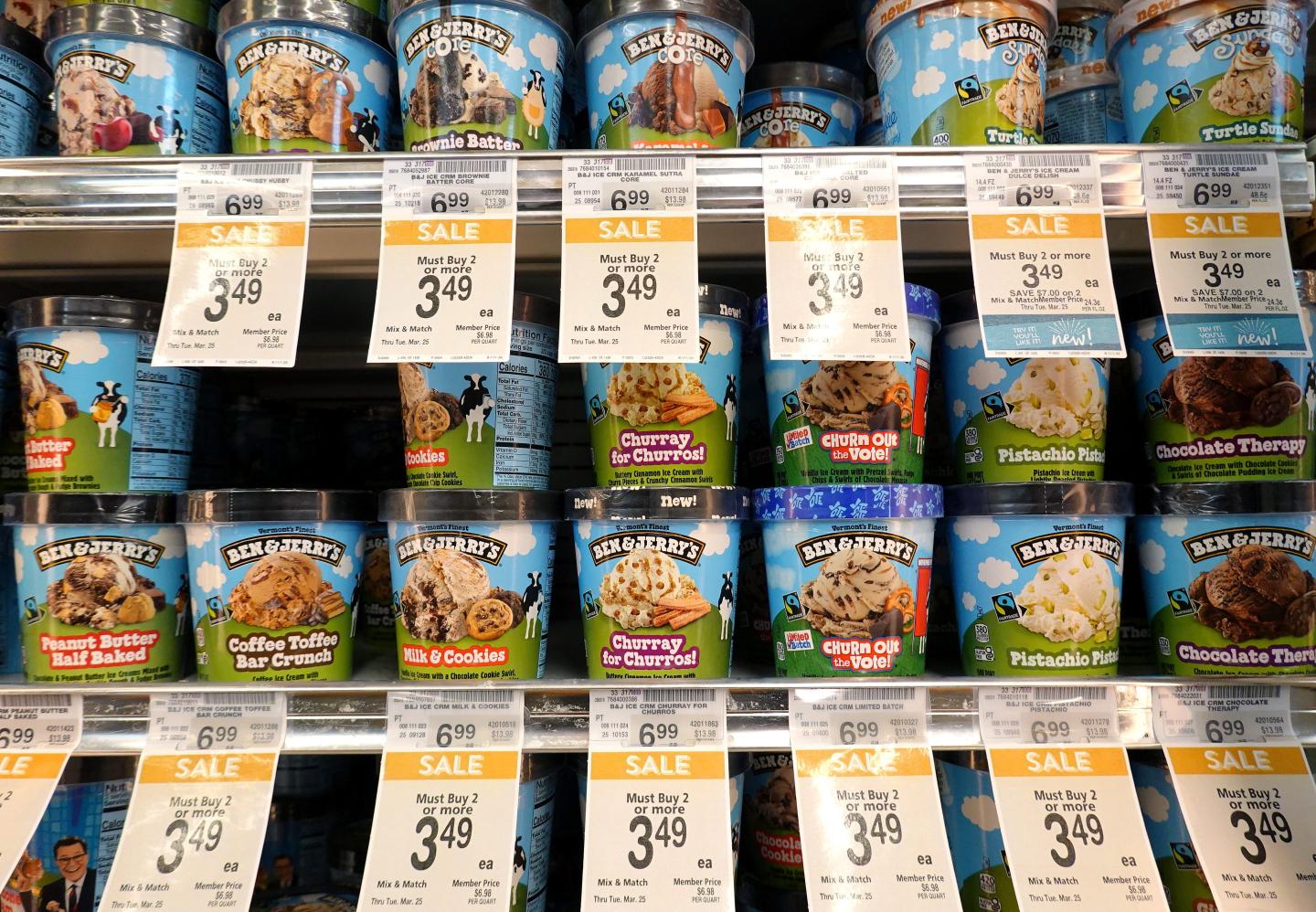
The paper’s authors call it the “Ben & Jerry’s risk,” or the danger that mission guardians will not only harm investors, but also achieve the exact opposite of what they set out to do. When Unilever acquired Ben & Jerry’s in 2000, it agreed to install self-perpetuating independent directors who could override Unilever to protect the brand’s social mission.
For two decades, tensions stayed behind closed doors. Then in 2021, the independent board announced it would not renew the license of Ben & Jerry’s Israeli licensee, over Unilever’s objections. Counterboycotts, state divestments, activist investor interventions, lawsuits, and the resignation of Unilever’s CEO all came next, just as the company lost billions in market value.
Fried and Reiter argue that the guardians’ actions backfired entirely. Unilever overrode the directors in 2022 and gave the Israeli licensee rights to sell Ben & Jerry’s in Israel and its controlled territories in perpetuity, which is exactly what the directors had tried to prevent. Unilever then spun off its ice cream businesses altogether, ensuring the guardians could never impose costs on the parent company again.
The parent company fired Ben & Jerry’s CEO after a battle of political issues, with Unilever at the time having “informed the Independent Board” of the change. This caused the brand’s namesake Jerry Greenfield to quit during the public dispute, and the July 2021 boycotts that ensued saw Unilever’s market cap dropping by $20 to $26 billion in the months that followed. The stock fell 8% in the first week alone, and was down more than a fifth over the following six months. More so, seven states (Florida, Texas, New York, New Jersey, Arizona, Illinois), divested pension fund holdings, totaling almost $1 billion.
“Basically these people could do whatever they wanted, no matter how much damage it would inflict on Unilever, and they couldn’t easily be removed,” Fried told Fortune. He called it “an ill-considered arrangement” that he assumed no one would ever replicate. Enter OpenAI.
OpenAI’s same structure and same problem
Before its 2025 restructuring, OpenAI had nonprofit directors controlling a for-profit subsidiary, the same architecture in a different industry. The board fired Sam Altman in November 2023, reportedly in part over safety concerns, which then led to nearly all of OpenAI’s 770 employees threatening to leave for Microsoft, thus forcing the board to reverse course. Altman returned, the safety-focused board members were pushed out, and prominent safety researchers eventually departed to start competing ventures.
“I’m not saying these people were bad people, or they did the wrong thing,” Fried said. “I’m just saying, if you look at it in retrospect, they not only put investors at risk but achieved the exact opposite of their mission, as they saw it. They thought that Sam Altman could not be trusted to lead a safe OpenAI. He’s still there. All the board members who cared about safety are gone. Leading AI researchers who were more concerned about safety have left. So it seems like overall safety has been harmed by the guardians’ attempt to increase safety.”
The paper argues those guardians both damaged investors and undermined the very mission they were appointed to protect.
The 2025 restructuring
OpenAI completed its conversion to a public benefit corporation in Oct. 2025, with the nonprofit, now called the OpenAI Foundation, retaining control through the power to appoint every director on the board. The Foundation’s Safety and Security Committee holds veto rights over safety-related decisions. On paper, mission governance survives.
“I make the argument that they’re not really constrained any more than the directors were constrained in 2023,” he said. The current board was selected by Altman himself. Nearly every Foundation director also sits on the board. Fried concedes that “they’re probably not going to do anything crazy” in the near term, but argues that governance structures need to be evaluated over decades, not based on the current cast of characters.
“When you’re building a governance arrangement, it has to work for the long term,” he said. “You have to look beyond who are the people there now, and imagine successors who are not as congenial. The world’s going to change. That’s what happened at Ben & Jerry’s.”
One detail that has drawn attention from critics: OpenAI removed the word “safely” from its mission statement during the restructuring. Fried considers this less significant than it might appear. “I think the removal of the word ‘safely’ from the mission statement is not that consequential,” he said. “The Foundation is still mandated by state attorneys general to focus on safety and security, and retains veto rights on those issues. I just don’t think it’s going to make a huge difference.”
What concerns him more is the structural trajectory heading into an expected IPO. “If OpenAI has difficulty pulling off an IPO at a reasonable valuation because of its structure, it wouldn’t surprise me if OpenAI goes back to the attorneys general and asks to have the October 2025 agreement modified,” he said. “Sam Altman seems to be quite effective at getting what he wants.”
Anthropic’s IPO and kill switch
On Monday, Anthropic confidentially filed for an IPO, beating OpenAI in a cat and mouse game of one-upmanship in recent months as the two companies continued to grow their valuations by the billions. Anthropic, the paper argues, is the better model, though not because it solved the underlying tension. Like OpenAI, Anthropic pairs a controlling mission entity (the Long-Term Benefit Trust) with a public benefit corporation. Save for one key difference: supermajority of Anthropic’s investors can terminate the Trust and remove the directors it appointed.
Fried said this kill switch is what makes the arrangement workable. “It puts a constraint on the guardians, because they don’t want to be thrown out,” he said. “If investors really don’t like what the guardians are planning to do, I expect the guardians will back off,” adding that “the guardians have some power and they use it to push things in a certain direction, but they can’t go too far.”
The Trust’s powers are also more limited than OpenAI’s Foundation. It can only nominate a majority of the board, not the entire board, and certain decisions require a supermajority at the board level, further diluting guardian control.
Still, Fried acknowledged a key caveat: Anthropic hasn’t been tested yet. The kill switch is a theory about what will happen under pressure. “If Anthropic works for 10 or 15 years, maybe somebody will use a structure like that again,” he said. “But otherwise I don’t see it.”
No one elected to have this structure
One of Fried’s most pointed observations is that OpenAI’s current governance wasn’t really chosen by anyone. “OpenAI didn’t choose its arrangement except for the initial nonprofit structure. After that choice was made, OpenAI was constrained in how it could evolve in response to the need for funds,” Fried said. “Once OpenAI needed funds, there was never a point in time where people looked at OpenAI’s for-profit arm and said, this is the best of all possible worlds. It’s like the best that could have been done, given the constraints.”
Anthropic, by contrast, was designed with intention. “They could have chosen whatever structure they wanted. They chose this structure,” Fried said, adding the arrangement carries real costs even when working as intended: “Instead of having just a founder CEO and investors make decisions, management and investors now also need to get buy-in from the Trust or the directors it appoints. In a fast-moving business, that can throw sand in the gears.”
And IPO ahead
Only three firms have ever installed investor-overriding mission guardians in a for-profit context. Ben & Jerry’s ended in what Fried and Reiter call a spectacular failure. OpenAI’s version has already melted down once and is structurally contested heading into an IPO. Anthropic’s is untested and comes with a kill switch that may render it moot under real pressure.
The paper notes that when safety-focused researchers like Ilya Sutskever and Mira Murati left OpenAI to found their own companies, neither adopted a guardian structure. The sample size is three, and of those, two have failed or been effectively neutered, and a third just filed for IPO.