• Home
  • Latest
  • Fortune 500
  • Finance
  • Tech
  • Leadership
  • Lifestyle
  • Rankings
  • Multimedia

Exclusive

An hour in the Oval Office with President Trump Fortune Editor-in-Chief: Alyson Shontell sat down with President Trump in the Oval Office for an hour. Tariffs, Intel, AI, Boeing, Iran—and the question every CEO eventually has to answer: who's next?

An hour in the Oval Office with President Trump Fortune Editor-in-Chief: Alyson Shontell sat down with President Trump in the Oval Office for an hour. Tariffs, Intel, AI, Boeing, Iran—and the question every CEO eventually has to answer: who's next?

An hour in the Oval Office with President Trump Fortune Editor-in-Chief: Alyson Shontell sat down with President Trump in the Oval Office for an hour. Tariffs, Intel, AI, Boeing, Iran—and the question every CEO eventually has to answer: who's next?

An hour in the Oval Office with President Trump Fortune Editor-in-Chief: Alyson Shontell sat down with President Trump in the Oval Office for an hour. Tariffs, Intel, AI, Boeing, Iran—and the question every CEO eventually has to answer: who's next?

An hour in the Oval Office with President Trump Fortune Editor-in-Chief: Alyson Shontell sat down with President Trump in the Oval Office for an hour. Tariffs, Intel, AI, Boeing, Iran—and the question every CEO eventually has to answer: who's next?

An hour in the Oval Office with President Trump Fortune Editor-in-Chief: Alyson Shontell sat down with President Trump in the Oval Office for an hour. Tariffs, Intel, AI, Boeing, Iran—and the question every CEO eventually has to answer: who's next?

An hour in the Oval Office with President Trump Fortune Editor-in-Chief: Alyson Shontell sat down with President Trump in the Oval Office for an hour. Tariffs, Intel, AI, Boeing, Iran—and the question every CEO eventually has to answer: who's next?

An hour in the Oval Office with President Trump Fortune Editor-in-Chief: Alyson Shontell sat down with President Trump in the Oval Office for an hour. Tariffs, Intel, AI, Boeing, Iran—and the question every CEO eventually has to answer: who's next?

An hour in the Oval Office with President Trump Fortune Editor-in-Chief: Alyson Shontell sat down with President Trump in the Oval Office for an hour. Tariffs, Intel, AI, Boeing, Iran—and the question every CEO eventually has to answer: who's next?

An hour in the Oval Office with President Trump Fortune Editor-in-Chief: Alyson Shontell sat down with President Trump in the Oval Office for an hour. Tariffs, Intel, AI, Boeing, Iran—and the question every CEO eventually has to answer: who's next?

EconomyFinance

Forget tariffs and the Iran oil shock—a top economist says the Fed is blind to the real inflation threat

Shawn Tully
By
Shawn Tully
Shawn Tully
Senior Editor-at-Large
Down Arrow Button Icon
Shawn Tully
By
Shawn Tully
Shawn Tully
Senior Editor-at-Large
Down Arrow Button Icon
May 19, 2026, 3:00 AM ET
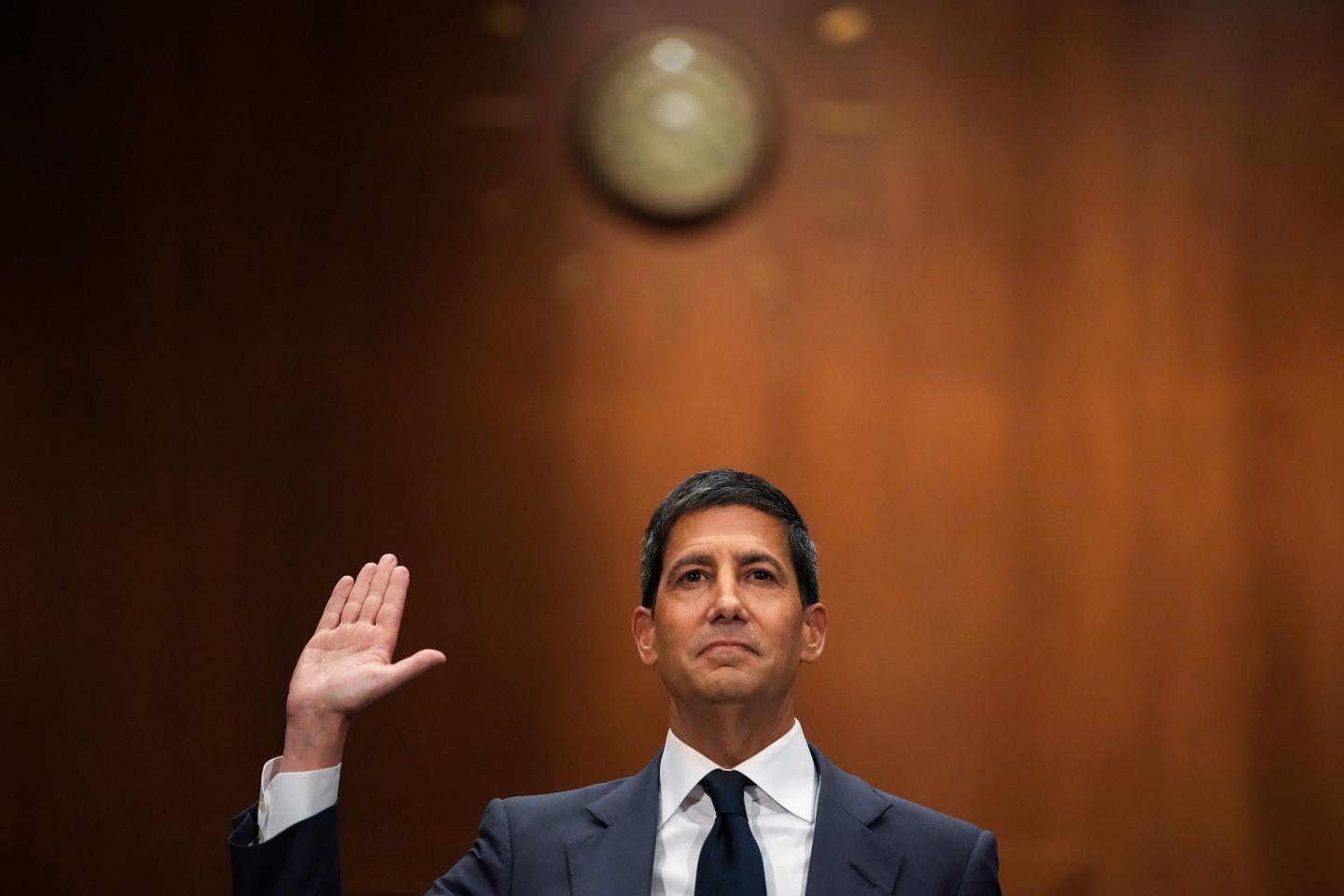
Kevin Warsh, U.S. President Donald Trump's nominee for Chair of the Federal Reserve, is sworn in to testify during his Senate Committee on Banking, Housing, and Urban Affairs confirmation hearing in the Dirksen Senate Office Building on April 21, 2026 in Washington, DC.
Kevin Warsh, U.S. President Donald Trump's nominee for Chair of the Federal Reserve, is sworn in on April 21, 2026.Andrew Harnik - Getty Images

The distressing inflation data just released raises the crucial question on whether all the good things we’re seeing in the economy—from a confident, big spending consumer to the roaring stock market to an explosion in capex for AI—can keep driving ahead. Is the surge in prices, and big rise in bond yields it’s triggered, really a temporary trend caused chiefly by the Iran war oil shock and the lingering pressure from the Trump tariffs?

Recommended Video

That’s the relatively optimistic stance just-exiting Fed Chairman Jerome Powell’s been taking. But a top monetary economist believes that Powell totally misread the signals, and that if the Central Bank doesn’t act fast, we could see a near-repeat of the inflationary scourge of 2021 and 2022. “Powell’s been saying the same thing he said then,” says William Luther, an associate professor at Florida Atlantic University. “He’s blaming everything on ‘transitory’ forces again, without using that word, just like he blamed inflation back then on supply chain disruptions. They weren’t the main problem then, and the tariffs and higher oil prices aren’t the chief culprit now. Even if those problems recede and nothing else changes, we won’t solve the inflation issue. The Fed needs to address the root cause. And that’s huge excess spending in the overall economy.”

Indeed, the recent numbers show a sharp shift from modest progress to a relapse towards the danger zone. Unveiled on May 12, the Labor Department’s Consumer Price Index report showed inflation rising a huge 0.6% in April, continuing a major uptrend that started with March’s reading of 0.9%. Those numbers are double to triple the average rise of 2.7% from December to February. Over the past 12 months, the index has leapt 3.8%, at almost twice the Federal Reserve’s 2.0% target. The following day, the Producer Price Index release suggested worse to come: The numbers companies are paying for raw materials and inputs surged 1.4% in April, three times the forecast and seven fold the reading from December.

For Luther, the real dynamic behind the recent spike couldn’t be more basic: The overall dollars America’s paying for goods and services is rising a lot faster than the quantities of cars, appliances, or hotel rooms we’re producing and supplying. “There’s a grain of truth in the tariffs and oil price argument,” he says. “But those price increases mainly take money away from what’s spent on other things, and don’t have a major impact on overall inflation. The fundamental problem is that more money is chasing the same number of goods. We have an aggregate demand issue, not a supply disruption issue.”

Luther explains that “aggregate demand” or “total spending” comprises all domestic expenditures by consumers, government, and businesses for everything from plants to inventories. So where is all this excess money coming from? A major source is a ramp in government spending: the CBO forecasts that federal outlays will rise a lofty 6% in FY 2026 (ended in September). An obvious contributor, also cited by Powell, is the king’s ransom being lavished on AI data centers, projected to reach almost $1 trillion this year, multiples of the number three years ago. To boot, consumers—especially the well-to-do—continue to spend big time on everything from dining out to health and wellness. The “wealth effect” from a stock market led by an S&P that’s gained 28% in the past year also likely emboldens folks to reach deeper into their wallets.

The data confirms Luther’s position. In the four quarters ended in March, GDP rose 2.66% on an annualized basis. As a reminder, that metric for national income measures the physical volumes of goods and services produced. But what about the trajectory of money available for pursuing what’s for sale in the supermarkets and auto lots? Total spending, or aggregate demand, rose at a jackrabbit 6%. That’s 3.34 points faster than output, and translates into inflation, pretty much matching the CPI numbers. And the just-released data suggests that the wave of excess money is waxing fast and unless checked, will put more upward pressure on those tabs at the checkout counter.

Luther charges that the Fed is passively loosening monetary policy, and needs to fashion a strategy that tames total spending

Luther points to a perverse result of Powell’s view that as during post-COVID period, it’s passing disruptions that account for the spikes. From October to December of last year, the Fed reduced its benchmark rate by half a point, from a range of 4.00% to 4.25%, to 3.50% to 3.75%. It hasn’t changed since. But since the start of January, the CPI’s gone from 2.6% to 3.8%, and the expected yearly inflation rate on the 5-year Treasury looking forward has increased by 0.42%. That inflation component explains the entire increase in what the 5-year is paying. What’s known as the “real rate” has actually fallen. “And it’s the real rate that influences economic decisions,” says Luther. Lower real rates encourage consumers and businesses to spend more, driving up prices, says Luther. The upshot “is that the Fed is actually loosening policy in the face of higher inflation. Just via math, when the Fed Funds rate stays the same, and inflation expectations rise by nearly 50 basis points, the real rate falls by 50 basis points, effectively creating an easier-money regime.”

“This a monetary policy failure going back to 2021,” declares Luther. “In the last couple of meetings, Powell kept saying that these transitory supply shocks will work themselves out. He didn’t comment on the actual principal source, the surge in overall spending.” The Fed’s primary responsibility, says Luther, is to keep that “aggregate demand” side steady, and instead, the Central Bank’s allowed it to run rampant. The things the Fed claims are causing inflation wouldn’t be sending the CPI higher had the Fed used its power over aggregate demand to combat them, Luther argues. “The Fed can see the increases in Federal spending from a mile away,” he says. “It’s the same with the trends in consumers spending. The Fed should project what Congress and households are going to do, and conduct policy accordingly, focusing on the necessary adjustments in overall spending needed offset places where it can see that spending’s going to rise.”

Luther’s not advocating a sudden increase in the Fed Funds rate. He believes the shift to sound strategy starts with communications, specifically, explaining the potential threats ahead, and that if they persist, what the Fed will do to overcome them. “Powell should have said that we’re seeing a big uptick in total spending, and we’re watching it and will respond to it,” Luther avows. “The communication has to be the opposite of the ‘no view on spending’ position we’ve seen.” He argues that suggesting inflation will abate when the war ends and oil starts flowing freely again fuels expectations that monetary policy will remain loose, and fails to address the spending problem.

Hence, in Luther’s toolkit, the first step is correctly identifying and explaining the real problem. “The Fed’s hung up on supply shocks,” he says. “The Fed first need to acknowledge what’s wrong in order to craft a good response. Once you recognize you have a spending problem, you have work to do.” What actions should the central bank take? The Fed should shift from passively loosening to effectively tightening via its statements about its future course. “The Fed should change its stated outlook towards a path to tightening,” says Luther. In his view, the Fed must explain that even if the war ends soon or tariffs aren’t ratcheted up any further, if it sees that factors such as the capex explosion and excess consumer spending persist, it won’t hesitate to tighten.

As always, Luther explains, the Fed has several options available to tackle the overall Big Spend. It can raise the Fed Funds rate, making borrowing more costly and curbing the lending that fuels expenditures as varied as auto purchases and new plant construction. Lifting the interest rates paid for deposits that banks park at the Fed would entice lenders to divert dollars from checking and savings accounts to the Central Bank, curbing the loan portfolios that fuel expenditures across the economy. Or, the Fed could embrace quantitative tightening, where it sells mortgages and Treasuries from its balance sheet, soaking up funds that would otherwise get spent.

On the plus side, Luther is cautiously optimistic that Kevin Warsh, who replaced Powell as Fed Chair on May 15, will steer a substantially better course than his predecessor—by in part making it a top priority keep aggregate demand on a steady course. “He’s a great pick,” says Luther. “He has great knowledge of financial markets, and it’s hard to imagine that inflation would have gotten as high under his leadership as it did under Powell’s.” Luther notes that Warsh has advocated shrinking the Fed’s oversized balance sheet, a move that would move money in the right direction, from consumption to investment––though he adds that the new Chair hasn’t specified how big the purchases would be, or how fast they’d come.

A potential spoiler, he adds, is Powell’s continued service on the Fed’s Board of Governors. “He says he’ll keep a low profile,” Luther warns, “but the deference to Powell won’t disappear. It’s reasonable to think he’ll have a bigger than average voice in setting policy on the Open Market Committee.”

It should worry all consumers and investors that so far, the return of Big Inflation’s gotten the same response from the Fed as did during the early in 2021. As Luther argues, the Central Bank needs a radically different strategy this time. Kevin Warsh has all the right credentials to prove just the change agent whose time has come.

The CEO-in-Chief speaks. Fortune sits down with President Trump on tariffs, the Intel stake, Boeing's record orders, and what the markets should expect next. Read the interview
About the Author
Shawn Tully
By Shawn TullySenior Editor-at-Large

Shawn Tully is a senior editor-at-large at Fortune, covering the biggest trends in business, aviation, politics, and leadership.

See full bioRight Arrow Button Icon

Latest in Economy

Finance
Lorem ipsum dolor sit amet, consectetur adipiscing elit, sed do eiusmod tempor incididunt ut labore et dolore magna aliqua. Ut enim ad minim veniam
By Fortune Editors
October 20, 2025
Finance
Lorem ipsum dolor sit amet, consectetur adipiscing elit, sed do eiusmod tempor incididunt ut labore et dolore magna aliqua. Ut enim ad minim veniam
By Fortune Editors
October 20, 2025
Finance
Lorem ipsum dolor sit amet, consectetur adipiscing elit, sed do eiusmod tempor incididunt ut labore et dolore magna aliqua. Ut enim ad minim veniam
By Fortune Editors
October 20, 2025
Finance
Lorem ipsum dolor sit amet, consectetur adipiscing elit, sed do eiusmod tempor incididunt ut labore et dolore magna aliqua. Ut enim ad minim veniam
By Fortune Editors
October 20, 2025
Finance
Lorem ipsum dolor sit amet, consectetur adipiscing elit, sed do eiusmod tempor incididunt ut labore et dolore magna aliqua. Ut enim ad minim veniam
By Fortune Editors
October 20, 2025
Finance
Lorem ipsum dolor sit amet, consectetur adipiscing elit, sed do eiusmod tempor incididunt ut labore et dolore magna aliqua. Ut enim ad minim veniam
By Fortune Editors
October 20, 2025

Most Popular

Finance
Lorem ipsum dolor sit amet, consectetur adipiscing elit, sed do eiusmod tempor incididunt ut labore et dolore magna aliqua. Ut enim ad minim veniam
By Fortune Editors
October 20, 2025
Finance
Lorem ipsum dolor sit amet, consectetur adipiscing elit, sed do eiusmod tempor incididunt ut labore et dolore magna aliqua. Ut enim ad minim veniam
By Fortune Editors
October 20, 2025
Finance
Lorem ipsum dolor sit amet, consectetur adipiscing elit, sed do eiusmod tempor incididunt ut labore et dolore magna aliqua. Ut enim ad minim veniam
By Fortune Editors
October 20, 2025
Finance
Lorem ipsum dolor sit amet, consectetur adipiscing elit, sed do eiusmod tempor incididunt ut labore et dolore magna aliqua. Ut enim ad minim veniam
By Fortune Editors
October 20, 2025
Finance
Lorem ipsum dolor sit amet, consectetur adipiscing elit, sed do eiusmod tempor incididunt ut labore et dolore magna aliqua. Ut enim ad minim veniam
By Fortune Editors
October 20, 2025
Finance
Lorem ipsum dolor sit amet, consectetur adipiscing elit, sed do eiusmod tempor incididunt ut labore et dolore magna aliqua. Ut enim ad minim veniam
By Fortune Editors
October 20, 2025
Fortune Secondary Logo
Rankings
  • 100 Best Companies
  • Fortune 500
  • Global 500
  • Fortune 500 Europe
  • Most Powerful Women
  • World's Most Admired Companies
  • See All Rankings
  • Lists Calendar
Sections
  • Finance
  • Fortune Crypto
  • Features
  • Leadership
  • Health
  • Commentary
  • Success
  • Retail
  • Mpw
  • Tech
  • Lifestyle
  • CEO Initiative
  • Asia
  • Politics
  • Conferences
  • Europe
  • Newsletters
  • Personal Finance
  • Environment
  • Magazine
  • Education
Customer Support
  • Frequently Asked Questions
  • Customer Service Portal
  • Privacy Policy
  • Terms Of Use
  • Single Issues For Purchase
  • International Print
Commercial Services
  • Advertising
  • Fortune Brand Studio
  • Fortune Analytics
  • Fortune Conferences
  • Business Development
  • Group Subscriptions
About Us
  • About Us
  • Press Center
  • Work At Fortune
  • Terms And Conditions
  • Site Map
  • About Us
  • Press Center
  • Work At Fortune
  • Terms And Conditions
  • Site Map
  • Facebook icon
  • Twitter icon
  • LinkedIn icon
  • Instagram icon
  • Pinterest icon

Latest in Economy

College graduates sitting at commencement yell.
AIEducation
College students are booing commencement speakers celebrating AI, but the wave of hate hasn’t stopped them from using it to cheat on their exams
By Sasha RogelbergMay 19, 2026
2 hours ago
Environmental advocates and progressive lawmakers hold a rally in support of legislation that would put a moratorium on new data centers in the state on Wednesday, May 13, 2026, at the Capitol in Albany, N.Y.
AIData centers
Americans’ AI hate wave might just be gathering steam: Data centers could hike power costs in some states over 50% by 2030
By Tristan BoveMay 19, 2026
3 hours ago
Kevin Warsh, U.S. President Donald Trump's nominee for Chair of the Federal Reserve, is sworn in to testify during his Senate Committee on Banking, Housing, and Urban Affairs confirmation hearing in the Dirksen Senate Office Building on April 21, 2026 in Washington, DC.
EconomyFinance
Forget tariffs and the Iran oil shock—a top economist says the Fed is blind to the real inflation threat
By Shawn TullyMay 19, 2026
3 hours ago
Billionaire space founder says a simple kids marshmallow test can reveal if you’ll stay stuck in the middle class forever
SuccessBillionaires
Billionaire space founder says a simple kids marshmallow test can reveal if you’ll stay stuck in the middle class forever
By Orianna Rosa RoyleMay 19, 2026
3 hours ago
Interior view of the New York Stock Exchange
Economyinvestors
New York Fed warns about $69 trillion foreign investment ‘burden’ on U.S. economy
By Tristan BoveMay 18, 2026
14 hours ago
President Donald Trump speaks to the media aboard Air Force One on May 15, 2026.
EconomyDonald Trump
While Trump insisted the Iran war would end ‘soon,’ an account in his name was buying millions in oil, defense and gold
By Eva RoytburgMay 18, 2026
15 hours ago

Most Popular

The Bezos family just donated $100 million to help achieve one of Mayor Zohran Mamdani’s top campaign promises
Politics
The Bezos family just donated $100 million to help achieve one of Mayor Zohran Mamdani’s top campaign promises
By Jake AngeloMay 12, 2026
7 days ago
While Trump insisted the Iran war would end ‘soon,’ an account in his name was buying millions in oil, defense and gold
Economy
While Trump insisted the Iran war would end ‘soon,’ an account in his name was buying millions in oil, defense and gold
By Eva RoytburgMay 18, 2026
15 hours ago
Current price of oil as of May 18, 2026
Personal Finance
Current price of oil as of May 18, 2026
By Joseph HostetlerMay 18, 2026
20 hours ago
EXCLUSIVE: An hour in the Oval Office with the CEO-in-Chief, President Trump
Politics
EXCLUSIVE: An hour in the Oval Office with the CEO-in-Chief, President Trump
By Alyson ShontellMay 18, 2026
1 day ago
Microsoft AI chief gives it 18 months—for all white-collar work to be automated by AI
AI
Microsoft AI chief gives it 18 months—for all white-collar work to be automated by AI
By Jake AngeloMay 16, 2026
3 days ago
Spirit Airlines apologizes to all the Americans who can't afford any summer vacation flights as it shuts down
Travel & Leisure
Spirit Airlines apologizes to all the Americans who can't afford any summer vacation flights as it shuts down
By Rio Yamat and The Associated PressMay 18, 2026
20 hours ago

© 2026 Fortune Media IP Limited. All Rights Reserved. Use of this site constitutes acceptance of our Terms of Use and Privacy Policy | CA Notice at Collection and Privacy Notice | Do Not Sell/Share My Personal Information
FORTUNE is a trademark of Fortune Media IP Limited, registered in the U.S. and other countries. FORTUNE may receive compensation for some links to products and services on this website. Offers may be subject to change without notice.