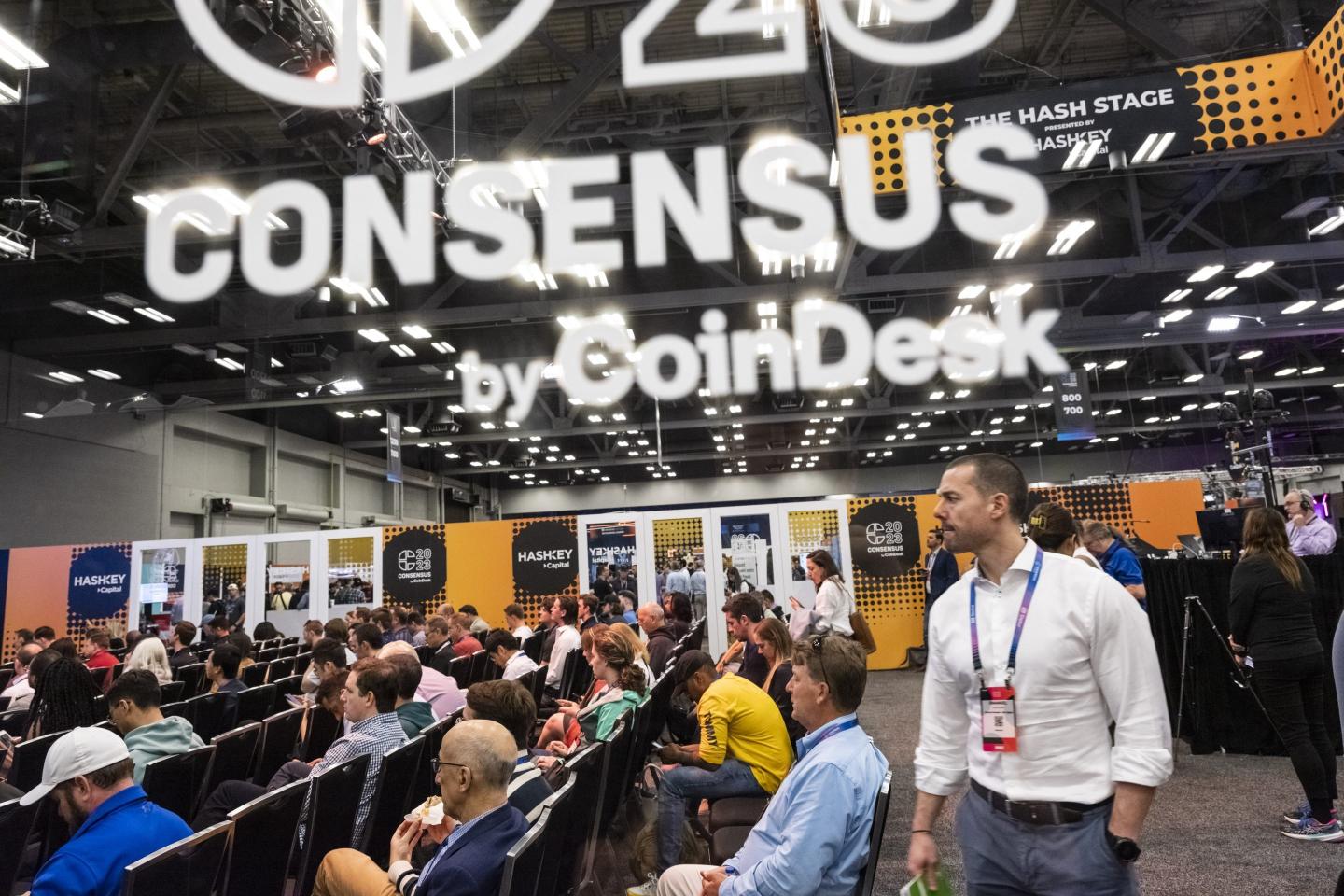
Crypto firms are rushing to distance themselves from a controversial party that capped a major industry event in Miami. The shindig, which took place on May 6 and coincided with the end of the Consensus conference, took place at a well-heeled night club called E11EVEN and featured female dancers performing pole routines and lap dances. Following reports of the raunchy atmosphere, crypto exchange OKX told the Financial Times it would be reconsidering its sponsorship of the conference.
“These kinds of immature and frankly borderline discriminatory events risk alienating exactly the communities the industry needs in order to continue growing,” OKX’s global head of corporate affairs Elliott Suthers told the FT. “We believe the industry should be moving towards greater professionalism, inclusivity and credibility, not away from it.”
Meanwhile, another big crypto firm called Consensys (which is a distinct and unrelated business from Consensus) said it “had no role” in the event and was reviewing its “partner selection and brand usage processes” after its logo appeared at the party.
Consenys is an infrastructure firm founded by Joseph Lubin, a co-founder of Ethereum. The company created MetaMask, one of the most-used wallets in crypto.
The event, for which attendees paid up to $6,000 and reportedly included a VIP networking area, was held at E11EVEN, a Miami night club sometimes frequented by celebrities. It’s also known as a strip club, and one picture taken by an attendee shows scantily clad women onstage in front of a screen bearing the logo of crypto news outlet CoinDesk, which is the organizer of the Consensus conference. CoinDesk did not return a request for comment
The critics of the event said the decision by Consensus to host an official after-party at E11EVEN will make it harder for the crypto industry to shake its “crypto bro” reputation and be taken seriously by the mainstream of finance. Brent Fulfer, co-founder of the crypto event firm that hosted the party, said on X that E11EVEN is a legal and licensed entertainment venue, the event drew 7,000 sign-ups, and “top executives from the biggest companies in the space were there.”
“That’s not ‘bro culture’ — that’s adults making adult choices,” Fulfer said.
E11EVEN is not a new location to the crypto-verse. In 2018, Bitcoin conference organizers rented out E11EVEN for a “networking party” before calling it a “misstep.” During a 2021 Bitcoin conference, someone brought out $500,000 in dollar bills in a bathtub to throw during a 50 Cent performance, the venue said. E11EVEN itself launched an NFT-based private membership club in 2022, though it’s unclear how active the club is.
The fallout from crypto’s latest run-in with the Miami night club comes at a critical juncture for crypto. The Clarity Act, a landmark piece of legislation that would create rules of the road for crypto firms in the U.S., just cleared a committee markup and is on its way to the Senate floor.
Technology firms like Stripe and Meta are integrating stablecoins, and financial institutions are broadening their crypto offerings. But for those assuming crypto’s emergence into the mainstream would tone down the space’s “degen” roots, it may be time to think again.
“Consensus – great attendance, high-spirited vibes, an insane amount of elaborate side events, tradfi everywhere,” Katherine Kirkpatrick Bos, general counsel of the crypto firm StarkWare, wrote on X. “On the closing party at a strip club, thanks, you’ve just made policy work – arguing that this industry isn’t a bunch of crypto bros – much, much harder.”