
• Home
  • Latest
  • Fortune 500
  • Finance
  • Tech
  • Leadership
  • Lifestyle
  • Rankings
  • Multimedia

Trendingnow

1

Former U.S. Secret Service agent says bringing your authentic self to work stifles teamwork: 'You don’t get high performers, you get sloppiness'

2

Former VP Kamala Harris says she went through a nine-hour interview to land the job—but she couldn’t escape ‘gold medal depression’ even when she won

3

NBC’s Tom Llamas climbed from 15-year-old intern to the top anchor chair—and still isn’t satisfied: ‘If you're not growing, you're dying'

1

Former U.S. Secret Service agent says bringing your authentic self to work stifles teamwork: 'You don’t get high performers, you get sloppiness'

2

Former VP Kamala Harris says she went through a nine-hour interview to land the job—but she couldn’t escape ‘gold medal depression’ even when she won

3

NBC’s Tom Llamas climbed from 15-year-old intern to the top anchor chair—and still isn’t satisfied: ‘If you're not growing, you're dying'
EnergyOil

One economist’s ‘radical idea’ to solve the biggest energy crisis in history: a reverse OPEC

Sasha Rogelberg
By
Sasha Rogelberg
Sasha Rogelberg
Reporter
Down Arrow Button Icon
Sasha Rogelberg
By
Sasha Rogelberg
Sasha Rogelberg
Reporter
Down Arrow Button Icon
May 2, 2026, 5:46 AM ET
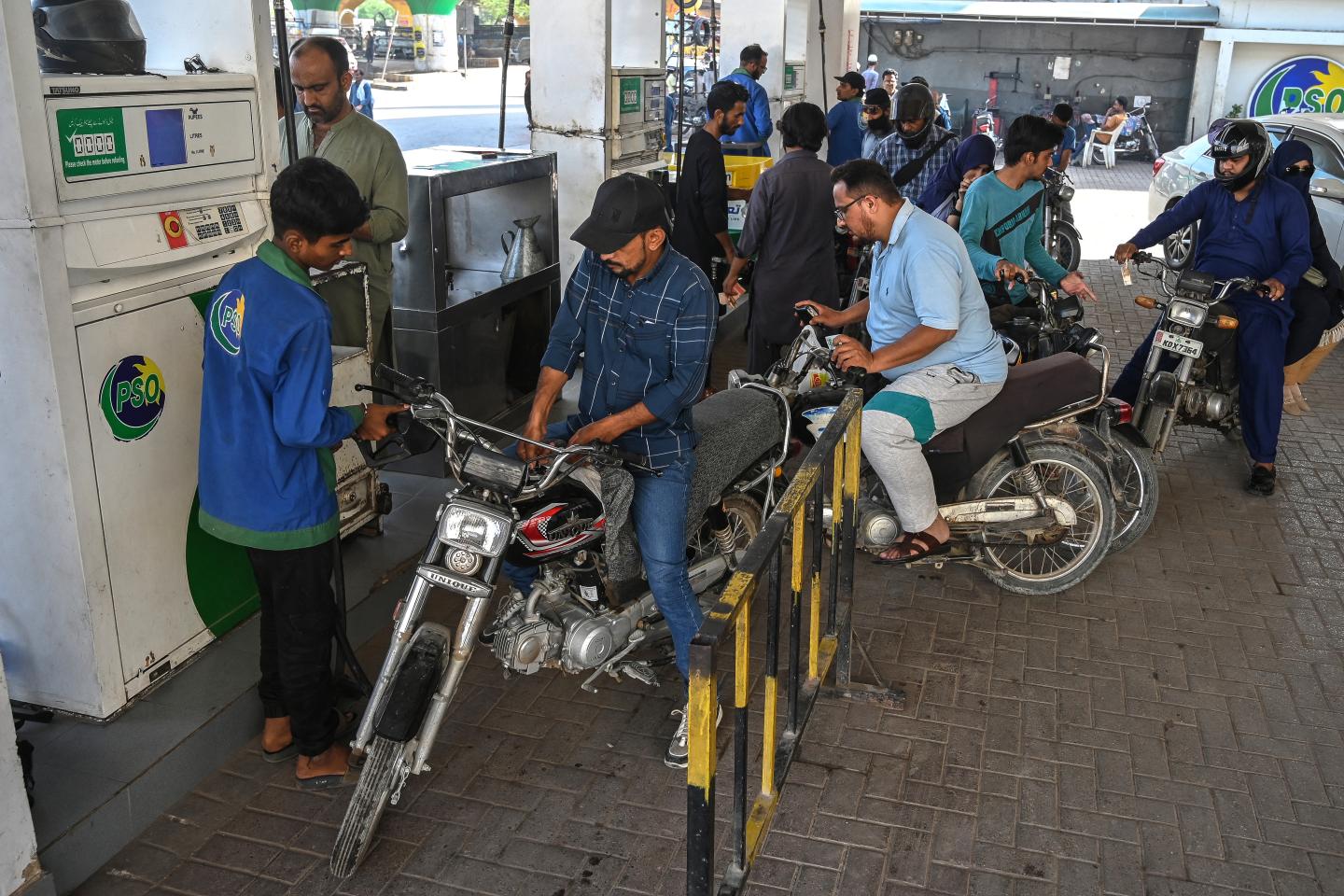
A group of people wait by a gap pump with their motorcycles.
Countries like Pakistan are days away from critical oil shortages amid the ongoing Iran war.Rizwan TABASSUM/AFP—Getty Images
Add Fortune on Google for similar content.

The world is facing the largest energy crisis in modern history—and the U.S. may be the country with the most power to do something about it. Oil exports are projected to slow by 1.5 million barrels per day in the second quarter of 2026, leaving Pakistan, Indonesia, and the Philippines within days of running out of gasoline and crude oil. The International Energy Agency warned last month that Europe has “maybe six weeks or so (of) jet fuel left,” which would force airlines to cancel flights or hike fares.

Recommended Video

For University of Massachusetts Amherst economist Gregor Semieniuk, the crisis makes a compelling case for the U.S. to lead a departure from the free-market philosophy that has governed oil distribution for more than 40 years.

“People on Wall Street and commodity traders will tell you that if you interfere, it’s going to make things worse; you will have shortages,” he told Fortune. “That may all be true …. But this is the biggest energy crisis the world has experienced in modern times—even larger than in the ‘70s in terms of quantity. Maybe it’s time for a different approach in such an emergency.”

A ‘radical idea’ with historical roots

Semieniuk suggested a potential easing of the oil shock could come from a “radical idea” compared to how the market currently functions. He and his UMass colleague and economist Isabella Weber developed what amounts to a reverse OPEC: a buyers’ coalition in which oil-importing nations would collectively corner the market and press exporters like the U.S. to sell at more affordable prices, rather than allowing a bidding war to drive costs out of reach for poorer countries. A price ceiling on oil would inhibit that bidding war and curb inflation.

The concept would invert the dynamic that the world has accepted for 65 years. OPEC was itself considered a radical intervention when it was founded in 1960—a cartel of producing nations that coordinated supply to wrest price control away from Western oil companies and consuming nations. Semieniuk’s proposal is the mirror image: consuming nations wresting price control back.

To be precise, OPEC controls production volumes, while this buyers’ club would control purchase price. The closest institutional precedent is the International Energy Agency itself, founded in 1974 explicitly as a consuming-nations counterweight to OPEC. The IEA’s coordinated strategic reserve releases, already deployed at record scale in 2026, are a form of collective buyer-side intervention. Semieniuk and Weber’s proposal would add a price ceiling on top of that existing architecture.

In 1981, President Ronald Reagan removed price controls on oil, a reversal of 1970s-era regulations following the oil shocks. The creation of West Texas Intermediate (WTI) futures two years later shifted the pricing of oil from not just a commodity, but also as an asset, weakening the power of Organization of the Petroleum Exporting Countries (OPEC) created two decades prior and establishing greater independence for the U.S.’s oil production. That framework—built explicitly has governed global oil for four decades.

Proponents of today’s free trade-leaning oil market have argued it’s an efficient system: Prices aren’t artificially determined, and it encourages less wasteful production and faster distribution. In nonwar times, Semieniuk argued, this may be the case, but with analysts suggesting the Strait of Hormuz will continue to be restricted into the second half of the year, without  a change, high-income countries will continue to outbid and price out poor countries from the market, exacerbating oil shortage in parts of the world that critically need it, and driving up prices globally.

The mechanics, he argues, are simpler than they sound: “Countries could actually get together and say, ‘Look, we know we have, we have a supply shortage, that’s true. But there is a crisis, and there’s a war, and there’s a blockade, and so on,” Semieniuk explained. “‘Maybe the market shouldn’t be the only mechanism by which we respond to this unprecedented crisis. Maybe governments should have a more active say in that.’”

Changing global framework

Though free trade dynamics have been at play in oil markets for decades, there’s been a shift over the past decade or so toward a mentality that trade is a “zero sum game,” according to Eswar Prasad, a Cornell University economics and trade policy professor. Today’s energy market dynamics mirror the pandemic-era distribution of vaccines, where wealthy countries stockpiled vaccines and personal protective equipment, while poorer nations were left with a dearth of supplies, Prasad noted. As the global economy rebounded from the pandemic, Russia’s invasion of the Ukraine led to international sanctions that once again priced lower-income countries out of natural gas markets, causing shortage and blackouts.

“Economics, domestic politics, and geopolitics have gotten stuck in this negative feedback loop where they sort of bring out the worst in each other,” Prasad told Fortune. “And what we’re seeing now is a perfect example of that phenomenon.”

This has not always been the case, even in the 21st century, Prasad noted. Following the 2007 global financial crisis, the G20 agreed to lower interest rates and participate in currency swap lines with the U.S. Federal Reserve to give international players access to dollars at the foundation of international transactions, though its efforts weren’t a panacea for total financial recovery.

But supercharged by the Trump administration’s advocacy of trade surpluses and tariffs, the U.S. has adopted the ethos that globalization is better for other countries than the U.S., Prasad argued. He said as a result, the U.S. in particular has been pushing allies away, in some cases to the deficit of other countries, or in the case of rising oil prices, sometimes itself.

The U.S.’s role in oil market interventions

As a wealthy country and net exporter of oil, the U.S. is poised to lead the charge of interventions to redistribute global oil, should it want to, Semieniuk said. The U.S. could lead the coalition of buyers, should oil exporters also participate. The U.S. achieved a record energy surplus of  9.3 quadrillion British thermal units in 2024, mostly as a result of oil and natural gas exports, creating an annualized energy trade surplus close to $100 billion.

With so much cash, the U.S. could also implement an excess profit tax, Semieniuk argued, noting oil companies like ExxonMobil and Chevron continue to be profitable, though less so than last year, and anticipate greater profits as oil prices rise. Democratic Sen. Bernie Sanders introduced legislation in 2022 to impose a 95% “windfall tax” on companies making more than $500 million in annual revenue, resurrecting a similar tax put in place during World War II to ensure private companies could not benefit from the war. 

“The U.S. is not the most affected country, except for the prices, but at least there are no shortages. We don’t have to worry whether tractors can still bring in the harvest and things like that,” Semieniuk said. “Things are a lot more dire in other countries right now.”

These excess profit taxes are not always as efficacious as proponents hope for. Between 2022 and 2024, the European Union raised about $26 billion through a windfall tax, far below the $140 billion in project revenue for these initiatives.

Against that backdrop, Semieniuk’s suggestion is pointed: OPEC has spent 65 years proving that a cartel of nations can reshape global energy markets. His question is whether the consuming world has the political will to do the same. 

“I think now maybe is the time to think about creative solutions and ways to alleviate suffering for ordinary people,” he said.

Subscribe to Fortune Gulf Brief. Every Tuesday, this new newsletter delivers clear-eyed, authoritative intelligence on the deals, decisions, policies, and power shifts shaping one of the world’s most consequential regions, written for the people who need to act on it. Sign up here.
About the Author
Sasha Rogelberg
By Sasha RogelbergReporter
LinkedIn iconTwitter icon

Sasha Rogelberg is a reporter and former editorial fellow on the news desk at Fortune, covering retail and the intersection of business and popular culture.

See full bioRight Arrow Button Icon
Add Fortune on Google for similar content.

Latest in Energy

Finance
Lorem ipsum dolor sit amet, consectetur adipiscing elit, sed do eiusmod tempor incididunt ut labore et dolore magna aliqua. Ut enim ad minim veniam
By Fortune Editors
October 20, 2025
Finance
Lorem ipsum dolor sit amet, consectetur adipiscing elit, sed do eiusmod tempor incididunt ut labore et dolore magna aliqua. Ut enim ad minim veniam
By Fortune Editors
October 20, 2025
Finance
Lorem ipsum dolor sit amet, consectetur adipiscing elit, sed do eiusmod tempor incididunt ut labore et dolore magna aliqua. Ut enim ad minim veniam
By Fortune Editors
October 20, 2025
Finance
Lorem ipsum dolor sit amet, consectetur adipiscing elit, sed do eiusmod tempor incididunt ut labore et dolore magna aliqua. Ut enim ad minim veniam
By Fortune Editors
October 20, 2025
Finance
Lorem ipsum dolor sit amet, consectetur adipiscing elit, sed do eiusmod tempor incididunt ut labore et dolore magna aliqua. Ut enim ad minim veniam
By Fortune Editors
October 20, 2025
Finance
Lorem ipsum dolor sit amet, consectetur adipiscing elit, sed do eiusmod tempor incididunt ut labore et dolore magna aliqua. Ut enim ad minim veniam
By Fortune Editors
October 20, 2025

Most Popular

Finance
Lorem ipsum dolor sit amet, consectetur adipiscing elit, sed do eiusmod tempor incididunt ut labore et dolore magna aliqua. Ut enim ad minim veniam
By Fortune Editors
October 20, 2025
Finance
Lorem ipsum dolor sit amet, consectetur adipiscing elit, sed do eiusmod tempor incididunt ut labore et dolore magna aliqua. Ut enim ad minim veniam
By Fortune Editors
October 20, 2025
Finance
Lorem ipsum dolor sit amet, consectetur adipiscing elit, sed do eiusmod tempor incididunt ut labore et dolore magna aliqua. Ut enim ad minim veniam
By Fortune Editors
October 20, 2025
Finance
Lorem ipsum dolor sit amet, consectetur adipiscing elit, sed do eiusmod tempor incididunt ut labore et dolore magna aliqua. Ut enim ad minim veniam
By Fortune Editors
October 20, 2025
Finance
Lorem ipsum dolor sit amet, consectetur adipiscing elit, sed do eiusmod tempor incididunt ut labore et dolore magna aliqua. Ut enim ad minim veniam
By Fortune Editors
October 20, 2025
Finance
Lorem ipsum dolor sit amet, consectetur adipiscing elit, sed do eiusmod tempor incididunt ut labore et dolore magna aliqua. Ut enim ad minim veniam
By Fortune Editors
October 20, 2025
Fortune Secondary Logo
Rankings
  • 100 Best Companies
  • Fortune 500
  • Global 500
  • Fortune 500 Europe
  • Most Powerful Women
  • World's Most Admired Companies
  • See All Rankings
  • Lists Calendar
Sections
  • Finance
  • Fortune Crypto
  • Features
  • Leadership
  • Health
  • Commentary
  • Success
  • Retail
  • Mpw
  • Tech
  • Lifestyle
  • CEO Initiative
  • Asia
  • Politics
  • Conferences
  • Europe
  • Newsletters
  • Personal Finance
  • Environment
  • Magazine
  • Education
Customer Support
  • Frequently Asked Questions
  • Customer Service Portal
  • Privacy Policy
  • Terms Of Use
  • Single Issues For Purchase
  • International Print
Commercial Services
  • Advertising
  • Fortune Brand Studio
  • Fortune Analytics
  • Fortune Conferences
  • Business Development
  • Group Subscriptions
About Us
  • About Us
  • Press Center
  • Work At Fortune
  • Terms And Conditions
  • Site Map
  • About Us
  • Press Center
  • Work At Fortune
  • Terms And Conditions
  • Site Map
  • Facebook icon
  • Twitter icon
  • LinkedIn icon
  • Instagram icon
  • Pinterest icon

Latest in Energy

The Fed is fed up with inflation and will bring down the hammer with a series of rate hikes this year, reversing earlier cuts, BofA says
EconomyFederal Reserve
The Fed is fed up with inflation and will bring down the hammer with a series of rate hikes this year, reversing earlier cuts, BofA says
By Jason MaJune 22, 2026
1 hour ago
Current price of oil as of June 22, 2026
Personal FinanceOil
Current price of oil as of June 22, 2026
By Joseph HostetlerJune 22, 2026
5 hours ago
Photo: President Trump
EnergyMarkets
Wall Street is more focused on what Iranian officials are saying than Trump’s war-threat tweets
By Jim EdwardsJune 22, 2026
8 hours ago
Dow futures drop as first day of U.S.-Iran talks sees Trump threaten Tehran on Hormuz: ‘You close it and you won’t have a country’
EnergyIran
Dow futures drop as first day of U.S.-Iran talks sees Trump threaten Tehran on Hormuz: ‘You close it and you won’t have a country’
By Jason MaJune 21, 2026
14 hours ago
Oil keeps flowing through Hormuz despite Iran saying it’s shut
EnergyOil
Oil keeps flowing through Hormuz despite Iran saying it’s shut
By Weilun Soon, Julian Lee and BloombergJune 21, 2026
1 day ago
Russia-occupied Crimea halts gas sales to civilians as Ukraine ramps up attacks on fuel supplies while speculators sell at double market prices
EuropeUkraine invasion
Russia-occupied Crimea halts gas sales to civilians as Ukraine ramps up attacks on fuel supplies while speculators sell at double market prices
By The Associated PressJune 21, 2026
1 day ago

Most Popular

Former U.S. Secret Service agent says bringing your authentic self to work stifles teamwork: 'You don’t get high performers, you get sloppiness'
Success
Former U.S. Secret Service agent says bringing your authentic self to work stifles teamwork: 'You don’t get high performers, you get sloppiness'
By Sydney LakeJune 21, 2026
1 day ago
Former VP Kamala Harris says she went through a nine-hour interview to land the job—but she couldn’t escape ‘gold medal depression’ even when she won
Success
Former VP Kamala Harris says she went through a nine-hour interview to land the job—but she couldn’t escape ‘gold medal depression’ even when she won
By Emma BurleighJune 21, 2026
1 day ago
NBC’s Tom Llamas climbed from 15-year-old intern to the top anchor chair—and still isn’t satisfied: ‘If you're not growing, you're dying'
Success
NBC’s Tom Llamas climbed from 15-year-old intern to the top anchor chair—and still isn’t satisfied: ‘If you're not growing, you're dying'
By Preston ForeJune 21, 2026
1 day ago
'I literally was crying last night because I’m nervous about what I’m going to find out': a record 51% of Americans aren't 'cost secure' on health
Health
'I literally was crying last night because I’m nervous about what I’m going to find out': a record 51% of Americans aren't 'cost secure' on health
By Ali Swenson, Amelia Thomson-Deveaux and The Associated PressJune 20, 2026
2 days ago
Tenzin Seldon: The GLP-1 boom is the biggest climate story no one is pricing in
Commentary
Tenzin Seldon: The GLP-1 boom is the biggest climate story no one is pricing in
By Tenzin SeldonJune 21, 2026
1 day ago
Ezekiel Emanuel: My father lived into his 90s. He understood something many successful men miss
Commentary
Ezekiel Emanuel: My father lived into his 90s. He understood something many successful men miss
By Ezekiel J. EmanuelJune 21, 2026
1 day ago

© 2026 Fortune Media IP Limited. All Rights Reserved. Use of this site constitutes acceptance of our Terms of Use and Privacy Policy | CA Notice at Collection and Privacy Notice | Do Not Sell/Share My Personal Information
FORTUNE is a trademark of Fortune Media IP Limited, registered in the U.S. and other countries. FORTUNE may receive compensation for some links to products and services on this website. Offers may be subject to change without notice.