
In many respects, Delta Air Lines owns the skies. It leads in global airline market cap, domestic market share, and premium customer satisfaction rankings. This is the same company that was bankrupt just two decades ago.
Delta CEO Ed Bastian, the longest-serving active CEO among major U.S. airlines, played a central role in the airline’s turnaround to become the most profitable carrier in the U.S. He’s led Delta to expansive growth in premium travel, fueled in part by a lucrative Amex partnership and significant investment in branding and experiences.
The company has shared billions with its employees during an annual profit-sharing celebration, and Delta regularly ranks on the Fortune 100 Best Companies to Work For list.
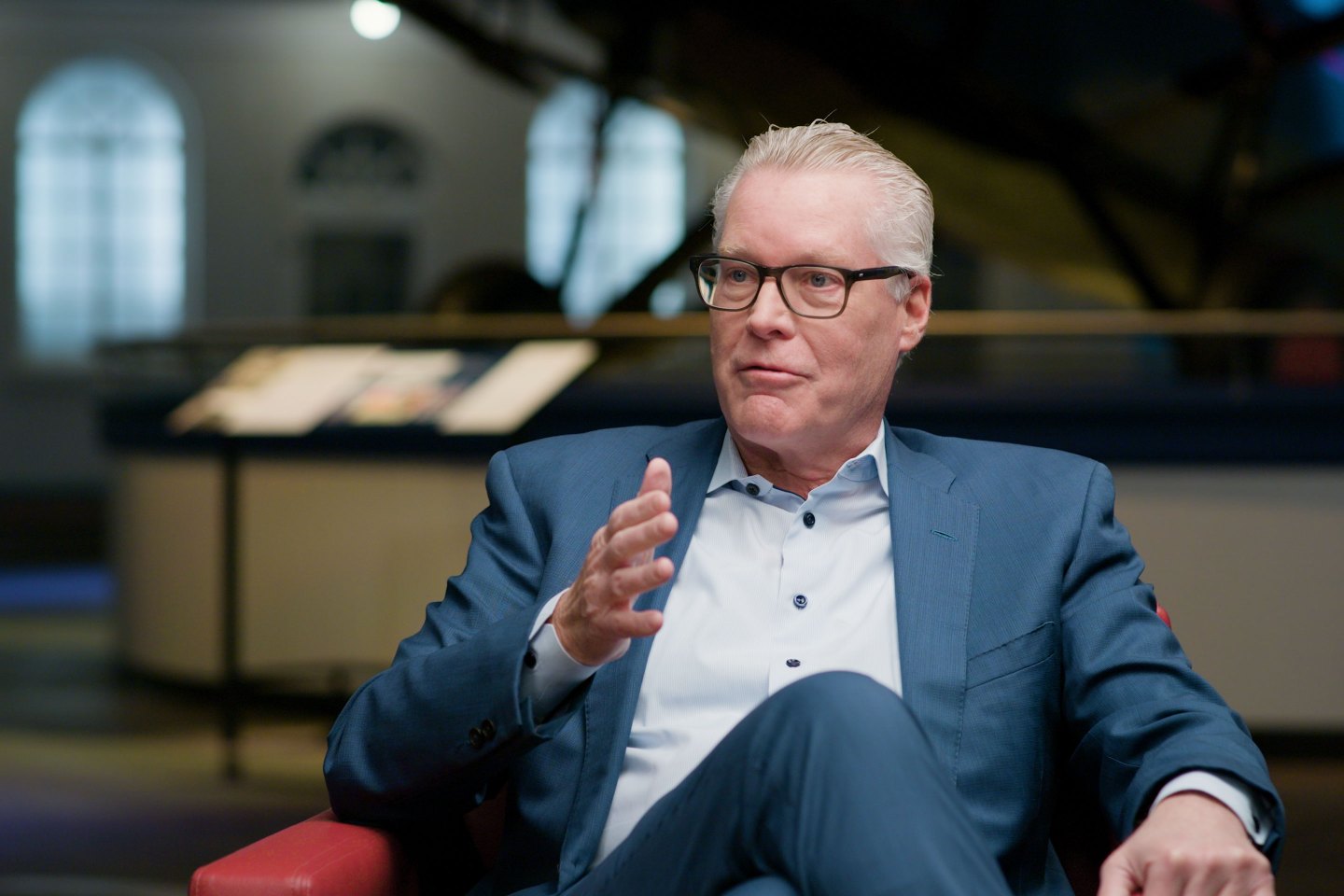
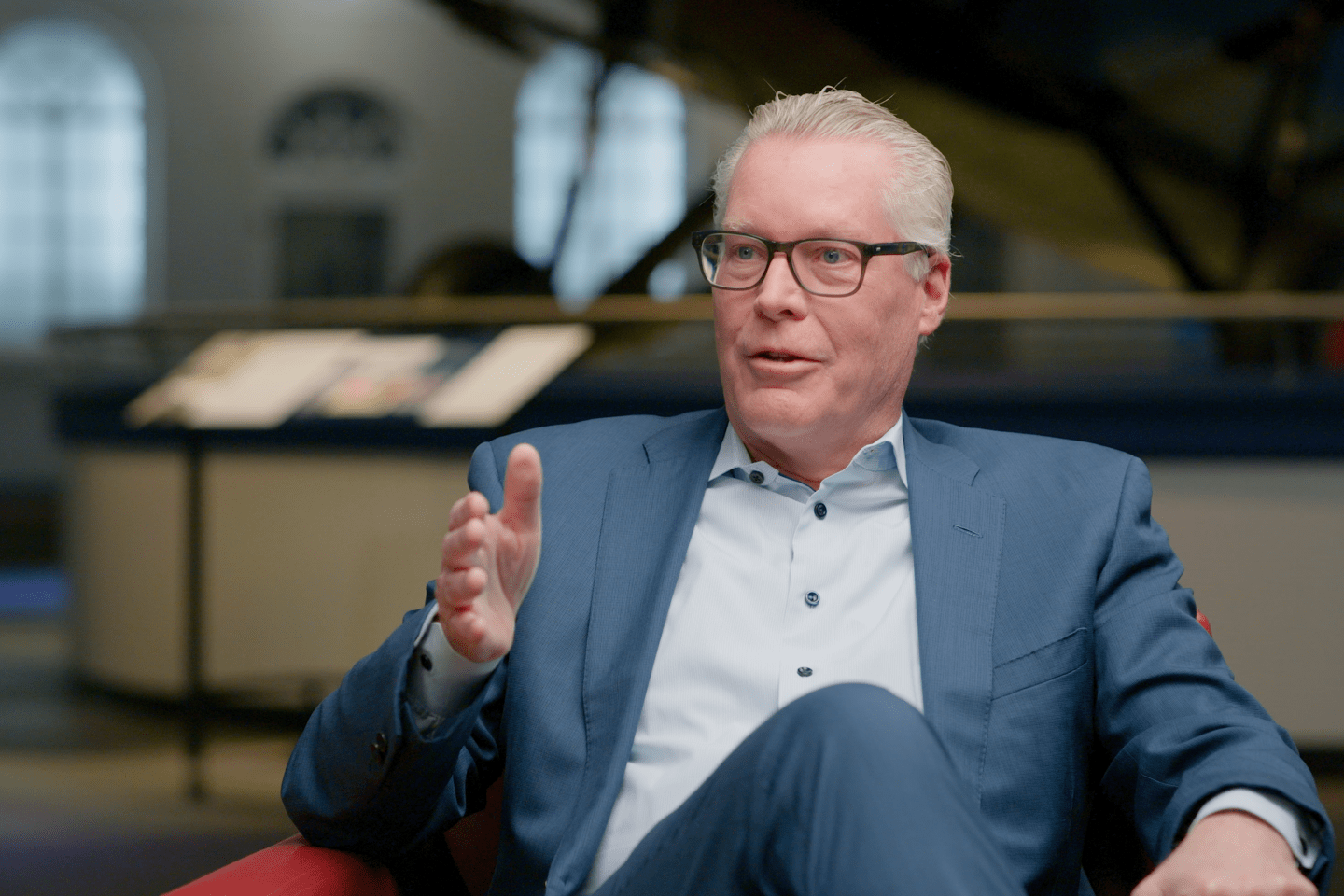
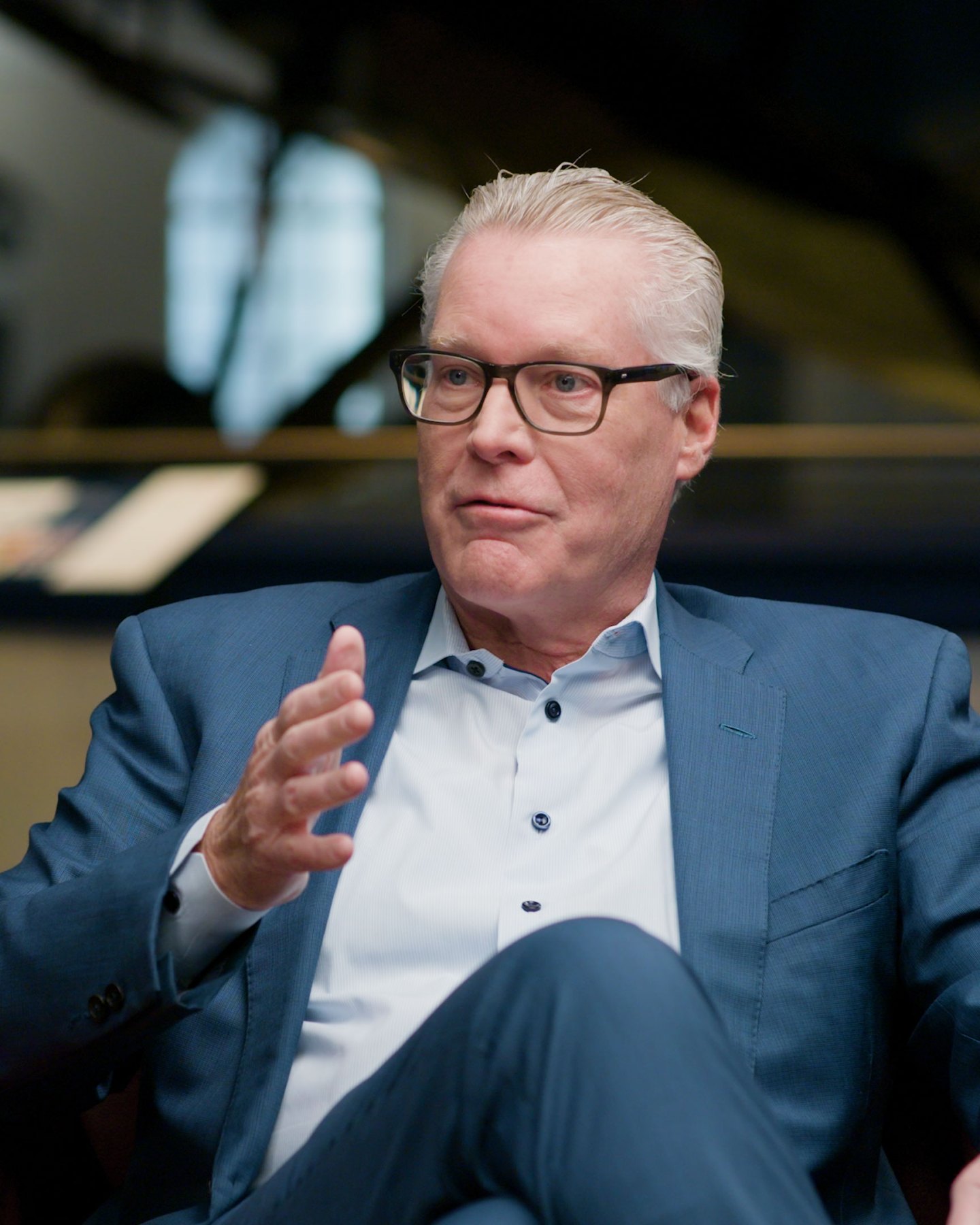
In a new episode of Fortune 500: Titans and Disruptors of Industry, Fortune’s Editor-in-Chief Alyson Shontell sat down with Bastian at Delta’s home base in Atlanta to learn how he leads and where he plans on taking the company in the future. Listen to the vodcast above.
Here’s some of what they discussed during their 45-minute conversation:
On his early life and professional experiences at PwC and Pepsi
- What growing up with eight siblings taught him about organization and leadership
- How a 24-year-old Bastian uncovered massive fraud at J. Walter Thompson while at PwC, leading him to believe that “you can never put something down until you really understand it”
- How Pepsi’s “talent factory” culture prepared him for C-suite leadership
On Delta’s transformation from a bankrupt airline to America’s most profitable carrier and a premium global brand
- Why Bastian insisted Delta file for bankruptcy and why he chose to come back at half his salary to lead the restructuring
- How a people-first, culture-led “turnaround playbook” repositioned Delta from a commodity airline to a loyalty-driven premium experience
- Why Bastian believes sharing billions of dollars in profits with employees creates a “virtuous circle” that strengthens service, brand loyalty, and shareholder returns
On building a distinctive culture that makes Delta one of the Fortune World’s Most Admired Companies and 100 Best Companies to Work For
- How Delta avoided furloughs during COVID by asking employees to voluntarily go unpaid while keeping their jobs, benefits, and travel privileges
- Why Bastian sees culture, not strategy, as the hardest and most important advantage to build—and how daily communication during crises sustains trust
- How Delta’s longstanding, exclusive co-branded partnership with American Express grew from $500 million to more than $8 billion in annual revenue and roughly 10% of Delta’s total revenue
- How Bastian’s unusually accessible communication style—including a public, personal email address—keeps him connected to customers
- Why he describes himself as a “point guard” who routes customer issues to experts while still seeing everything that matters in the business
On Delta’s AI strategy and why he insists on “augmented intelligence,” not artificial intelligence, in a deeply human, experience-based business
- Why he refuses to put AI in the cockpit but sees its use in operations like air traffic control
- Why he believes “people still want to do business with people” and AI can free employees up to better serve customers
Read the transcript, which has been lightly edited for length and clarity, below.
A quick message from our sponsor:
Fortune spoke with Deloitte US CEO Jason Girzadas on maximizing AI agents and what CEOs should consider as they assess and prioritize use cases for AI.
Jason Girzadas, CEO of Deloitte US: This is on the topic of every CXO conversation I’m a part of, and I think the thought process has to be looking for high-impact areas that may not be necessarily the most glamorous or high-profile, functional areas, but are ripe for automation and use of this technology to create efficiencies as well as innovation. And over time, AI agents will also be in customer-facing and growth-oriented domains. In our case, at Deloitte, we’re using it within our finance organization, looking at very mundane processes like expense management and working capital management. We’re seeing other organizations using it in call centers and with software development that can be automated.
What are the key elements for successfully implementing AI agents?
It comes down to intentionality. And so, I think that intentionality, in going functional area by functional area, in concert with business and IT leadership with an enterprise, it needs to be a mainstream business planning effort that’s budgeted, that’s KPIs are developed, and there’s real accountability for actual business outcomes and impact because of agentic capabilities.
Bastian’s upbringing with eight siblings—and his time leadership training at Pepsi and PwC
Ed, thank you so much for being with us today. It’s a pleasure, as always. You’re a bit of an unlikely CEO on paper in terms of running an airline, because you hadn’t even stepped foot on an airplane until you were 25. That has changed quite a bit, I am sure.
And you are the oldest of nine children. You grew up in a house with 12 people, one and a half bathrooms, fighting your sisters for the bathroom slot for two minutes at a time. How did that prepare you for leadership, for everything you’re doing today?
First of all, thanks for having us. Well, it wasn’t as crazy as that might sound. It felt normal. That’s all we knew. But yeah, I think as the oldest of nine in a large family, my parents set expectations and standards for all of us, and as the oldest, you’re intended to set the bar and keep the bar high for your siblings. People are looking at you. People are looking up to you, and you’re the first to go through, you know, whether it’s going to high school, going to college, getting a job.
Fortunately, all nine of us are still around, so we still have our pecking order, sort of. We used to always jokingly refer [that] we could field our own baseball team with nine of us. So you get involved in organization, you get involved in trying to push others to make things happen and keep people together.
Before you got to Delta, I know you went to Pepsi, which is a bit of a finishing school for CEOs, it seems. There are actually 12 Fortune 500 CEOs that went through Pepsi. We ran an article a few years ago about what’s in the water at Pepsi. I’m curious how that experience shaped you and got you prepared to step into a C-suite role when you finally arrived at Delta.
Well, I did my undergraduate in accounting. Small school, St. Bonaventure in upstate New York. I think you went to Syracuse?
I did.
So, rivals in basketball, at least. I went right to work. I didn’t have the money or the patience to get any postgraduate education. And I started working at Pricewaterhouse, and I realized that if I wanted to move further in my career, I would need to get some additional education, and I didn’t have the means to pay for it, or the time to reallocate it.
So when Pepsi came calling, I found it interesting, and so I decided to jump on it. Pepsi is a fascinating culture. It’s about speed, it’s about decision-making. It’s a street business, up and down the street, the products that they sell, whether it’s beverages or snacks. I was pretty much in the international space. I was traveling all the time around the world. You’re surrounded by great talent. They understood that talent is going to win in the marketplace, and so they were always out recruiting, constantly recruiting, bringing talent in.
It’s one of the only places I’ve ever been to where they tell you, when you start, you’re probably not going to retire here, because it’s a talent factory. So you learn what you can, you grow, and some people stay, but many people take what they have and they go test their wares in another industry.
And since I was traveling so much, someone told me at one point, I should consider working for an airline, because I’m on a plane all the time, and so it kind of made sense. And coincidentally enough, six months later, I got a call from Delta, and here I am today. But it’s a fascinating company. You work with great people.
You had found a huge amount of fraud at a client when you were at PricewaterhouseCoopers with J. Walter Thompson. You were just 24 years old. People went to jail over this. So very numbers focused. I’m curious how that numbers background has served you, even when you think about when you arrived at Delta, the company was in a very different state.
I think I grew up with a lot of curiosity. My parents always taught us that we should be able to aspire to greatness, and trying to figure out how to do that. And as a result, curiosity and learning was something that was really important to me.
And when I got to that accounting task at the advertising company, they had something there that was kind of large that I couldn’t figure out and I didn’t know if it was just me, and I just kept digging in and digging in and digging in. And then eventually, it wasn’t what it was supposed to be.
And you’re right, a lot of people got in trouble. And I, at a very early age, learned that you can never put something down until you really understand it. And so there’s value in that. I look back on it now, it’s a long time ago. There’s no question it got me to a different place in my mind as to what I could do.
Why Bastian left Delta—and how they convinced him to come back to turn the airline around
When you arrived at Delta, you were [there] for a bit, and then you left for six months, and you came back. I think you returned at like half of your salary, but one of the things you said to the CEO who was bringing you back was, we have to file for bankruptcy. I’m curious, why come back at half your salary? And why come back to a company that you felt needed to go bankrupt?
Well, it was a company that I knew had a lot of potential. And I saw that there were a lot of strategies that weren’t playing out well, that the employees of the company were great, the frontline, but they weren’t being led with the type of confidence and the values-driven goals that I thought were appropriate for a company in terms of what we do.
And so I left because my voice wasn’t being heard at the leadership levels of the company. It was just chaos, candidly. It was after 9/11, there was a lot of confusion. A lot of airlines were having trouble. So it wasn’t as if it was only Delta. Sometimes your voice is actually louder when you leave than when you stay.
And that woke up the board, woke up the CEO, and he came after me a few times, and I wouldn’t come back until they made the decision that they were going to actually take bankruptcy, which was not a statement of failure, but was a statement that the law gives you to get a second shot at life and try to utilize the application of it to revive our company. And fortunately, they finally agreed with me. And when they decided to do it, they brought me back.
I led the restructuring as the CFO, and 20 years later, you know, [we’re the] top airline in the world. So, it gave [us] a second chance. And it was something—it was a tool that we needed to avail ourselves to.
I want to ask you about that turnaround playbook. It’s really remarkable to take a company in the CFO position, and eventually the CEO position, to take one that was so distressed to now America’s most profitable airline. It’s such a swing. And yes, it was 20 years in the making. But when you look back on that period, what were the key decision points and things that happened in your turnaround playbook?
The two most important things—one was that we needed to get out of being seen as a commodity. Back then, when you asked people why they chose an airline for their specific flight, 80% of the time it would be whoever had the lowest price. And then another 20% would be because it got me faster to my destination, and brand was almost nothing. Loyalty plans were kind of an afterthought.
Today, if you ask people why they choose Delta, 80% would say because it’s Delta, because of the experience, the brand, the confidence I have in that company, that’s my airline. And 20% are other things. So just a total flip. And so that was the most important thing, getting paid for the great service that our people do.
“Delta is not a low-cost airline. We can’t win by trying to provide the cheapest. We have to be able to win by providing the best.”
Ed Bastian, CEO, Delta Air Lines
And secondly, giving our people reason to believe and giving them the responsibility to go make it work. It’s a complicated business. There’s a lot of decisions, a lot of changes that we’re always confronted with. You have to let your people know that you’re behind them, that you’re supporting them, you’re giving the tools, you’re putting them out front, rather than the management being out front. We want our people to be out front, and that’s the one thing I’ve tried with our leadership team to be, that we’re serving our people. [It’s] not, they’re serving us; we’re serving their people.
We’re not obsessing on customers, per se, at the leadership levels, because we want to obsess over our own people, so that they can obsess over you as a customer. And when your people know that you’ve got their back, amazing things can happen. That had been lost, and bringing that back, and getting the confidence and trust back, was really key.
Delta’s successes under Bastian, including its profit-sharing program
I have to congratulate you, because you’ve been on our World’s Most Admired list as a company, and also on our Great Place to Work ranking for a number of years. And it’s a testament to the culture that you’ve built here at Delta, and the people-first nature of which you do it. I think there are about 100,000 employees who now work for Delta.
When I look back at that period and your turnaround playbook, I think definitely putting the culture and people first has been key. The move into luxury, getting more dollars per seat, is key. But there are also two big programs that came out of that distressed period.
One is a remarkable Amex partnership. They were really integral in that moment where you needed a partner, and they helped. And the other is this profit-sharing program that you created for employees that I think you devised and executed as the CFO that still stands today. And for people to understand the size and scale of it, over $11 billion have been paid to your employees over the last decade. That’s pretty unheard of in the Fortune 500. There is other, smaller profit-sharing, but nothing like that.
So, can you walk me through the genesis of that profit-sharing? I understand why you needed to get the people on your team, now, but you’re also working with shareholders. They probably want to see some of that money come back to the company, not necessarily to your employees.
Well, when we went through the restructuring, we had to make a lot of hard decisions. It resulted in large amounts of pay cuts, loss of jobs, loss of benefits, loss of pensions, in certain cases. And when you’re at the bottom and you’re looking up, you don’t know how deep you have to go.
And there was always concern with our people saying, Yeah, we understand we have to make sacrifices, but how do we know what you’re going to do with the money that we’re going to give you, the concessions, that they’re going to be deployed effectively? Because they’re making an investment in the company and in terms of your turnaround.
And I said to them, Well, a great fail-safe measure is, when we are profitable, and we were far from it at the time, you’ll get the first returns on that. You’ll get a 15% effective return on profits for as long as we’re around.
I mean, this is not a short-term thing, because they created—and a 15% investment return I thought was a pretty good idea to get people excited about it. And at the time, people didn’t think too much about it, because it wasn’t paying anything. And maybe the first year, $100 million dollars distributed across, [which] still wasn’t a whole lot of money, but eventually it became real dollars.
And I think the first time that we paid $1 billion dollars was maybe 12, 14 years ago. And when you’re distributing a billion dollars to your people, that’s life-changing money for a lot of people. They got anywhere between four to eight weeks, at different times, of pay that they never knew to count on year to year.
And it’s a great alignment with your shareholders, because our customers win because our employees are doing a great job for them. And the better job they do serving our customers, the better job our shareholders are going to do in terms of the returns into Delta, and it’s paid back to the employees through the profit-sharing scheme.
So years ago, I used to get a lot of pushback when we started getting into some big numbers from shareholders. Why are you doing this? This is our money you’re giving away.
I would tell you [that] if I was to announce, and I’m not, that we were going to end the profit-sharing or change the profit-sharing formula, the shareholders would be the first people that would come after me, because they see that the sharing of success is just core to the culture, core to the competitive advantage that Delta has in the culture and the people.
The numbers you mentioned are with that profit-sharing already included. The most profitable airline pays more profit-sharing than all the other airlines put together and still has the highest profits as a result of that. So that circle, that virtuous circle we talk about—taking care of the people, so they can take care of the customers who then reward our shareholders with their loyalty, is way out in front of them to see.
Do you feel like other CEOs grasp that? It does seem like you’re a bit on an island here. I haven’t seen other CEOs saying that. In fact, they’re saying, Well, I can get more efficiency. I can keep more to the company and maybe not spread out the wealth.
Well, we’re a people business, we’re an experience business. We’re a business where we do hard things. It’s a technically challenging business. We have a lot of seniority in the company.
I’ve been here 30 years, but I’m actually not one of the more senior people in the company. Many people have given 40, 50, up to 60 years of service. And the reason why is because they love the company, and you always want to inspire love for your brand from your customers, but you can never get it if your people don’t love who they work for, and they don’t love that brand even more.
How Bastian came to be CEO—and the transition from CFO to CEO
I think the first time you ever heard that you could be the CEO was a surprise. I gather [that] your predecessor mentioned in a newspaper article, yeah, Ed Bastian could be my successor. And you were like, wait, what?
He forgot to tell me.
He forgot to tell you, but he told the public. So I’m curious what that moment was like for you, and was that your first time thinking, huh, maybe the CEO thing could be in my future. Not everybody knows when or if they want to be a CEO.
I wasn’t aspiring to be the CEO. I was happy with the job I had. I was challenged by the role. I was, candidly, probably intimidated by the thought of all the extra things that I’d have to do. Doing things like this, for example, was not necessarily my nature growing up. And the more I thought about it, I understood the responsibility it carried, the accountability, the privilege. It’s a privilege—that pressure is a privilege. And I wanted to make a difference.
And did you find there was any skills gap you had to overcome between going from a CFO to CEO? Sometimes CFOs can make great CEOs, and it’s an easy transition. And sometimes, whether it’s the numbers focus or they haven’t learned leadership or empathy or some sorts of things, it can not be a great fit. What was the skill gap that you had to overcome? What was the hardest part?
I think there’s a lot that has to be overcome. I don’t think there’s any such thing as an easy transition into the CEO chair, no matter where you’ve been, because I was the president of the company for eight years prior to becoming the CEO. So I’ve been pretty close to this for almost 20 years, but even as president, sitting in the CEO chair is different. There’s a lot of things that feel different.
Whether you’re dealing with D.C., whether you’re the last line of defense in terms of having to make a decision, and people look to you. All eyes are on you in terms of what’s happening, whether it’s the media—people don’t want to hear from the number two or three person. They want to hear from the person.
Whether it’s your international relationships, dealing with dignitaries and the like, and then being in front of so many—for us, 100,000—people constantly, and being willing to put your face on your brand, it’s a very different feel, and it takes a few years to get comfortable, I’ll be honest with you, I know it did for me. And talking to a number of younger CEOs and folks, they’ll call it looking for insight and help and some mentorship.
From time to time, you’ve got to get comfortable in the chair. You have to make sure it’s your chair. And a lot of times you’re in the chair, you’re still not certain that you’ve earned it.
Do you still have impostor syndrome? You can’t possibly still.
No, no, but when you’re in the first handful of years, you’re still not certain. You’re trying to prove to yourself that you actually deserve the seat you’re sitting in, because stakeholder management is different today, too.
I’ve been at this for 10 years. Ten years ago, it was complicated. Now, I think it’s much more complicated. And so, how do you deal with so many different constituencies that always want your time, your attention, and how do you balance that?
And how has your communication style evolved? I love one thing you said about your predecessor too, was, he recommended, get a private phone, get a private email, don’t go out in public, bunker down. And you’ve done the opposite. I can attest that you will respond to an email in minutes, and that’s not just me, it’s for all of your employees—for your customers, for anyone, you have a very public email. What has your style been in communicating externally but also, really, internally?
Well, I want people to feel like we care. I want our people to know that I care about them. Our leadership cares about them. I certainly want our customers to feel that, I want our community to feel that, I want our investors to feel that. And it would always frustrate me when people would say, I just can’t get through to a customer service line. I can’t do this, I can’t do that. And I finally, at one point, this was during COVID. I said, Well, if people are having a hard time, just contact me. Here’s my email.
And people said, really? I said, Yeah. And people have been using it for years. It always allows me to stay in touch. And yes, I see every email that comes to me. I can’t personally respond to every single one of them.
I’ve got a whole team of people that sit behind me that I know I feel like sometimes I’m more a point guard, and I’m receiving it and I’m giving it to someone who’s more of a subject-matter expert, whether it’s someone in our executive care department, whether it’s someone in our maintenance team, whether it’s dealing with a pilot matter or whatnot. I have a team of people that, when they receive it from me, they know to take care of it quickly and efficiently and effectively, just as I would, because I can’t possibly deal with the thousands and thousands I get every single day.
But I see them all, and by the way, I do respond to a fair number of them as well. By seeing everything, I think I have developed a sense of peace with my role. It’s a fast-moving industry. It’s hard.
People talk about it as one of the more challenging industries to operate in. People say, How do you stay calm when you have so much swirling around you at all times? I know what’s happening. There’s nothing in my business that’s happening that I don’t hear about from somebody, because people know [that] I want to hear. They can tell me. They choose to tell me.
And as a result of that, I feel like there’s a pace and a rhythm I’m always constantly in sync with, and I don’t ever need to worry [if] I’m missing something or having to look for something. It finds me, and it gives me the freedom to continue to stay ahead of it. It’s a weird use of technology that people would say, either it’s something that would drive you crazy, or something that actually is liberating. I find it somewhat liberating.
How Bastian led the airline through COVID
I mean, you’ve gotten Delta through some hard times in terms of—I mean, any 100-year-old company. And congratulations, you guys turned 100 last year, that’s a huge milestone. There are going to be 10 near-death moments, really scary moments, and one of them, you dug yourself out financially in the early 2000s, but COVID was a huge moment.
Difficult for you as a leader, very scary for the employees. I know you have said you felt like Job in the Bible. It was a tough time for you personally—your mother, I’m so sorry, had passed.
All revenue basically seemed like it was evaporating overnight. You had to refund a bunch of customers for trips they’d never go on, and you really didn’t want to furlough your employees, and you somehow got half of your team to willingly go without pay for over a year, I think, to get through that period.
How are you corralling this team to be selfless to their peers, to help Delta in times of need? What is your internal communication to people to get them to do these hard things?
Well, you know, we talk a lot in business about culture. We talk a lot about strategy, and people always think the strategy is the harder thing. It’s the more brilliant thing, it’s the more scientific thing—only the very best are strategists. I’ll tell you that’s not true.
The very best are people that have a great culture and that invest in their culture. And yeah, we can do strategy as well as anybody, and our progress shows that. But investing in your culture and your people is by far a harder thing, the more important thing, and I think the longer lead time that you have, and the alignment of that culture from the top of the company down to the front line, everybody knows what we’re doing, how we’re doing it, and what that strategy is. And that culture is really strong, and the DNA within our company is really strong.
So when COVID hit, it was a shock. We had no idea how to prepare for it. We had built such a reservoir of confidence and trust that our people had in the company that they were leaning into us, and they were saying, Whatever decision you take, we’re behind you. Just tell us where to go. Which was hard, because you’re trying to figure out where to go, but I knew that we needed to find a way to reduce the cost because we had no revenue. You can’t possibly run a business with all of your people and no revenue coming in.
Even in my leadership team, I said, We’re going to try to do this without furloughing people. People told me I was crazy, and I was very visible when I was talking, because we did a lot of these video chats to my own people. I said, I have a vision of doing this without furloughing, which would be incredible. And we’ve furloughed plenty of times in the past with bankruptcy and other events that happened.
And I said, Well, you have to stay with us in order to do it. And we came up with this approach where, if people volunteered, we’d keep their jobs, we’d keep their benefits, we’d let them travel. It was the greatest time to travel because no one else was traveling. So you could sit wherever you want on a plane, and it felt like flying private at some points, and half our people volunteered to give up their jobs without furloughing a single person. We got through it without furloughing a single person.
They also knew how important it was for our younger people who couldn’t afford to give up their jobs to stay, and allow them to continue running the business. And that, to me, still to this day, is one of the things that—how we did it, I’m still not quite sure, but there was a real vulnerability when you were talking and asking people.
I was doing these video chats nearly every single day with our people, tens of thousands of people around the world would always tune in at a certain time of the day to watch and to hear what that was like. It was a new chapter every day as you think about, what did we learn? How are we doing it? What do I need people to think about? And they said, Yes, I’m in. And they all started to raise their hands and we made it. We made it.
Delta’s massive partnership with Amex
The other thing I wanted to talk about was the American Express partnership. I’m curious how you have nurtured and cultivated that to become really great on both sides. I believe it was $8 billion that was paid to Delta from Amex last year for the credit card that you two have together. And that’s like 10% of revenue for Delta. It’s significant, and that has been a long-term partnership. I think you renewed in 2019 for another 10-year deal. How does that partnership work? And how has it tested time?
20 years ago, that was paying maybe $500 million, and that was still a lot of money, but it’s nowhere close to the many billions that we receive today. As Delta’s brand started to move and people started to see it as a premium brand, as a differentiated experience, Amex was critical to that, because we see Amex as the premium credit card in the business. It has a higher value proposition. Customer loyalty is greater.
And so the attachment, and it’s an exclusive attachment in the U.S. between Delta and American Express, gave us a partner that we could put both our brands together and we’d both lift each other up.
Those are the most successful relationships. It’s not when one brand is taking advantage of another or feeding off of another, [but] when both brands legitimately raise up. Years ago, many years ago, we would have difficulties with Amex, because we could never figure out whose customer it was. Amex thought it was their customer because they had the credit card. Delta thought it was our customer because we’re providing the experience.
10 years or so ago, we got together—and Steve Squeri, who is the CEO of Amex, is not just a close partner, but a close friend—and said it’s our customers, and let’s stop fighting about who’s getting what size slice, and figure out, how do we make the pie bigger?
And if you focus on making the pie bigger, there’ll be plenty to share for each of us, because it would always be a lot of negotiations and squabbling about making this investment. What do we get from it? We spent all of our time now thinking, how do we make it bigger?
Today, Delta is by far American Express’s largest distribution of cards. Ten percent of Amex’s worldwide billings are on the Delta card, and in the U.S., 30% of their U.S. consumer spend for all of Amex is on the Delta card that’s making the pie bigger, and as a result of that, that’s what’s funding the growth we’ve had. And even though we’re the largest distribution outlet, we’re growing faster than any of the other distribution outlets they have, at a double-digit clip still today.
Wow. I know you’re not a credit card CEO, per se, but you definitely have a strong vantage point and view into how credit card companies work. President Trump recently suggested the idea that we should have a 10% cap on interest rates for credit cards. I’m curious what you think about that. It would impact Delta somewhat, I would imagine, in terms of if Amex takes a hit, you guys would take a hit. Why should credit card interest rates ever be more than 10%?
Well, that’s probably a better question for the credit card companies, but when you look at the economics for the cards, when you look at the risk that the cards provide and give access to credit, particularly to the lower end of the income strata, I think it’s pretty clear that if there was a pretty sizable financial hit to the credit card companies, eventually it would come back in terms of reducing credit availability.
So, while it sounds like a great idea on paper to maybe give people some relief, I think it potentially could have a very significant adverse consequence in terms of stranding credit availability, and meaning only the rich could actually afford to have a card. So it’s something the credit card companies, I know, are discussing, and I’m confident we’ll come to a good solution on that.
Well, as you mentioned, the card is very successful, and a lot of it comes back to the fact that Delta flyers seem very loyal. And this is something you’ve deliberately done over the last 10-plus years. You went away from cheap seats and you went for more of the luxury feel, the premium feel, the loyalty feel.
I want to dig into a little bit about how you’ve built that feeling where now you’re getting 20% more revenue per seat than other airlines. What goes into creating that brand of trust and loyalty?
Well, we started this journey probably 15 years ago, this de-commoditization, which is what it was originally called. Now it’s a premium strategy. And we said, If we were ever going to succeed, we need to get paid for what we do. Delta is not a low-cost airline. We can’t win by trying to provide the cheapest. We have to be able to win by providing the best. And our economics are geared towards the top-line growth, not necessarily trying to make the middle line or the expenses work for the bottom line.
To do that, you have to start with making certain that customers see you as a premium experience. And how could you be a premium experience if your reliability isn’t the very best in class? And our reliability, candidly, was not best in class. We had very nice people that apologized nicely—they weren’t delivering the expectations of our customers. So we spent a lot of time and money for a number of years making certain that we had the very best reliability, the lowest cancellation rates, the best on-time rates, the lowest amount of mishandled bags.
We never lose bags. We just misplace them from time to time, but we always find them quickly.
Never? Surely there’s some lost bags around.
There are some, but we do a really good job of not doing that. We don’t deny boarding involuntarily and all of these things that are just fundamental tenets of good customer strategy.
We wanted to be the best in class, and we started measuring them and improving, and after about five years of this, customers would come to me and say, I’m noticing something different. Your people seem to be happier. The service levels seem to be better. People are actually enjoying the experience, rather than enduring the experience. And what are you doing to make this happen?
And, well, we’re not doing anything different than we’ve been doing for years. It takes time at scale to show all of that, because you can’t just do it one day or one month or one year. You had to do it every hour of every day, and that’s what our people have done. And then when we got there, and we’ve been at the top for quite a number of years of the reliability stats in our industry, then you can start layering on higher-quality experiences, because you have the baseline to do that.
You can’t start there. You have to go by building it. And so the premium seating, the bringing more suites into the planes, particularly for international flights, the Delta One experience, American Express, all of that was built on a strategy of a strong foundation that gives people what they need, and they’re willing to pay for it. So no longer are people looking at what’s going to get me the lowest price. And we have strategies for people that want the lowest price. It’s called Basic Economy.
But people want to get the best experience and want to get the best value for money. And that’s where we went, value for money.
Where Bastian sees AI playing a part in the air travel industry
I think AI is the conversation happening right now. You’re such a people-centered company. I’m curious how you’re looking at navigating this AI future. I believe you think we’re in an AI bubble to some extent, but I think we could probably both agree that the underlying technology is there and very strong. And it certainly is capable of doing jobs like customer service, all sorts of stuff. So I’m curious how you’re communicating with your team about what’s ahead, what technology means for them, really, truly and honestly, and how you’re thinking about using it moving forward.
I do believe the technology is powerful, and I also do know that there’s a lot of skepticism.
There’s a lack of trust. And I think while all the attention is being paid to how amazing the technology is, not a lot of people are talking about how important it is to make certain that change management and building trust and confidence in deploying the technology is even more important. And that’s the harder thing, that’s the far harder thing.
“I never talk about it as artificial, I always talk about augmented intelligence, because it’s technology that’s going to make our people’s jobs easier, more efficient, smarter.”
Ed Bastian
And so from my perspective, I want to make certain that this technology, to the extent we deploy it, is enabling our people to do an even better job of winning in the marketplace. Whether that’s solving problems quicker, being able to provide new opportunities for growth. How can we think about areas of our business, whether it’s in maintenance or scheduling departments or reservations, our app—all of these things come up instantly. And to start thinking about, wow, we can be a very different place.
But if you don’t know who you are and you don’t know what drives your business success, if you start thinking that the technology is driving your success, at least as an airline, you’re going to fail. It’s people that deploy the technology. It’s people that serve. I’m not getting on any planes that are being flown by AI. I’m not. There’s going to be two pilots in that cockpit, at least two on that plane.
For, like, the long haul?
For the long haul, yeah. I mean, that’s not our strategy. And I think the biggest challenge we’re facing today is not the technology at all, it’s the trust and the confidence and the safeguards. This is something that people have to adapt to.
We’re not going to, as a company, put our people in harm’s way by saying this technology is going to take their role. It may change the role. It will change roles, but we then have to redeploy talent to give them more time to serve, which I think would be great in the airports. And think about all the additional use that we have in terms of where we can go.
So the technology is in the background. It’s not at the forefront, and it allows our people to get more in front of people.
As you’re thinking through how AI will transform your industry and your company, who are you talking to about it? How are you making these decisions? Who are you seeking expertise from?
We’re doing a lot of learning. We’re doing a lot of listening. It’s really important. There’s a lot of people that want to talk. There’s not enough people, I think that are really trying to understand and connect the dots.
One of the things that’s confusing sitting in the CEO chair is, the technologists themselves will tell you, in six months, everything will be different again. So how do you know when to plant and decide where you’re going to go? So we’re doing a lot of projects, pilots, trying to understand what the technology can be.
One thing for Delta—I never talk about it as artificial, I always talk about augmented intelligence, because it’s technology that’s going to make our people’s jobs easier, more efficient, smarter. We’re a big data company. We’ve been a big data company for many, many years. We’ve had some of the original big data applications in the airline industry, and so when we think about AI, it’s not something that’s intimidating to us because we do hard things, but we’re actually excited to make our jobs potentially easier and then allocate more and more of our people to service rather than trying to solve problems.
How do you think things like generative AI and other advanced technologies will change the flying experience from a customer perspective?
I don’t think it’s going to change it. I mean, if deployed properly, it should make it maybe more efficient, more reliable. You think about, just the atmosphere, your ability to better predict turbulence, better understand efficient flow patterns.
I can tell you one place that it could do an awful lot of good. It’s going to take a long time, but how do we deal with air traffic control and congestion and all the challenges that we have in the ATC environment? That would be an amazing deployment. I think that would do more in terms of helping our customers have quicker travel, more efficient travel than, candidly, most any other deployment of the technology that I can think about.
Today, it takes longer to fly between Atlanta and New York than it did in the 1950s when we launched that route. That’s insane. All that technology investment that we put in AI is not going to change that, unless it’s focused on, how do you unlock the sky?
Bastian on making air travel greener—and the company’s investment in flying cars
In terms of other innovations and things you’re working on, I know there’s a lot around sustainability and green flights. Where are we in that future? How likely do you think that is? What kinds of things are you working on to get us there?
That’s a long, long road, and we’re making good progress on that. Unfortunately, we don’t have a great replacement for jet fuel, and 90% of our footprint is the fossil fuel that we burn. We’re working with a lot of communities and a lot of government support in different ways, whether it’s biofuels or getting customers that are like minded to think about this thing differently to be able to deploy the technologies, but it’s going to take many, many years, but we have no choice.
We don’t want our customers to have to choose between seeing the world and saving the world. As we like to say, we need to do both, and that’s where we’re spending our time.
And what about for something fun? I know you’ve invested in Joby, flying taxis at airports. Is that likely to happen in the next couple of years?
I do think so. I think you will see Joby in the sky in the next couple of years. It’s not going to change what we do at Delta. They’re small planes—four, six people to an aircraft, but it’ll change the experience for people. First of all, they’re all electric powered. There’s no noise. It will take you from your home over time to where you want to go. An airport is a great use case for the product.
When you think about whether it’s New York or even here in Atlanta, it can take you more time to get to the airport, to get through the airport, to get on your seat, than the flight itself. We can unlock that, and we can get people through to their destinations quicker.
Where Bastian sees the company in 10 years—and his parting leadership lessons
Amazing. You have been the CEO of Delta for quite a while, and you’ve been with the company for even longer, but I’ve heard you say that your role as CEO is to really try and think five to 10 years ahead of where the company currently is, to be strategically planning how you’re going to lead it. So when you look out five to 10 years from now, what’s on the horizon, what are you focused on right now?
Two things come to mind. First is our continued push globally as a very, very large international airline. We’re still seeing more as a U.S. carrier than a true global carrier, and I would hope over the next 10 to 20 years, that would continue to shift more on the international front.
We’re continuing to push and grow and expand our franchise there. So thinking about the partnerships, thinking about the geographies, thinking about how you’re going to win in the marketplace, different marketplaces than we’ve historically been is really top of mind for me.
The second is technology. Technology is moving at a lightning speed, it can be blinding at times, but if you have an idea where you want the technology to take you, rather than what the technology wants to do to you, I think you can get ahead of it.
Well, you’ve now been at Delta for over 25 years, in the C-Suite roles for a lot of them, you could answer this better than anyone. What is the top advice you would give for someone who thinks maybe they want to be a leader someday? Maybe they want to be a CEO someday of a Fortune 500, what’s the best advice you could give now?
My best advice is to make certain that you’re taking care of the people that got you there, and you’re continuing to do that. Do a great job at what you have in front of you.
I never aspired to be the CEO, and I would tell you that most of the great CEOs that I know never aspired to be a great CEO. We talk about, in leadership, the importance of confidence and drive and energy and vision.
There’s also a really important attribute, and that’s humility, the willingness to actually listen more than you talk, to be able to make certain that you have an appreciation for what people do. To relate to people. In this fast-paced environment we have, which technology continues to accelerate, relation skills are getting lost, and people still want to do business with people. They want to do business with people that they trust, that care about them, and that’s where I think real value is. And as a leader, it’s so important. And it sounds maybe a little old-fashioned.
People look at that when I talk about that as like, I’m not necessarily trying to give the cutting edge experience. The cutting edge opportunities are out there, but understand that leadership is about people. It’s about leading people, and that will get you further than anything you could ever do
Well, Ed, thank you so much for spending time with us.
Thank you, Alyson.