
• Home
  • Latest
  • Fortune 500
  • Finance
  • Tech
  • Leadership
  • Lifestyle
  • Rankings
  • Multimedia
SuccessFour day work week

Covid gave us hybrid work. The Iran War might give us a four-day week—and this time, experts say it could stick

Orianna Rosa Royle
By
Orianna Rosa Royle
Orianna Rosa Royle
Associate Editor, Success
Down Arrow Button Icon
Orianna Rosa Royle
By
Orianna Rosa Royle
Orianna Rosa Royle
Associate Editor, Success
Down Arrow Button Icon
March 21, 2026, 6:14 AM ET
As governments across Asia slash the working week to save energy amid the Iran War, workers have never been closer to a permanent four-day week—but it won't be for everyone.
As governments across Asia slash the working week to save energy amid the Iran War, workers have never been closer to a permanent four-day week—but it won't be for everyone.milorad kravic—Getty Images

COVID-19 gave us hybrid work. The Iran War might give us a three-day weekend. That’s because, as Sri Lanka, the Philippines, and Pakistan move to a 4-day work week because of the war in Iran, experts say we’re the closest we’ve ever been to a permanent shorter workweek. 

Recommended Video

It started in Asia, but now major governments around the world are once again mandating that workers stay home to save on fuel and survive an energy crisis as the war in the Middle East threatens vital oil shipments through the Strait of Hormuz. 

What began as an emergency measure in the developing world is now spreading globally. Sound familiar? We’ve been here before: The last time the world was forced to shift en masse—the pandemic—the changes we thought would be temporary became permanent. Hybrid work didn’t die when offices reopened. Instead, it reshaped how we work.

Now, with governments reaching for the same lever again, experts say something similar could happen with a four-day workweek. But it’ll come with major consequences for those who can’t take their jobs home, like drivers, baristas, window cleaners, pet sitters, and more.

Will an overnight emergency four-day week come to the West?

Although Brits and Australians are being urged to work from home, Dr. Wladislaw Rivkin, Professor in Organisational Behaviour at Trinity Business School, told Fortune that a global three-day weekend currently looks unlikely—at least not at the click of the government’s fingers.

That’s because a permanent restructuring of how work is organized is a far heavier lift than an overnight shift to working from a makeshift home office. “I do not see this as a model for the U.S. and U.K., at least in the long term, because the current sharp rise in fuel costs is temporary,” Rivkin says.

Professor Roberta Aguzzoli at Durham University Business School says she wouldn’t rule out the West moving to shorter workweeks to save fuel, but she argues better infrastructure should minimise that need. 

“Public transport systems in large European cities are generally more developed and less reliant on individual transport use than those in certain emerging economies,” she says, adding that limited transport infrastructure and higher exposure to fuel price volatility make last-minute policy changes more necessary.

On that basis, she says a permanent four-day week in the near term is more likely to become the new norm in developing countries. But there’s a big but. The mere fact that millions of workers are about to spend an extended period proving they can get the job done in four days could be the tipping point the movement has been waiting for.

Why Asia’s four-day week could permanently change how the world works

Whether Asia’s emergency four‑day workweek will have the same lasting effect as the pandemic’s work-from-home mandate, or even ripple into Europe and the U.S., remains to be seen. But once workers get a taste of a shorter week—even a forced one—it’s a hard sell to go back to the old one.

“Remote work didn’t spread because companies planned it,” says William Self, chief workforce strategist at Mercer. “It spread because the pandemic crisis forced the experiment, the experiment worked, and workers weren’t willing to give back what they’d gained. The same logic applies here.”

Self argues that once the experiment runs, the burden of proof flips. “If employers experiment with a four-day workweek and employees show they can deliver in four days what they previously delivered in five, management has to justify the fifth day rather than the other way around.”

What makes this moment historically distinct, he says, is the convergence of two previously separate conversations. “Previously, a four-day workweek was mostly theoretical or confined to a handful of pilot programmes. Now you have some governments weighing in as a matter of public policy and major employers adopting it, and they’re doing so in the same news cycle. That’s a different situation than we’ve been in before.” Add AI rewriting what productivity means, a cost-of-living crisis, stagnant wages and workers who’ve already had a taste of flexibility, and the pressure for more flexible ways of working is converging from every direction at once.

Emergency or not, Aguzzoli argues that research shows we’re already heading that way anyway. 

According to CIPD, the four-day workweek has the potential to become a new norm. There is a growing global trend in this direction, with organisations across different countries volunteering to test the effectiveness of such policies. 

Thankfully for workers, the fuel crisis isn’t the sole reason for this shift, making it more likely to stick—but it’s also why you shouldn’t expect it to explode overnight like hybrid working during the pandemic. 

“The discussion around the four-day workweek is still at an early stage, with companies and researchers continuing to assess its long-term impact on performance,” Aguzzoli added. “While there are several initiatives moving in this direction, most involve large organisations with well-developed human resource management systems that are better equipped to plan for and manage such changes.”

Who gets left behind: why the four-day week could make inequality worse

Perhaps the most uncomfortable truth about the four-day workweek is who it would actually benefit—and who it would leave behind.

For office workers, the transition is relatively seamless and largely welcomed.

But workers in lower-skilled, customer-facing, or physically demanding roles—delivery drivers, construction workers, care workers, retail staff—face a fundamentally different reality. Compressing the same output into fewer hours doesn’t mean more rest, Aguzzoli argues. It means more strain, greater fatigue, and a higher risk of workplace accidents. Plus, for those already on low wages with little bargaining power, a forced compression of hours could also mean a direct hit to their income.

Ultimately, Aguzzoli says that although a four-day workweek could help reduce the current gender gap, it could “widen disparities between skilled and low-skilled workers.“

The divisions don’t stop there. Rivkin warns that the four-day workweek could fracture workplaces from the inside out. “For example, if an administrative worker in a hospital works 4 days a week, while a nurse has to work 5 days a week.”

The result isn’t a more equitable workplace—it’s a more resentful one. Rather than levelling the playing field, a four-day rollout could make physically demanding professions even less attractive, harder to staff, and more dangerous than they already are.
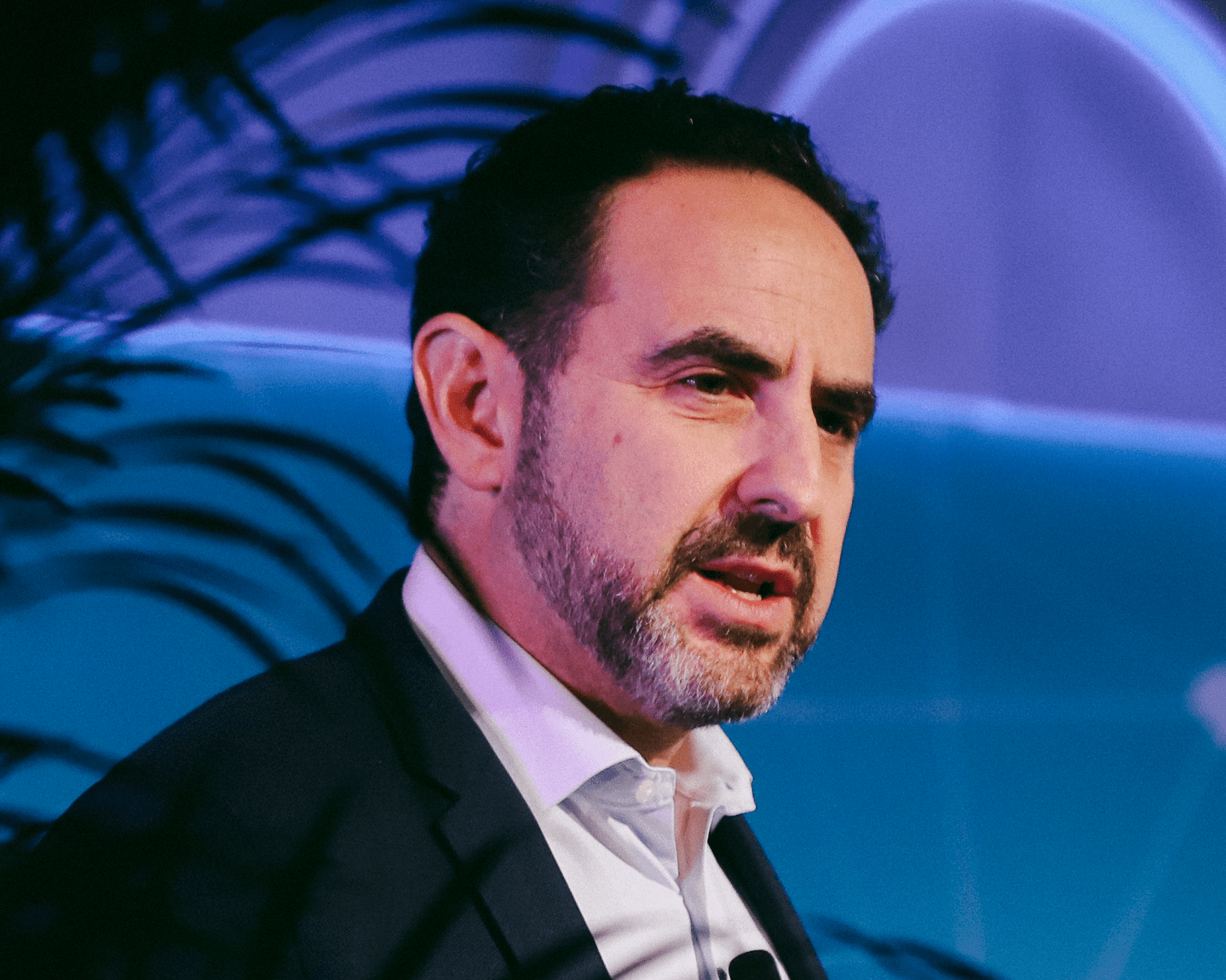

Join us for a virtual Fortune 500 Europe C-suite conversation, in partnership with Syndio, on mastering workforce decisions and pay transparency in the age of AI. Built for global and regional HR leaders, this session, moderated by Fortune editor Francesca Cassidy, will take place Wednesday, March 25, at 2:30 p.m. GMT (10:30 a.m. EDT) and feature senior HR leaders from Hilton and Syndio. Together we'll explore how CHROs are using AI to drive smarter pay decisions, manage regulatory risk, and strengthen workforce trust. Register now.
About the Author
Orianna Rosa Royle
By Orianna Rosa RoyleAssociate Editor, Success
Instagram iconLinkedIn iconTwitter icon

Orianna Rosa Royle is the Success associate editor at Fortune, overseeing careers, leadership, and company culture coverage. She was previously the senior reporter at Management Today, Britain's longest-running publication for CEOs. 

See full bioRight Arrow Button Icon

Latest in Success

Finance
Lorem ipsum dolor sit amet, consectetur adipiscing elit, sed do eiusmod tempor incididunt ut labore et dolore magna aliqua. Ut enim ad minim veniam
By Fortune Editors
October 20, 2025
Finance
Lorem ipsum dolor sit amet, consectetur adipiscing elit, sed do eiusmod tempor incididunt ut labore et dolore magna aliqua. Ut enim ad minim veniam
By Fortune Editors
October 20, 2025
Finance
Lorem ipsum dolor sit amet, consectetur adipiscing elit, sed do eiusmod tempor incididunt ut labore et dolore magna aliqua. Ut enim ad minim veniam
By Fortune Editors
October 20, 2025
Finance
Lorem ipsum dolor sit amet, consectetur adipiscing elit, sed do eiusmod tempor incididunt ut labore et dolore magna aliqua. Ut enim ad minim veniam
By Fortune Editors
October 20, 2025
Finance
Lorem ipsum dolor sit amet, consectetur adipiscing elit, sed do eiusmod tempor incididunt ut labore et dolore magna aliqua. Ut enim ad minim veniam
By Fortune Editors
October 20, 2025
Finance
Lorem ipsum dolor sit amet, consectetur adipiscing elit, sed do eiusmod tempor incididunt ut labore et dolore magna aliqua. Ut enim ad minim veniam
By Fortune Editors
October 20, 2025

Most Popular

Finance
Lorem ipsum dolor sit amet, consectetur adipiscing elit, sed do eiusmod tempor incididunt ut labore et dolore magna aliqua. Ut enim ad minim veniam
By Fortune Editors
October 20, 2025
Finance
Lorem ipsum dolor sit amet, consectetur adipiscing elit, sed do eiusmod tempor incididunt ut labore et dolore magna aliqua. Ut enim ad minim veniam
By Fortune Editors
October 20, 2025
Finance
Lorem ipsum dolor sit amet, consectetur adipiscing elit, sed do eiusmod tempor incididunt ut labore et dolore magna aliqua. Ut enim ad minim veniam
By Fortune Editors
October 20, 2025
Finance
Lorem ipsum dolor sit amet, consectetur adipiscing elit, sed do eiusmod tempor incididunt ut labore et dolore magna aliqua. Ut enim ad minim veniam
By Fortune Editors
October 20, 2025
Finance
Lorem ipsum dolor sit amet, consectetur adipiscing elit, sed do eiusmod tempor incididunt ut labore et dolore magna aliqua. Ut enim ad minim veniam
By Fortune Editors
October 20, 2025
Finance
Lorem ipsum dolor sit amet, consectetur adipiscing elit, sed do eiusmod tempor incididunt ut labore et dolore magna aliqua. Ut enim ad minim veniam
By Fortune Editors
October 20, 2025
Fortune Secondary Logo
Rankings
  • 100 Best Companies
  • Fortune 500
  • Global 500
  • Fortune 500 Europe
  • Most Powerful Women
  • Future 50
  • World’s Most Admired Companies
  • See All Rankings
Sections
  • Finance
  • Fortune Crypto
  • Features
  • Leadership
  • Health
  • Commentary
  • Success
  • Retail
  • Mpw
  • Tech
  • Lifestyle
  • CEO Initiative
  • Asia
  • Politics
  • Conferences
  • Europe
  • Newsletters
  • Personal Finance
  • Environment
  • Magazine
  • Education
Customer Support
  • Frequently Asked Questions
  • Customer Service Portal
  • Privacy Policy
  • Terms Of Use
  • Single Issues For Purchase
  • International Print
Commercial Services
  • Advertising
  • Fortune Brand Studio
  • Fortune Analytics
  • Fortune Conferences
  • Business Development
  • Group Subscriptions
About Us
  • About Us
  • Editorial Calendar
  • Press Center
  • Work At Fortune
  • Diversity And Inclusion
  • Terms And Conditions
  • Site Map
  • About Us
  • Editorial Calendar
  • Press Center
  • Work At Fortune
  • Diversity And Inclusion
  • Terms And Conditions
  • Site Map
  • Facebook icon
  • Twitter icon
  • LinkedIn icon
  • Instagram icon
  • Pinterest icon

Latest in Success

david
CommentaryScience
The one skill that separates people who get smarter with AI from everyone else
By David Rock and Chris WellerMarch 21, 2026
4 hours ago
Former Berkshire Hathaway CEO Warren Buffett
SuccessCareers
Dairy Queen CEO says he learned from Warren Buffett being the ‘smartest person in the world’ isn’t the most important attribute for success
By Emma BurleighMarch 21, 2026
5 hours ago
SuccessFour day work week
Covid gave us hybrid work. The Iran War might give us a four-day week—and this time, experts say it could stick
By Orianna Rosa RoyleMarch 21, 2026
7 hours ago
suburbs
Real EstateGen Z
Gen Z can’t afford a house. Some parents are choosing to fund their down payments over their college funds
By Jake AngeloMarch 20, 2026
22 hours ago
Stressed out job seeker on laptop
Successjob hunting
Job seekers aren’t imagining things: the number of candidates ghosted by employers just reached a three-year high thanks to AI
By Emma BurleighMarch 20, 2026
1 day ago
SuccessCareers
AI boom is fueling demand for skilled trades—and demand for technicians, HVAC workers, and electricians is soaring, with six-figure salaries to match
By Preston ForeMarch 20, 2026
1 day ago

© 2026 Fortune Media IP Limited. All Rights Reserved. Use of this site constitutes acceptance of our Terms of Use and Privacy Policy | CA Notice at Collection and Privacy Notice | Do Not Sell/Share My Personal Information
FORTUNE is a trademark of Fortune Media IP Limited, registered in the U.S. and other countries. FORTUNE may receive compensation for some links to products and services on this website. Offers may be subject to change without notice.