• Home
  • Latest
  • Fortune 500
  • Finance
  • Tech
  • Leadership
  • Lifestyle
  • Rankings
  • Multimedia

Trendingnow

1

After forcing workers back to the office, Goldman Sachs and JPMorgan Chase are now letting their staff work remotely—but only for the World Cup

2

Markets tumble worldwide as Fed resets expectations: $400 billion wiped off SpaceX stock

3

Current price of oil as of June 23, 2026

1

After forcing workers back to the office, Goldman Sachs and JPMorgan Chase are now letting their staff work remotely—but only for the World Cup

2

Markets tumble worldwide as Fed resets expectations: $400 billion wiped off SpaceX stock

3

Current price of oil as of June 23, 2026
CommentaryScience

The one skill that separates people who get smarter with AI from everyone else

By
David Rock
David Rock
and
Chris Weller
Chris Weller
Down Arrow Button Icon
By
David Rock
David Rock
and
Chris Weller
Chris Weller
Down Arrow Button Icon
March 21, 2026, 8:59 AM ET
david
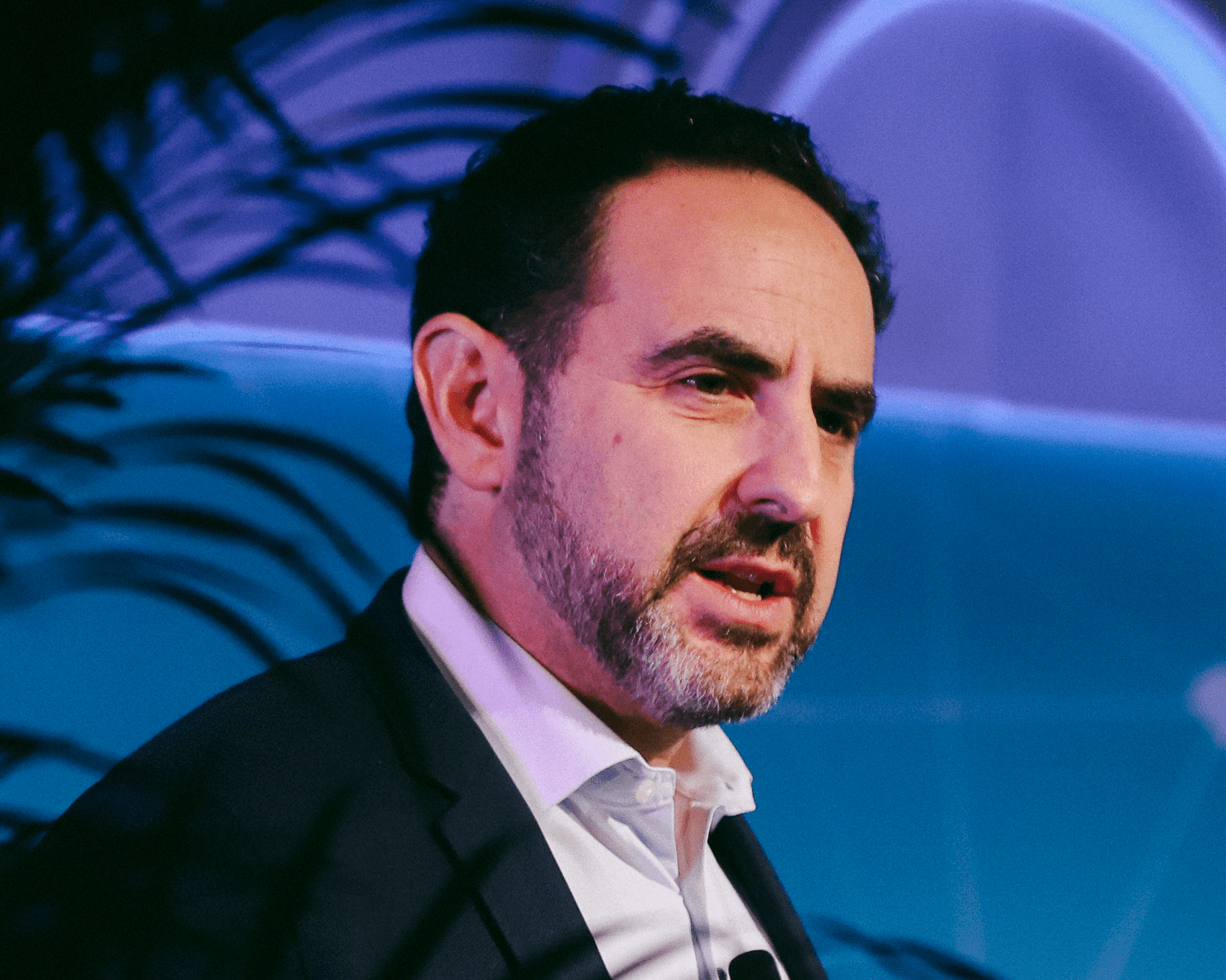
Dr. David Rock is the Co-founder and CEO of the NeuroLeadership Institute.courtesy of the NeuroLeadership Institute
Add Fortune on Google for similar content.

After three years of widespread generative AI adoption, our data reveals only a small percentage of U.S. employees use AI in such a way that it enhances their thinking. Most workers either resist the technology entirely or use it passively. A small group — call them fluent users — does something fundamentally different.

Recommended Video

So, what sets them apart? It’s not IQ. It’s not a technical skill. When we ask people how they’re using AI to make themselves smarter, their descriptions coalesce around a particular skill that rejects asking AI for direct answers to complex problems. These fluent users are thinking about their own thinking, casting AI in a supportive role, not a guiding one.

What they are describing is the act of metacognition.

The skill that unlocks smarter AI use

Metacognition is a fundamental concept in psychology that involves a distinctly human ability: reflecting on our own stream of thoughts, mulling them over, revisiting assumptions, and folding in new ideas to evolve our mental model. When we ask ourselves, “What am I missing?” or “What’s another way of looking at this problem?” We are engaging in metacognitive acts.

Few people practice metacognition deliberately, which makes fluent AI users look almost magical to their peers — the way a polyglot seems effortless to someone who only speaks one language. But here’s the good news: the skill is highly learnable. With the right principles and enough practice, anyone can use AI to make themselves smarter.

Based on our research, AI fluent users represent between 5–30% of employees at a given organization, depending on industry and role. They don’t ask the chatbot to generate a plan and pass it off as their own. Instead, they remain in the driver’s seat, starting conversations with prompts like:

I’ve created a marketing plan that I need help refining. I’m fairly confident it needs to reach mid-career professionals between 28–45 years old, but I could be missing something because of my unconscious bias around the topic. Without providing specific suggestions, can you help me think through my various options for improving the attached plan?

There are several things going on here. Most importantly, notice that the prompt doesn’t hand control to the AI. In our example, the user explicitly tells the AI not to offer suggestions — signaling that the user intends to remain the intellectual authority in the conversation.

Three metacognitive habits fluent users share

First, the prompt demonstrates humility. The user acknowledges they don’t have all the answers, using certain hedge phrases, such as “I’m fairly confident” and “could be missing something.” These signal a growth mindset, or the belief that one’s skills can be improved over time. Without it, the ego stays in self-protection mode — and learning stops.

Second, the prompt shows flexibility. The user acknowledges their point of view isn’t the only valid one. With a bit of digging, other options will come into view, expanding their perspective on the matter. From a neuroscience perspective, cognitive flexibility in AI usage enables us to be adaptive and open to multiple perspectives. Cognitive flexibility is thought to involve an expansive network of brain regions involved in cognitive control, including regions of the prefrontal cortex. 

Third, the prompt shows the user taking an active role in driving their search for new perspectives — a form of vigilance. The user prioritizes getting it right over feeling right.

Bias is a quiet saboteur. Without pausing to question blind spots, users risk having AI simply repackage flawed assumptions in new wrapping. Also, a sense of vigilance is crucial for mitigating any biases that may be embedded in the AI’s answers — including biases baked into the AI itself.

The most encouraging finding from our research: metacognition isn’t an innate talent. It’s a trainable skill. The more deliberately you practice thinking about your own thinking, the more natural it becomes — and the more likely you are to walk away from every AI conversation sharper than when you started. In an era when most people worry AI will make them dumber, fluent users are quietly proving the opposite.

The opinions expressed in Fortune.com commentary pieces are solely the views of their authors and do not necessarily reflect the opinions and beliefs of Fortune.

About the Authors
By David Rock
See full bioRight Arrow Button Icon
By Chris Weller
See full bioRight Arrow Button Icon
Add Fortune on Google for similar content.

Latest in Commentary

Finance
Lorem ipsum dolor sit amet, consectetur adipiscing elit, sed do eiusmod tempor incididunt ut labore et dolore magna aliqua. Ut enim ad minim veniam
By Fortune Editors
October 20, 2025
Finance
Lorem ipsum dolor sit amet, consectetur adipiscing elit, sed do eiusmod tempor incididunt ut labore et dolore magna aliqua. Ut enim ad minim veniam
By Fortune Editors
October 20, 2025
Finance
Lorem ipsum dolor sit amet, consectetur adipiscing elit, sed do eiusmod tempor incididunt ut labore et dolore magna aliqua. Ut enim ad minim veniam
By Fortune Editors
October 20, 2025
Finance
Lorem ipsum dolor sit amet, consectetur adipiscing elit, sed do eiusmod tempor incididunt ut labore et dolore magna aliqua. Ut enim ad minim veniam
By Fortune Editors
October 20, 2025
Finance
Lorem ipsum dolor sit amet, consectetur adipiscing elit, sed do eiusmod tempor incididunt ut labore et dolore magna aliqua. Ut enim ad minim veniam
By Fortune Editors
October 20, 2025
Finance
Lorem ipsum dolor sit amet, consectetur adipiscing elit, sed do eiusmod tempor incididunt ut labore et dolore magna aliqua. Ut enim ad minim veniam
By Fortune Editors
October 20, 2025

Most Popular

Finance
Lorem ipsum dolor sit amet, consectetur adipiscing elit, sed do eiusmod tempor incididunt ut labore et dolore magna aliqua. Ut enim ad minim veniam
By Fortune Editors
October 20, 2025
Finance
Lorem ipsum dolor sit amet, consectetur adipiscing elit, sed do eiusmod tempor incididunt ut labore et dolore magna aliqua. Ut enim ad minim veniam
By Fortune Editors
October 20, 2025
Finance
Lorem ipsum dolor sit amet, consectetur adipiscing elit, sed do eiusmod tempor incididunt ut labore et dolore magna aliqua. Ut enim ad minim veniam
By Fortune Editors
October 20, 2025
Finance
Lorem ipsum dolor sit amet, consectetur adipiscing elit, sed do eiusmod tempor incididunt ut labore et dolore magna aliqua. Ut enim ad minim veniam
By Fortune Editors
October 20, 2025
Finance
Lorem ipsum dolor sit amet, consectetur adipiscing elit, sed do eiusmod tempor incididunt ut labore et dolore magna aliqua. Ut enim ad minim veniam
By Fortune Editors
October 20, 2025
Finance
Lorem ipsum dolor sit amet, consectetur adipiscing elit, sed do eiusmod tempor incididunt ut labore et dolore magna aliqua. Ut enim ad minim veniam
By Fortune Editors
October 20, 2025
Fortune Secondary Logo
Rankings
  • 100 Best Companies
  • Fortune 500
  • Global 500
  • Fortune 500 Europe
  • Most Powerful Women
  • World's Most Admired Companies
  • See All Rankings
  • Lists Calendar
Sections
  • Finance
  • Fortune Crypto
  • Features
  • Leadership
  • Health
  • Commentary
  • Success
  • Retail
  • Mpw
  • Tech
  • Lifestyle
  • CEO Initiative
  • Asia
  • Politics
  • Conferences
  • Europe
  • Newsletters
  • Personal Finance
  • Environment
  • Magazine
  • Education
Customer Support
  • Frequently Asked Questions
  • Customer Service Portal
  • Privacy Policy
  • Terms Of Use
  • Single Issues For Purchase
  • International Print
Commercial Services
  • Advertising
  • Fortune Brand Studio
  • Fortune Analytics
  • Fortune Conferences
  • Business Development
  • Group Subscriptions
About Us
  • About Us
  • Press Center
  • Work At Fortune
  • Terms And Conditions
  • Site Map
  • About Us
  • Press Center
  • Work At Fortune
  • Terms And Conditions
  • Site Map
  • Facebook icon
  • Twitter icon
  • LinkedIn icon
  • Instagram icon
  • Pinterest icon

Dr. David Rock coined the term neuroleadership, and is the Co-founder and CEO of the NeuroLeadership Institute (NLI), a 26-year-old cognitive science consultancy that has advised over two thirds of the Fortune 100.

Chris Weller is a ghostwriter and editorial consultant. He is the founder of 1-Across, a company that specializes in helping social scientists, entrepreneurs, and ambitious thinkers write nonfiction books that change how people see the world. 

 
He has written two books to date, The Spaces That Make Us: Why Design Is Broken and How We Can Create a Happier, Healthier World and The Performance Culture: Go Beyond Buzzwords to Lead Teams That Win. His writing has appeared in The Atlantic, Harvard Business Review, Newsweek, Business Insider, and Fast Company. 
 
He can be reached at 1across.co.


Latest in Commentary

sb
Commentaryclimate change
The climate policy triangle: why leaders can no longer choose between growth, security and sustainability
By Sebastian BuckupJune 23, 2026
13 hours ago
brett
CommentaryManagement
Middle managers aren’t going extinct—they’re evolving into something more powerful
By Brett HurtJune 23, 2026
22 hours ago
ravi
CommentaryAI agents
Yale School of Management: surveillance pricing is just the beginning. AI agents will be the real test of corporate trust
By Ravi Dhar and Jon IwataJune 23, 2026
23 hours ago
elon
CommentaryElon Musk
Elon Musk’s trillion dollars aren’t real — and that’s the point
By Douglas P. McCormickJune 23, 2026
23 hours ago
gen z
CommentaryCareers
Gen Z: if you want to succeed at work, you need to start friction-maxxing
By Michelle SobelJune 23, 2026
24 hours ago
rp
CommentaryLaw
Cooley CEO: Big Law won’t survive if it treats AI as just an efficiency tool
By Rachel ProffittJune 23, 2026
1 day ago

Most Popular

After forcing workers back to the office, Goldman Sachs and JPMorgan Chase are now letting their staff work remotely—but only for the World Cup
Success
After forcing workers back to the office, Goldman Sachs and JPMorgan Chase are now letting their staff work remotely—but only for the World Cup
By Orianna Rosa RoyleJune 23, 2026
22 hours ago
Markets tumble worldwide as Fed resets expectations: $400 billion wiped off SpaceX stock
Banking
Markets tumble worldwide as Fed resets expectations: $400 billion wiped off SpaceX stock
By Jim EdwardsJune 23, 2026
1 day ago
Current price of oil as of June 23, 2026
Personal Finance
Current price of oil as of June 23, 2026
By Joseph HostetlerJune 23, 2026
22 hours ago
Meet the 2 men putting New York's $300 billion pension fund in play for the first time in 20 years
Investing
Meet the 2 men putting New York's $300 billion pension fund in play for the first time in 20 years
By Nick LichtenbergJune 22, 2026
2 days ago
Former U.S. Secret Service agent says bringing your authentic self to work stifles teamwork: 'You don’t get high performers, you get sloppiness'
Success
Former U.S. Secret Service agent says bringing your authentic self to work stifles teamwork: 'You don’t get high performers, you get sloppiness'
By Sydney LakeJune 21, 2026
3 days ago
Texas and Charlotte used to build huge McMansions—now they're copying the California design tricks they once mocked
Real Estate
Texas and Charlotte used to build huge McMansions—now they're copying the California design tricks they once mocked
By Sydney LakeJune 22, 2026
2 days ago

© 2026 Fortune Media IP Limited. All Rights Reserved. Use of this site constitutes acceptance of our Terms of Use and Privacy Policy | CA Notice at Collection and Privacy Notice | Do Not Sell/Share My Personal Information
FORTUNE is a trademark of Fortune Media IP Limited, registered in the U.S. and other countries. FORTUNE may receive compensation for some links to products and services on this website. Offers may be subject to change without notice.