• Home
  • Latest
  • Fortune 500
  • Finance
  • Tech
  • Leadership
  • Lifestyle
  • Rankings
  • Multimedia
CommentaryLoneliness

Why my $150 million startup thinks it can solve the $406 billion loneliness problem

By
Fabio Bin
Fabio Bin
Down Arrow Button Icon
By
Fabio Bin
Fabio Bin
Down Arrow Button Icon
March 20, 2026, 5:00 AM ET
fabio
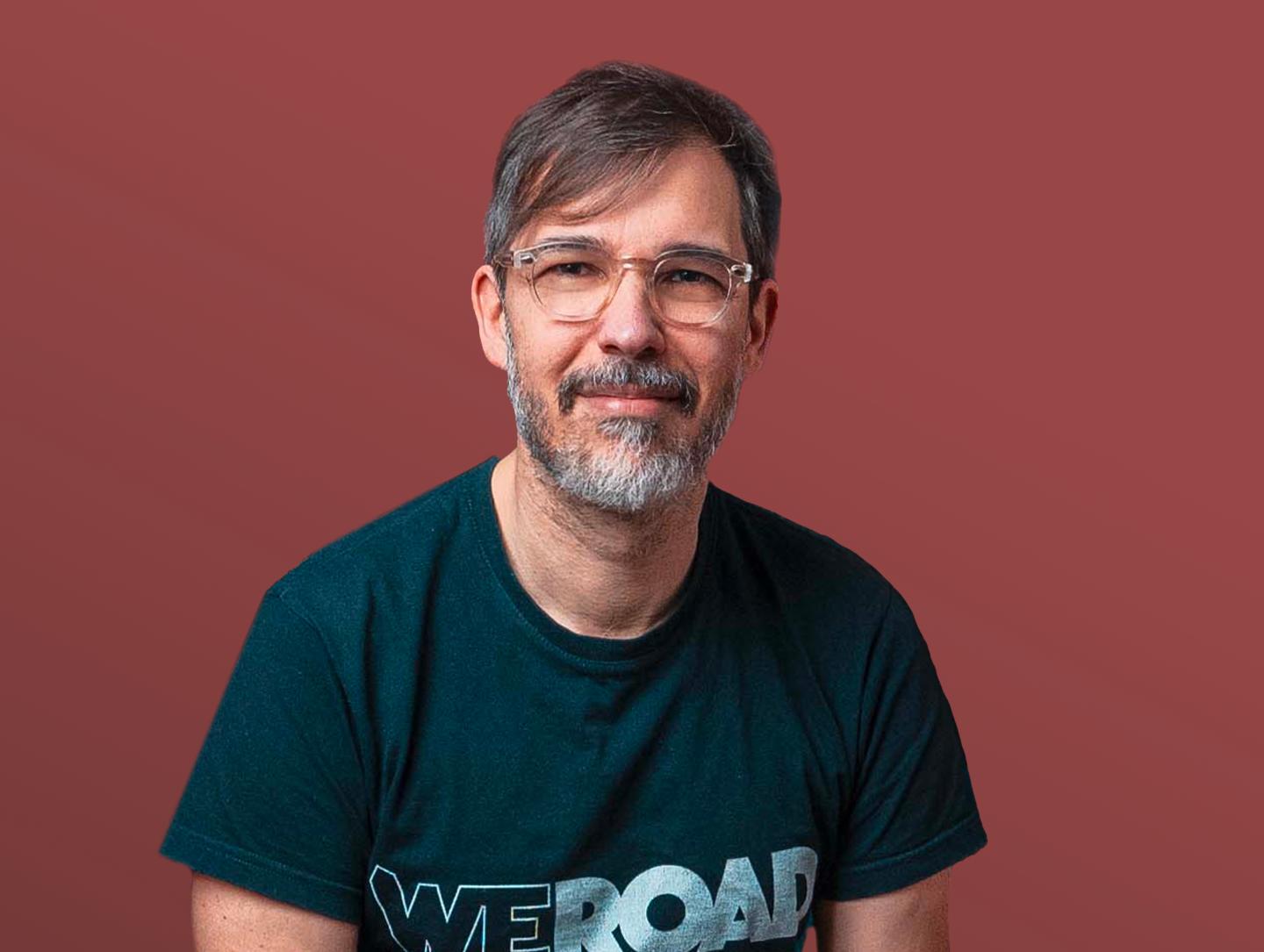
Fabio Bin is co-founder and CMO of WeRoad.courtesy of WeRoad

Facebook, Twitter, and MySpace once promised to bring humanity closer together. They delivered something else entirely.

Recommended Video

The screen economy that emerged around these apps at extraordinary speed optimized for attention. Time spent and daily active users were the twin metrics upon which this economy lived and died. Engagement loops got stickier and friction fell away from increasingly measurable interactions. The promises of internet-induced belonging, of social cohesion, of a new global intimacy all failed to materialize.

Instead, people retreated into their screens at such a scale that major social health organizations started sounding the alarm about a global loneliness epidemic. The World Health Organization found that 1 in 6 people worldwide experienced persistent loneliness, contributing to 870,000 deaths per year and costing governments billions in healthcare, employment, and education. Loneliness often manifests on balance sheets as absenteeism, which costs the U.S. economy alone $406 billion annually.

People are starving for the meaningful social connection they haven’t found online, and now they’re willing to pay. That hunger is quietly giving rise to a brand new market — and a generation of startups racing to serve it.

How social isolation created a new demand 

Humans are social animals. We’re biologically wired for social cohesion, which has been a matter of life or death since the days of hunting woolly mammoths and sleeping in caves. As our species marched forward, we built this cohesion into institutions: schools, religious communities, trade associations, sports clubs, civic organizations, even entire nations. Multigeneration families living together were the norm and  every city was dotted with bars and cafés for informal gatherings.

When such institutions enter a protracted decline, the desire for community remains. Enter the IRL economy, which I loosely define as an industry that deliberately facilitates in-person belonging. The end goal of all these businesses is to get people offline, together. How a given business goes about doing it is somewhat secondary.

The first phase of this economy arrived in the form of city-specific meet-up apps. Meetup, arguably the most popular of these apps, actually predates most social media platforms, having been initially founded to bring New Yorkers together in the wake of 9/11. Post-Facebook, so to speak, these platforms proliferated, and Meetup eventually proved so successful that WeWork bought it for $200 million in 2017. New startups meanwhile coordinated curated dinners, coworking spaces, running clubs, and shared activities. At WeRoad, we came to it through travel.

We organize trips for small groups of people who do not know each other before departure, specifically targeting young adults in their 20s and 30s. Wherever our travelers go, the base product is the same: guaranteed connection with like-minded people. We saw solo travel become a bona fide phenomenon and we figured many solo travelers still want to meet others along the way. We offered them a way to solo travel together.

It worked. When you give people the chance to rebuild social scaffolding, they will take it.

The economics of the new social scaffolding

Real-world participation has not disappeared. It has, however, slipped through the cracks of an atomized world. In dismantling social scaffolding through the decline of third spaces, real-world participation became difficult to access spontaneously. Going out was no longer a surefire way to meet someone, and the dating apps that emerged within the attention economy didn’t guarantee meaningful connections either.

IRL economy businesses sell that structure. We’re selling context more than a single, easily defined product. We commercialized travel at WeRoad, but we’re actually serving a different need. If we didn’t exist, the solo travelers who use us would still go all over the world. What they wouldn’t necessarily get is the connection we offer. That’s what they’re paying for, more than any specific trip to Mexico or Morocco or Indonesia.

The real product is always connection. We achieve it through structured immersion: 15 strangers together for ten days, away from their routines and homes. Introduce shared logistics, a little unpredictability, and the mild discomfort inherent to being in an unfamiliar place. Titles fade, social bubbles soften, interaction is a matter of course.

There’s basic economics in play, too. Real-world connection feels scarce and scarcity drives demand and increases value. The global travel and experience economy is already valued at over $1 trillion. IRL businesses are meeting that demand by contextualizing real-world connection in abundant, active economic sectors—not just through travel, but also dining out (a global industry valued at $3.9 trillion) and live music (valued at $38.5 billion). But since belonging doesn’t operate like behavioral metrics, its economic value will always be harder to measure than in the attention economy.

It’s too early for formal valuations of the IRL economy. What we do know is that VC investment in consumer startups, which includes IRL business, rose 25% between 2023 and the end of 2024. We can also point to funds like the Jägermeister-backed Best Nights VC, which specifically invests in startups dedicated to nightlife and going out together. And Tinder is now beta testing an in-person events tab offering pottery classes, raves, and bowling nights. Something big is happening here.

Friction-maxxing and mass atomization

In 2026, we’re seeing a new trend emerge: friction-maxxing.

Friction-maxxing is the deliberate rejection of seamless convenience — the transactional optimization that virtually every consumer-facing company has ruthlessly pursued for a decade. You order dinner without speaking to anyone. You rent a bike by scanning a QR code. You work from home, stream on demand, and feel constantly stimulated while remaining physically alone. Friction-maxxing refuses that bargain.

The friction-maxxers, however, need somewhere to go to find the connection they seek, and this is where the IRL economy comes in.

None of this is precisely new. Although social atomization exploded in the age of social media, it had already begun to take hold in the wake of the Industrial Revolution. Family members moved away from one another. Professional environments became increasingly tenuous as places to build community, despite colleagues being the only built-in social circle for many young professionals. Traditional community structures continued to decline. Digital communication emerged as the default, a development accelerated by the pandemic. In other words, we’ve been headed this way for a long time. 

The IRL economy is still emerging, but the demand behind it extends far beyond the 1 in 6 people experiencing persistent loneliness. The friction-maxxers aren’t just rejecting their phones — they’re signaling that the next trillion-dollar consumer market won’t be built on a screen.

The opinions expressed in Fortune.com commentary pieces are solely the views of their authors and do not necessarily reflect the opinions and beliefs of Fortune.

Join us at the Fortune Workplace Innovation Summit May 19–20, 2026, in Atlanta. The next era of workplace innovation is here—and the old playbook is being rewritten. At this exclusive, high-energy event, the world’s most innovative leaders will convene to explore how AI, humanity, and strategy converge to redefine, again, the future of work. Register now.
About the Author
By Fabio Bin
See full bioRight Arrow Button Icon

Latest in Commentary

Finance
Lorem ipsum dolor sit amet, consectetur adipiscing elit, sed do eiusmod tempor incididunt ut labore et dolore magna aliqua. Ut enim ad minim veniam
By Fortune Editors
October 20, 2025
Finance
Lorem ipsum dolor sit amet, consectetur adipiscing elit, sed do eiusmod tempor incididunt ut labore et dolore magna aliqua. Ut enim ad minim veniam
By Fortune Editors
October 20, 2025
Finance
Lorem ipsum dolor sit amet, consectetur adipiscing elit, sed do eiusmod tempor incididunt ut labore et dolore magna aliqua. Ut enim ad minim veniam
By Fortune Editors
October 20, 2025
Finance
Lorem ipsum dolor sit amet, consectetur adipiscing elit, sed do eiusmod tempor incididunt ut labore et dolore magna aliqua. Ut enim ad minim veniam
By Fortune Editors
October 20, 2025
Finance
Lorem ipsum dolor sit amet, consectetur adipiscing elit, sed do eiusmod tempor incididunt ut labore et dolore magna aliqua. Ut enim ad minim veniam
By Fortune Editors
October 20, 2025
Finance
Lorem ipsum dolor sit amet, consectetur adipiscing elit, sed do eiusmod tempor incididunt ut labore et dolore magna aliqua. Ut enim ad minim veniam
By Fortune Editors
October 20, 2025

Most Popular

Finance
Lorem ipsum dolor sit amet, consectetur adipiscing elit, sed do eiusmod tempor incididunt ut labore et dolore magna aliqua. Ut enim ad minim veniam
By Fortune Editors
October 20, 2025
Finance
Lorem ipsum dolor sit amet, consectetur adipiscing elit, sed do eiusmod tempor incididunt ut labore et dolore magna aliqua. Ut enim ad minim veniam
By Fortune Editors
October 20, 2025
Finance
Lorem ipsum dolor sit amet, consectetur adipiscing elit, sed do eiusmod tempor incididunt ut labore et dolore magna aliqua. Ut enim ad minim veniam
By Fortune Editors
October 20, 2025
Finance
Lorem ipsum dolor sit amet, consectetur adipiscing elit, sed do eiusmod tempor incididunt ut labore et dolore magna aliqua. Ut enim ad minim veniam
By Fortune Editors
October 20, 2025
Finance
Lorem ipsum dolor sit amet, consectetur adipiscing elit, sed do eiusmod tempor incididunt ut labore et dolore magna aliqua. Ut enim ad minim veniam
By Fortune Editors
October 20, 2025
Finance
Lorem ipsum dolor sit amet, consectetur adipiscing elit, sed do eiusmod tempor incididunt ut labore et dolore magna aliqua. Ut enim ad minim veniam
By Fortune Editors
October 20, 2025
Fortune Secondary Logo
Rankings
  • 100 Best Companies
  • Fortune 500
  • Global 500
  • Fortune 500 Europe
  • Most Powerful Women
  • World's Most Admired Companies
  • See All Rankings
  • Lists Calendar
Sections
  • Finance
  • Fortune Crypto
  • Features
  • Leadership
  • Health
  • Commentary
  • Success
  • Retail
  • Mpw
  • Tech
  • Lifestyle
  • CEO Initiative
  • Asia
  • Politics
  • Conferences
  • Europe
  • Newsletters
  • Personal Finance
  • Environment
  • Magazine
  • Education
Customer Support
  • Frequently Asked Questions
  • Customer Service Portal
  • Privacy Policy
  • Terms Of Use
  • Single Issues For Purchase
  • International Print
Commercial Services
  • Advertising
  • Fortune Brand Studio
  • Fortune Analytics
  • Fortune Conferences
  • Business Development
  • Group Subscriptions
About Us
  • About Us
  • Press Center
  • Work At Fortune
  • Terms And Conditions
  • Site Map
  • About Us
  • Press Center
  • Work At Fortune
  • Terms And Conditions
  • Site Map
  • Facebook icon
  • Twitter icon
  • LinkedIn icon
  • Instagram icon
  • Pinterest icon

Fabio Bin is co-founder and CMO of WeRoad, the European leader in group adventure travel for solo travellers. He has led the company’s brand and marketing since 2017, growing the business across multiple international markets. He believes the purpose of marketing is not just visibility but to bring people together through shared experiences and genuine connection. He designed WeRoad's community-driven brand around belonging, participation, and real-life experiences. Fabio is an Effie Award winner and previously held senior digital and marketing roles at Hearst Magazines, RCS MediaGroup and OneDay Group. He lives and works in Milan.


Latest in Commentary

golf
Commentarybooks
How playing golf alone can make you better at your job
By Gary BelskyMay 8, 2026
3 hours ago
naomi
Commentarymental health
Naomi Osaka: the things I didn’t do to succeed
By Naomi OsakaMay 8, 2026
5 hours ago
amanda
Commentarybatteries
Why energy storage is moving beyond the capex debate
By Amanda SimonianMay 7, 2026
1 day ago
trump
CommentaryMedicare
Auto-enrollment in Medicare Advantage isn’t a nudge. It’s a trap
By Brian KeyserMay 7, 2026
1 day ago
nyse
CommentaryAI agents
Your trusted advocate or your rebellious Frankenstein: how you deploy agentic AI determines which one you get
By Jeffrey Sonnenfeld, Stephen Henriques, Yevheniia Podurets and Jasmine GarryMay 7, 2026
1 day ago
moore
CommentaryAntitrust
I litigated the JetBlue-Spirit merger. A few thoughts on the future of antitrust in the airline industry
By James "Jimmy" MooreMay 7, 2026
1 day ago

Most Popular

California farmers must destroy 420,000 peach trees after Del Monte closes its canneries and cancels more than $550 million in long-term contracts
North America
California farmers must destroy 420,000 peach trees after Del Monte closes its canneries and cancels more than $550 million in long-term contracts
By Sasha RogelbergMay 7, 2026
19 hours ago
U.S. Treasury will have to borrow $2 trillion this year just to continue functioning—more than $166 billion every month
Economy
U.S. Treasury will have to borrow $2 trillion this year just to continue functioning—more than $166 billion every month
By Eleanor PringleMay 7, 2026
1 day ago
'Blue dot fever' plagues musicians like Post Malone, Meghan Trainor, and Zayn as a growing list of artists cancel tours due to lagging ticket sales
Arts & Entertainment
'Blue dot fever' plagues musicians like Post Malone, Meghan Trainor, and Zayn as a growing list of artists cancel tours due to lagging ticket sales
By Dave Lozo and Morning BrewMay 7, 2026
20 hours ago
A Michigan farm town voted down plans for a giant OpenAI-Oracle data center. Weeks later, construction began
Magazine
A Michigan farm town voted down plans for a giant OpenAI-Oracle data center. Weeks later, construction began
By Sharon GoldmanMay 6, 2026
2 days ago
Current price of oil as of May 7, 2026
Personal Finance
Current price of oil as of May 7, 2026
By Joseph HostetlerMay 7, 2026
1 day ago
Tokyo is throwing out its strict office dress code and asking workers to wear shorts amid the war in Iran energy crisis
Success
Tokyo is throwing out its strict office dress code and asking workers to wear shorts amid the war in Iran energy crisis
By Emma BurleighMay 5, 2026
3 days ago

© 2026 Fortune Media IP Limited. All Rights Reserved. Use of this site constitutes acceptance of our Terms of Use and Privacy Policy | CA Notice at Collection and Privacy Notice | Do Not Sell/Share My Personal Information
FORTUNE is a trademark of Fortune Media IP Limited, registered in the U.S. and other countries. FORTUNE may receive compensation for some links to products and services on this website. Offers may be subject to change without notice.