
• Home
  • Latest
  • Fortune 500
  • Finance
  • Tech
  • Leadership
  • Lifestyle
  • Rankings
  • Multimedia
EconomyAgriculture

Fertilizer prices soar as Strait of Hormuz tensions rise—forcing U.S. farmers to rethink spring planting

Sasha Rogelberg
By
Sasha Rogelberg
Sasha Rogelberg
Reporter
Down Arrow Button Icon
Sasha Rogelberg
By
Sasha Rogelberg
Sasha Rogelberg
Reporter
Down Arrow Button Icon
March 12, 2026, 12:58 PM ET
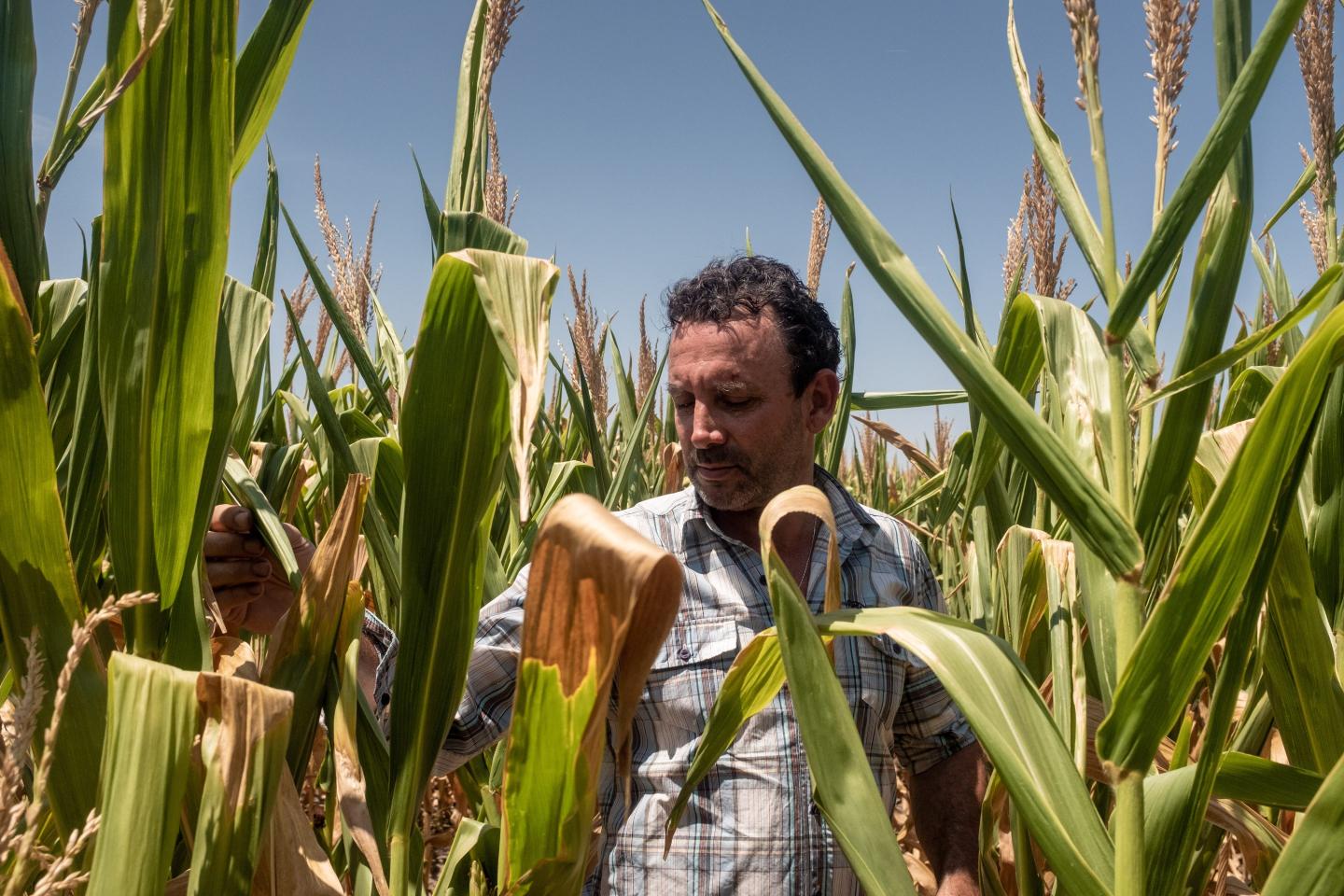
A man stands amidst a field of corn.
Soaring fertilizer prices as a result of the Iran war may disincentivize farmers from growing crops like corn, which require more agricultural chemicals to grow.Anita Pouchard Serra/Bloomberg—Getty Images

U.S. farmers, who have spent the last year grappling with tariff shocks and shrinking margins, now face another blow to their operations.

Recommended Video

The de facto closure of the Strait of Hormuz has fertilizer prices surging, complicating the already strained decisions U.S. farmers are making on the cusp of planting season.

“You’ve got the usual tension, you’ve got the added tension of fertilizer and trade, and you’ve got the perhaps more crucial context of, margins are very poor,” Seth Meyer, a former chief economist for the U.S. Department of Agriculture, told Fortune. “A bad decision this year could be pretty costly.”

About one-third of global seaborne fertilizer passes through the Strait of Hormuz, where Persian Gulf nations export nearly half of the world’s urea and 30% of its ammonia—key plant nutrients. Threats to that shipping route have pushed prices up roughly 30% between late February and early March, according to the Fertilizer Institute.

Certain crops rely on fertilizer more than others, namely corn, which accounts for 95% of the total grain and feed grown in the U.S., per USDA data. The exorbitant prices of fertilizer may force some farmers to pivot some of their acres away from corn and instead grow more crops that rely less on added nutrients, such as soybeans, said Meyer, who now serves as director of the University of Missouri’s Food and Agricultural Policy Research Institute. President Donald Trump’s One Big Beautiful Bill Act outlines subsidies for crops like wheat, corn, and soybeans that may also sway which crops farmers choose to grow.

While many farmers have already purchased fertilizer, others are now faced with the challenging decision of whether to purchase more at a higher price, or take the risk of producing more of a crop that is already at a surplus with rock-bottom prices.

“The chunk of the fertilizer has already been pre-purchased, but not all of it,” Meyer said. “This just adds to the tension on producers’ decision-making when they go into the field this year, if they don’t have all of their fertilizer needs booked.”

A trying time for farmers

Soaring fertilizer prices add yet another variable to farmers’ ongoing battle against razor-thin margins. Since 2022, corn prices are down nearly 50% and soybeans 40%, while fertilizer and pesticide costs have barely eased—leaving corn farmers losing 85 cents per bushel, according to the National Corn Growers Association.

As a result, farm bankruptcies have been on the rise, reaching 315 Chapter 12 filings in 2025, according to an American Farm Bureau Federation report published in February, a 46% increase from the 216 filings in 2024.

Part of that strain traces back to Trump administration tariffs, which added nearly $1 billion in costs on fertilizers, chemicals, machinery, and seeds between February and October 2025, according to North Dakota State University’s Agricultural Trade Monitor. The levies also squeezed soybean exports by effectively pricing American farmers out of the global market, though the U.S. still shipped 12 million tons to China as promised.

These recent pressures likely caused farmers to delay fertilizer orders, as they waited to see if prices eased or new aid programs were announced, Scott Stiles, extension agricultural economics program associate for the University of Arkansas System Division of Agriculture, told Fortune.

“A significant number of producers were delaying input purchases, either waiting to see if they got financing for 2026 or waiting for renewal of a working capital line for cash flow,” Stiles said. “That was a factor that delayed decisions about locking-in 2026 inputs.”

To be sure, Trump announced in December a $12 billion bailout plan to cushion farmers impacted by higher input costs and fewer export opportunities as a result of the tariffs. (USDA opened the enrollment period for this on February 23, 2026, with a deadline of April 17, 2026.)

Echoes of the war in Ukraine

Some of the challenges farmers faced also predated Trump’s second term. In February 2022, following the Russian invasion of Ukraine, oil and fertilizer prices similarly spiked because Russia accounts for about 20% of the global fertilizer trade. 

But this time, disruptions could be even more severe. The NDSU Center for Agricultural Policy and Trade Studies noted in its latest report that the Persian Gulf accounts for a larger share of the global fertilizer trade than Russia. Moreover, farmers were able to offset some increased input costs as a result of a spike in grain prices because of the disruptions in the Black Sea region, the world’s breadbasket. Because Iran is not a major grain producer, grain crop prices will likely remain low, giving farmers few options to recoup costs.

Even if the war in Iran is short-lived, the consequences of the conflict will linger, according to Ryan Loy, assistant professor and extension economist for the University of Arkansas Division of Agriculture. He pointed to a “rocket and feather” pattern that input costs follow after a disruptive event.

“When prices react, they go up like a rocket, but they are very slow to correct and come down like a feather,” Loy told Fortune. “This is all contributing to a kind of vicious circle that farmers are caught in.”

Subscribe to Fortune Gulf Brief. Every Tuesday, this new newsletter will deliver clear-eyed, authoritative intelligence on the deals, decisions, policies, and power shifts shaping one of the world’s most consequential regions, written for the people who need to act on it. Sign up here.
About the Author
Sasha Rogelberg
By Sasha RogelbergReporter
LinkedIn iconTwitter icon

Sasha Rogelberg is a reporter and former editorial fellow on the news desk at Fortune, covering retail and the intersection of business and popular culture.

See full bioRight Arrow Button Icon

Latest in Economy

Finance
Lorem ipsum dolor sit amet, consectetur adipiscing elit, sed do eiusmod tempor incididunt ut labore et dolore magna aliqua. Ut enim ad minim veniam
By Fortune Editors
October 20, 2025
Finance
Lorem ipsum dolor sit amet, consectetur adipiscing elit, sed do eiusmod tempor incididunt ut labore et dolore magna aliqua. Ut enim ad minim veniam
By Fortune Editors
October 20, 2025
Finance
Lorem ipsum dolor sit amet, consectetur adipiscing elit, sed do eiusmod tempor incididunt ut labore et dolore magna aliqua. Ut enim ad minim veniam
By Fortune Editors
October 20, 2025
Finance
Lorem ipsum dolor sit amet, consectetur adipiscing elit, sed do eiusmod tempor incididunt ut labore et dolore magna aliqua. Ut enim ad minim veniam
By Fortune Editors
October 20, 2025
Finance
Lorem ipsum dolor sit amet, consectetur adipiscing elit, sed do eiusmod tempor incididunt ut labore et dolore magna aliqua. Ut enim ad minim veniam
By Fortune Editors
October 20, 2025
Finance
Lorem ipsum dolor sit amet, consectetur adipiscing elit, sed do eiusmod tempor incididunt ut labore et dolore magna aliqua. Ut enim ad minim veniam
By Fortune Editors
October 20, 2025

Most Popular

Finance
Lorem ipsum dolor sit amet, consectetur adipiscing elit, sed do eiusmod tempor incididunt ut labore et dolore magna aliqua. Ut enim ad minim veniam
By Fortune Editors
October 20, 2025
Finance
Lorem ipsum dolor sit amet, consectetur adipiscing elit, sed do eiusmod tempor incididunt ut labore et dolore magna aliqua. Ut enim ad minim veniam
By Fortune Editors
October 20, 2025
Finance
Lorem ipsum dolor sit amet, consectetur adipiscing elit, sed do eiusmod tempor incididunt ut labore et dolore magna aliqua. Ut enim ad minim veniam
By Fortune Editors
October 20, 2025
Finance
Lorem ipsum dolor sit amet, consectetur adipiscing elit, sed do eiusmod tempor incididunt ut labore et dolore magna aliqua. Ut enim ad minim veniam
By Fortune Editors
October 20, 2025
Finance
Lorem ipsum dolor sit amet, consectetur adipiscing elit, sed do eiusmod tempor incididunt ut labore et dolore magna aliqua. Ut enim ad minim veniam
By Fortune Editors
October 20, 2025
Finance
Lorem ipsum dolor sit amet, consectetur adipiscing elit, sed do eiusmod tempor incididunt ut labore et dolore magna aliqua. Ut enim ad minim veniam
By Fortune Editors
October 20, 2025
Fortune Secondary Logo
Rankings
  • 100 Best Companies
  • Fortune 500
  • Global 500
  • Fortune 500 Europe
  • Most Powerful Women
  • World's Most Admired Companies
  • See All Rankings
  • Lists Calendar
Sections
  • Finance
  • Fortune Crypto
  • Features
  • Leadership
  • Health
  • Commentary
  • Success
  • Retail
  • Mpw
  • Tech
  • Lifestyle
  • CEO Initiative
  • Asia
  • Politics
  • Conferences
  • Europe
  • Newsletters
  • Personal Finance
  • Environment
  • Magazine
  • Education
Customer Support
  • Frequently Asked Questions
  • Customer Service Portal
  • Privacy Policy
  • Terms Of Use
  • Single Issues For Purchase
  • International Print
Commercial Services
  • Advertising
  • Fortune Brand Studio
  • Fortune Analytics
  • Fortune Conferences
  • Business Development
  • Group Subscriptions
About Us
  • About Us
  • Press Center
  • Work At Fortune
  • Terms And Conditions
  • Site Map
  • About Us
  • Press Center
  • Work At Fortune
  • Terms And Conditions
  • Site Map
  • Facebook icon
  • Twitter icon
  • LinkedIn icon
  • Instagram icon
  • Pinterest icon

Latest in Economy

joaquin
Commentary250 Years of Innovation
Johnson & Johnson CEO: America’s innovation advantage starts with health 
By Joaquin DuatoMay 9, 2026
4 hours ago
tyler
EconomyRecession
This economist studied 400 years of recessions. His bleak conclusion: stop trying to predict them
By Nick LichtenbergMay 9, 2026
5 hours ago
Asia’s ultra-luxury Capella Hotels brand plans to double its portfolio by 2030, starting with Florence and Riyadh
Travel & LeisureHospitality
Asia’s ultra-luxury Capella Hotels brand plans to double its portfolio by 2030, starting with Florence and Riyadh
By Angelica AngMay 8, 2026
14 hours ago
Man driving and looking shocked.
Economygas prices
Driving less, canceling vacations, and tightening budgets: All the ways Americans are coping with soaring gas prices
By Tristan BoveMay 8, 2026
20 hours ago
kid on phone
Politicssmartphones and mobile devices
‘Close to zero’: Schools are spending tens of millions banning phones from classrooms, but test scores aren’t improving
By Jake AngeloMay 8, 2026
21 hours ago
Iran may have a higher tolerance for economic pain—but the pain is excruciating as regime reveals 100% inflation in just days on some items
EconomyIran
Iran may have a higher tolerance for economic pain—but the pain is excruciating as regime reveals 100% inflation in just days on some items
By Jason MaMay 8, 2026
22 hours ago

Most Popular

California farmers must destroy 420,000 peach trees after Del Monte closes its canneries and cancels more than $550 million in long-term contracts
North America
California farmers must destroy 420,000 peach trees after Del Monte closes its canneries and cancels more than $550 million in long-term contracts
By Sasha RogelbergMay 7, 2026
2 days ago
A Michigan farm town voted down plans for a giant OpenAI-Oracle data center. Weeks later, construction began
Magazine
A Michigan farm town voted down plans for a giant OpenAI-Oracle data center. Weeks later, construction began
By Sharon GoldmanMay 6, 2026
3 days ago
'Blue dot fever' plagues musicians like Post Malone, Meghan Trainor, and Zayn as a growing list of artists cancel tours due to lagging ticket sales
Arts & Entertainment
'Blue dot fever' plagues musicians like Post Malone, Meghan Trainor, and Zayn as a growing list of artists cancel tours due to lagging ticket sales
By Dave Lozo and Morning BrewMay 7, 2026
2 days ago
Current price of oil as of May 8, 2026
Personal Finance
Current price of oil as of May 8, 2026
By Joseph HostetlerMay 8, 2026
1 day ago
The CEO of Maersk, which ships 14% of everything you buy, said the Iran war is adding $500 million in monthly costs it's trying not to pass down
Energy
The CEO of Maersk, which ships 14% of everything you buy, said the Iran war is adding $500 million in monthly costs it's trying not to pass down
By Sasha RogelbergMay 8, 2026
22 hours ago
Airbnb CEO Brian Chesky warns two types of people won’t survive the AI era: ‘pure people managers’ and workers who resist change
Success
Airbnb CEO Brian Chesky warns two types of people won’t survive the AI era: ‘pure people managers’ and workers who resist change
By Emma BurleighMay 7, 2026
2 days ago

© 2026 Fortune Media IP Limited. All Rights Reserved. Use of this site constitutes acceptance of our Terms of Use and Privacy Policy | CA Notice at Collection and Privacy Notice | Do Not Sell/Share My Personal Information
FORTUNE is a trademark of Fortune Media IP Limited, registered in the U.S. and other countries. FORTUNE may receive compensation for some links to products and services on this website. Offers may be subject to change without notice.