• Home
  • Latest
  • Fortune 500
  • Finance
  • Tech
  • Leadership
  • Lifestyle
  • Rankings
  • Multimedia

Trendingnow

1

After forcing workers back to the office, Goldman Sachs and JPMorgan Chase are now letting their staff work remotely—but only for the World Cup

2

Markets tumble worldwide as Fed resets expectations: $400 billion wiped off SpaceX stock

3

Former U.S. Secret Service agent says bringing your authentic self to work stifles teamwork: 'You don’t get high performers, you get sloppiness'

1

After forcing workers back to the office, Goldman Sachs and JPMorgan Chase are now letting their staff work remotely—but only for the World Cup

2

Markets tumble worldwide as Fed resets expectations: $400 billion wiped off SpaceX stock

3

Former U.S. Secret Service agent says bringing your authentic self to work stifles teamwork: 'You don’t get high performers, you get sloppiness'
EconomyMiddle East

How Trump created a ‘nightmare scenario’ for the world economy

By
Paul Wiseman
Paul Wiseman
and
The Associated Press
Down Arrow Button Icon
By
Paul Wiseman
Paul Wiseman
and
The Associated Press
Down Arrow Button Icon
March 10, 2026, 11:05 AM ET
trump
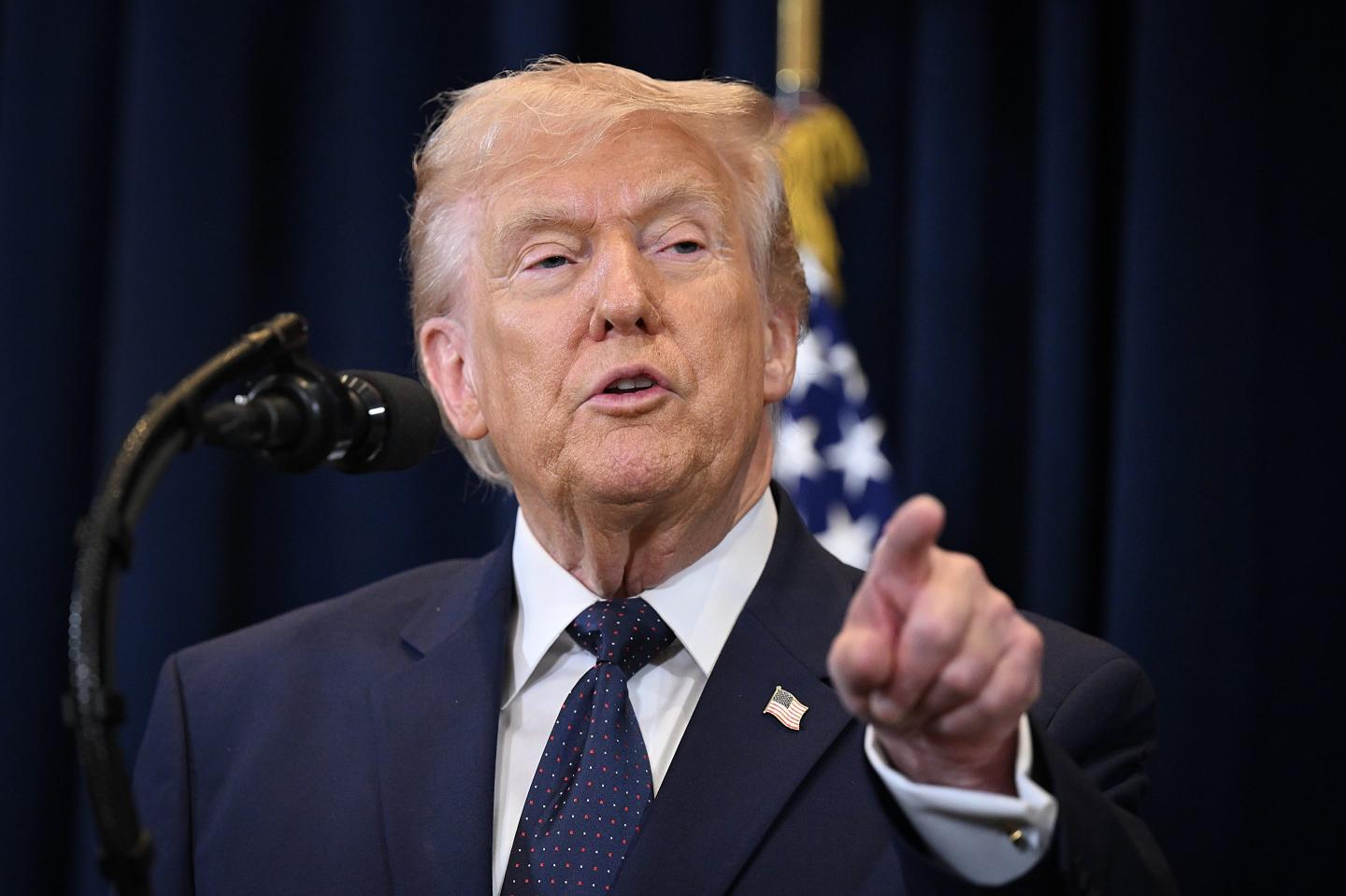
President Donald Trump speaks to reporters during a news conference at Trump National Doral Miami on March 9, 2026 in Doral, Florida. President Trump spoke on his administration's strikes on Iran. Roberto Schmidt/Getty Images
Add Fortune on Google for similar content.

The war with Iran is doing collateral damage to the world economy.

Recommended Video

The conflict is driving up energy and fertilizer prices; threatening food shortages in poor countries; destabilizing fragile states such as Pakistan; and complicating options for the inflation fighters at central banks like the Federal Reserve.

Causing much of the pain: the Strait of Hormuz — through which a fifth of the world’s oil passes — was effectively shut down after the U.S. and Israel launched missile strikes Feb. 28 that killed Iranian leader Ayatollah Ali Khamenei.

“For a long time, the nightmare scenario that deterred the U.S. from even thinking about an attack on Iran and which got them to urge restraint on Israel was that the Iranians would close the Strait of Hormuz,” said Maurice Obstfeld, a senior fellow at the Peterson Institute for International Economics and former chief economist at the International Monetary Fund. “Now we’re in the nightmare scenario.”

With a key shipping route cut off, oil prices have surged — from less than $70 a barrel on Feb. 27 to a peak of nearly $120 early Monday before settling closer to $90. They’ve taken gasoline prices with them.

According to AAA, the average price of U.S. gasoline has shot up to $3.48 a gallon from just under $3 a week ago. Prices could be felt even more significantly in Asia and Europe, which are more dependent on Middle Eastern oil and gas than the United States.

In India, restaurants are already warning of possible shutdowns as the government prioritizes gas supplies for households. Thailand has suspended overseas travel for civil servants and urged them to take stairs instead of elevators. The Philippines has introduced a temporary four-day work week for some government agencies, while Vietnam is encouraging people to work from home.

20 million barrels of oil a day go missing

Every 10% increase in oil prices — provided they persist for most of the year — will push up global inflation by 0.4 percentage points and reduce worldwide economic output by as much as 0.2%, said Kristalina Georgieva, managing director of the International Monetary Fund.

“The Strait of Hormuz has to be reopened,” said economist Simon Johnson of the Massachusetts Institute of Technology and recipient of the 2024 Nobel memorial prize in economics. “It’s 20 million barrels of oil a day going through there. There’s no excess capacity anywhere in the world that can fill that gap.”

The world economy has shown it can take a punch, absorbing blows from the Russian invasion of Ukraine four years ago and from President Donald Trump’s massive and unpredictable tariffs in 2025.

Many economists express hope that global commerce can stagger through the latest crisis.

“The world economy has shown itself capable of shaking off significant shocks like broad U.S. tariffs, so there is room for optimism that it will prove resilient to the fallout of the war on Iran,” said Eswar Prasad, professor of trade policy at Cornell University.

Timing is everything

Especially if oil prices can fall back to the $70-to-$80-a-barrel range, wrote economist Neil Shearing of Capital Economics, “the world economy may absorb the shock with less disruption than many fear.”

But a lot of ifs remain.

“The question is how long is it going to go on?” said Johnson, also former IMF chief economist. “It’s hard to see Iran backing down now that it’s announced this new leader” – Mojtaba Khamanei. The son of the slain ayatollah is believed to be even more of a hardliner than his father.

Also muddying the outlook for an end to the crisis is uncertainty about what the United States is trying to achieve. “This is all about President Trump,” Johnson said. “It’s not clear when he’s going to declare victory.”

Economic winners and losers

For now, the war is likely to create economic winners and losers.

Energy importers — most of Europe, South Korea, Taiwan, Japan, India and China — will get clobbered by higher prices, Shearing wrote in a commentary for London’s Chatham House think tank.

Pakistan finds itself in an especially bleak position. The South Asian country imports 40% of its energy and relies especially heavily on liquified natural gas from Qatar, supplies of which have been cut off by the conflict. Higher energy prices will squeeze Pakistani families and damage their economy.

Far from cutting interest rates to provide some relief, though, the country’s central bank will probably have to raise them instead, say economists Gareth Leather and Mark Williams of Capital Economics. That is partly because inflation remains uncomfortably high in Pakistan — and higher energy prices threaten to make it worse.

But oil-producing countries outside the warzone — Norway, Russia, Canada — will benefit from high oil prices without the risk of missile and drone attacks.

Energy isn’t the only issue. Up to 30% of world fertilizer exports – including urea, ammonia, phosphates, and sulfur – pass through the Strait of Hormuz, according to Joseph Glauber of the International Food Policy Research Institute.

Disruption in the Strait has already cut off fertilizer shipments, raising costs for farmers – and is likely pushing food prices higher.

“Any countries with significant agriculture sectors, including the United States, would be vulnerable,” Obstfeld said. “The effects are going to be most devastating in low-income countries where agricultural productivity may already be challenged. Add this extra cost component and you get the prospect of significant food shortages.”

Where things stand in the US

The United States, now a net exporter of energy, should gain slightly overall from higher oil and gas prices. But ordinary families will feel the pain at a time when Americans are already furious about high costs ahead of November’s midterm elections.

U.S. households pay $2,500 a year, or nearly $50 a week, to fill up their cars, said Mark Mathews, chief economist at the National Retail Federation. A 20% increase in gasoline prices means an extra $10 a week out their budgets, forcing them to cut back elsewhere. “If I have to pay more for an essential, then I would reduce a discretionary item,” Mathews said.

If oil prices remain around $100 a barrel, analysts at Evercore ISI calculated, the resulting higher gasoline prices will wipe out for most Americans the benefits of higher tax refunds this year arising from Trump’s 2025 tax cuts. Only the top 30% would still see a gain.

A quandary for central banks

The Iran crisis also puts the world’s central banks in a bind. Higher energy prices feed inflation. But they also hurt the economy. So should central bankers raise rates to curb inflation — or cut them to give the economy a lift?

The Fed is already divided between policymakers who think a weak American job market needs help from lower rates and those still worried that inflation remains stuck above the central bank’s 2% target.

“Their minds will easily go to the 1970s,” Johnson said, when conflict in the Middle East and an Arab oil embargo sent oil prices rocketing. Central bankers are haunted by the memory that their predecessors “didn’t get it right in the 1970s. They thought it was a temporary shock. They thought they could accommodate with lower interest rates, and they ended up regretting that because inflation became much higher.”

Johnson predicted that higher energy prices ignited by the war with Iran are “going to massively intensify the debate inside the Fed” and make U.S. rate cuts less likely.

____

Anne D’Innocenzio in New York, Christopher Rugaber in Washington, Aniruddha Ghosal in Hanoi, Vietnam, and Anton Delgado in Bangkok contributed to this report.

Subscribe to Fortune Gulf Brief. Every Tuesday, this new newsletter delivers clear-eyed, authoritative intelligence on the deals, decisions, policies, and power shifts shaping one of the world’s most consequential regions, written for the people who need to act on it. Sign up here.
About the Authors
By Paul Wiseman
See full bioRight Arrow Button Icon
By The Associated Press
See full bioRight Arrow Button Icon
Add Fortune on Google for similar content.

Latest in Economy

Finance
Lorem ipsum dolor sit amet, consectetur adipiscing elit, sed do eiusmod tempor incididunt ut labore et dolore magna aliqua. Ut enim ad minim veniam
By Fortune Editors
October 20, 2025
Finance
Lorem ipsum dolor sit amet, consectetur adipiscing elit, sed do eiusmod tempor incididunt ut labore et dolore magna aliqua. Ut enim ad minim veniam
By Fortune Editors
October 20, 2025
Finance
Lorem ipsum dolor sit amet, consectetur adipiscing elit, sed do eiusmod tempor incididunt ut labore et dolore magna aliqua. Ut enim ad minim veniam
By Fortune Editors
October 20, 2025
Finance
Lorem ipsum dolor sit amet, consectetur adipiscing elit, sed do eiusmod tempor incididunt ut labore et dolore magna aliqua. Ut enim ad minim veniam
By Fortune Editors
October 20, 2025
Finance
Lorem ipsum dolor sit amet, consectetur adipiscing elit, sed do eiusmod tempor incididunt ut labore et dolore magna aliqua. Ut enim ad minim veniam
By Fortune Editors
October 20, 2025
Finance
Lorem ipsum dolor sit amet, consectetur adipiscing elit, sed do eiusmod tempor incididunt ut labore et dolore magna aliqua. Ut enim ad minim veniam
By Fortune Editors
October 20, 2025

Most Popular

Finance
Lorem ipsum dolor sit amet, consectetur adipiscing elit, sed do eiusmod tempor incididunt ut labore et dolore magna aliqua. Ut enim ad minim veniam
By Fortune Editors
October 20, 2025
Finance
Lorem ipsum dolor sit amet, consectetur adipiscing elit, sed do eiusmod tempor incididunt ut labore et dolore magna aliqua. Ut enim ad minim veniam
By Fortune Editors
October 20, 2025
Finance
Lorem ipsum dolor sit amet, consectetur adipiscing elit, sed do eiusmod tempor incididunt ut labore et dolore magna aliqua. Ut enim ad minim veniam
By Fortune Editors
October 20, 2025
Finance
Lorem ipsum dolor sit amet, consectetur adipiscing elit, sed do eiusmod tempor incididunt ut labore et dolore magna aliqua. Ut enim ad minim veniam
By Fortune Editors
October 20, 2025
Finance
Lorem ipsum dolor sit amet, consectetur adipiscing elit, sed do eiusmod tempor incididunt ut labore et dolore magna aliqua. Ut enim ad minim veniam
By Fortune Editors
October 20, 2025
Finance
Lorem ipsum dolor sit amet, consectetur adipiscing elit, sed do eiusmod tempor incididunt ut labore et dolore magna aliqua. Ut enim ad minim veniam
By Fortune Editors
October 20, 2025
Fortune Secondary Logo
Rankings
  • 100 Best Companies
  • Fortune 500
  • Global 500
  • Fortune 500 Europe
  • Most Powerful Women
  • World's Most Admired Companies
  • See All Rankings
  • Lists Calendar
Sections
  • Finance
  • Fortune Crypto
  • Features
  • Leadership
  • Health
  • Commentary
  • Success
  • Retail
  • Mpw
  • Tech
  • Lifestyle
  • CEO Initiative
  • Asia
  • Politics
  • Conferences
  • Europe
  • Newsletters
  • Personal Finance
  • Environment
  • Magazine
  • Education
Customer Support
  • Frequently Asked Questions
  • Customer Service Portal
  • Privacy Policy
  • Terms Of Use
  • Single Issues For Purchase
  • International Print
Commercial Services
  • Advertising
  • Fortune Brand Studio
  • Fortune Analytics
  • Fortune Conferences
  • Business Development
  • Group Subscriptions
About Us
  • About Us
  • Press Center
  • Work At Fortune
  • Terms And Conditions
  • Site Map
  • About Us
  • Press Center
  • Work At Fortune
  • Terms And Conditions
  • Site Map
  • Facebook icon
  • Twitter icon
  • LinkedIn icon
  • Instagram icon
  • Pinterest icon

Latest in Economy

MSCI delays Indonesia’s market status review until November
AsiaIndonesia
MSCI delays Indonesia’s market status review until November
By Prima Wirayani, Bernadette Toh and BloombergJune 23, 2026
2 hours ago
Alan Greenspan testifying before the Senate Banking Committee.
BankingFederal Reserve
The man who invented the Fed’s magic trick just died. His successor is about to try it again
By Eva RoytburgJune 23, 2026
10 hours ago
Woman hides from the sun in front of Big Ben in London
EconomyEurope
‘London isn’t just calling—it’s cooking.’ Europe’s largest economies face over $600 billion in heat-driven losses by 2030
By Tristan BoveJune 23, 2026
11 hours ago
Young woman shopper in store
SuccessPersonal Finance
Bed Bath & Beyond will splash out $100,00 on a home renovation for the thriftiest couponer of 2026
By Emma BurleighJune 23, 2026
13 hours ago
ks
PoliticsUnited Kingdom
10 years of Brexit means 7 Prime Ministers and a broken British politics
By Jill Lawless and The Associated PressJune 23, 2026
14 hours ago
iran
EnergyIran
The Strait of Hormuz is ‘open’ — but it’s mined, half-empty, and subject to tolls both sides say they might charge
By Wyatte Grantham-Philips, Mae Anderson and The Associated PressJune 23, 2026
14 hours ago

Most Popular

After forcing workers back to the office, Goldman Sachs and JPMorgan Chase are now letting their staff work remotely—but only for the World Cup
Success
After forcing workers back to the office, Goldman Sachs and JPMorgan Chase are now letting their staff work remotely—but only for the World Cup
By Orianna Rosa RoyleJune 23, 2026
16 hours ago
Markets tumble worldwide as Fed resets expectations: $400 billion wiped off SpaceX stock
Banking
Markets tumble worldwide as Fed resets expectations: $400 billion wiped off SpaceX stock
By Jim EdwardsJune 23, 2026
18 hours ago
Former U.S. Secret Service agent says bringing your authentic self to work stifles teamwork: 'You don’t get high performers, you get sloppiness'
Success
Former U.S. Secret Service agent says bringing your authentic self to work stifles teamwork: 'You don’t get high performers, you get sloppiness'
By Sydney LakeJune 21, 2026
3 days ago
Meet the 2 men putting New York's $300 billion pension fund in play for the first time in 20 years
Investing
Meet the 2 men putting New York's $300 billion pension fund in play for the first time in 20 years
By Nick LichtenbergJune 22, 2026
2 days ago
Current price of oil as of June 22, 2026
Personal Finance
Current price of oil as of June 22, 2026
By Joseph HostetlerJune 22, 2026
2 days ago
Current price of oil as of June 23, 2026
Personal Finance
Current price of oil as of June 23, 2026
By Joseph HostetlerJune 23, 2026
16 hours ago

© 2026 Fortune Media IP Limited. All Rights Reserved. Use of this site constitutes acceptance of our Terms of Use and Privacy Policy | CA Notice at Collection and Privacy Notice | Do Not Sell/Share My Personal Information
FORTUNE is a trademark of Fortune Media IP Limited, registered in the U.S. and other countries. FORTUNE may receive compensation for some links to products and services on this website. Offers may be subject to change without notice.