
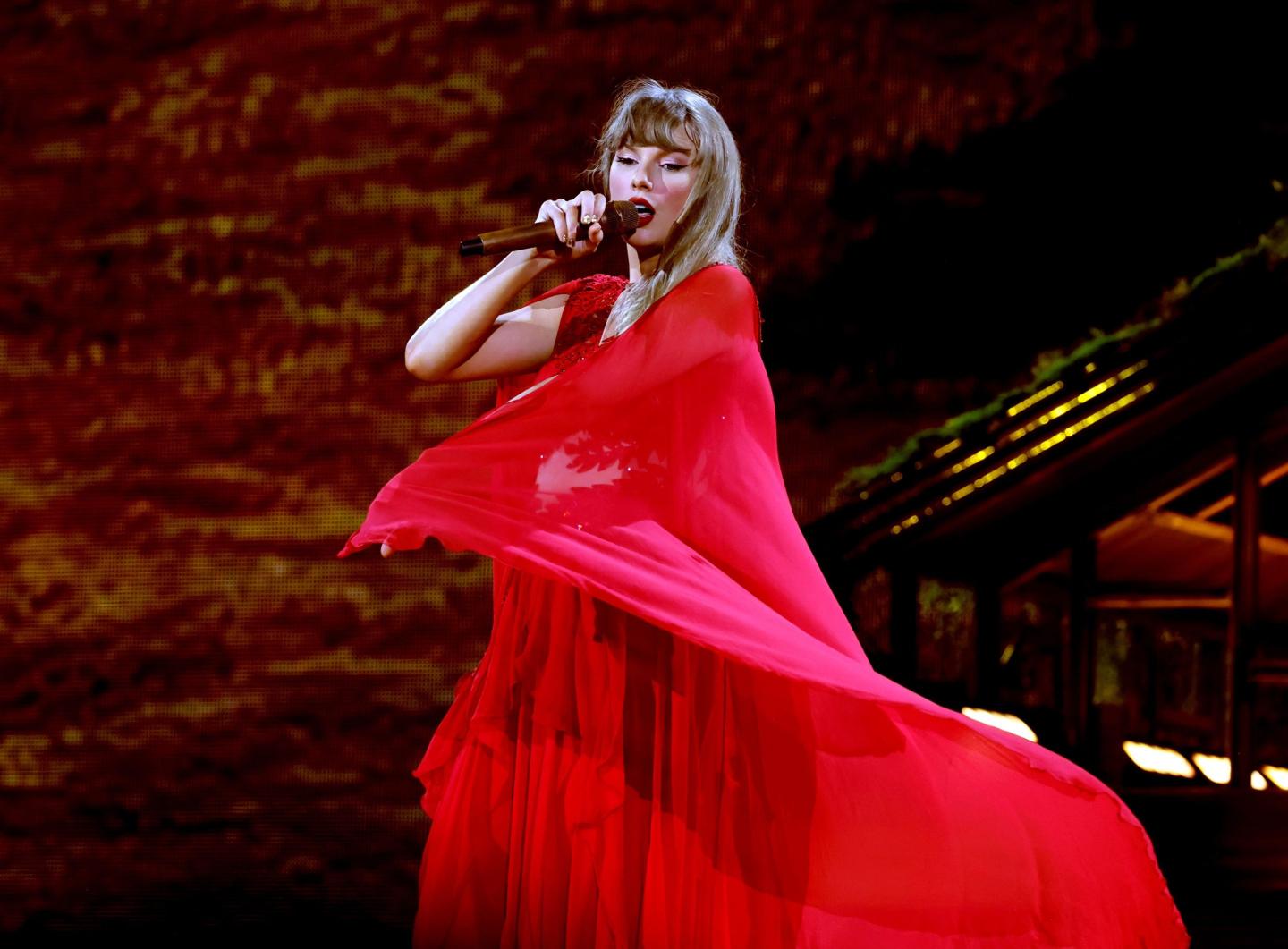
If you’ve ever watched a Taylor Swift ticket vanish from your cart, or a 7 p.m. restaurant reservation disappear in a blink, an economist has a name for what just happened to you: a “hidden market.”
“Today, the concert ticket industry is broken,” a government attorney told jurors at a civil antitrust trial in early March. Ticketmaster and its parent Live Nation Entertainment have monopolized the market, the Department of Justice argued, driving up the prices for everyone.
Leaving the antitrust issues to one side, Judd Kessler sees something else going on: a market being hidden.
If you’ve ever watched that ticket disappear from your cart at the last second, stared at a frozen Ticketmaster screen, or refreshed a Resy page only to see that 7 p.m. table vanish in a blink, Kessler has studied the strange form of economic activity. You’re a participant, he says, in what he calls a “hidden market,” a system in which demand overwhelms supply, prices are kept artificially low, and the real allocation happens somewhere offscreen.
These hidden markets are a big part of where modern life gets decided: who gets into the hottest restaurant, who sits closest to the stage, who skips the line at Disney World, who lands the interview for the most coveted job. They’re not labeled as markets, and they rarely look like the Econ 101 diagram you saw in college. But they are structured, they follow rules, and most crucially, someone is profiting from the resulting friction.
Kessler, a Wharton professor and author of the new book Lucky by Design, has spent his career pulling back the curtain on these systems. His core diagnosis is disarmingly simple: “The reason it’s a hidden market is because there is excess demand given the price that is being charged.”

When the price of something scarce—concert tickets, Saturday night tables, theme park rides—is set far below what the market would naturally bear, the scarcity doesn’t disappear. It just moves sideways, into queues, lotteries, intermediaries, and perks—into hiding, in other words.
Frankly, he told Fortune in a recent interview from his New York City apartment, it’s “weird” how people act around hidden markets, sometimes even preferring them to visible ones.
Why we accept a $3,000 ticket selling for $300
At the heart of hidden markets, according to Kessler, is a collective discomfort with using price alone to allocate everything.
“If we do allocations by prices, the allocation of any scarce resource gets distributed based on the inequalities in wealth and income,” Kessler argued. And people really don’t seem to want a world where the only way into a beloved artist’s show or a neighborhood restaurant is to outbid everyone else, so we hold face value down.
“It would be weird if the restaurant sold the reservations to the highest bidder,” Kessler said. “That would seem weird—[for] the same reason, like, Taylor Swift doesn’t sell tickets to her tour for $3,000 a piece, because that would seem too high, even though that’s what the secondary market says the prices kind of should be.” The super-popular restaurant could auction off reservations, too, but we think that would be weird too, Kessler added.
“We don’t like when other people buy [or] claim the reservations and then try to sell them to us,” he said.
What’s not weird, for some reason, is the extra benefits that accrue to, say, American Express Platinum card holders, Kessler offered. (American Express acquired Resy.com in 2019 and gives Platinum holders a tier of “Global Dining Access” reservations that are more exclusive than regular app holders, along with special events, such a “Platinum Nights by Resy.”) At least for the moment, Kessler said, society has found a solution to the hidden markets problem. “Somehow, we’ll give the folks who are willing to pay over here for the Amex, we’ll give them the early reservations. And that’s how we’ll solve this problem … no one seems to complain about that.”
Benjamin Shiller of Brandeis University recently talked to Fortune about his separate research about “personalized pricing” by companies including credit card providers. “My more recent research in that vein is looking at the potential for firms to hide how they do it, to basically personalize prices without having any consumers be aware. And so that’s something that’s hard to prove,” Shiller said.
Shiller said he hasn’t studied the particular examples mentioned by Kessler, but agreed in theory that it sounded similar. “I’d also mention that those credit card companies are doing personalized pricing as personalized coupons.” In graduate school, he added, he studied the video-game and music markets and saw commonalities.
“When you transition from selling something from a physical product to a digital product,” Shiller explained, “it allows the seller, the publisher to restrict resale, they can prevent you from reselling the item, and that ends up being very profitable, particularly for the types of goods that people grow tired of.” This suggests that companies selling these goods have a strong incentive to find ways to distribute products where people can’t resell it, with digital distribution a great way to accomplish this. Resale markets tend to disappear in these markets as a result, he added: “I think it’s more hidden rather than acknowledged.”
How Disney turned nostalgia into a hidden toll booth
Conversation with Kessler drifted to the DisneyWorld experience, now so fundamental to the entertainment giant that it accounts for roughly 70% of operating profit. Disney’s new CEO Josh D’Amaro, after all, came from the parks side, not the content side.
Would-be park goers have options on the ticket website for DisneyWorld such as a standard date-based ticket for around $119 per day, depending on the time of year. If you wanted to go tomorrow, you would be paying between $174 to $199 per day, depending on which of Disney’s four parks you want to visit. From there, you can bounce around multiple parks for an extra fee. The most flexible package sells for around $293 per day and includes “a certain number of visits to a water park or other Walt Disney World fun.” Tickets are about $5 cheaper for kids between the ages of 3 and 9. You can also add on options that allow you to cut long lines and prepay for your meals.
Kessler said these are relatively standard price discrimination strategies, not something he’d consider a hidden market. What qualifies to him is, for instance, the ways to access rides once you’re in the park. “You need to wait in line for the really desirable rides. But then — for a price — Disney offers various ‘lightning lane’ passes that allow folks to have access to a shorter line or otherwise skip the line with a reservation time. These are the strategies that Disney uses to monetize the hidden markets that they create inside the park.” Once you’re inside the world of the park and you discover the opportunity to pay extra for additional benefits, “all of that screams hidden markets,” Kessler said.
Brett Schneider, a marketing veteran who teaches the business of fandom for UCLA Extension, told Fortune he sees the same phenomenon from a consumer perspective—and there is some “gatekeeping” going on, with the risk being that “you alienate the true fans.” In general, Schneider added that he thinks the “corporatization” or “monetization” of fandom is a “really slippery slope.”

Influential entertainment journalist Matt Belloni recently described Disney’s overreliance on theme parks—and their various monetizing schemes—as a “real danger” for the company on his podcast, The Town. The “stratification” of the Disney consumer has resulted in a parks business “focused on mining the upper class and kind of weaponizing nostalgia to get more money out of these diehard Parks fans,” he said. This risks alienating young Disney families, Belloni added, claiming that his sources inside Disney are “concerned” about this dynamic.
The Wall Street Journal reported in February 2025 that “even Disney is worried about the high cost of a Disney vacation,” citing comments from CFO Hugh Johnston in December 2024 that the company has to be “smart about pricing,” especially at the lower end. Incoming CEO D’Amaro said in May 2025 that he thinks about pricing every day and framed the many tiers of price options as something that welcomes in lower-income fans: “How do we create experiences and pricing structures and optionality to invite as many families as possible into these experiences?”
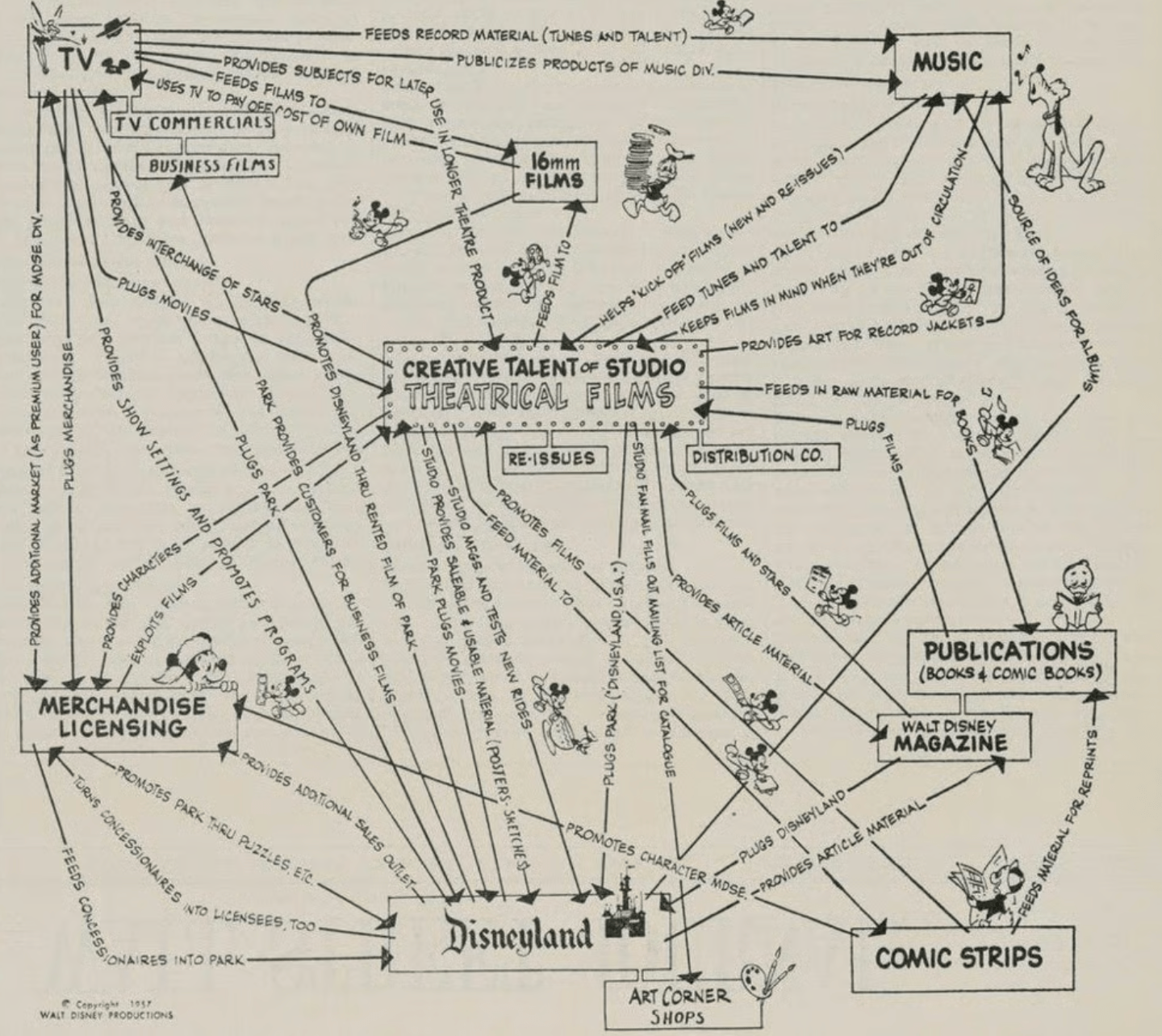
Kessler agreed that D’Amaro’s appointment shows that the parks are a crucial part of the “flywheel effect” in which movies lead to merchandise sales which lead to theme park visits, especially in the age of streaming and fragmented consumption. In fact, a 1957 napkin sketch by Walt Disney himself has been hailed by Harvard Business Review a “corporate theory of sustained growth.” In other words, the parks make the flywheel complete.
Kessler said that Disney should just check in with his younger daughter to see how well the strategy continues to work. “My daughter is a living example. She’s like, ‘Hey, can we go on Amazon and buy a Disney princess doll? … Can I get a Disney princess nightgown so that the doll has something to wear? Now can we watch the movie of the princess while I hold the doll in the nightgown?’ Like, oh my God.”
Disney, American Express and Ticketmaster did not respond to requests for comment.
The one trick that beats rigged queues—and why almost no one uses it
Faced with these systems, most consumers do one of two things: They rage against the machine, or they resign themselves to impossible conditions. Kessler argued for a third path: Understand the rules of the hidden market you’re in, then play it more intelligently.
For instance, Kessler shared his own recent, failed attempt to book The French Laundry, Thomas Keller’s legendary Napa Valley restaurant, for his wife’s 40th birthday. Reservations opened at 10 a.m. on the dot. Like everyone else, Kessler went straight for the gold: the prime 7:30 pm slot. By the time the page loaded, it was gone. He then tried 4:30 pm—still relatively attractive—and lost that, too. By chasing what everyone else wanted most, he effectively guaranteed himself nothing.
The lesson he draws is what he calls “settling for silver.” In first‑come, first‑serve races in which everything drops at once—whether it’s reservations, tickets, or limited‑edition sneakers—the top choice is the focal point. It attracts the most clicks, the fastest fingers, the best scripts. The second‑best option, by contrast, is often dramatically less crowded but still very good: “If I had gone to 4:30 initially, I would have gotten it.”
Applied practically, that might mean targeting the Wednesday show instead of Saturday, the 5:00 seating instead of 7:30, the mezzanine instead of row one. It feels like accepting a compromise. In probabilistic terms, you’re trading a marginal downgrade in experience for a massive upgrade in odds.
The real reason Taylor Swift keeps prices low
Kessler said this is an evolving field of research, and economists don’t quite understand it yet. Take the Taylor Swift example, and the market indicating the fair value of her ticket is roughly $3,000. But Swift doesn’t charge that much upfront; instead, Ticketmaster sells a limited number of tickets at an illusory low price. Those are immediately gobbled up by bots, and the true value is realized on the secondary market.
“Ticketmaster gives her money back when the sales happen on the secondary platform, so all of the additional surplus goes to her,” he explained. “She ends up with the same high price, but there’s other people in the process [in] between.”
He said one theory holds that the more levels of intermediation that occur in a hidden market, the less blame people tend to put on the person driving the economic activity—Swift, in this case.
When a Taylor Swift ticket is priced at a fraction of what a superfan (or hedge fund manager) would willingly pay, a secondary market is inevitable. Bots scoop up inventory, resellers flip tickets at eye‑watering markups, and regulators scramble to ban the most egregious forms of scalping. The resentment is real enough that politicians now campaign on “fixing” ticketing and ordering regulators to go after gouging by bulk buyers and bot operators.
But the underlying mispricing rarely changes. The primary seller gets to look benevolent, having kept prices low for fans. The platform and the resellers soak up the outrage. The artist’s reputation stays intact; the system, less so.
Kessler’s rule of thumb is blunt: “It basically at the end all comes down to this mispricing. People are trying to take advantage of the mispricing.” And in hidden markets, he added, things are “100% mispriced.” What Kessler’s work suggests is supply and demand may work in theory, but in practice, consumers often revolt at life conducted on purely economic terms that feel unfair.
Schneider, for his part, said he thinks the solution lies less in better pricing algorithms and more in rethinking what loyalty actually means. He envisions gamified systems that reward genuine fans—not just the wealthiest ones—with access to experiences they couldn’t otherwise afford: a free lightning lane pass, a limited-edition collectible, a backstage moment.
“The top 1% of people are accountable for 90% of all revenue for most brands,” Schneider said, “but I think it also has to be the core 1% that is spending time with you.” Attention, he argued, is the most valuable currency—and the brands that figure out how to reward that, rather than simply extracting from it, will be the ones that master the business of fandom.